Fungus Gnats: How to Get Rid of Them for Good
How do I eliminate fungus gnats from my houseplants?
On this page
How to Know You Actually Have Fungus Gnats
Before you treat anything, make sure fungus gnats are the real culprit. Here's how to tell them apart from other common household bugs.
Look for the adults. Fungus gnats are tiny—about 1/16 to 1/8 inch long—dark, and mosquito-like with slender legs. They're weak fliers, so you'll usually see them hovering near the soil, running across the surface, or resting on leaves rather than zipping around the room.
Check the soil for larvae. The larvae live in the top 2 to 4 inches of soil and are about 1/4 inch long, with clear-to-white legless bodies and a shiny black head. This is the stage that does the real damage to your plant's roots.
Where you see them matters. Fungus gnats stay around the pot and soil surface. If the bugs are hovering around ripe fruit or your kitchen instead, those are fruit flies—a different pest that needs a different fix.
Good news: adult fungus gnats don't bite people or pets, and in the US they aren't known to carry human pathogens. They're a nuisance, not a health threat.
Quick confirmation test: lay a raw potato wedge cut-side down on the soil for a few days, then lift it and check the underside. If you spot small larvae feeding there, you've confirmed it.
Why They Keep Coming Back: The Fungus Gnat Life Cycle
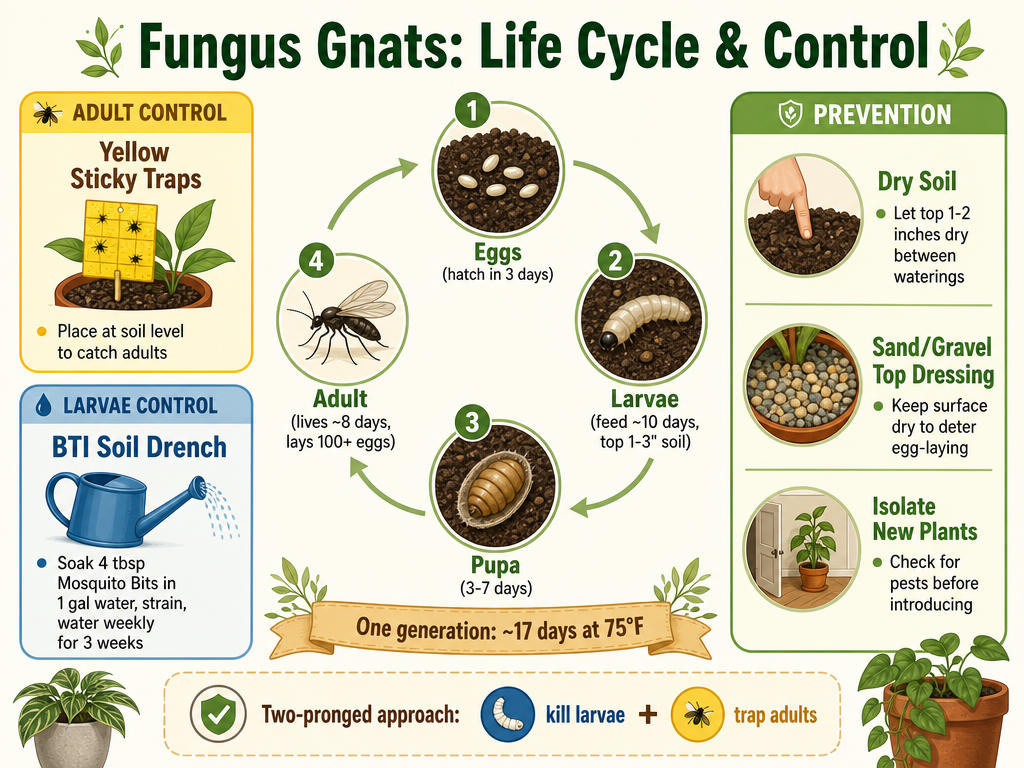
If your gnats keep returning after you swat or spray the adults, it's because you're only seeing a fraction of the problem. Fungus gnats go through four life stages—egg, larva (a soil-dwelling maggot-like young stage), pupa (the resting, transforming stage), and adult—and the vast majority of that life happens hidden in your potting soil, out of sight.
The cycle is fast, and it overlaps
At a typical apartment temperature of 75°F, the timeline moves quickly:
- Eggs hatch in about 3 days
- Larvae feed in the soil for about 10 days
- Pupae transform for a few days, and adults emerge roughly 4 days after that
- Adults then live only about 8 days
That's a full generation—female to female—in about 17 days. Cooler rooms slow it down (up to 4 weeks around 55°F) and warmer rooms speed it up (as little as 2 weeks near 80°F). Since many apartments run warm, the cycle tends toward the faster end.
Why one treatment never finishes the job
Here's the part that catches most new plant parents off guard: a single female can lay 30 to 200 eggs—often more than 100 in her first week alone. With generations overlapping, at any moment your soil holds eggs, larvae, and pupae all at once. Kill the adults you can see, and the eggs and larvae you can't see keep hatching.
Because most of a gnat's life is spent as a larva and pupa in the soil, that's where control actually matters. The next sections focus your effort there—drying out the top layer of soil and treating the larvae directly—so you break the cycle instead of chasing adults forever.
Step 1: Attack the Larvae in the Soil
Fungus gnat larvae live in the top layer of your potting soil, where they feed on roots and organic matter—and grow into the next batch of egg-laying adults. Since the larvae do the actual damage and keep the cycle going, this is where you start.
Let the soil dry out
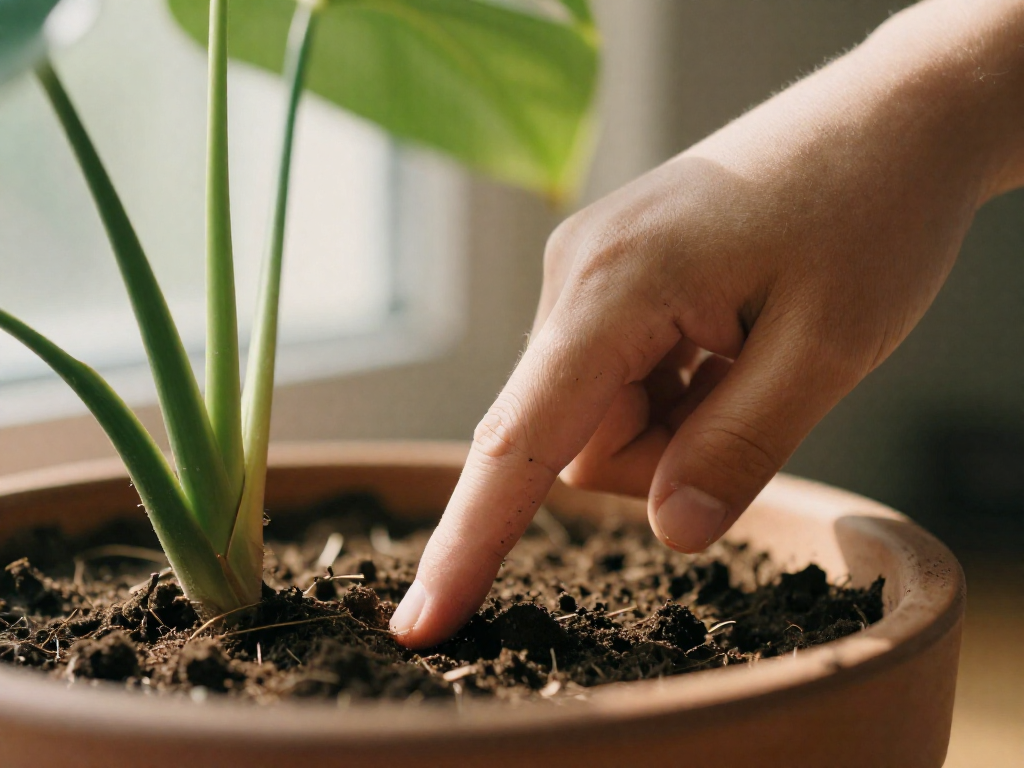
The single most effective step is also the simplest: let the top 1–2 inches of soil dry out completely between waterings. Gnats thrive in constant moisture, so dry soil makes your pots unappealing to egg-laying females and kills off eggs and larvae already living there. Poke a finger into the soil; if it's damp an inch down, wait to water.
Treat with BTI (Mosquito Bits)
BTI stands for Bacillus thuringiensis israelensis, a naturally occurring soil bacterium. It's deadly to fungus gnat and mosquito larvae but harmless to people, pets, bees, and butterflies—which makes it the go-to treatment for indoor plants.
The easiest home form is Mosquito Bits. To use them:
- Soak 4 tablespoons of Mosquito Bits per gallon of water for 30 minutes.
- Skim or strain off the floating granules.
- Water your plants with the treated water so it soaks the soil.
Here's the catch: BTI stays active in the soil for only about 2 days, and it does nothing to adult gnats. So repeat this treatment weekly for three weeks to catch newly hatched larvae as more eggs open.
Optional: a hydrogen peroxide drench
For a fast knockdown, mix 1 part 3% hydrogen peroxide with 4 parts water and water your plants with it. It kills larvae on contact, then breaks down into plain water and oxygen, so it's safe for your plants.
Killing the larvae is half the battle—next you'll target the adults so they stop laying more eggs.
Step 2: Trap and Reduce the Adults
Treating the soil only handles the larvae. The adult gnats flying around your plant are untouched by that treatment, and the females keep laying eggs the whole time. That's why you need a second prong: while Step 1 breaks the cycle underground, this step cuts down the egg-layers above the soil.
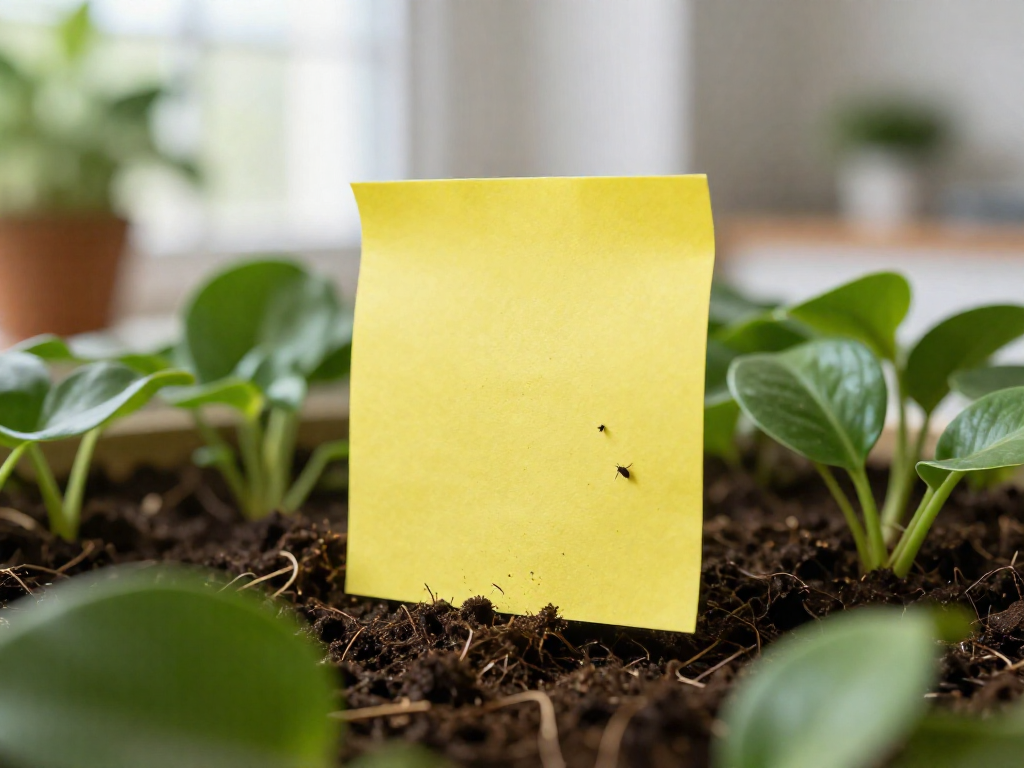
Use yellow sticky traps. These small yellow cards are coated in glue, and fungus gnats are drawn to the color and get stuck. They do two jobs at once: they capture adults and let you monitor progress. If you count fewer gnats on the trap each week, your population is shrinking.
Place traps low. Adult fungus gnats are weak fliers that stay near the soil, so lay traps flat on the soil surface or stick them just an inch or two above it. Positioning them high up misses most of the gnats.
About DIY traps. You'll see recipes for apple cider vinegar plus a drop of dish soap. The evidence that these work is mostly anecdotal, so treat them as a supplement, not a replacement for sticky traps.
Isolate the worst plant. Fungus gnats only fly short distances, so move a badly infested plant to a separate room away from your other plants to stop the spread while you treat it.
Step 3: Break the Cycle So They Don't Return
Killing the adults you can see isn't enough. Fungus gnats go through four life stages—egg, larva, pupa, and adult—and a full generation takes about three to four weeks. If you stop treating too early, a hidden batch of larvae in the soil will hatch and start the problem all over again.
Keep treating for at least three weeks. Repeat your BTI soil drench (BTI is a natural soil bacterium that kills larvae) weekly, and leave your yellow sticky traps up the whole time. This covers a complete life cycle so no unseen generation survives.
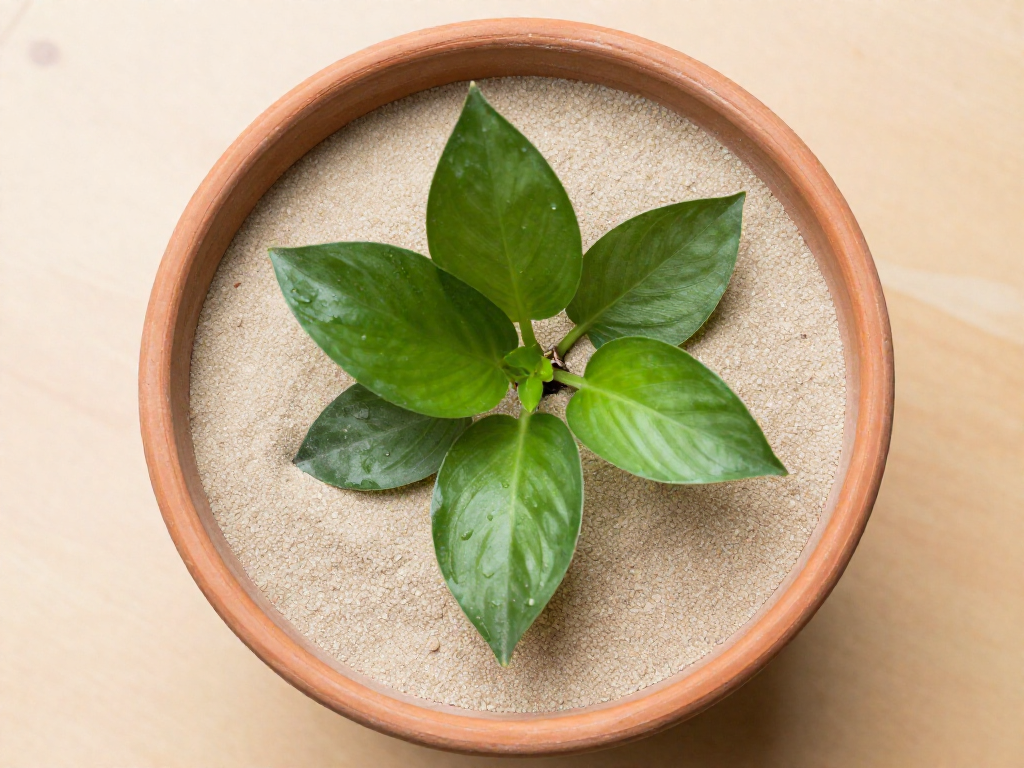
Dry out the egg-laying zone. Females lay eggs in the top inch of soil, and larvae live in the top two to three inches. Add a half-inch top dressing of sand, fine gravel, or decorative stone to keep that surface dry and unappealing for breeding.
Fix the root cause: moisture. Fungus gnats thrive in soggy soil, so stop overwatering. Let the top 1 to 2 inches dry out between waterings, and only use pots with drainage holes.
Screen anything new. Bagged potting soil isn't sterilized and often carries larvae, and new plants can too. Quarantine new arrivals for a couple of weeks and watch for gnats. Inspect outdoor plants carefully before bringing them in—their potting mix can smuggle larvae straight into your home.
Should You Worry About Your Plants?
Here's the honest answer: for most established houseplants, fungus gnats are more annoying than dangerous. But they're not harmless, either.
The real damage comes from the larvae (the tiny worm-like young that live in your soil), not the flying adults. When larvae run out of fungus and decaying matter to eat, they start feeding on live roots. That can stunt growth, yellow the leaves, and cause leaves to drop.
They can also spread plant fungal diseases such as Pythium, Botrytis, and Fusarium (all forms of root rot and wilt) between pots.
Who's most at risk:
- Seedlings and cuttings with undeveloped roots — these are the most vulnerable, so treat any infestation seriously.
- Small or young plants — damage shows up faster.
The good news: established plants usually bounce back once you get the population under control. So don't panic, but don't ignore it either.
Advanced and Biological Options
If gnats keep coming back or you're fighting them across several plants at once, it may be time for biological controls—living organisms that hunt the larvae in your soil.
Beneficial nematodes (Steinernema feltiae). These are microscopic, insect-killing worms you mix into water and pour over the soil (a "drench"). Apply once, then repeat weekly for 2 to 3 weeks. They work best as prevention and are weak against a heavy, established infestation.
Predatory mites (Stratiolaelaps scimitus). In university trials these tiny soil-dwelling mites gave excellent control, applied twice about a week apart for roughly six to eight weeks of coverage. They're a strong choice for ongoing problems.
Skip the bug spray. Home insecticides generally aren't recommended for fungus gnats indoors—they target adults, while most of the gnat's life happens as larvae in the soil where sprays don't reach.
Sources
- Fungus gnats — missouribotanicalgarden.org
- Fungus Gnats / Home and Landscape / UC Statewide IPM Program (UC IPM) — ipm.ucanr.edu
- Fungus Gnat - Symptoms and Treatments — arborjet.com
- Kill Fungus Gnats on Houseplants with BTI 3.2021 — summitchemical.com
- How to Get Rid of Fungus Gnats | Garden Design — gardendesign.com
- Fungus Gnats [fact sheet] — extension.unh.edu
- How to Get Rid of Fungus Gnats in Houseplants - How I Get Rid Of — howigetridof.com
- How to Get Rid of Fungus Gnats in Houseplants Naturally – Grounded — feelgrounded.com
FAQ
How long does it take to get rid of fungus gnats?
Plan on about three to four weeks of consistent effort, because that's roughly how long one full fungus gnat generation takes (as little as two weeks at 80°F, up to four weeks at cooler temperatures around 55°F). The insects overlap generations, so you need to keep treating until every egg and larva already in the soil has hatched and died out. The proven approach is two-pronged: use yellow sticky traps to catch egg-laying adults while you treat the soil for larvae. A common BTI routine, for example, is watering the soil once a week for three weeks. Skipping applications or stopping early usually lets the population rebound.
Are fungus gnats harmful to my plants or to me?
For people, fungus gnats are a nuisance, not a health threat. Adults don't bite, they aren't known to carry human diseases in the US, and they feed only on liquids like water or nectar. They can harm plants, though. The larvae live in the top few inches of soil and, once their preferred food (fungi and decaying matter) runs low, they feed on roots. This can stunt growth and cause yellowing leaves and leaf drop, especially in seedlings and young plants with underdeveloped roots. Larvae can also spread plant fungal diseases such as Pythium and Fusarium root and wilt problems. Established houseplants often tolerate light infestations, but it's still worth clearing them out.
Will letting the soil dry out really kill fungus gnats?
Yes, and it's the single most effective home strategy. Fungus gnats need moist soil to survive: females lay eggs in the damp top inch, and the larvae depend on that moisture and the fungi that grow in it. Letting the top 1 to 2 inches of soil dry out between waterings kills larvae, discourages females from laying eggs, and reduces egg survival. Check by pushing a finger into the soil; water only when that top inch or two feels dry. Overwatering is the root cause of most infestations, so also make sure pots drain well. Drying alone may not wipe out a heavy infestation quickly, so pair it with sticky traps and, if needed, a BTI or hydrogen peroxide soil treatment.
Do apple cider vinegar traps actually work on fungus gnats?
They can catch some adult gnats, but the evidence is mostly anecdotal, and they don't touch the larvae in the soil where the real problem lives. A vinegar-and-dish-soap trap lures adults to drown, which can trim the flying population, but females keep laying eggs faster than a jar can catch them. If you want a more reliable adult trap, yellow sticky traps are well documented for both catching and monitoring adult fungus gnats; place them flat or just above the soil surface. Whatever you use for adults, remember it's only half the job. You still need to treat the soil to kill larvae and break the breeding cycle.
Is hydrogen peroxide safe to pour on my houseplants?
A properly diluted soil drench is generally considered safe for most houseplants and can kill gnat larvae on contact. The common recipe is one part 3% hydrogen peroxide (the standard drugstore strength) to four parts water; peroxide breaks down into water and oxygen, so it doesn't linger in the soil. Water the plant with it as you normally would, wetting the soil where larvae live. A few cautions: use only the diluted mix (never full strength on roots), don't get it on foliage, and test one plant first if you're unsure how it will respond. Keep in mind that support for peroxide as a gnat remedy is largely anecdotal, so treat it as one tool alongside drying out the soil, sticky traps, and BTI.
Where do fungus gnats come from in the first place?
Almost always from moist, organic-rich potting soil, and they usually hitchhike in. New houseplants and fresh bags of potting mix often already contain eggs or larvae, since manufacturers don't sterilize the soil, and plants moved indoors from outside can carry them in too. Once inside, consistently damp soil is the perfect nursery: a single female can lay 100 or more eggs in her first week, and generations overlap quickly. To avoid future outbreaks, inspect and quarantine new plants for a couple of weeks, avoid overwatering, let the top inch or two of soil dry between waterings, and consider a top layer of sand or gravel to keep the surface dry where females prefer to lay eggs.
See also
How to Repot a Houseplant Step by Step
Learn how and when to repot a houseplant with this beginner walkthrough covering timing, choosing the right pot size, and simple step-by-step technique.
Jul 14, 2026 · 11 min read
Why Are My Plant's Leaves Turning Yellow?
Yellow leaves on your houseplant? Use this simple decision tree to tell overwatering, light, and nutrient problems apart—and fix the real cause fast.
Jul 14, 2026 · 13 min read
- How to Water Houseplants Without Overwatering
- Choosing the Right Potting Soil for Indoor Plants
- Common Houseplant Pests and How to Identify Them
Related articles
My New Plant Is Dropping Leaves: Is It Normal?
New plant dropping leaves after you brought it home? Learn when leaf drop is normal acclimation and when it signals a real problem you need to fix.
Jul 14, 2026 · 5 min read
Leggy, Stretched-Out Plants: Why and How to Fix It
Is your plant growing tall, pale, and sparse? Learn what causes leggy, etiolated growth and the exact steps to fix it and prevent it from coming back.
Jul 14, 2026 · 10 min read
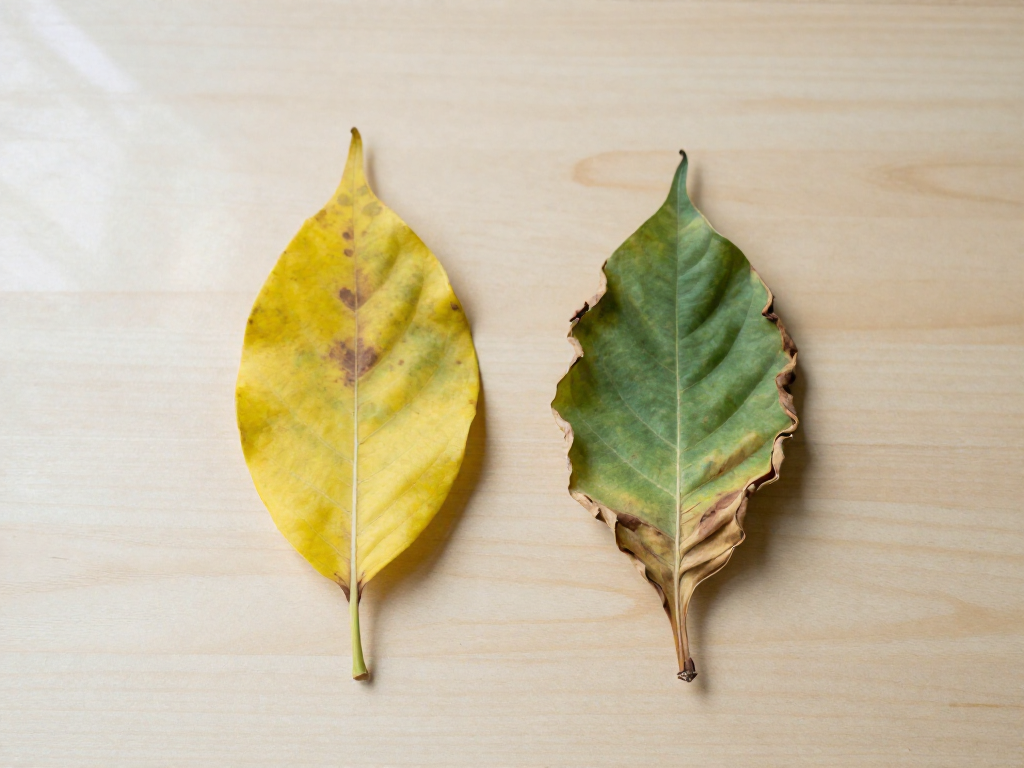
Overwatering vs. Underwatering: How to Tell the Difference
Is your plant overwatered or underwatered? Compare symptoms side by side, run 4 quick checks, and follow plant-by-plant recovery steps for apartment plants.
Jul 14, 2026 · 8 min read