Overwatering vs. Underwatering: How to Tell the Difference
Is my plant overwatered or underwatered?
On this page
Why This Is So Confusing (Same Symptom, Opposite Problem)
If you're staring at a sad, droopy plant and can't tell whether it needs more water or less, you're not doing anything wrong. This is genuinely hard, even for experienced plant owners.
Watering issues are the number one cause of houseplant death — and a big reason is that overwatering and underwatering look nearly identical when trouble first starts. A drooping pothos (a common trailing houseplant) could mean the roots are bone-dry and thirsty, or it could mean the roots are drowning in soggy soil. Same symptom. Completely opposite fix.
Here's why that happens. An underwatered plant wilts because it's simply thirsty — there's not enough water to keep its leaves firm. An overwatered plant wilts for the opposite reason: its roots are suffocating and beginning to die, so they can't pull up water even when the soil is wet. The leaf looks the same, but the cause is reversed.
So the most important thing to know upfront: no single symptom proves anything. You diagnose by combining several signals — soil, leaf feel, pot weight, and recovery — which is exactly what the next sections walk you through.
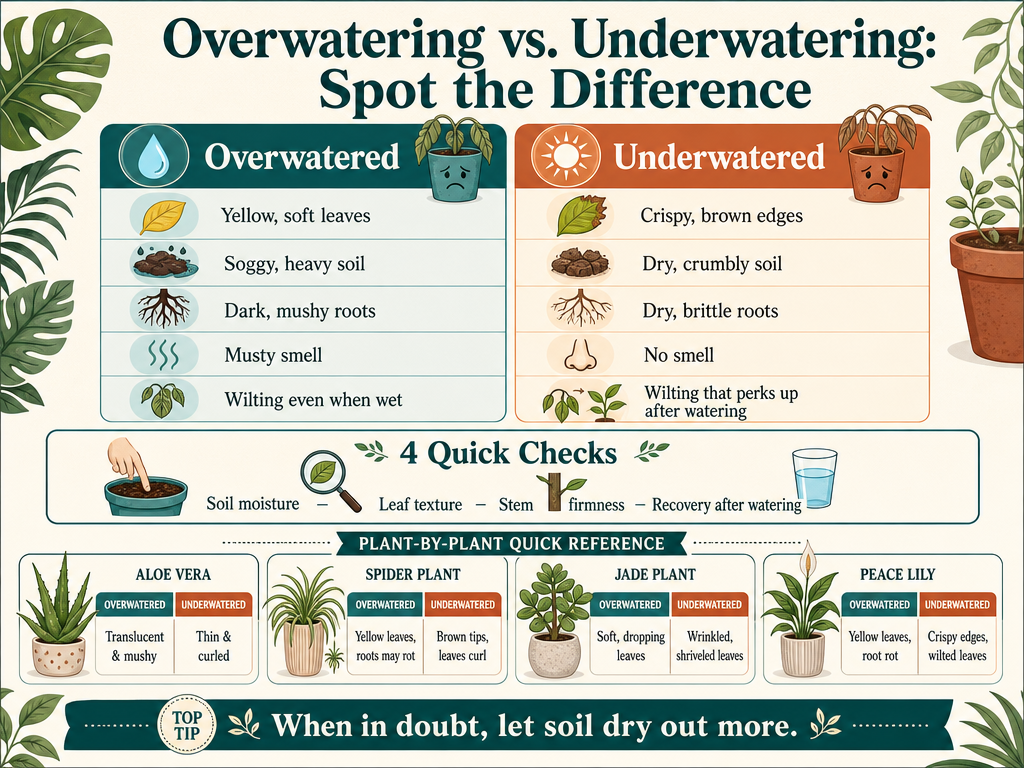
Side-by-Side Symptom Comparison
Same droopy plant, opposite causes. The fastest way to tell them apart is to touch the leaves and the soil, then lift the pot. Here's the at-a-glance breakdown.
| What to check | Overwatered | Underwatered |
|---|---|---|
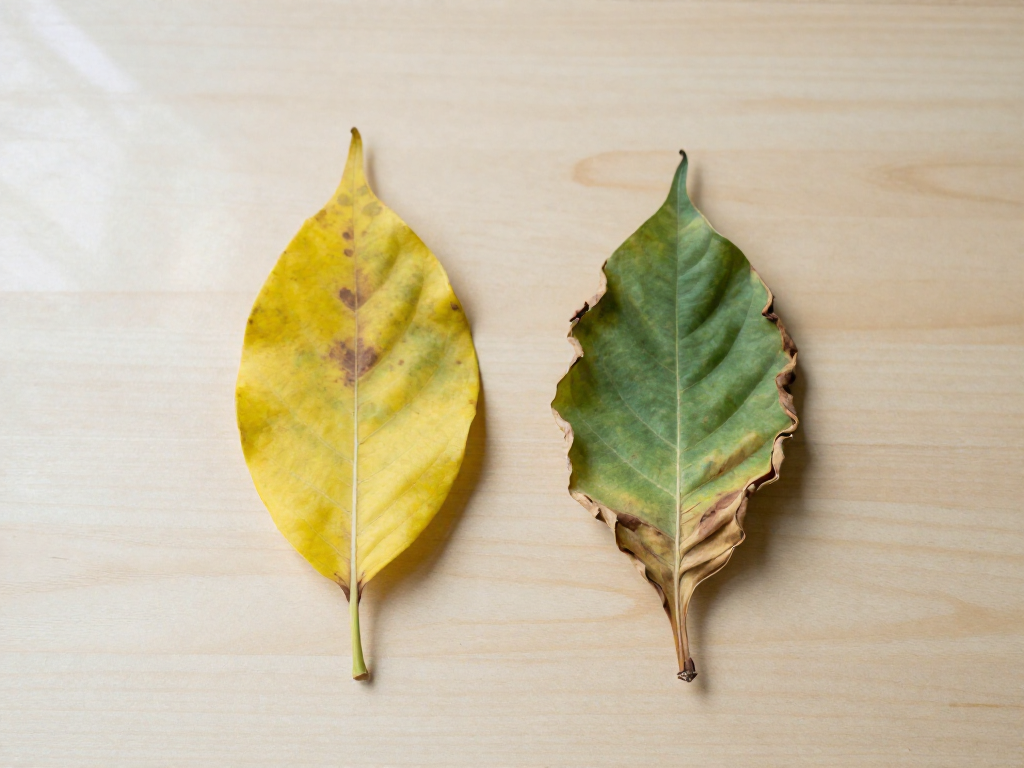
| Leaf feel | Soft, swollen, jellylike or slightly see-through; yellowing spreads from the inside out with dark, water-soaked patches | Crisp and papery; brown edges march inward from the tip toward the center |
| Soil | Stays wet for days, dense, cool, and heavy | Dry, crumbly, lightweight, and pulling away from the pot's edges |
| Pot weight | Heavier than expected when lifted | Surprisingly light |
| Smell | May smell sour, swampy, or fermented near the base | Little to no smell |
| Yellowing pattern | Oldest leaves near the soil yellow first | Lower leaves and leaf tips turn brown |
| Wilting clue | Still droops even after watering or while soil is wet (a sign of root rot) | Perks up after a deep drink |
The one sign that only means overwatering
Look for edema (pronounced "uh-DEE-muh")—small brown, corky dots or bumps on the leaves. These form when leaf cells absorb so much water they burst. It shows up most often on thicker-leaved plants like the Fiddle Leaf Fig, and it's a reliable overwatering-only signal, so it can settle the question when other symptoms overlap.
How to use this table
Don't rely on a single row. A yellow leaf on its own is ambiguous—but a yellow, mushy leaf on a plant sitting in heavy, sour-smelling soil points clearly to overwatering. Crispy tips on a light, crumbly pot that's pulled away from the edges points to underwatering. When two or more cues line up in the same column, you have your answer.
The 4-Point Check to Diagnose in Under a Minute
When the symptoms look the same, stop guessing and run this quick routine. Check all four signals together — no single one is reliable on its own, but combined they point clearly to the answer.
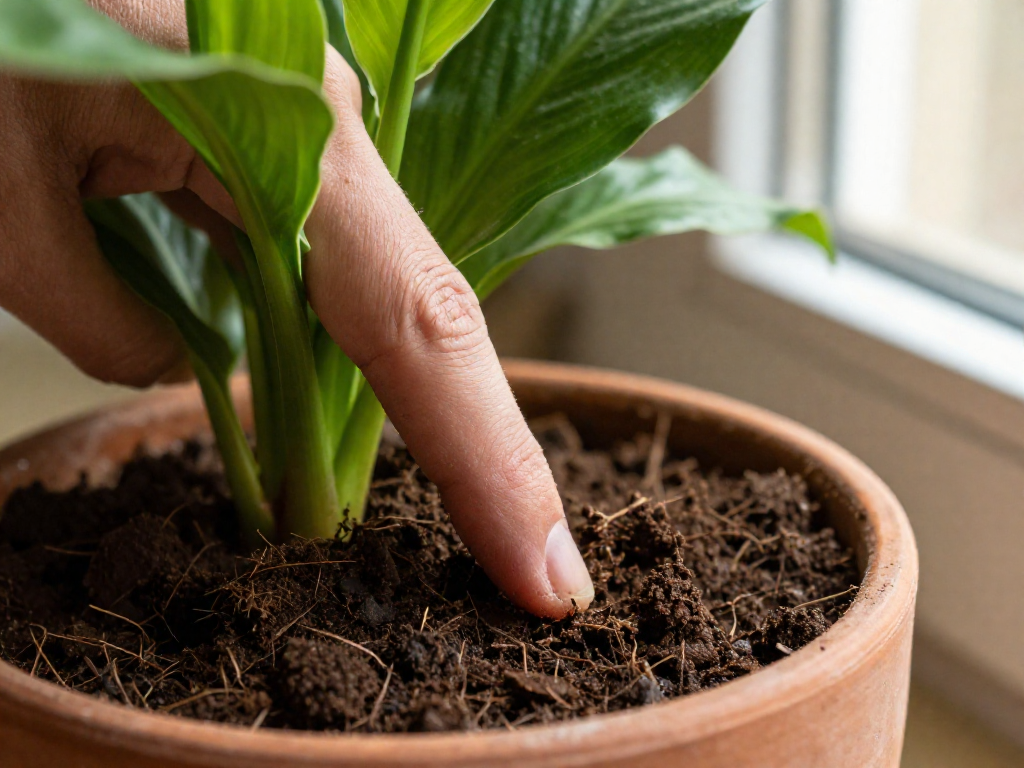
1. Soil moisture (the knuckle test)
Push your index finger straight into the soil up to the second knuckle (about an inch deep). If it comes out soggy, cold, or there's standing water, you're overwatering. If it's dry an inch below the surface, it's time to water. Dry soil that's pulling away from the pot's edges is another underwatering tell.
2. Leaf texture
Gently press a struggling leaf.
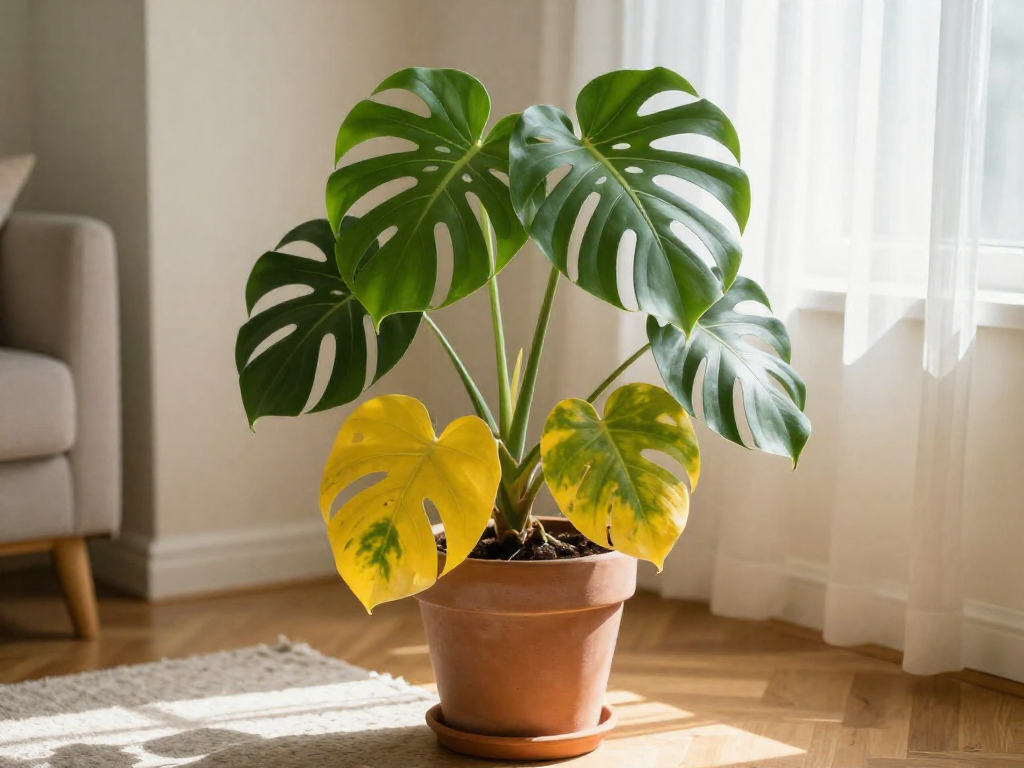
- Soft, limp, mushy, or slightly translucent → overwatered. Yellowing often starts on the oldest leaves nearest the soil.
- Crispy, papery, brittle with browning edges → underwatered.
3. Stem firmness
Feel the stem near the base. A soft or mushy stem signals rot from too much water. A stem that's firm but the plant is drooping points to thirst.
4. Recovery after watering (the tie-breaker)
This is the deciding test when the first three are ambiguous. Water the plant and watch it over the next few hours to a day:
- An underwatered plant usually perks up fast once it gets a drink.
- An overwatered plant keeps declining even after you add water — or wilts while the soil is still wet.
That last point is the biggest red flag. Wilting in soggy soil, or wilting that continues after watering, is a hallmark of root rot (roots damaged by too much moisture, so they can no longer absorb water). When you see it, the answer is almost always overwatering — stop watering and check the roots.
When in Doubt, Check the Roots
Still can't tell from the leaves? The roots give you the clearest answer. Gently tip the plant out of its pot—hold the base of the stems, turn it sideways, and ease the root ball free. A quick look and sniff will usually settle it.
Overwatered (root rot): Roots look dark brown or black instead of pale. They feel mushy and slimy, fall apart when you touch them, and give off a foul, rotten smell. "Root rot" just means the roots have started to decay from sitting in too much water.
Healthy or underwatered: Roots stay light tan to white and feel firm. They may look dry or brittle if the plant is thirsty, but they won't be soft, slimy, or smelly.
One caveat: Underwatering left too long can eventually cause root rot too, as dying roots break down. So don't read the roots alone—line them up with your soil and leaf checks. Soggy soil plus mushy roots points to overwatering; bone-dry soil plus crisp leaves and firm roots points to underwatering.
How to Recover an Overwatered Plant
If you've diagnosed overwatering, act quickly but gently. Here's how to nurse the plant back to health.
1. Stop watering — but don't overcorrect. Set the plant somewhere with good airflow and let the soil dry. Watch it closely, though: swinging from soggy to bone-dry too fast can stress roots more than staying wet a bit longer. You're aiming for the top inch to dry out, not the whole pot cracking apart.
2. Check the roots and cut away the rot. If leaves stay soft or the soil smells sour, slide the plant out of its pot. Healthy roots are white or light tan and firm. Root rot — decay caused by roots sitting in waterlogged soil — shows up as dark brown or black roots that feel mushy and smell foul. Snip these away with scissors wiped down with rubbing alcohol, then let the plant dry on a paper towel for a few hours.
3. Repot in fresh, fast-draining mix. Use a pot with drainage holes and a mix loosened with perlite, coarse sand, or orchid bark (all add air pockets so roots can breathe).
4. Downsize the pot. With fewer roots, a big pot holds extra water the plant can't use, which invites rot again. Pick a container only slightly larger than the remaining healthy roots.
5. Consider terra-cotta. These clay pots let moisture evaporate through the sides, drying soil faster. Afterward, water sparingly — only when the top inch feels dry.
How to Recover an Underwatered Plant
Good news first: underwatering is usually the more forgiving problem. As long as the roots are still firm and light-colored, most thirsty plants bounce back within a day or two of a proper drink.
Start with a deep watering. Pour water slowly over the soil until it runs out the drainage holes at the bottom. This tells you the whole root ball got wet, not just the top layer. Going forward, check the soil more often — stick a finger in and water again once the top inch feels dry.
For severe cases, try a bottom-soak. When soil gets very dry, it can turn hydrophobic, meaning it hardens and actually repels water. You'll notice water running straight down the sides and out the bottom without soaking in — a frustrating cycle where the plant stays thirsty no matter how much you pour on top. To break it, set the whole pot in a sink or bucket filled with a few inches of water and let it soak for 15 to 30 minutes. The soil rehydrates from the bottom up and starts absorbing again.
Then let it drain fully. Lift the pot out, let excess water run off, and don't leave the plant sitting in water for more than a day — soggy roots are how you trade one problem for a worse one.
When you're unsure which way to go, err toward letting the soil dry a bit more. A plant that dried out is far easier to revive than one that's rotting.
Plant-by-Plant Quick Reference
Symptoms shift a little from plant to plant. Here's what over- and underwatering look like on the most common apartment houseplants.
Aloe
- Overwatered: leaves turn translucent and mushy
- Underwatered: leaves go thin and curl inward
Spider plant
- Overwatered: leaves yellow and go limp
- Underwatered: leaf tips turn dry and brown
Jade
- Overwatered: leaves feel soft and drop at the lightest touch
- Underwatered: leaves wrinkle and look flattened
Peace lily
- Overwatered: soft, limp leaves sitting in soggy soil
- Underwatered: dry, brittle leaves with dusty, shrunken soil pulling away from the pot
Pothos
Pothos is the classic "droops either way" plant, so the leaves alone won't tell you much. Always confirm with the knuckle test: push a finger into the soil up to your first knuckle. Soggy or wet means overwatered; dry an inch down means it's time to water.
When symptoms are ambiguous on any plant here, trust the soil and roots over the leaves — soggy soil and dark, mushy roots point to overwatering, while dry soil with firm, light-colored roots points to underwatering.
Sources
- Signs of overwatering vs underwatering: How to tell the difference - Air Apps — airapps.co
- Overwatering vs underwatering — how to spot the difference – Urban Roots — urban-roots.co
- Overwatered vs Underwatered Plants — myplantin.com
- How can I tell if my indoor plant is overwatered or underwatered? | Houseplant UK — houseplant.co.uk
- Reading the Leaves: Signs of Overwatering and Underwatering & How to Know the Difference - Rockledge Gardens — rockledgegardens.com
- 6 Ways to Revive a Dying Indoor Plant Before It’s Too Late - Good Earth Plants — goodearthplants.com
- How to Save an Overwatered Plant — mahoneysgarden.com
- How To Fix Overwatering and Root Rot on Your Houseplants – Costa Farms — costafarms.com
- How to Save a Plant with Root Rot — modernsprout.com
- Leaf damage on houseplants — rhs.org.uk
See also
- How to Fix Root Rot on Houseplants
- How Often Should You Water Indoor Plants?
- Best Well-Draining Potting Mix for Houseplants
- Choosing the Right Pot: Terra-Cotta vs. Plastic vs. Ceramic
- Beginner Care Guide: Pothos
Related articles
My New Plant Is Dropping Leaves: Is It Normal?
New plant dropping leaves after you brought it home? Learn when leaf drop is normal acclimation and when it signals a real problem you need to fix.
Jul 14, 2026 · 5 min read
Leggy, Stretched-Out Plants: Why and How to Fix It
Is your plant growing tall, pale, and sparse? Learn what causes leggy, etiolated growth and the exact steps to fix it and prevent it from coming back.
Jul 14, 2026 · 10 min read
Why Is My Plant Drooping? Overwater, Underwater, or Shock
A drooping plant can mean thirst, overwatering, or repot shock—and they look alike. Use these simple checks to find the real cause and fix it fast.
Jul 14, 2026 · 12 min read