A Beginner's Glossary of Houseplant Terms
What do common houseplant terms mean?
On this page
How to Use This Glossary
You don't have to read this top to bottom. The terms are grouped by theme—watering, soil, plant anatomy, and propagation—so related jargon lives together and you can browse whatever's tripping you up.
Looking for one specific word? On a computer, press Ctrl+F (or Cmd+F on a Mac) and type it in; on your phone, use your browser's "Find in page" search box.
Every definition here is written for someone with zero gardening background—no prior knowledge assumed. And don't worry about memorizing any of it. This page is a reference, so just come back whenever a new term stumps you.
Watering & Light Terms
These are the words you'll bump into on day one of learning to keep a plant alive. Get comfortable with these and most care instructions will start making sense.
"Top of soil is dry." The most common watering cue you'll read. For most houseplants, stick a finger into the pot and water when the top inch feels dry. Then soak the soil thoroughly until water runs out of the drainage holes.
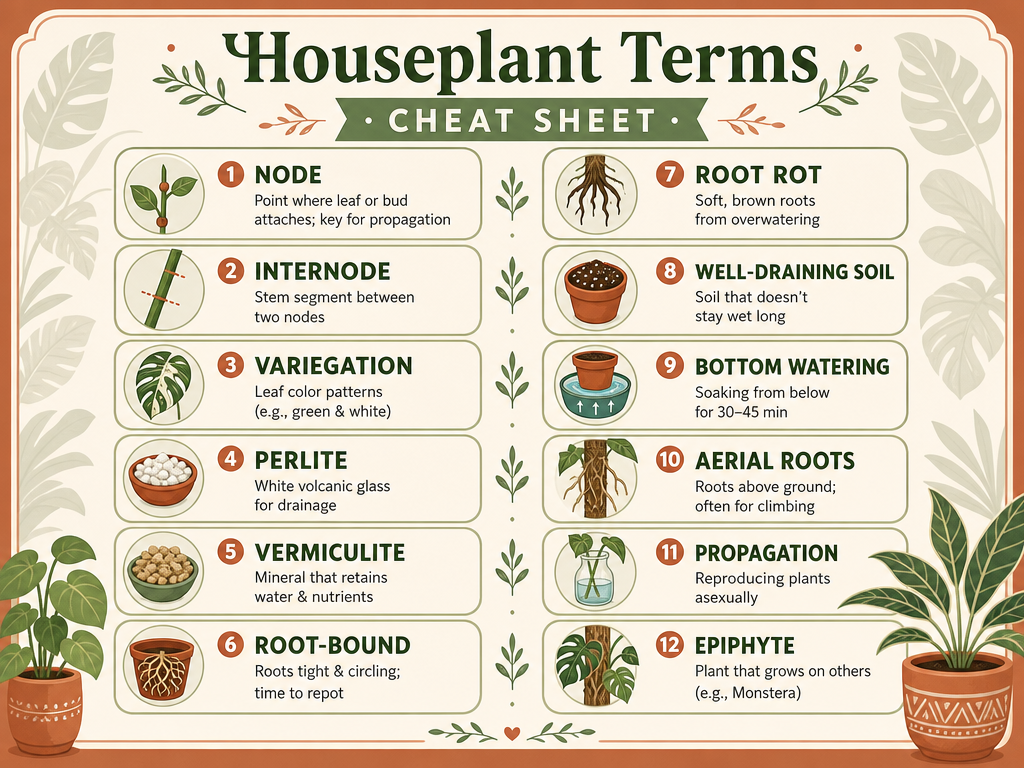
Bottom watering. Instead of pouring water on top, you set the pot in a tray or tub of water and let it soak up moisture through the drainage holes. This usually takes about 30–45 minutes. You'll know the plant has had enough when the top of the soil starts to feel moist.
Root rot. Soft, brown, smelly roots caused by overwatering (a leading reason houseplants decline). Healthy roots, by contrast, are white and firm. If you smell something off or slide out a mushy root ball, that's your sign to cut back on water.
Foot-candle. A unit for measuring light: the light from a single candle falling on a one-square-foot surface, one foot away (equal to one lumen per square foot).
Light-quality terms like "bright indirect light" get their own dedicated guide — see our lighting explainer for the full breakdown.
Soil & Potting Terms
Buying "the right dirt" gets confusing fast. Here are the potting terms you'll see on bags and in care guides, in plain English.
Well-draining soil. Soil that doesn't stay wet for too long. Materials like sand, gravel, and perlite let water pass through instead of pooling around the roots—which is exactly what most houseplants want.
Perlite. A lightweight, porous volcanic glass, sometimes nicknamed "volcanic popcorn" because it's made by heating volcanic glass until it puffs up and pops. It creates air pockets that improve drainage and get oxygen to the roots. Mixing in about 20–30% perlite helps prevent root rot.
Vermiculite vs. perlite. They look similar but do opposite jobs. Vermiculite holds water—up to four times its own weight—plus some nutrients, so it keeps soil moist. Perlite is for drainage. Reach for vermiculite with thirsty plants and perlite with plants that like to dry out.
Root-bound. When roots are tight and wound together (often circling the pot), the plant is root-bound and it's time to repot. A tell-tale sign: you're suddenly watering far more often than before.
Sizing up a pot. When you repot, go only 1–2 inches larger in diameter. A pot that's too big holds extra soil, which holds extra moisture—and that raises the risk of root rot.
Plant Anatomy Terms
These structural terms show up constantly in care and propagation guides. Learn them once, and instructions like "cut below a node" will finally make sense.
Node. The point where a bud, leaf, or branch attaches to the main stem. Look for a small knob, a scar from a fallen leaf, or a stubby aerial root. Nodes matter because this is where new roots form, making them the key to propagation.
Internode. The stretch of bare stem between two nodes. When you take a stem cutting, make the cut on the internode—never too close to the node itself, since that's where roots will develop.
Aerial roots. Roots that emerge above ground from stems or leaves, often used to climb (think mature Monstera or Pothos). Indoors they serve less purpose than outdoors, but raising humidity can encourage them to grow longer.
Adventitious roots. Roots that sprout from unexpected spots—stems or leaves—as a survival backup, so a detached piece can root and keep going. Aerial roots are one common type.
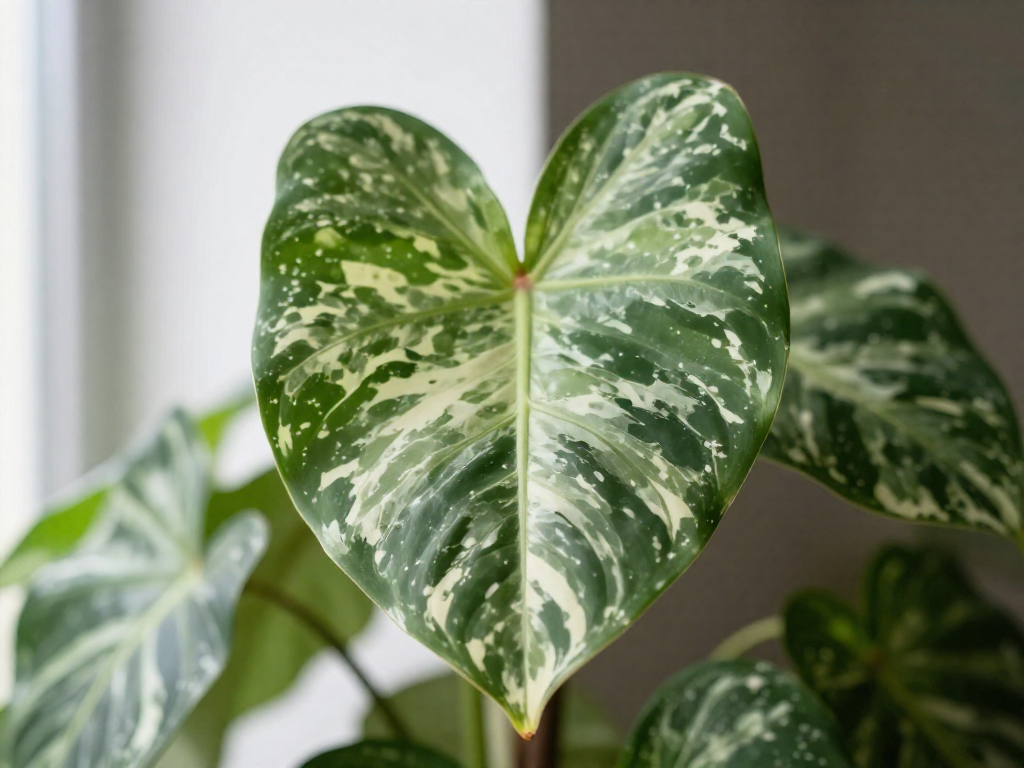
Variegation. Leaf markings in more than one color, like green-and-white splashes. These come from a random genetic mutation or from selective breeding baked into a cultivar.
Chlorophyll. The pigment that makes plants green and powers photosynthesis, converting sunlight into energy.
Caudex (caudiciform). A plump, swollen, water-storing trunk usually visible above the soil. Plants with one—like the Ponytail Palm or Desert Rose—are called caudiciform.
Propagation Terms
Once you've kept a plant alive for a few months, you'll want to make more of it — for free. These are the words you'll hit the moment you start.
Propagation is reproducing plants asexually, without seeds, so each new plant is a genetic copy of the parent. It's the fastest way to multiply the plants you already own.
Callus is the hardened area a plant forms over a cut to seal off sap loss and prevent rot. Let stem or leaf cuttings dry for a day or two so a callus forms before you put them in soil or water — it lowers the chance of the cutting rotting.
Offsets (or "pups") are baby plants that grow on short stems right next to the parent. To separate them, lift the whole plant and gently tease the pups apart, snipping the connecting stems. Common with aloe, haworthia, and gasteria.
Stolons (or "runners") are long stems that grow ready-made plantlets on their tips — think spider plants. Just snip a plantlet off and pot it up.
Rhizomes are fleshy, horizontal underground stems. Uproot the parent and slice the rhizome into sections, each with a growth point, to create multiple new plants (ZZ plant, ginger).
Botanical Classification Terms (Nice to Know)
You'll bump into these science-y terms now and then. You don't need to memorize them, but knowing a few makes plant labels and care advice click.
Epiphyte — A plant that pulls moisture and nutrients from the air, rain, or debris around it rather than from soil, often growing on other plants or rocks. Monstera, Pothos, and orchids are all epiphytes. Why it matters: orchid roots need air circulation or they rot, which is why orchid pots have holes in the sides.
Aroid (family Araceae, the Arum family) — A huge group of popular houseplants, including Monstera, Pothos, ZZ Plant, Philodendron, Peace Lily, and Anthurium. If you love one, you'll probably love the others—their care is often similar.
Monocot vs. dicot — Simply whether a seed sprouts with one starter leaf (monocot) or two (dicot). Fun fact: cacti are dicots.
Areole — The small bumps on a cactus that grow its spines. Areoles are what make a cactus a cactus, setting it apart from other succulents.
Keep This Handy
Good news: you don't need to memorize all of these. Understanding just a handful—especially the watering and soil terms—covers most care tags and beginner blog posts you'll run into.
Bookmark or pin this page so you can check a definition in seconds. If you only master two skills first, make them watering (water when the top inch of soil is dry) and picking well-draining soil—they prevent the most common beginner mistakes.
Next up: Watering Basics for New Plant Parents and How to Choose the Right Potting Soil.
Sources
- Glossary of Houseplant Terminology — howmanyplants.com
- Common Houseplant Care | Extension | West Virginia University — extension.wvu.edu
- What exactly is well draining soil? : r/Horticulture — reddit.com
- Perlite Soil Amendments: Better Drainage, Healthier Plants — norcalperlite.com
- Perlite vs Vermiculite: What's the Difference? UK | St Peters GC — stpetersgardencentre.co.uk
- How to Propagate Houseplants - Brooklyn Botanic Garden — bbg.org
- Aerial root - Wikipedia — en.wikipedia.org
See also
- Watering, Light & Soil Basics (category hub)
- How to tell when your houseplant needs water
- Understanding light: what 'bright indirect light' really means
- How to repot a houseplant without killing it
- Beginner's guide to propagating houseplants
- Best beginner-friendly houseplants for apartments
Related articles
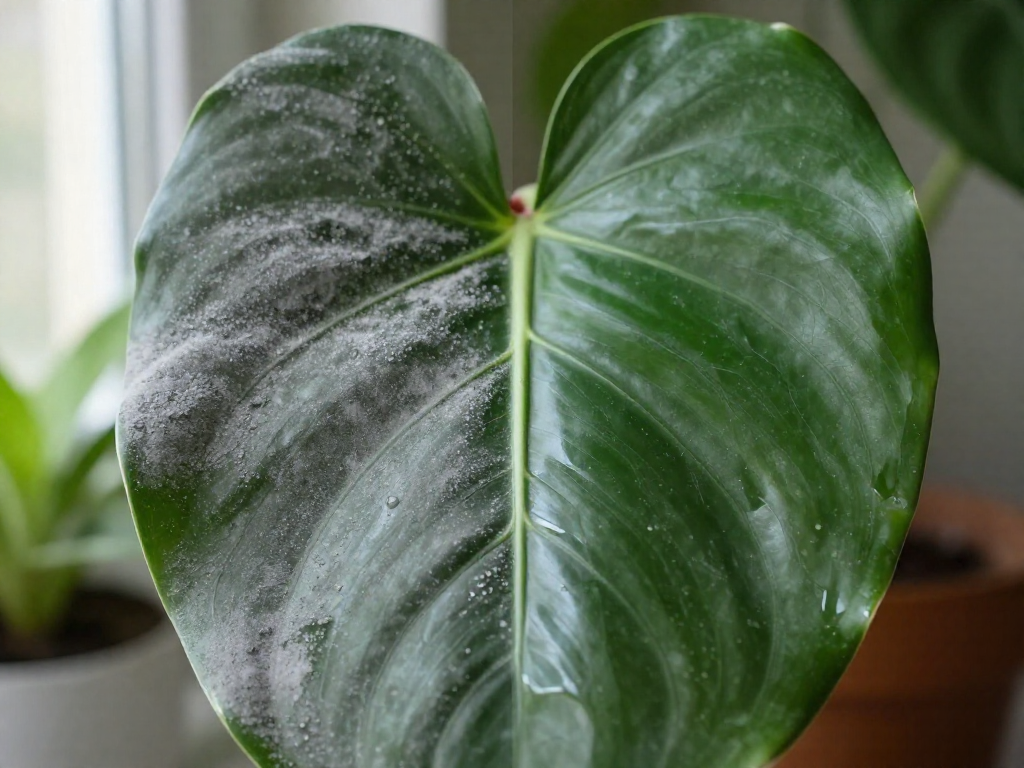
How to Clean Dusty Houseplant Leaves (and Why It Matters)
Dusty leaves block light and slow plant growth. Learn the simple, safe way to clean houseplant leaves by type—plus what to avoid, like leaf shine sprays.
Jul 14, 2026 · 6 min read
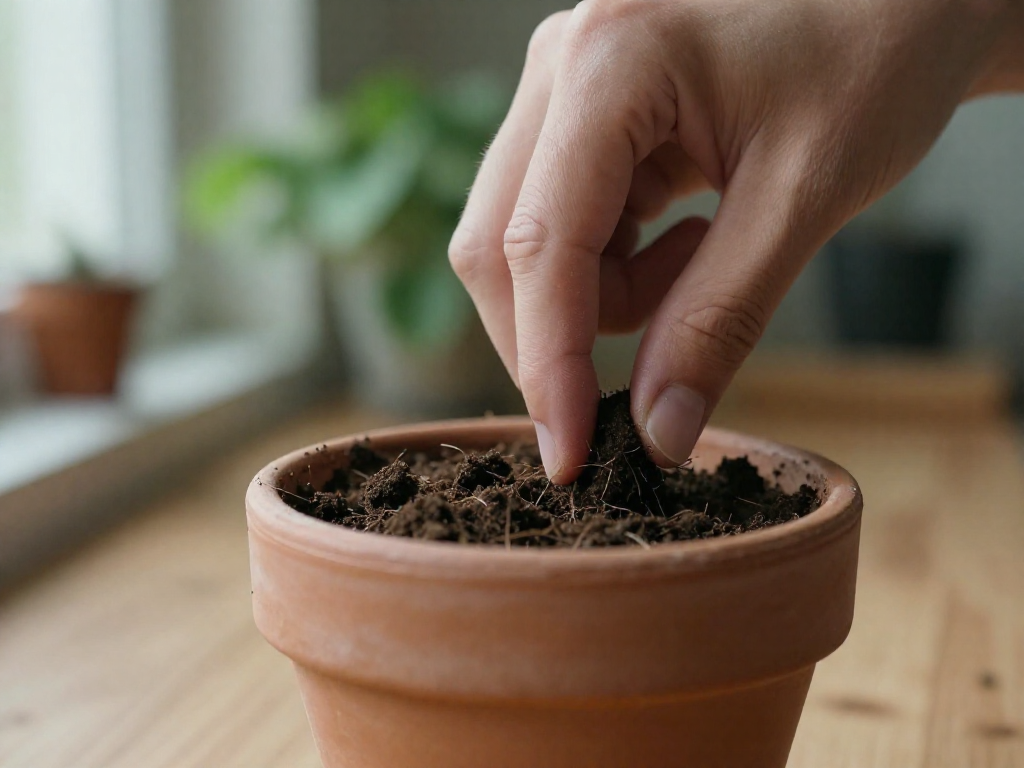
Winter Houseplant Care: Watering and Light When Days Get Short
Learn how to care for houseplants in winter: cut back watering, boost light and humidity, and pause feeding so your plants survive short, dark days.
Jul 14, 2026 · 11 min read
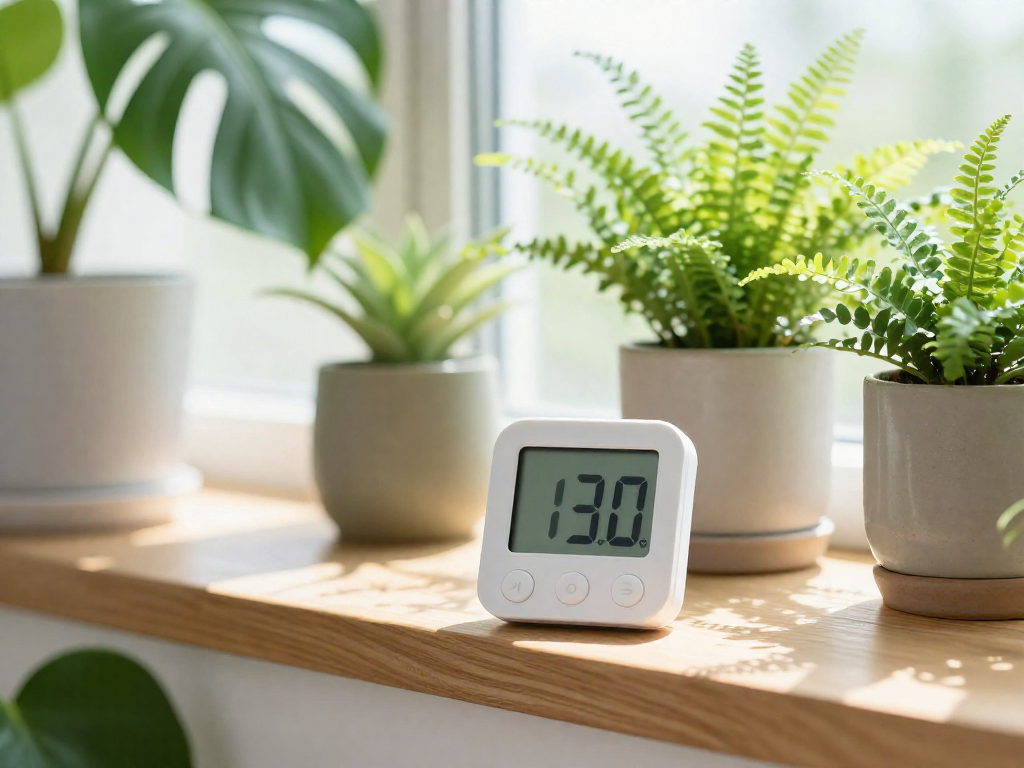
Do Houseplants Need Humidity? What Apartments Really Require
Do your houseplants really need extra humidity? See which plants need it, what apartment air actually offers, and cheap ways to raise humidity that work.
Jul 14, 2026 · 8 min read