Do Houseplants Need Humidity? What Apartments Really Require
Do I need to raise humidity for my plants?
On this page
The Short Answer: Most Apartment Plants Are Fine
No—most beginner houseplants don't need you to raise the humidity. If your apartment feels comfortable to you, it's almost certainly fine for the plants most stores sell to new plant parents.
Here's why. Most homes sit around 40–50% relative humidity (the amount of moisture in the air compared to the most it could hold at that temperature). Plenty of popular houseplants tolerate this range happily. Many tropical plants technically prefer closer to 50–60%, but "prefer" isn't "require"—they'll grow fine at average household levels. As Penn State Extension puts it, if the humidity in your home is comfortable enough for you, your plants should tolerate it.
So the real question isn't "Do plants need humidity?" It's "Do MY specific plants need extra humidity?" For most beginners, the answer is no.
What actually matters more:
- Light — the right amount of brightness for each plant
- Watering — getting the timing and amount right
- Humidity — usually a distant third for common, easy plants
Nail light and watering first. Those two solve the vast majority of beginner plant problems.
The main exceptions run in both directions: cacti and succulents like it drier, while a few thirsty tropicals (think ferns and calatheas) may want a boost in dry, heated winter air. We'll cover exactly which plants care—and what to do—below.
What Humidity Your Apartment Actually Has (and Why Winter Changes It)
Before you buy a humidifier, find out what you're actually working with. Most homes sit around 30–50% relative humidity (RH)—the amount of moisture in the air compared to the maximum it could hold at that temperature. That range keeps the majority of common houseplants comfortable.
The catch is winter. Warm air holds more moisture, so when your heat kicks on, the same amount of water vapor spreads through warmer air and the relative humidity drops. In heating season, many apartments fall below 30%. Forced-air heat and air conditioning dry things out the fastest, so a plant that looked fine in October can start showing crispy leaf edges by January.
For reference, ASHRAE (the American Society of Heating, Refrigerating, and Air Conditioning Engineers) recommends keeping indoor humidity between 30% and 60%—a range that's good for both you and your plants.
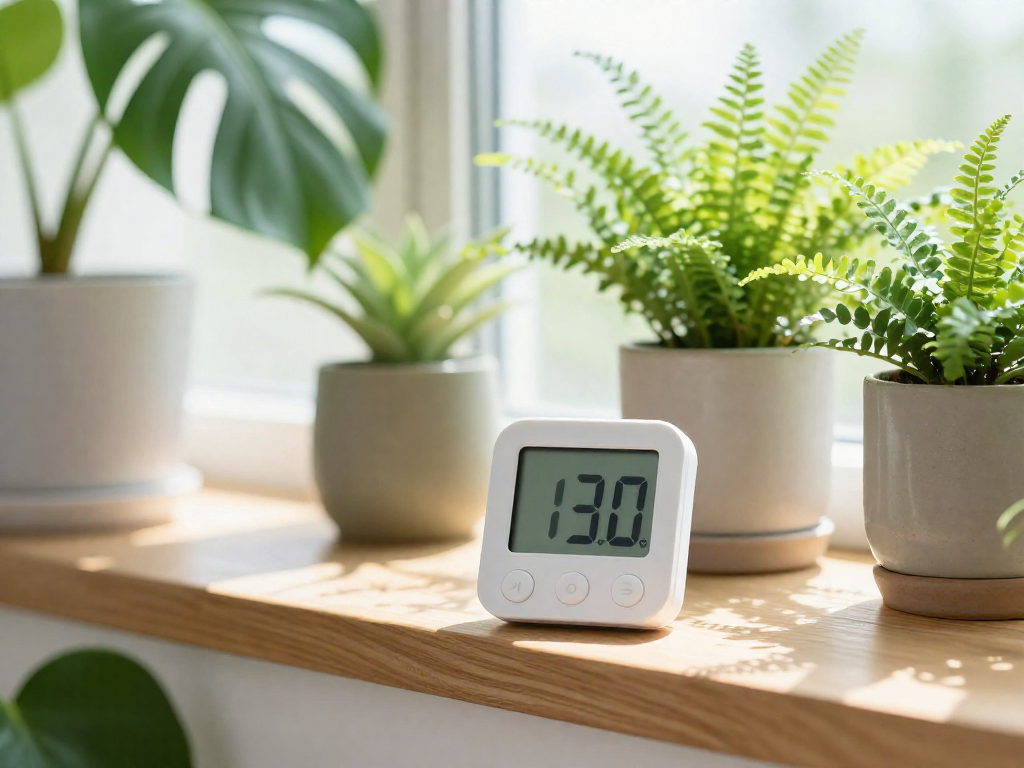
How to measure it: stop guessing and buy a hygrometer, a small device that reads humidity. A basic one costs under $15. Set it near your plants for a day and you'll know instantly whether you have a real problem or just a nervous plant parent's imagination.
Which Plants Actually Need Extra Humidity (3 Simple Tiers)
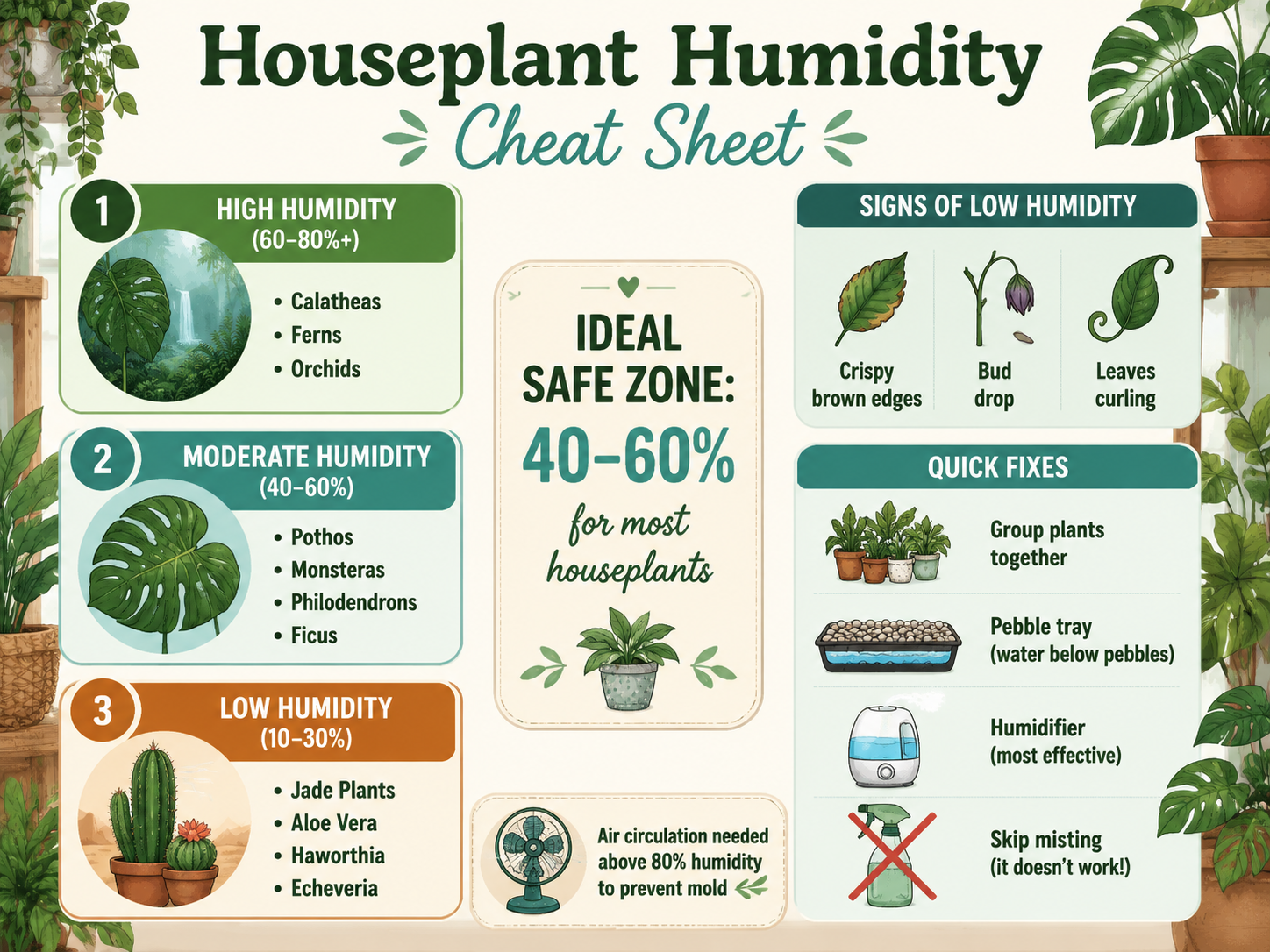
Before you buy a humidifier, find your plants below. Relative humidity (RH)—the amount of water vapor in the air, shown as a percentage—matters far more for some plants than others. Most apartments hover between 30% and 60% RH, so knowing your plant's tier tells you whether you have a real problem or none at all.
Tier 1 — High Need (60–80%+)
Calatheas, ferns, orchids, alocasias, and African violets. These are the drama queens, and they're the reason humidity advice exists. African violets do best around 70–80%, though most tropicals in this group stay healthy closer to 60%. If you own these and see crispy edges or curling leaves, humidity is a likely culprit—this tier genuinely benefits from a pebble tray or humidifier.
Tier 2 — Moderate (40–60%)
Pothos, monsteras, philodendrons, and ficus (including the fiddle-leaf fig). These are the common apartment plants, and here's the good news: 40–60% keeps them thriving, which most homes already provide outside of deep winter. The fiddle-leaf fig is a useful benchmark—the New York Botanical Garden notes that keeping humidity above 40% is enough to prevent the brown leaf tips owners worry about. No special equipment required in most cases.
Tier 3 — Low / Arid (10–40%)
Jade, aloe, haworthia, echeveria, and other succulents and cacti. These plants evolved in dry climates and never need added humidity. In fact, raising it can invite rot. Skip the pebble trays and humidifiers here entirely.
The Safe Zone for a Mixed Collection
If you're growing a variety of plants, aim for 40–60% RH. It keeps Tier 2 happy, is tolerable for most of Tier 1, and won't harm Tier 3. Grab a cheap hygrometer (a small humidity gauge) to see where your rooms actually land before changing anything.
How to Tell If Your Plant Is Actually Suffering From Dry Air
Before you buy a humidifier, make sure dry air is really the problem. When humidity is too low, plants lose water through their leaves (a process called transpiration) faster than their roots can pull it back in. That imbalance shows up in a few recognizable ways:
- Crispy, brown, brittle leaf edges — the classic sign that moisture is leaving faster than roots can replace it.
- Leaves curling inward, folding to reduce the surface area exposed to dry air.
- Flower buds dropping before they ever open.
- Drooping, sluggish growth, and more pest problems, since a stressed plant is an easier target.
Here's the catch: brown, crispy tips are one of the least specific symptoms in houseplant care. They can also come from overwatering or salt buildup from fertilizer and tap water. So rule those out first. Check that you're not letting the pot sit in water, that the top inch of soil dries between waterings, and flush the soil occasionally to clear mineral buildup.
If the edges are still crisping after you've dialed in watering, and you notice curling or bud drop too, then dry air is the likelier culprit. A cheap hygrometer (a small humidity meter) confirms it in a day.
Cheap Ways to Raise Humidity (and What Actually Works)
Not every trick is worth your time or money. Here they are ranked by how much they actually move the needle—starting with the one that works best.
1. A humidifier (most effective, still cheap)
This is the single most reliable way to raise humidity consistently, and budget models cost about as much as a couple of plants. Set it near your moisture-loving plants and aim for 40–60% relative humidity (RH is just the amount of water vapor in the air). If you only do one thing, do this.
2. Group your plants together
Plants release moisture through their leaves, so clustering them creates a slightly humid pocket of air around the group—a "microclimate." It's free and genuinely helpful, though the effect depends on how many plants you have and how big the room is. The more plants packed together, the better.
3. Pebble/humidity trays (for small plants only)
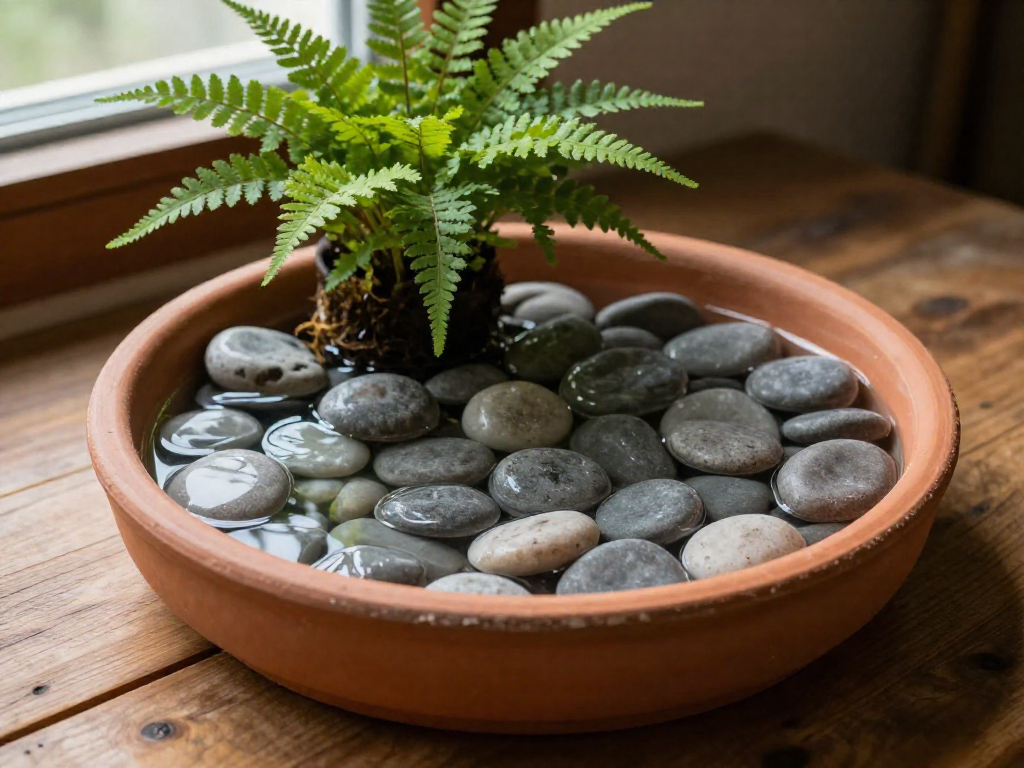
Set a tray of pebbles under the pot and add water that stays below the top of the pebbles, so the pot base never sits in water (which causes root rot). Use a tray at least an inch wider than a small pot—wide enough that it extends past the plant's spread of leaves. These help small plants like ferns, orchids, and calatheas. Skip them for succulents and cacti, which want dry air.
4. A terrarium or glass cloche (for tiny fussy tropicals)
A glass dome or terrarium traps and recycles the plant's own moisture—ideal for small, demanding tropicals.
5. The steamy-bathroom trick
If your bathroom gets a window's worth of light, moisture-lovers like the bird's nest fern thrive there thanks to daily shower steam.
Skip daily misting—the humidity boost evaporates within minutes and does almost nothing.
Misting and Pebble Trays: The Overrated Fixes
If you've been told to mist your plants daily for humidity, you can stop. According to Penn State Extension, misting only raises the humidity around a plant until the water evaporates—which can happen in minutes—so even daily misting does almost nothing to change the air your plant actually lives in. Costa Farms puts it plainly: "Skip the misting and go for long-term solutions."
(One exception: misting is still a fine way to water air plants, also called Tillandsia—the small, soil-free plants you set on a shelf.)
Pebble trays—a saucer of water and stones you set the pot on—get the same skeptical verdict. Penn State Extension notes the moist air simply diffuses into the whole room, "making almost no overall impact on the relative humidity."
Where they still help: a pebble tray can give a small plant a slightly moister pocket of air if the tray extends past the leaves. For everything else, spend your effort on the fixes that actually move the needle: grouping plants together, a small humidifier, or a glass cloche.
Can You Give Plants Too Much Humidity?
Yes, but for most apartments it's a rare problem. When relative humidity (the amount of moisture in the air compared to the maximum it can hold) sits above 80% with still, stagnant air, you create ideal conditions for fungus, mold, and powdery mildew—a fuzzy or white coating that shows up on leaves and soil.
The fix is airflow, not less water in the air. Run a small fan on low to keep air moving, and check the spots that trap stale air—corners, crowded plant clusters, and rooms with the door usually closed. These low-airflow pockets show the first signs of trouble.
One side effect worth knowing: higher humidity slows how fast soil dries out. If you add a humidifier, expect to water less often, and always check that the top inch of soil is dry first.
For the vast majority of US apartments, over-humidifying is far less common than air that's too dry.
Bottom Line for Apartment Plant Parents
Here's the whole decision in four steps:
-
Check the tier and the number. Match your plant to its humidity tier, then read your room's hygrometer (a cheap device that measures relative humidity, or how much moisture is in the air). A safe zone for most collections is 40–60%.
-
Relax if it's a succulent or common tropical. Cacti, succulents, pothos, monsteras, and philodendrons do fine in normal apartment air. Focus your energy on getting light and watering right instead.
-
Help the fussy ones in winter. If a humidity-loving plant (like calathea or alocasia) is browning when heating dries the air below 30%, group your plants together or run a small humidifier.
-
Don't buy gadgets for a problem you don't have. If your home feels comfortable to you, your plants likely tolerate it too.
Sources
- Essential Humidity Levels for Common Houseplants - Soltech — soltech.com
- Enhancing Indoor Plant Health with Humidifiers — hunterpureair.com
- Can you have too much humidity for tropical houseplants? in the Ask a Question forum - Garden.org — garden.org
- What is the Ideal Temperature and Humidity for Indoor Plants — grozeebo.com
- Why Humidity Matters for Houseplants and How to Get It Right — costafarms.com
- Home - Fiddle-leaf fig (Ficus lyrata) - Research Guides at New York Botanical Garden — libguides.nybg.org
- 24 Best Indoor Plants – Find Your Perfect Houseplant | Garden Design — gardendesign.com
- Humidity and Houseplants — extension.psu.edu
- Amazon (Treleaf humidity tray guide) — treleaf.shop
See also
- How to Water Houseplants Without Overwatering
- How Much Light Do Houseplants Really Need in an Apartment
- The Best Beginner Houseplants for Small Apartments
- Why Are My Plant's Leaves Turning Brown? A Troubleshooting Guide
- Best Bathroom Plants for Low Light and High Humidity
Related articles
A Beginner's Glossary of Houseplant Terms
Confused by plant jargon? This plain-language glossary defines the houseplant terms beginners hit most—nodes, variegation, perlite, root-bound and more.
Jul 14, 2026 · 6 min read
How to Clean Dusty Houseplant Leaves (and Why It Matters)
Dusty leaves block light and slow plant growth. Learn the simple, safe way to clean houseplant leaves by type—plus what to avoid, like leaf shine sprays.
Jul 14, 2026 · 6 min read
Winter Houseplant Care: Watering and Light When Days Get Short
Learn how to care for houseplants in winter: cut back watering, boost light and humidity, and pause feeding so your plants survive short, dark days.
Jul 14, 2026 · 11 min read