Why Are My Plant's Leaves Turning Yellow?
What causes yellow leaves and how do I fix it?
On this page
First, Don't Panic: When Yellow Leaves Are Normal
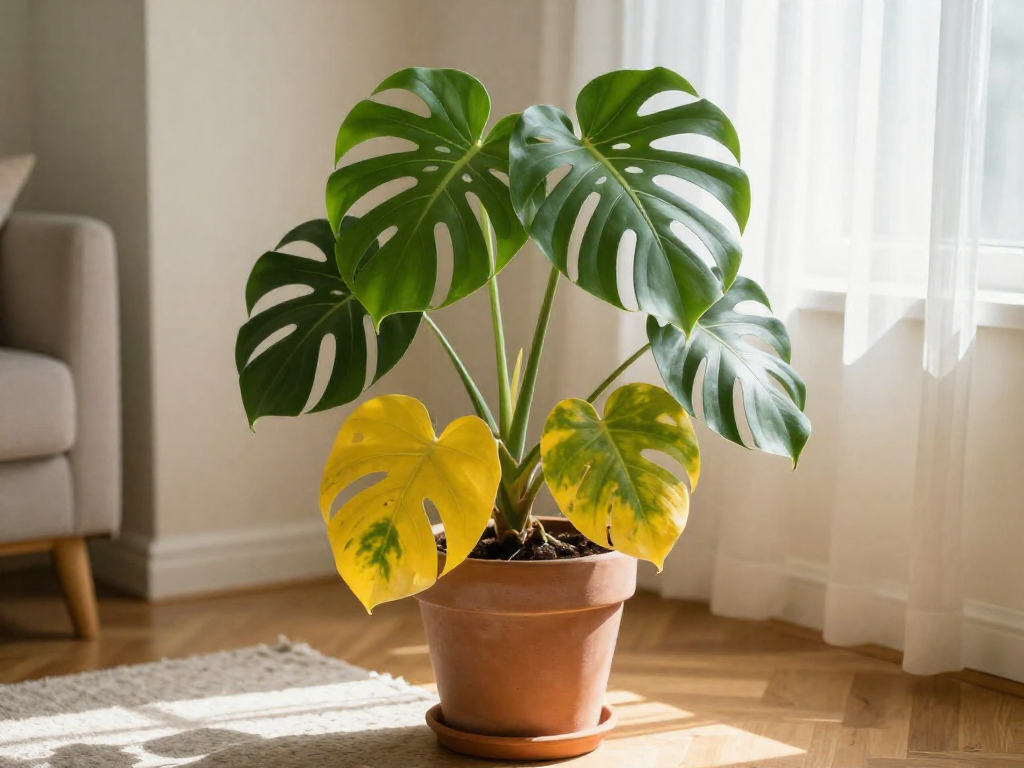
Before you change anything, take a breath: some yellow leaves are completely normal. As a plant ages, its oldest, lowest leaves naturally turn yellow and drop off. The plant is simply retiring old growth to feed new growth—no action needed.
So when is it a real problem? Watch for these red flags:
- Widespread yellowing across many leaves at once
- Yellowing in young or new leaves (the growth at the tips and top)
Either of these signals a genuine issue worth troubleshooting.
Here's the trap that hurts plants most: guessing at the cause. Yellow leaves can come from overwatering, underwatering, a nutrient shortage, or temperature stress—and these look surprisingly alike. If you guess wrong, you can make things worse. For example, fertilizing a plant that's actually overwatered burns its already-damaged roots.
The fix is a mindset shift. Instead of jumping to a solution, diagnose in a fixed order—checking the most common and most damaging causes first. The rest of this article walks you through that decision tree, one step at a time, so you can find the real cause before you touch a watering can or fertilizer.
The 4-Step Yellow Leaf Decision Tree (Start Here)
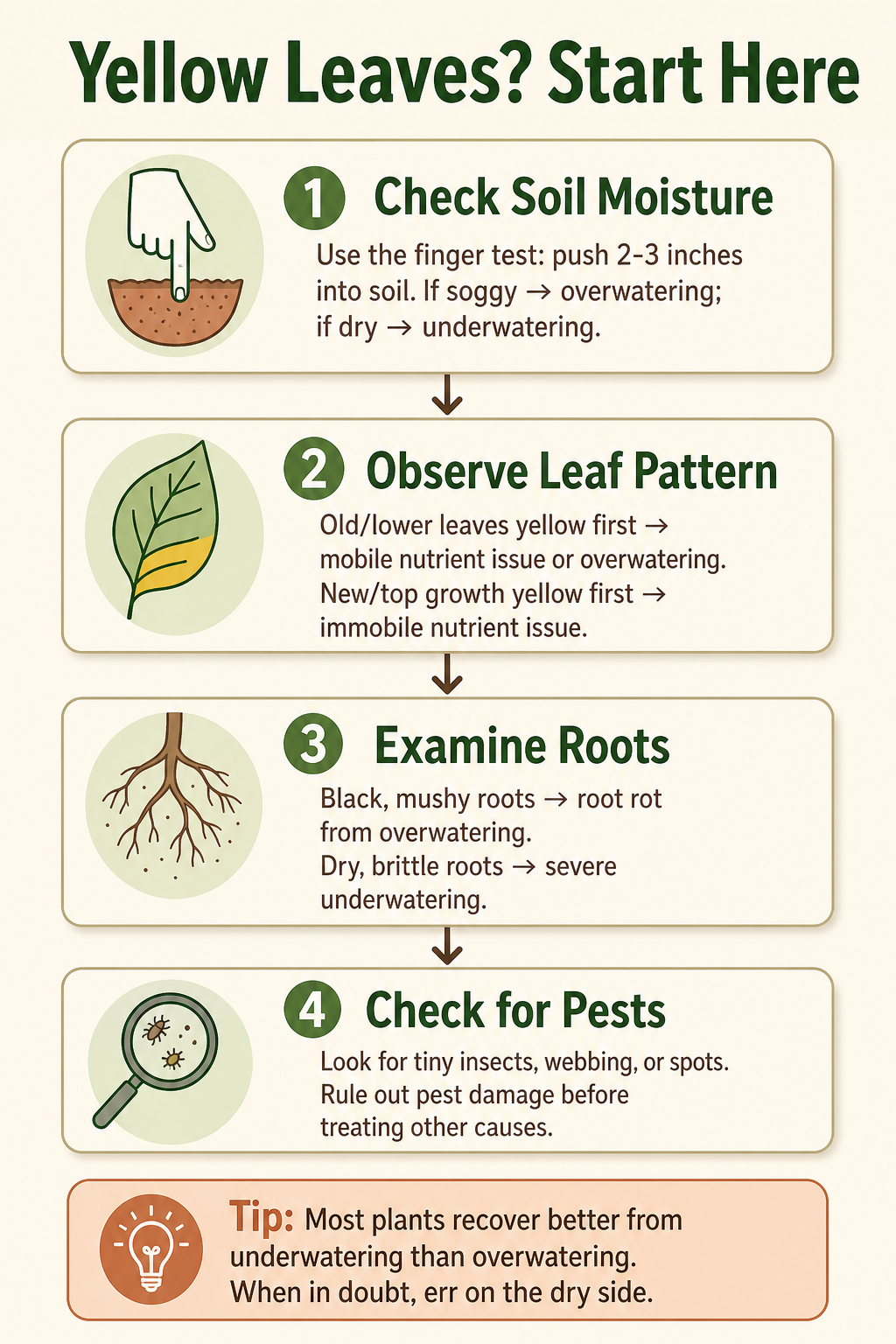
Yellow leaves have many possible causes, but you can pin down almost all of them by working through four checks in order. The order matters: watering and root problems produce symptoms that look exactly like nutrient deficiencies, so you have to rule them out first. If you skip ahead and fertilize a plant that's actually overwatered, you'll burn its already-damaged roots and make things worse.
Work top to bottom and stop as soon as a step explains what you're seeing.
Step 1: Check soil moisture (do this first)
Push your index finger 2–3 inches into the soil (about knuckle-deep):
- Dry past the top inch → likely underwatered. Water thoroughly until it drains from the bottom.
- Soggy, spongy, or standing water → likely overwatered. Let the soil dry out more before the next watering.
- Damp and cool → moisture is fine; move to Step 2.
The finger test beats any fixed schedule, because pot size, season, and humidity all change how fast soil dries. When unsure, err toward underwatering—most houseplants tolerate a little drought far better than soggy roots.
Step 2: Read the leaf pattern
Look at which leaves and what pattern. Bright-yellow leaves with wet soil (maybe fungus gnats or a mushy stem base) point to overwatering. Yellow leaves curling inward with soil pulling away from the pot edges point to underwatering. Uniform yellowing on new growth may signal a nutrient issue—but only after Steps 1 and 3 clear water.
Step 3: Examine the roots
If water and pattern don't explain it, slide the plant out of its pot. Healthy roots are firm and light-colored; mushy, brown, smelly roots mean rot.
Step 4: Inspect for pests (last)
Only now check leaf undersides and stems for pests. It's last because water and root issues are far more common—rule those out first.
Quick checklist: 1. Finger-test soil → 2. Read leaf pattern → 3. Check roots → 4. Inspect for pests. Water problems mimic everything else, so always start at Step 1.
Step 1: The Water Problem (Overwatering vs. Underwatering)
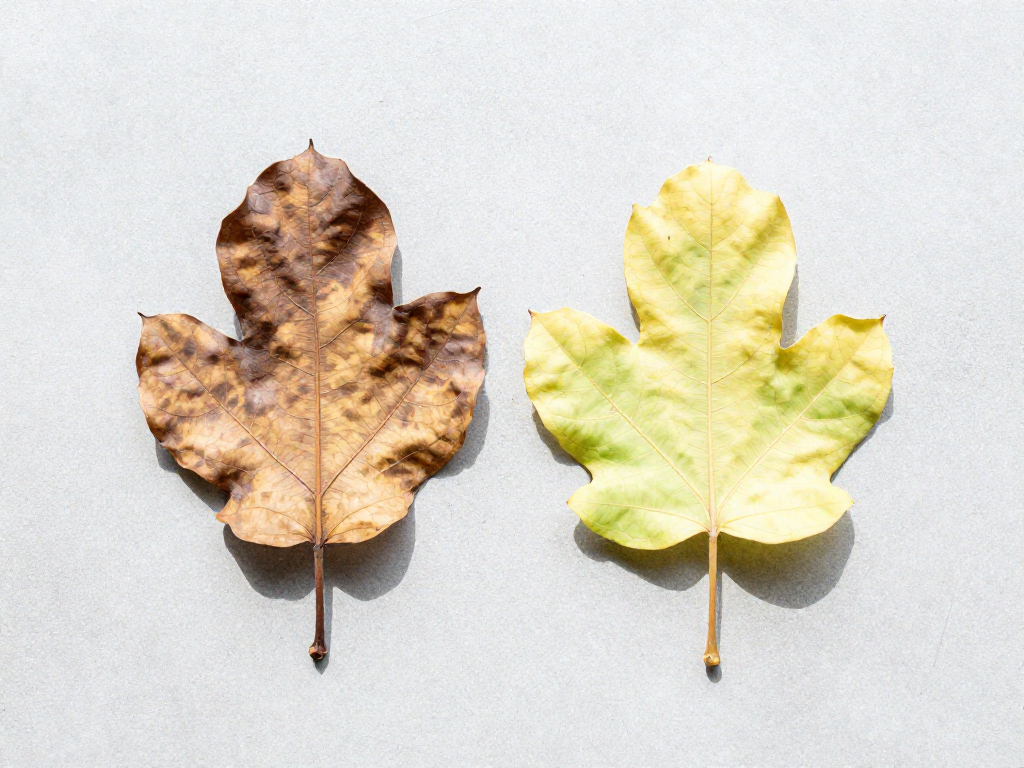
Watering is the number one cause of yellow leaves—and the most confusing, because too much and too little water can look identical. Start here before you blame anything else.
Do the Finger Test First
Skip the guesswork and check the soil directly. Push your index finger 2–3 inches into the pot (about up to your second knuckle):
- Soggy, spongy, or standing water = too wet. Stop watering.
- Dry an inch below the surface = time to water.
- Damp and cool = leave it alone for now.
This beats any fixed schedule, because pot size, season, and humidity all change how fast soil dries out (more on that below).
Signs of Overwatering
- Bright yellow leaves
- Wet, muddy soil that won't dry out
- Soft, mushy stems or a blackened stem base
- Fungus gnats (tiny flies) hovering around the pot
Signs of Underwatering
- Yellow leaves curling inward
- Dry, crispy leaf edges and brittle leaves
- Soil pulling away from the sides of the pot
- Older, lower leaves dropping off
Why They Look So Alike
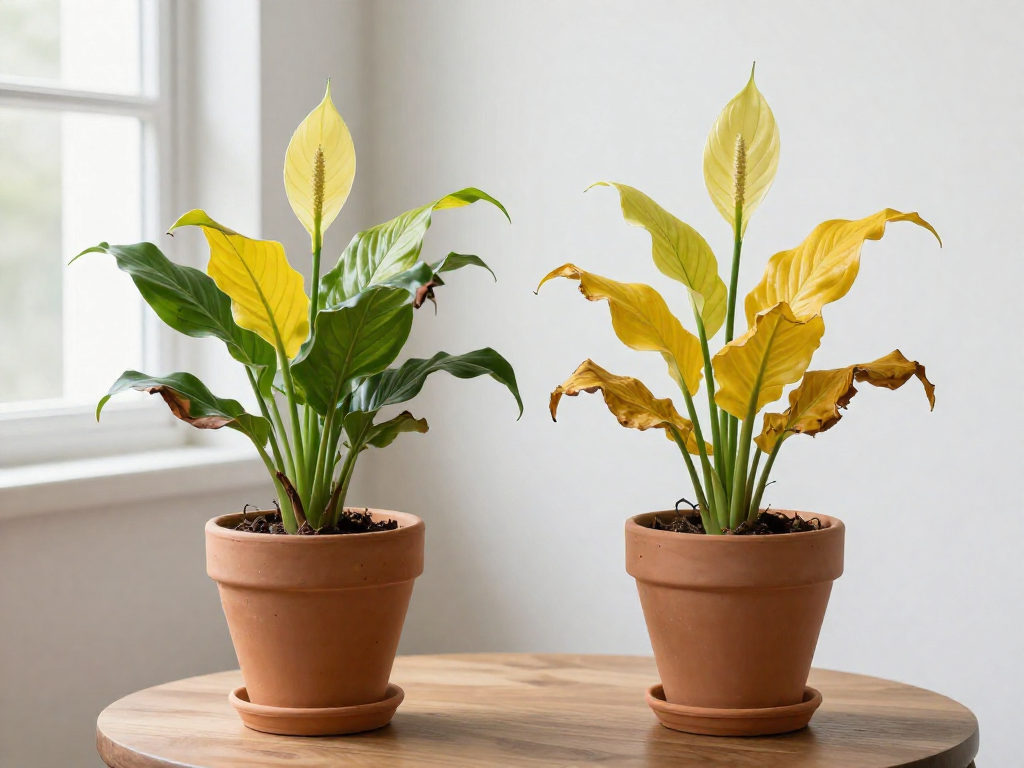
Here's the trap that fools most beginners: overwatering can look exactly like underwatering. When soil stays soaked, roots suffocate from lack of oxygen and start to die. Dead roots can't drink—so the leaves wilt and yellow as if the plant were bone dry. Waterlogged roots also can't absorb nutrients even when the soil is full of them, which mimics a nutrient deficiency. That's why a droopy, yellowing plant in wet soil almost always needs less water, not more.
Because the symptoms overlap, the finger test—not the leaves—is your reliable diagnostic.
How to Fix Each
- Overwatering: Let the soil dry out well before watering again. Make sure your pot has drainage holes, and empty any water sitting in the saucer. If the soil stays soggy for days, consider repotting into fresh, well-draining mix.
- Underwatering: Water slowly and thoroughly until it drains from the bottom, so the whole root ball is evenly saturated—not just the top layer.
When in Doubt, Underwater
Most houseplants tolerate a little dryness far better than they tolerate soggy roots. If you're unsure, wait and check again in a day or two.
And skip the rigid "water every Sunday" habit. A small pot in a warm, dry room dries out much faster than a large pot in a cool, humid one. Let the soil—not the calendar—tell you when to water.
Step 2: Reading the Leaf Pattern (Old Leaves vs. New Leaves)
If moisture checked out in Step 1, look at where the yellowing shows up. This one distinction—old lower leaves versus new top growth—is the most useful diagnostic clue you have, because it points directly to the likely cause.
Here's the rule that makes it work. Some nutrients are mobile, meaning the plant can move them out of old leaves to feed new growth when supplies run low. Others are immobile and stay locked in place. So the location of the damage tells you which group is short.
Old or lower leaves yellowing first usually means a mobile nutrient (nitrogen, magnesium, or potassium) is running low—or that overwatering has stressed the roots. The plant is cannibalizing its oldest leaves to protect new ones.
New or top growth yellowing first points to an immobile nutrient (iron, manganese, or sulfur). With iron in particular, the real culprit is almost always soil pH being too high for the plant to absorb it—not a true shortage in the soil.
Whole-plant pale yellowing often means nitrogen deficiency or a pot-bound plant (roots have run out of room and can't take up nutrients). Slide the plant out of its pot; if roots circle the outside in a dense mat, it needs repotting.
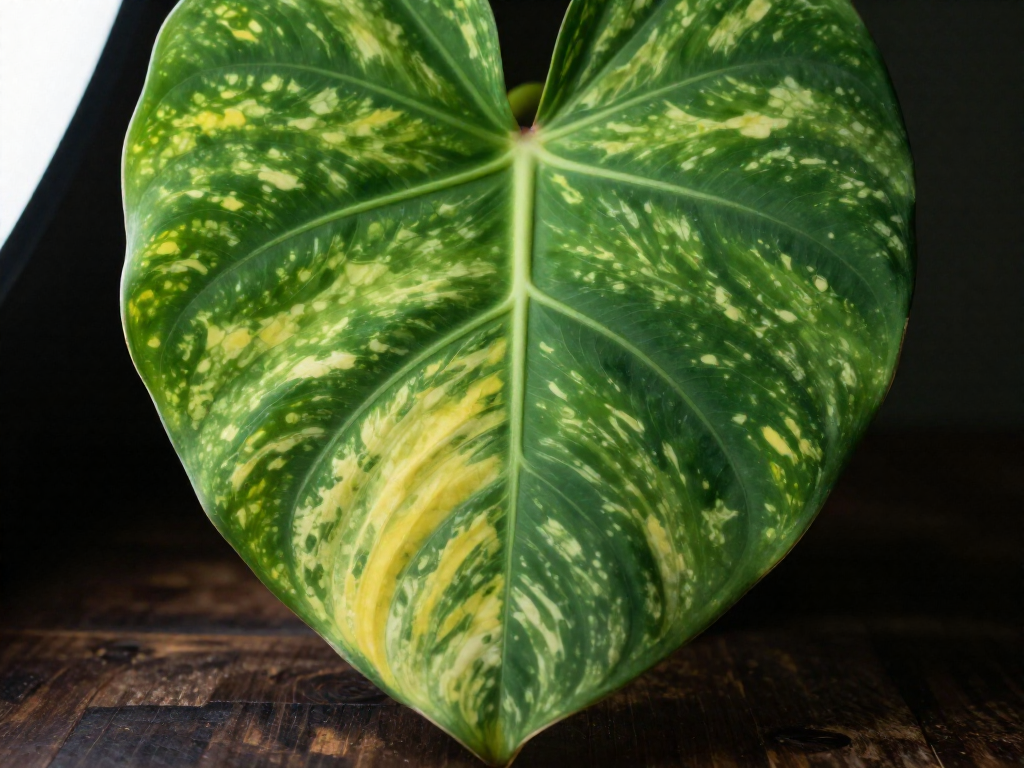
A key pattern to learn is interveinal chlorosis—yellowing between the leaf veins while the veins themselves stay green. Where it appears matters:
- On new growth = iron (usually a pH issue; severe cases turn leaves nearly white)
- On old growth = magnesium
Nitrogen deficiency looks a little different: overall pale yellowing that starts on the oldest leaves, plus slow growth and smaller-than-normal new leaves—a general "hungry" look.
Quick pattern → cause → first fix
| Pattern | Likely cause | First fix |
|---|---|---|
| Old/lower leaves yellow first | Nitrogen or overwatering | Check moisture; feed with balanced fertilizer |
| Yellow between veins, old leaves | Magnesium | Apply a diluted balanced fertilizer with magnesium |
| Yellow between veins, new leaves | Iron (high pH) | Use slightly acidic water; check soil pH |
| Whole plant pale, small new leaves | Nitrogen or pot-bound | Fertilize, or repot in fresh soil |
Landed on a nutrient answer but still unsure? Step 3 checks the roots to confirm.
Step 3 & 4: Roots, Pests, and the Hidden pH Trap
If moisture and leaf pattern didn't give you a clear answer, it's time to dig a little deeper—literally.
Step 3: Check the Roots
Slide the plant out of its pot and look at the roots. Healthy roots are firm and light-colored (white to tan). Trouble looks like brown, mushy roots with a swampy, rotten smell—that's root rot, a condition where roots die and decay in soggy soil. Root rot is the #1 result of chronic overwatering, so if you find it, trim the mushy roots away and repot in fresh, well-draining soil.
Fix water and roots before you fertilize. Fertilizing a plant with damaged or rotting roots burns those already-stressed roots and makes things worse. Feeding is not a cure for a water problem.
Step 4: A Quick Pest Check
Flip the leaves over and inspect the undersides and new growth—that's where common pests hide. Look for tiny moving specks, fine webbing, or sticky residue. Catching pests early makes them far easier to treat.
The Hidden pH Trap
Here's the non-obvious one. Soil pH—how acidic or alkaline the soil is—controls whether roots can actually absorb nutrients. Your soil can be full of nutrients and still starve the plant if the pH is off. Iron is a frequent casualty: locked-out iron shows up as yellowing between the veins of newer leaves, with the veins staying green.
Finally, remember that every watering rinses some nutrients out of the pot. Refreshing the soil by repotting, or feeding lightly during the growing season, replaces what washes away.
The Light Factor: Too Little vs. Too Much
Light is the cause apartment dwellers overlook most often, and it works in two opposite directions.
Too little light. When a plant isn't getting enough light, it can't photosynthesize well (photosynthesis is how a plant uses light to make its food), so leaves yellow and drop—starting with the ones farthest from the window. The fix: move the plant closer to your brightest window, or add an inexpensive LED grow light.
Too much direct sun. The opposite problem looks different. Harsh, direct sun scorches leaves, producing yellowing with brown, crispy, burnt-looking spots. Move the plant back from the glass into bright indirect light (a spot that's well-lit but out of the sun's direct rays).
Why low light and overwatering team up. This is the trap. In low light, a plant uses water slowly, so the soil stays wet far longer. Water on your usual schedule and the roots sit in damp soil, rot, and the leaves yellow anyway. If your plant is in a dim spot, water less—only when the top inch of soil is dry.
Apartment-specific tips:
- North-facing rooms get the least light; save them for low-light plants like pothos or snake plants.
- Every foot away from a window is a meaningful drop in brightness.
- Light weakens in fall and winter—expect to move plants closer and water less then.
Putting It All Together: Your Recovery Plan
You've done the detective work—now here's how to act on it.
The decision tree at a glance:
- Check soil moisture (the finger test): push a finger into the soil up to the second knuckle. Soggy = overwatering; dry an inch down = underwatering.
- Read the leaf pattern: old leaves yellowing first often points to a watering or nitrogen issue; new leaves yellowing with green veins (called chlorosis—a lack of chlorophyll) points to an iron problem, usually tied to soil pH.
- Examine the roots for rot (dark, mushy, foul-smelling).
- Inspect for pests on stems and leaf undersides.
After you fix the cause: Here's the part that surprises new plant parents—yellow leaves won't turn green again. That tissue is done. Instead, judge your fix by watching the new growth that comes in healthy over the following weeks.
Should you remove yellow leaves? Only cosmetically, and only once a leaf is fully yellow or dead. A partially green leaf still feeds the plant, so leave it be.
Prevention checklist:
- Use the finger test before every watering—don't water on a schedule.
- Pot in a container with drainage holes.
- Match the plant to its light needs.
- Feed occasionally during the growing season.
Sources
- Reading the Leaves: Signs of Overwatering and Underwatering & How to Know the Difference - Rockledge Gardens — rockledgegardens.com
- Overwatered Vs Underwatered Plants: Signs, Fix Tips (Full Guide) — myplantin.com
- What are the signs of overwatering or underwatering houseplants? How frequently should houseplants be watered? — quora.com
- Plants on Broadway — plantsonbroadway.com
- The Sill | 5 Causes For Your Houseplant's Yellow Leaves — thesill.com
- Unveiling the Mystery of Chlorosis: How to Revive Your Yellowing Houseplants | The Palm Centre — palmcentre.co.uk
- Chlorosis in Plants: How to Treat It | RHS Advice — rhs.org.uk
- Plant Nutrient Deficiency Identification — harrells.com
- Identifying Nutrient Deficiencies of Greenhouse and Indoor Grown Crops — purdue.edu
- Common nutrient deficiencies in plants and how to fix them – Bluelab USA — bluelab.com
- Why Are My Houseplant's Leaves Turning Yellow? | Prairie Gardens & Jeffrey Alans — prairiegardens.com
- Yellow Leaves on Plants: Diagnose & Fix the Cause – Dragonfly Farm & Nursery — dragonflyfarmlanglois.com
FAQ
Should I cut off yellow leaves or leave them on the plant?
Once a leaf turns fully yellow, it won't recover, so you can safely remove it. Use clean scissors or pinch it off at the base of the stem. Removing fully yellowed leaves tidies the plant and lets it redirect energy to healthy growth. If a leaf is only partly yellow, you can leave it a little longer, but there's no harm in trimming it. Most importantly, removing the leaf is only cosmetic—it doesn't fix the underlying cause. Always diagnose why the leaf yellowed (usually watering, light, or nutrients) so the problem doesn't keep spreading.
Will a yellow leaf ever turn green again?
Usually not. Once a leaf has lost its chlorophyll (the green pigment plants use to make food from light) and turned fully yellow, that tissue is done and won't re-green. Your goal is to protect the leaves that are still healthy by fixing the cause. There's one partial exception: leaves yellowing from a nutrient issue caught very early—such as iron or magnesium deficiency, where veins stay green—can sometimes regain color on newer growth after you correct the problem. But a leaf that's already solid yellow should simply be removed.
How often should I water my houseplant to prevent yellow leaves?
Water based on the soil, not a fixed calendar. The most reliable method is the finger test: push your index finger about 1–2 inches into the soil. If it feels dry at that depth, it's time to water; if it feels damp, soggy, or spongy, wait. For many common apartment houseplants this works out to roughly every 7–10 days, but pot size, season, humidity, and light all change how fast soil dries, so always check first. When you do water, saturate the soil thoroughly until it drains from the bottom, then empty the saucer. When in doubt, wait a day—most houseplants tolerate being slightly dry far better than sitting in constantly wet soil, which is the leading cause of yellowing.
Can too little light really cause yellow leaves?
Yes. When a plant doesn't get enough light, it can't photosynthesize properly, and leaves—often the ones farthest from the window—turn yellow and drop. Low light also causes yellowing indirectly: in dim conditions the soil dries out slowly, so it stays wet longer and the roots suffocate, which mimics overwatering. Move the plant to a brighter spot with plenty of indirect light, or add a grow light. Be careful of the opposite extreme, though: harsh direct sun can scorch leaves, producing yellowing with brown, crispy spots. For most beginner houseplants, bright indirect light is the safe target.
Is it overwatering or underwatering if the leaves are yellow?
Both can cause yellow leaves, which is why you have to look at more than color. Overwatering usually shows bright yellow leaves with soil that stays wet or muddy, sometimes with soft, mushy stems or fungus gnats—the roots are rotting and can no longer take up water. Underwatering typically shows yellow leaves that curl inward, dry or crispy edges, and soil that's pulled away from the pot's sides. The fastest way to know is the finger test: push a finger 1–2 inches in. Soggy means overwatering; bone-dry means underwatering. Overwatering is the more common and more dangerous of the two, since it's the number-one cause of root rot.
Should I fertilize a plant with yellow leaves?
Not until you've ruled out watering and root problems first. If the plant is overwatered or has root rot, fertilizer will burn the already-damaged roots and make things worse. Check soil moisture and root health before reaching for plant food. Fertilize only when the yellowing points to a genuine nutrient shortage and the roots are healthy—for example, uniform pale yellowing of the older lower leaves (often nitrogen), or yellow leaves with green veins on new growth (often iron, frequently a soil-pH issue rather than a true lack of iron). Since every watering flushes some nutrients out of the pot, a diluted balanced fertilizer during the growing season, or repotting into fresh soil, can help—but only after water and roots check out.
See also
- How to Tell If You're Overwatering Your Houseplant
- The Finger Test: How to Check Soil Moisture
- How Much Light Does My Houseplant Really Need?
- How to Repot a Houseplant (Step-by-Step for Beginners)
- How to Save a Plant With Root Rot
- Beginner's Guide to Fertilizing Houseplants
Related articles
My New Plant Is Dropping Leaves: Is It Normal?
New plant dropping leaves after you brought it home? Learn when leaf drop is normal acclimation and when it signals a real problem you need to fix.
Jul 14, 2026 · 5 min read
Leggy, Stretched-Out Plants: Why and How to Fix It
Is your plant growing tall, pale, and sparse? Learn what causes leggy, etiolated growth and the exact steps to fix it and prevent it from coming back.
Jul 14, 2026 · 10 min read
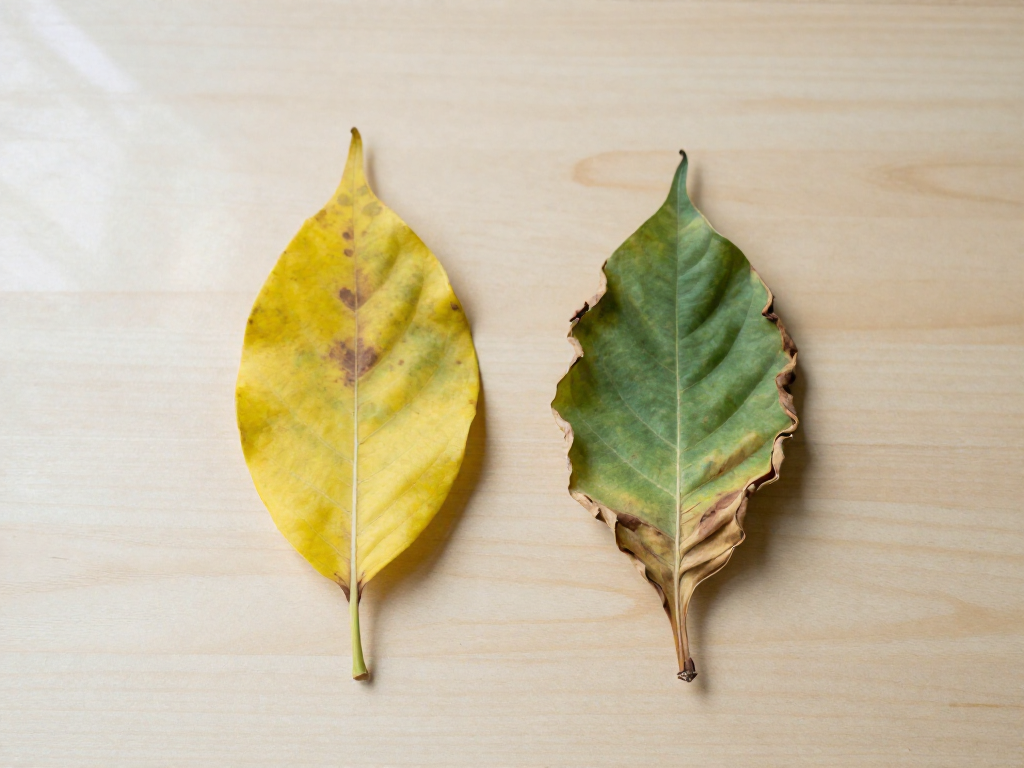
Overwatering vs. Underwatering: How to Tell the Difference
Is your plant overwatered or underwatered? Compare symptoms side by side, run 4 quick checks, and follow plant-by-plant recovery steps for apartment plants.
Jul 14, 2026 · 8 min read