Watering Schedule Cheat Sheet for Common Houseplants
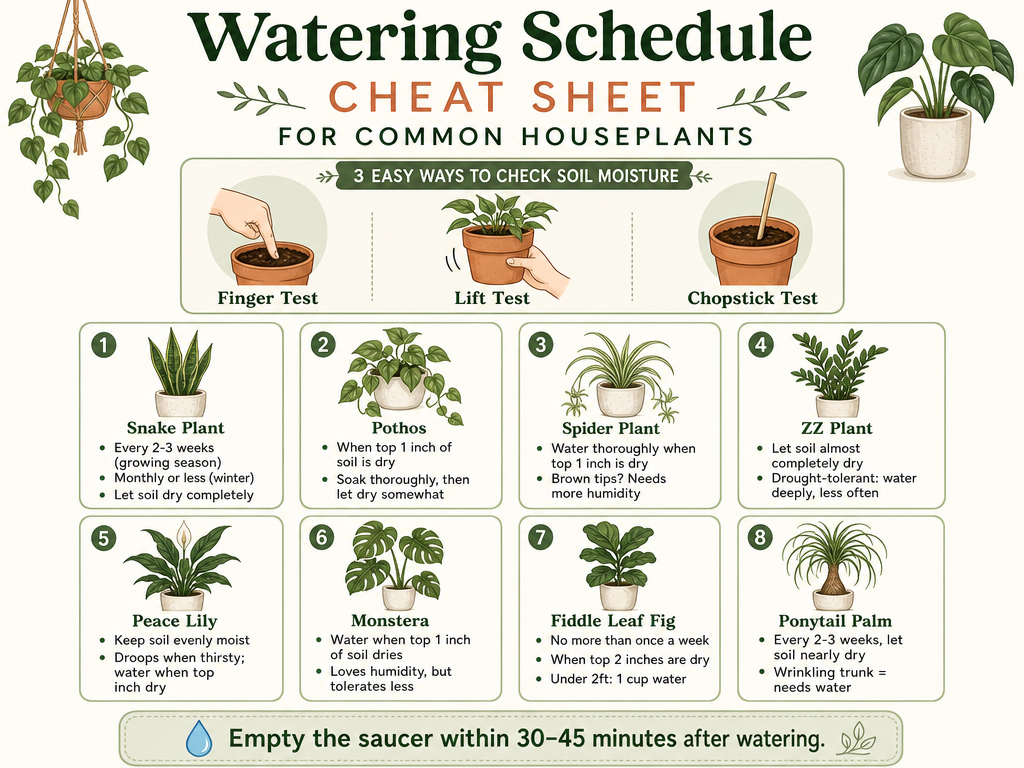
How often does each common plant need water?
On this page
Why There's No One-Size-Fits-All Watering Schedule
Here's the short answer: there's no single calendar that works for every plant, because how often you water depends on the plant plus its conditions. The same pothos might need water weekly in a bright summer window and every two weeks in a dim winter corner.
Four things shift how fast soil dries out:
- Light: More light means faster drying. A peace lily may drink every 4–7 days in bright indirect light but only every 7–12 days in low light.
- Pot and soil: Terracotta and small pots dry faster than plastic or glazed ones.
- Season: Most plants use less water in winter and more in summer.
- Humidity: Dry apartment air (especially with heating) speeds drying.
One rule saves the most beginner plants: overwatering kills more houseplants than underwatering, so when in doubt, wait. The cheat sheet below gives ranges to start from—always confirm by feeling the top inch of soil before you water.
The Houseplant Watering Cheat Sheet (Quick-Reference Table)
Here's the fast answer to "how often does each plant need water?" Screenshot or pin this table, then check the soil before you pour. The "water when" trigger matters more than the calendar — pot size, light, and humidity shift these numbers, so let your finger be the final judge.
| Plant | How often | Water when (the real trigger) |
|---|---|---|
| Snake plant | Every 2–3 weeks; monthly or less in winter | Soil is completely dry ~2 inches down |
| ZZ plant | Every 2–3 weeks; less in winter | Soil is almost completely dry — water deeply, infrequently |
| Pothos | ~Weekly, adjust to conditions | Top inch is dry; soak well, then let it dry somewhat |
| Monstera | ~Weekly; less in humid rooms | Top inch of mix is dry |
| Spider plant | ~Weekly | Top ~1 inch is dry; water thoroughly |
| Ponytail palm | Every few weeks | Soil is nearly completely dry |
| Peace lily | 4–7 days (bright), 5–9 (medium), 7–12 (low light) | Top inch feels dry, or leaves start to droop |
| Fiddle leaf fig | Once a week max | Top 2 inches are dry; give 1–4 cups scaled to plant height |
| Calathea / rabbit's foot fern | More often than most | Keep lightly moist — don't let it dry out fully |
| Peperomia | Medium watering | Soil is past halfway dry |
How to read this table: "Bright indirect light" means a spot near a window that's well-lit but out of direct sun rays. "Top inch is dry" means push your finger an inch into the soil — if it's dry at your fingertip, it's time to water; if it's still damp, wait.
A few patterns make this easy to remember. Drought-tolerant plants (snake, ZZ, ponytail palm) want to dry out fully — overwatering is the fastest way to kill them. Medium-watering plants (pothos, monstera, spider, peperomia, fiddle leaf fig) like a soak-then-dry rhythm: water when the top inch or two is dry. Moisture-lovers (peace lily, calathea, ferns) prefer soil that stays lightly damp, never bone-dry.
Two habits keep any plant healthy: always water thoroughly until it drains from the bottom, and never let the pot sit in standing water. Soggy roots cause more houseplant deaths than forgotten waterings ever will.
How to Tell When a Plant Actually Needs Water
The cheat sheet above gives you a starting point, but the real skill is checking the soil before you reach for the watering can. A few seconds of testing beats watering on autopilot and prevents root rot (root damage from soil that stays too wet).
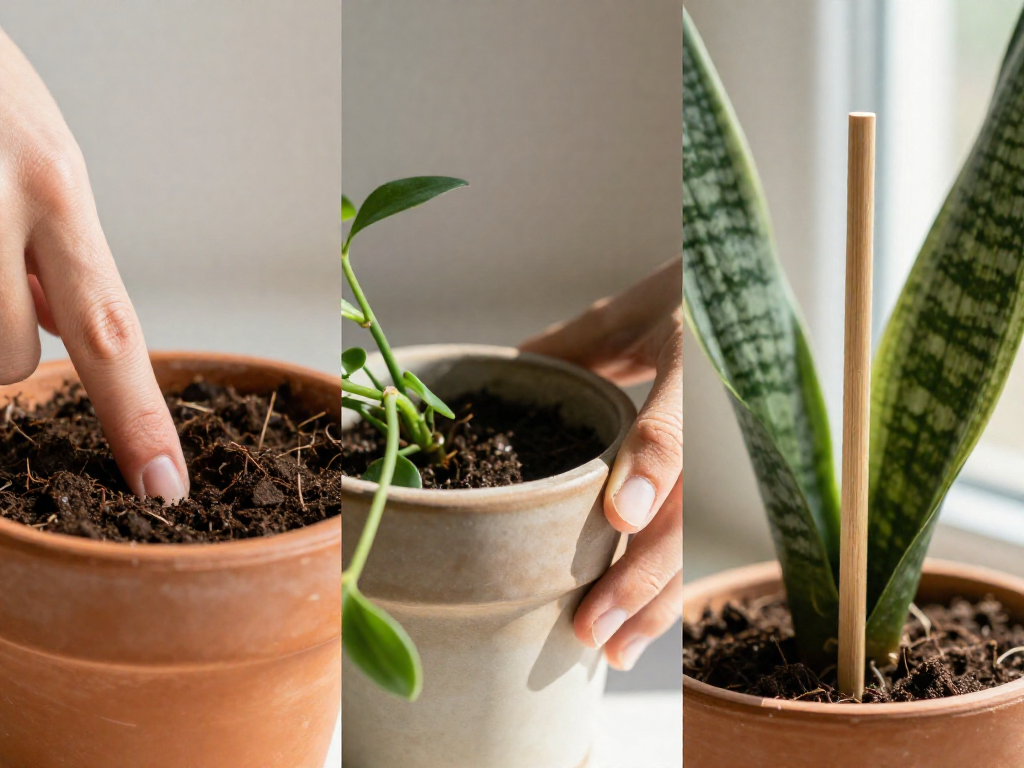
Use whichever of these quick checks fits your plant:
- Finger test: Stick a finger 1–2 inches into the soil. If it feels dry at your fingertip, water. If it's still damp, wait.
- Lift test: Pick up the pot. A light pot usually means the soil has dried out; a heavy one means there's still moisture inside.
- Chopstick test: Push a wooden chopstick deep into the soil, then pull it out. If it comes out clean and dry, it's time to water. Damp soil clings to the wood.
- Watch the plant: Some plants tell you directly. Peace lilies and fiddle leaf figs droop when thirsty, and ponytail palms wrinkle at the trunk.
When in doubt, wait a day and test again—underwatering is far easier to fix than overwatering.
Watering Tips That Prevent Root Rot
Overwatering—specifically water pooling around the roots—is the fastest way to kill a houseplant. Root rot happens when soil stays soggy and roots suffocate. These four habits protect against it:
- Water thoroughly, then let it drain. Soak the soil until a small stream runs from the drainage holes (aim for 10–20% runoff). This ensures the whole root ball gets a drink.
- Never let a plant sit in water. Empty the saucer or cache pot (the decorative outer pot) within 30–45 minutes of any standing water.
- Adjust with the seasons. Cut back in winter when growth slows, and water more often in summer as plants speed up.
- Use room-temperature water. For sensitive plants like peace lilies, distilled or rainwater helps prevent brown, burned leaf tips.
Sources
- Snake Plant Care - Complete Indoor Plant Guide – Elm Dirt — elmdirt.com
- 6 Houseplants for Beginners — Swansons Nursery — swansonsnursery.com
- Here's an easy plant + light + water cheat sheet (jaketheplantguy) — instagram.com
- How Often Do You Water Snake Plants? - OurHouseplants — ourhouseplants.com
- Low-Maintenance Houseplants You'll Love - Costa Farms — costafarms.com
- How Often to Water Peace Lily Plants — Zen Plant Care — zenplantcare.com
- Peace Lily Care: When to Water and How Much - Gardenia — gardenia.net
- Peace Lily | Home & Garden Information Center (Clemson) — hgic.clemson.edu
- Peace Lily (Spathiphyllum) Care | White Flower Farm — whiteflowerfarm.com
- The Ultimate Guide to Watering Your Fiddle Leaf Fig Plant — fiddleleaffigplant.com
- Fiddle Leaf Fig Houseplant - Proper Care | The Coastal Gardener — ucanr.edu
See also
- Understanding light levels for indoor plants (bright, medium, low)
- Best potting soil and drainage basics for beginners
- How to save an overwatered houseplant
- Beginner-friendly houseplants for small apartments
- Peace lily care guide
- Snake plant care guide
Related articles
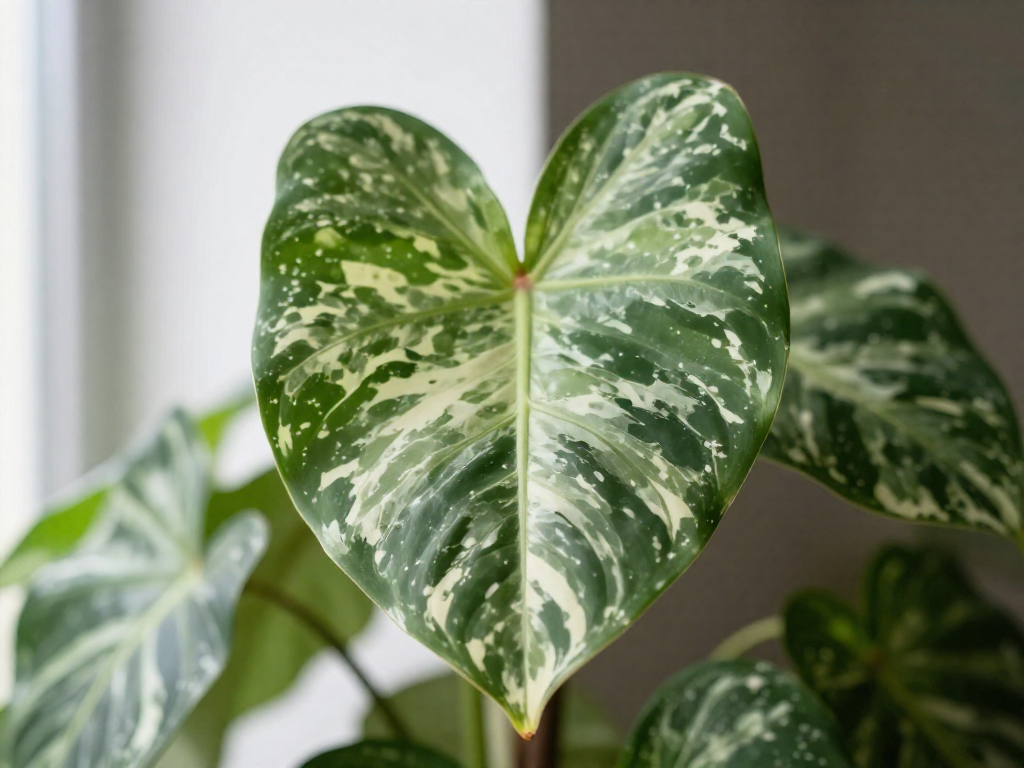
A Beginner's Glossary of Houseplant Terms
Confused by plant jargon? This plain-language glossary defines the houseplant terms beginners hit most—nodes, variegation, perlite, root-bound and more.
Jul 14, 2026 · 6 min read
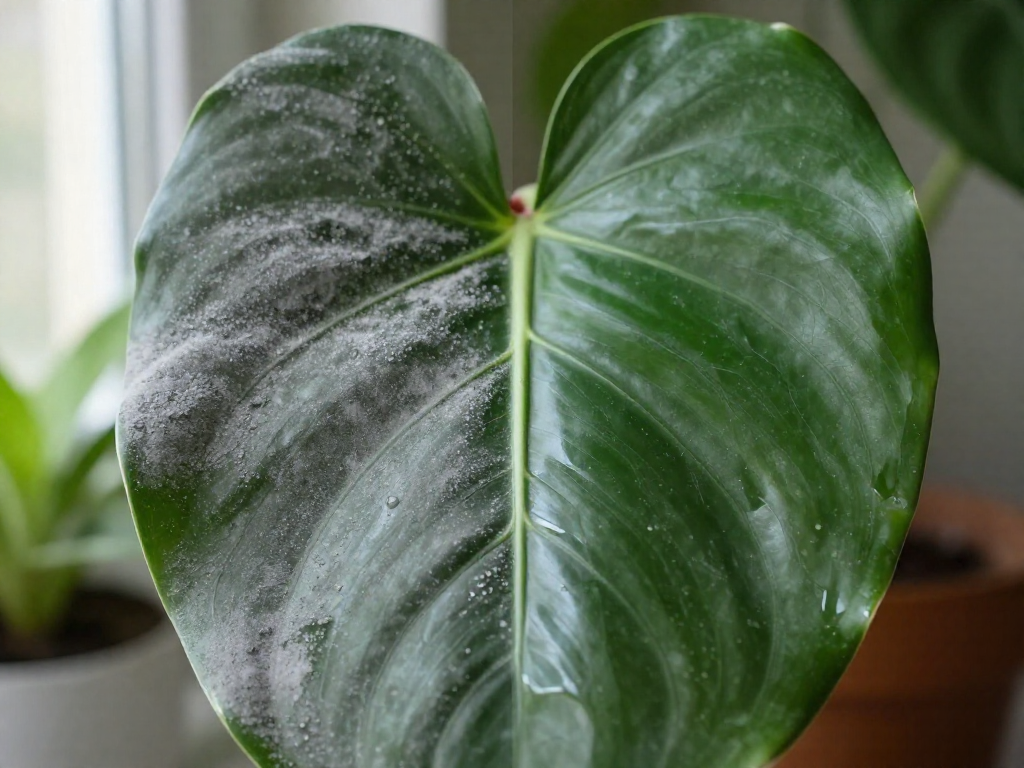
How to Clean Dusty Houseplant Leaves (and Why It Matters)
Dusty leaves block light and slow plant growth. Learn the simple, safe way to clean houseplant leaves by type—plus what to avoid, like leaf shine sprays.
Jul 14, 2026 · 6 min read
Winter Houseplant Care: Watering and Light When Days Get Short
Learn how to care for houseplants in winter: cut back watering, boost light and humidity, and pause feeding so your plants survive short, dark days.
Jul 14, 2026 · 11 min read