Terracotta vs. Plastic vs. Ceramic Pots for Beginners
Which type of pot should I buy?
On this page
The Real Question Isn't Style—It's How Fast Your Soil Dries
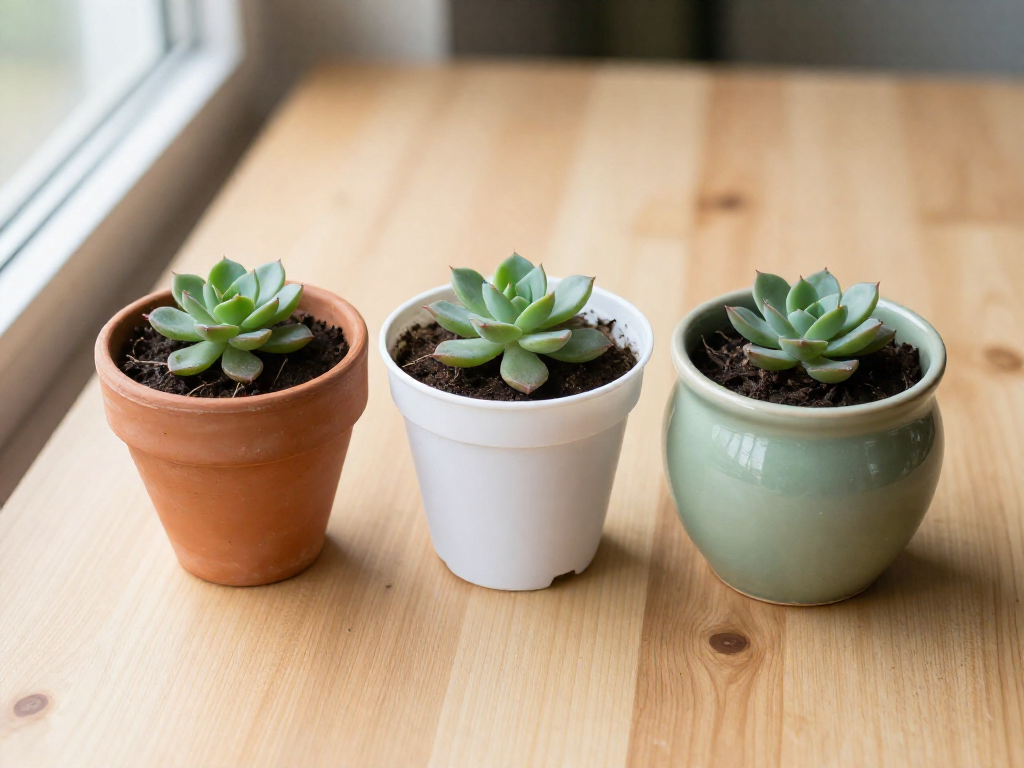
Short answer: pick the pot that matches how often you actually water. Pot material is really a watering tool. It controls one thing that matters more than color or shape: how long your soil stays wet.
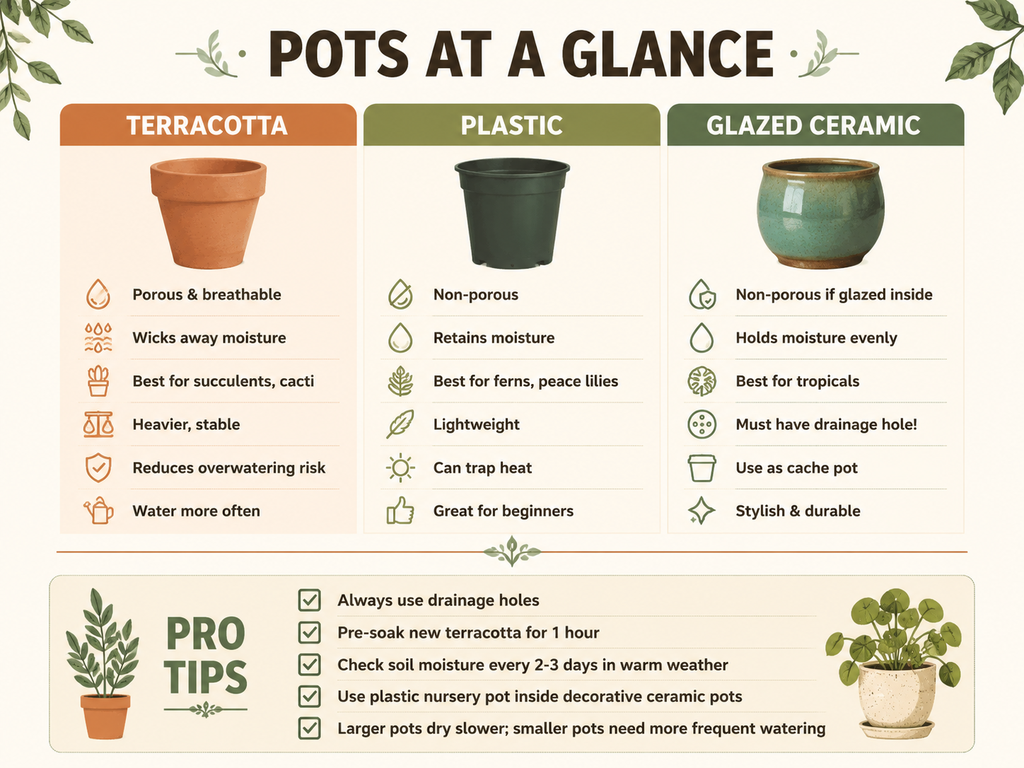
The difference comes down to whether the material is porous (lets air and water pass through its walls) or non-porous (seals moisture in). Porous terracotta breathes, so water evaporates through the sides and the soil dries faster. Non-porous plastic and glazed ceramic hold moisture in, so soil stays wet longer.
Why does this matter so much for beginners? Because most new plant parents water too often. Soggy soil pushes oxygen out of the root zone, and roots that can't breathe rot—one of the most common ways houseplants die.
So match the pot to two things: your plant's water needs and your own habits.
- Forgetful or busy? Plastic or glazed ceramic keeps soil moist longer between waterings.
- Heavy-handed with the watering can? Terracotta dries faster and forgives overwatering.
- Growing succulents or cacti? Terracotta's fast-drying walls suit plants that hate wet feet.
We'll break down each material next—but keep this drying-speed idea in mind, and the choice gets easy.
Terracotta: Best for Overwaterers and Dry-Loving Plants
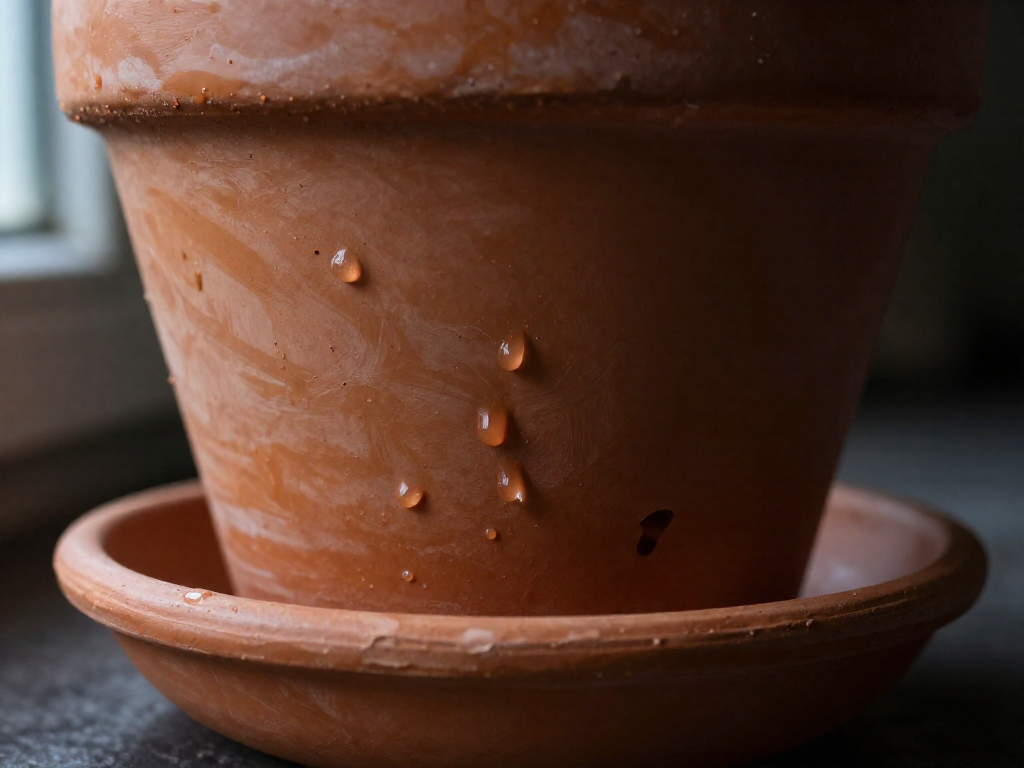
If you tend to water too much—the single most common way new plant parents kill houseplants—terracotta is your safety net. These pots are made of baked clay that's naturally porous, meaning the walls are full of tiny holes that let air and water pass through. When you water, the clay soaks up moisture and pulls it to the outside surface through capillary action (the way a paper towel wicks up a spill), where it evaporates into the air.
That constant drying does two things. It lets excess water escape instead of pooling around the roots, and it pulls air in through the walls so roots can "breathe." Together, that lowers the risk of root rot—when roots sit in soggy soil, suffocate, and start to decay—along with the fungus that soggy soil invites.
Best plants for terracotta: anything that likes to dry out between waterings. That means succulents, cacti, snake plants, philodendrons, hoyas, pileas, orchids, and kitchen herbs like basil and thyme. Terracotta's weight also makes it a smart pick for tall, top-heavy plants like fiddle leaf figs and rubber trees—a 14-inch-plus pot won't tip over the way a lightweight plastic one might.
It's also the cheapest option, sold at nearly every nursery and hardware store.
The trade-offs: because it dries so fast, you'll water more often—check the soil every 2–3 days in warm weather and water most plants when the top inch is dry. Terracotta cracks if left outside to freeze, and cheap clay chips easily. If you notice a white, chalky crust on the outside, don't worry—that's just harmless mineral buildup from your water, not mold.
Plastic: Best for Moisture-Lovers and Busy Beginners
If terracotta dries out fast, plastic does the opposite. Plastic is non-porous—meaning water and air can't pass through its walls—so it slows evaporation and keeps soil moist far longer. That makes it the natural choice for plants that hate drying out.
Reach for plastic if you're growing moisture-loving plants like ferns, calatheas, peace lilies, or philodendrons. These tropicals want their soil to stay evenly damp, and a plastic pot buys you extra days between waterings.
Plastic is also the practical pick for real life. It's lightweight, cheap, and forgiving—if you're the type who forgets to water for a week, that moisture retention works in your favor. For most busy beginners, that's the single biggest reason to start here.
The catch: what helps forgetful waterers hurts chronic overwaterers. Because plastic holds water so well, soggy soil can linger and lead to root rot. Only water when the top inch of soil feels dry, and never use a plastic pot without drainage holes.
A few more downsides to know:
- Heat: In a sunny window, plastic can trap heat and stress sensitive roots.
- Fading: Cheaper plastic fades and gets brittle in direct sun over time.
- Stability: It's too light for tall, top-heavy plants, which tip over easily—choose a heavier pot for those.
Ceramic (Glazed): Best-Looking, With One Big Condition
Glazed ceramic is the pot most people reach for on looks alone—and that's fine, as long as you respect one rule. Because the glaze (a hard, glass-like coating fired onto the clay) makes the pot essentially non-porous, it holds moisture far more evenly than terracotta and outlasts plastic by years.
That even moisture makes glazed ceramic a good match for moisture-loving tropicals like ferns and calatheas. If you like the look but aren't confident about watering yet, choose a partially glazed pot—the unglazed clay still breathes out some excess moisture, giving you a little margin for error.
The non-negotiable: it must have a drainage hole. A glazed ceramic pot without one is a slow-motion drowning device with good aesthetics. Water has nowhere to go, and salts from tap water, fertilizer, and breaking-down soil build up because you can never flush them out. If you fall for a pot with no hole, use the cheap trick: drop a plastic nursery pot with drain holes inside it, and lift the plant out to water.
These pots are heavier and more decorative—a solid middle ground once you understand how often your plant actually needs water. Best for slightly more experienced beginners or as a statement piece.
Drainage Holes: The Rule That Beats Any Material
Here's the truth that outranks every pot debate: a pot needs drainage holes. No matter how perfect the material, a pot without a hole in the bottom will eventually drown your plant.
Drainage holes let excess water escape. Without them, water the soil and roots don't absorb has nowhere to go, so it stagnates at the bottom and keeps the soil saturated—the fastest route to root rot (roots that suffocate and decay in soggy soil).
There's a slower problem too. Every time you water, salts from tap water, fertilizer, and naturally breaking-down potting mix build up in the soil. Drainage lets you rinse them out; a hole-less pot traps them forever. That's why the rule is to water until about 10–15% runs out the bottom—enough to flush the buildup.
Fell in love with a decorative pot that has no hole? Use the cache-pot trick: keep your plant in the plain plastic nursery pot it came in, then set that pot inside your pretty one. To water, lift the nursery pot out, water it over the sink, let it fully drain, and drop it back in.
Quick Comparison Table & How to Choose
Here's how the three materials stack up side by side. (Porosity just means how much air and water can pass through the pot walls.)
| Feature | Terracotta (unglazed clay) | Plastic | Ceramic (glazed) |
|---|---|---|---|
| Porosity | High—walls breathe | None | None (sealed by glaze) |
| Watering frequency | Most often; soil dries fast | Least often; holds moisture | Moderate; holds moisture evenly |
| Weight | Heavy, stable | Very light | Heavy, stable |
| Cost | Low | Lowest | Highest |
| Durability | Chips and cracks | Years, but can fade | Longest—outlasts plastic by years |
| Best plants | Succulents, cacti, fiddle leaf figs, rubber trees | Ferns, calatheas, peace lilies, philodendrons | Moisture-loving tropicals |
A Simple Decision Path
- Chronic overwaterer, or a dry-loving plant (succulent, cactus)? → Terracotta. Its breathable walls let excess water evaporate, so it's hard to drown your plant.
- Forgetful, busy, or growing a moisture-lover? → Plastic. It retains water, so you can go longer between waterings.
- Want good looks and you're comfortable watering? → Ceramic—but only one with a drainage hole.
Two rules that apply no matter what you pick:
- Smaller pots dry faster than larger ones, regardless of material. A 4-inch terracotta pot may need water twice as often as a 10-inch one.
- When repotting, size up only about 2 inches. A pot that's too big holds extra soil and water your plant can't use, which leads to root rot.
Beginner Tips for Getting the Most From Any Pot
A few small habits make any pot work harder for you—no gardening experience required.
- Pre-soak new terracotta. Because terracotta (unglazed clay) is porous, soak a new pot in water for about an hour before planting. This keeps the dry clay from pulling moisture out of your soil too fast.
- Use a saucer indoors. Terracotta and other unglazed pots let water seep through the sides and bottom. Set them on a saucer to protect floors, shelves, and windowsills.
- Do the finger test. In warm weather, poke your finger into the soil every 2–3 days. Water when the top inch feels dry for most plants, or when the soil is completely dry for succulents and cacti.
- Clean off white crust. That harmless mineral buildup on terracotta scrubs off with warm water and a splash of vinegar.
- Pick a forgiving plant first. Herbs like basil or easy succulents like jade tolerate watering mistakes while you learn.
Sources
- What are the pros and cons of using plastic plant pots over ... — quora.com
- How to Choose Between Plastic and Clay Pots for Houseplants - Ramniwas Bagh — ramniwasbagh.com
- What Type of Pot Should I Put My Houseplant In? — homesteadgardens.com
- Elements of plant care: choosing the right container — Stamen & Stem — stamenandstemblog.com
- Why Terracotta Pots Are a Must-Have for Plant Lovers — mahoneysgarden.com
- The Do's and Don'ts of Terracotta Plant Pots — livingcolorgardencenter.net
- Ceramic Pots for Plants: What 25 Years Taught Us — chive.com
- Anyone use nice ceramic pots without drainage? — houzz.com
- Watering Indoor Plants, A Complete Guide — joyusgarden.com
- The Best Plants for Terracotta Pots: A Complete Guide — bloomist.com
- Clay Pot vs. Plastic Pot: What's the Difference? | Ten Thousand Pots — tenthousandpots.com
- Avoid Root Rot With These 3 Simple Steps | House of Kojo — houseofkojo.com
See also
- How to Tell When Your Houseplant Needs Water
- How Much Light Does My Plant Really Need?
- Choosing the Right Potting Soil for Beginners
- How to Prevent and Fix Root Rot
Related articles
A Beginner's Glossary of Houseplant Terms
Confused by plant jargon? This plain-language glossary defines the houseplant terms beginners hit most—nodes, variegation, perlite, root-bound and more.
Jul 14, 2026 · 6 min read
How to Clean Dusty Houseplant Leaves (and Why It Matters)
Dusty leaves block light and slow plant growth. Learn the simple, safe way to clean houseplant leaves by type—plus what to avoid, like leaf shine sprays.
Jul 14, 2026 · 6 min read
Winter Houseplant Care: Watering and Light When Days Get Short
Learn how to care for houseplants in winter: cut back watering, boost light and humidity, and pause feeding so your plants survive short, dark days.
Jul 14, 2026 · 11 min read