Spider Mites, Mealybugs, and Scale: A Beginner Pest ID Guide
What pest is on my plant and how do I treat it?
On this page
First: Confirm You Actually Have a Pest (30-Second Check)
Before you diagnose which pest you have, spend 30 seconds confirming you have one at all. Most houseplant pests are sap-suckers—tiny insects and mites that pierce plant tissue and drink the sap—and they hide where you're least likely to look. That means the top of a leaf can look fine while the real problem sits underneath.
Do these four things:
- Flip the leaves over. Most houseplant pests—aphids, mealybugs, scale, spider mites, and more—live on leaf undersides and along stems, not on top of the foliage.
- Check the three hotspots. Inspect (a) leaf undersides, (b) stem and branch junctions where branches meet the main stem, and (c) new growth at the plant's tip. These protected crevices get colonized first.
- Look for honeydew. A sticky, shiny film on the leaves, the pot, or the floor below is honeydew—the sugary waste that many sap-suckers excrete while feeding. It's a strong sign of active mealybugs or soft scale. (Note: hard "armored" scales don't produce it, so no honeydew doesn't rule out pests entirely.)
- Try the paper-tap test. For pests almost too small to see, hold a sheet of white paper under a leaf and tap the leaf gently. Small moving specks that fall onto the paper point to spider mites.
Finally, note your conditions—they hint at the likely culprit. Dry, warm, stagnant air favors spider mites, while humid, crowded setups favor mealybugs and scale.
If you see none of these signs, your leaf trouble may be a watering, light, or nutrient issue rather than a pest. If you do see them, read on to match your findings to the right bug.
Quick Pest ID Chart: Tell the Three Apart at a Glance
Use this table to match what you're seeing to a pest, then jump to that pest's treatment section below. Look at your plant in good light, and check leaf undersides and where leaves meet the stem (the "leaf axil")—that's where problems hide.
| Clue | Spider mites | Mealybugs | Scale |
|---|---|---|---|
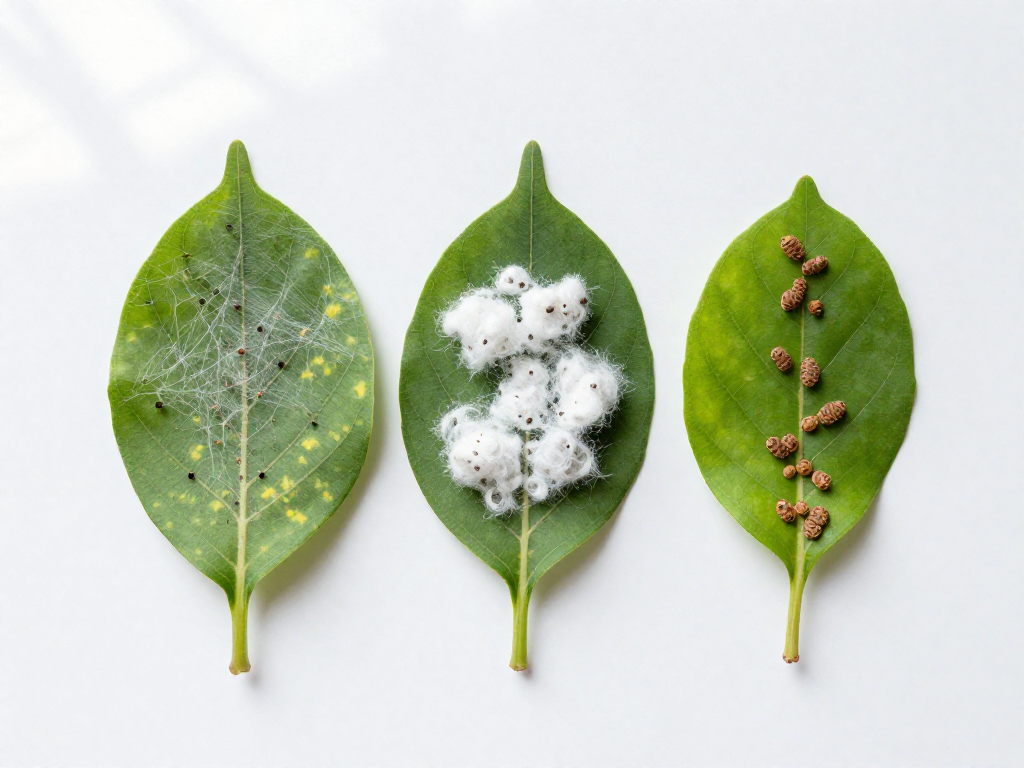
| What you see | Near-invisible moving dots (about 1/50 inch) | White, cottony tufts like tiny cotton swabs | Brown or tan dome-shaped bumps/scabs |
| Where | Leaf undersides, fine webbing in tight new growth | Leaf axils and new growth | Along stems and leaf veins |
| Leaf damage | Yellow stippling (tiny pale dots); dusty, washed-out look | Yellowing and curling leaves | Yellowing, leaf drop |
| Sticky honeydew? | No | Yes | Yes (soft scale) |
| Quick test | Tap a leaf over white paper—specks fall and crawl | Crush one—it smears pink | Scratch a bump—it doesn't brush off easily |
Honeydew is the shortcut. Honeydew is the sticky, shiny residue sap-feeding pests leave behind, and it often grows a black film called sooty mold. If your leaves or the pot are sticky, you're looking at mealybugs or scale—not spider mites, which don't produce it.
Commit to a diagnosis with one line each
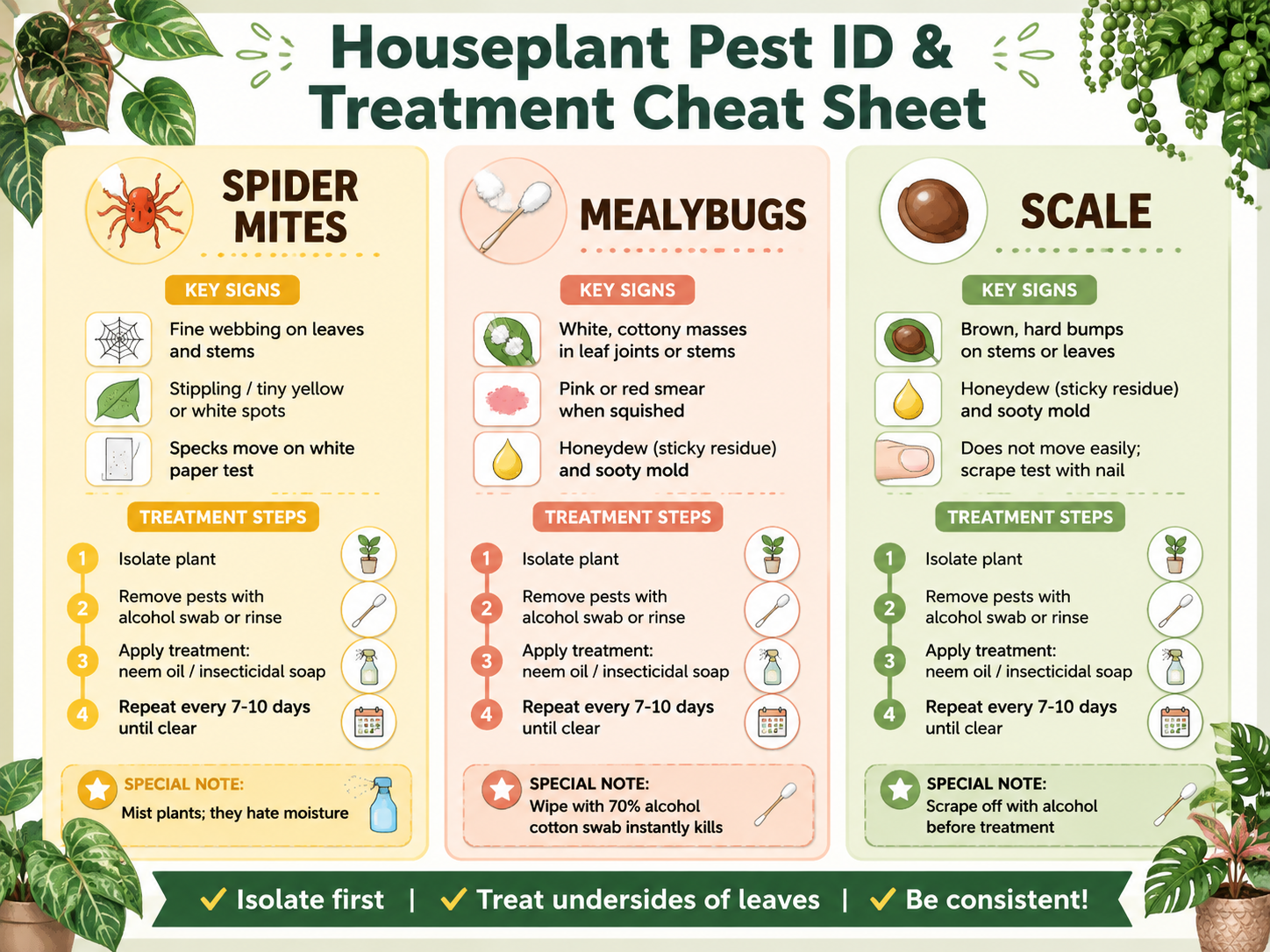
- Spider mites: If you see fine webbing and dusty, stippled leaves but no sticky residue, it's spider mites.
- Mealybugs: If it looks like white fuzz or cotton swabs tucked into new growth, it's mealybugs.
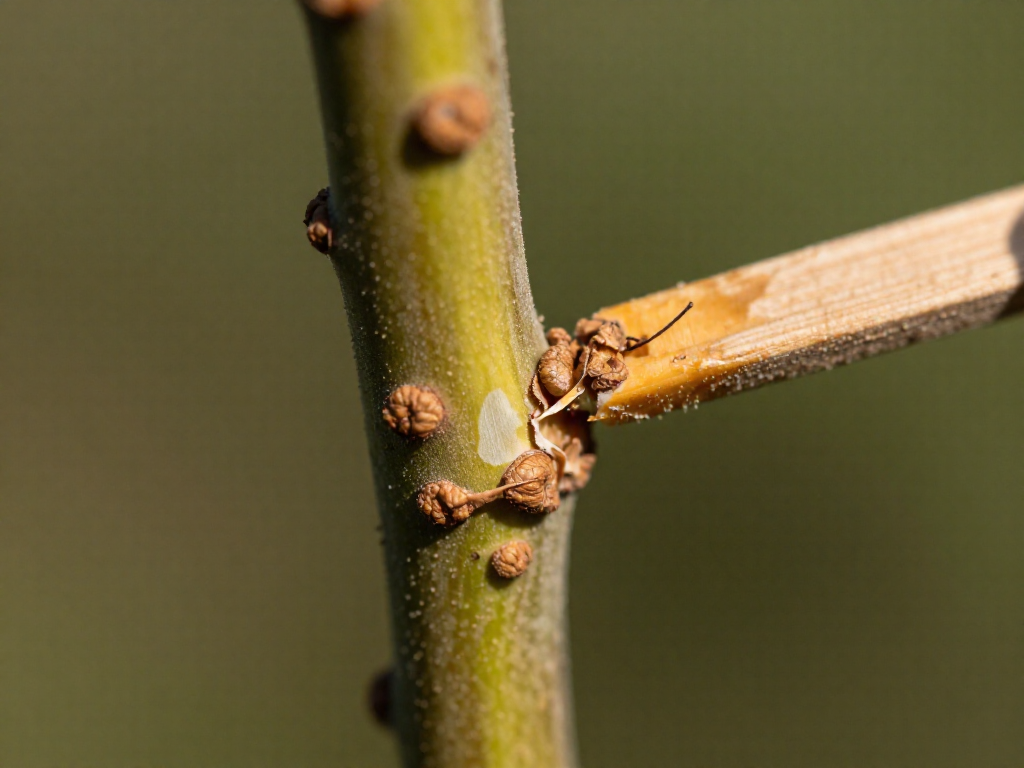
- Scale: If you see hard brown bumps along stems and veins that don't wipe off, it's scale.
Still unsure between mealybugs and scale? Both leave honeydew, but mealybugs are soft and fuzzy while scale is hard and shell-like. When you scratch a scale bump, a hard (armored) scale lifts cleanly to show green tissue underneath, while a soft scale smears.
Spider Mites: How to Spot and Treat Them
Spider mites are the pest most new plant parents meet first, usually in a heated winter apartment. They're tiny arachnids (eight-legged relatives of spiders) that pierce leaf cells with needle-like mouths and drain the contents. Each one looks like a moving speck, so you'll almost always notice the damage before the bug. They thrive in hot, dry, stagnant air and pile onto plants that are already stressed—exactly the conditions near a radiator or a sunny, closed-up window.
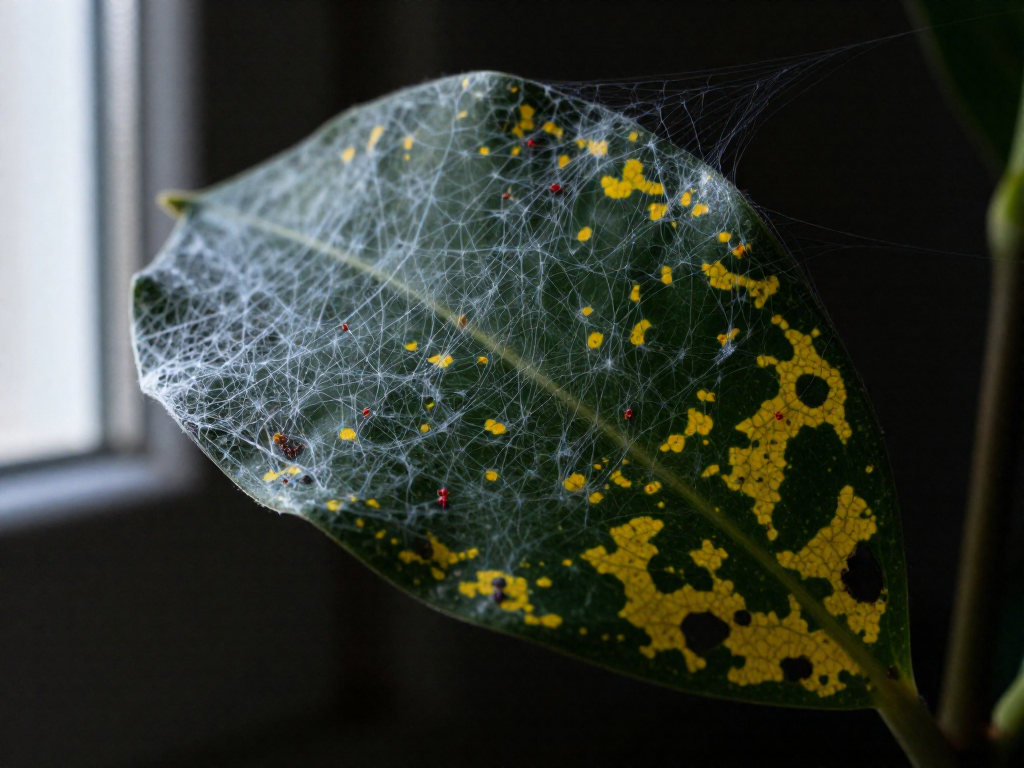
Signs to look for
- Stippling: tiny yellow or pale dots scattered across the leaf, making it look dusty or washed out.
- Fine webbing in leaf crevices, stem joints, and dense new growth.
- Slight curling or a dull, sickly cast to leaves that were healthy a week ago.
Confirm before you treat
Do the white-paper tap test: hold a sheet of white paper under a leaf and tap the leaf gently. If small specks fall and slowly start moving across the paper, you have spider mites. This one step keeps you from spraying for a pest you don't actually have.
Treatment, step by step
- Isolate the plant. Move it away from your other plants immediately so mites can't spread.
- Rinse the foliage with lukewarm water, focusing on the undersides of leaves and tight growth where mites hide. This knocks down the population before you spray.
- Spray an insecticidal soap, neem oil, or a spinosad product, coating every surface—especially the undersides. These smother mites on contact. Neem oil goes a step further: it works at all life stages by suffocating mites and disrupting their hormones, and it's safe around pets and pollinators.
DIY spray recipe: mix 1 tsp insecticidal soap + 1/2 tsp neem oil + 1 quart warm water in a spray bottle. Apply to leaf undersides and crevices at the start or end of the day, never in strong midday sun.
Keep them from coming back
Reapply every 7–10 days until you see no mites for a few weeks—one round rarely finishes the job. Then fix the conditions that invited them: raise humidity (a pebble tray or occasional misting helps), improve airflow, and keep plants unstressed with consistent watering. Dry, still air is what spider mites love, so changing it is your best long-term defense.
Mealybugs: How to Spot and Treat Them
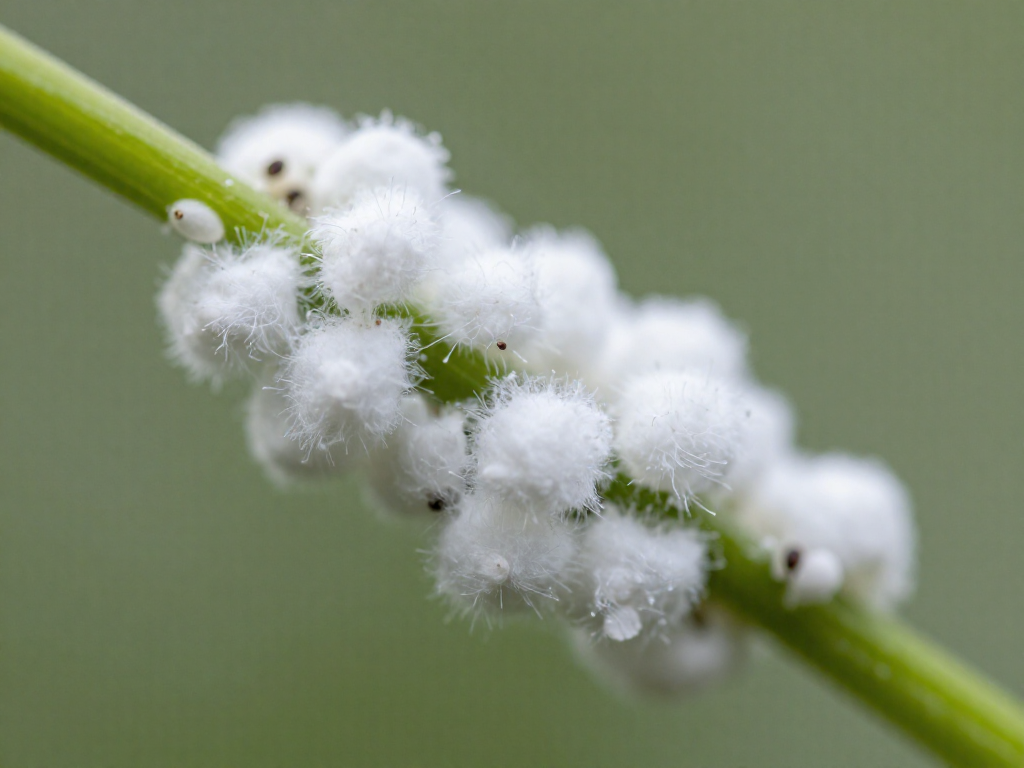
If you see what looks like tiny tufts of cotton tucked into your plant, you're almost certainly dealing with mealybugs. These soft-bodied, wingless insects are a type of unarmored scale (a scale insect without a hard protective shell). They coat themselves in a fuzzy white wax for protection, which is why they look like little cotton swabs crawling along stems and leaves.
What to look for
- White cottony tufts clustered in leaf axils (the joint where a leaf meets the stem) and on tender new growth.
- Yellowing or curling leaves, since mealybugs pierce plant tissue with needle-like mouthparts and drink the sap.
- Sticky honeydew (the sugary waste they excrete) on leaves and pots, often followed by black sooty mold and sometimes ants.
- A quick confirmation trick: crushed mealybugs often smear pinkish-orange.
Why they're so stubborn
Mealybugs frustrate beginners because they reinfest easily. They crawl between plants whose leaves touch, hide in crevices like unfurled leaves and stem crotches, and a single female can lay around 600 eggs in loose cottony masses. Miss a few hidden bugs and you're back to square one.
How to treat them
1. Isolate the plant. Move it away from your other plants immediately so the bugs can't spread.
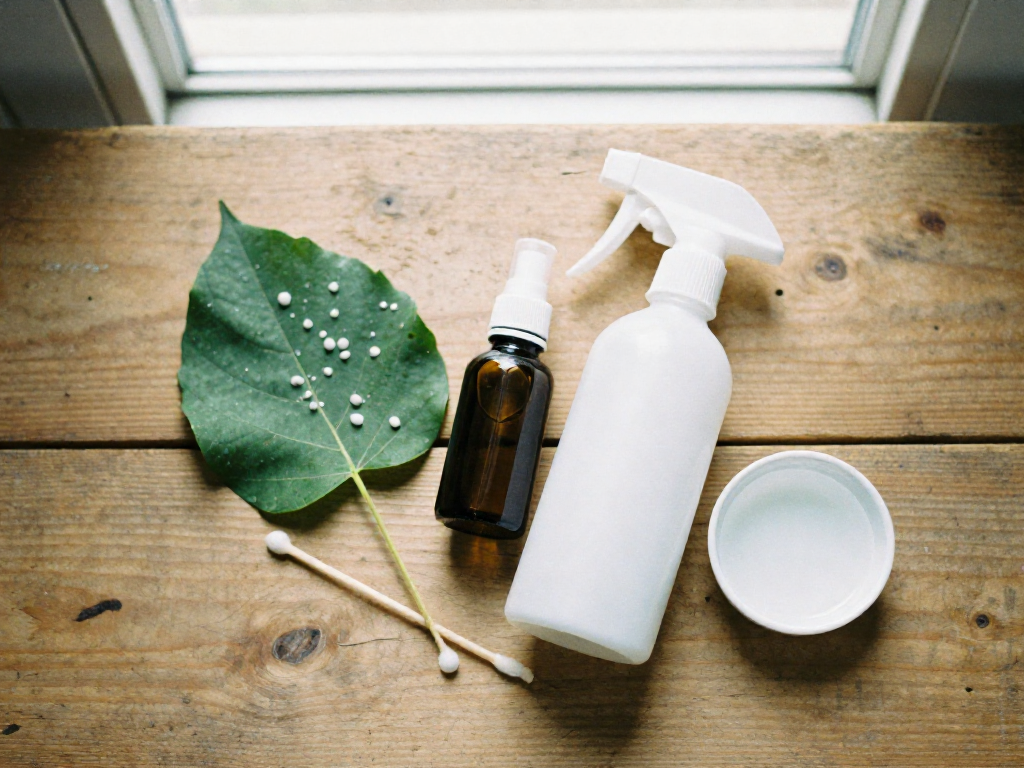
2. Knock down what you see. Dip a cotton swab in isopropyl (rubbing) alcohol at 70% or less and dab each visible bug; the alcohol kills them on contact. Test one leaf first and wait a day to make sure your plant tolerates it.
3. Follow up on a schedule. Spray thoroughly with insecticidal soap or neem oil, coating leaf undersides and crevices, every 7–10 days. Keep going until you see no mealybugs for 3–4 weeks straight, since eggs keep hatching.
4. Clean up honeydew with a damp cloth to prevent sooty mold and discourage ants.
For heavy infestations: prune off and discard badly infested leaves, and consider pairing a horticultural oil spray with an imidacloprid soil drench (a systemic insecticide the plant absorbs through its roots).
Scale: How to Spot and Treat Them
Scale is the pest beginners miss most, because it doesn't look like a bug. Scale insects are tiny pests that anchor themselves to stems and leaf veins, then hide under a waxy, armored shell. New plant parents almost always mistake them for scabs, bark texture, or crusty brown spots—so they never treat them.
Where to Look
You'll find scale by touch more reliably than by sight. Run your fingers along the stems, the midribs (the thick central vein on the underside of each leaf), and branch junctions (where a branch meets the main stem). Feel for small, irregular bumps. Those protected crevices at branch junctions are where scale settles first and where it's hardest to kill.
Hard vs. Soft Scale (The Fingernail Test)
There are two kinds, and a quick fingernail scratch tells them apart:
- Hard (armored) scale lifts off cleanly to reveal green tissue underneath, and leaves no sticky residue.
- Soft scale smears when you scratch it.
Here's the useful part: only soft scale produces honeydew—the sticky, shiny film you'll notice on leaves or the floor below the plant. And most houseplant scale is soft scale. The most common one, brown soft scale, shows up on ferns, ficus, schefflera, and orchids as small brown bumps clustered along leaf veins, with sticky leaves as the first warning sign.
How to Treat Scale
- Isolate the plant so it can't spread to neighbors.
- Remove scale manually first. Scrape or wipe every bump off with a cotton swab dipped in rubbing alcohol (70% or less), covering stems, midribs, and junctions.
- Spray all surfaces with insecticidal soap, neem oil, or horticultural oil to smother what's left.
- Repeat every 7–10 days for at least 3–4 cycles. Newly hatched "crawlers" keep appearing in waves; stopping after one or two sprays almost guarantees reinfestation.
For a severe, stubborn case, use a systemic insecticide labeled for scale—it moves through the plant and reaches insects your sprays can't.
Treatments That Work on All Three (and How to Use Them Safely)
Good news: you don't need a shelf full of products. Four treatments handle spider mites, mealybugs, and scale, and you probably only need one or two.
Neem oil — the beginner all-rounder. Neem contains azadirachtin, a compound that acts like an insect hormone: it makes pests stop feeding, blocks them from maturing, and prevents eggs from hatching. Because it hits every life stage, it's the most forgiving choice when you're not sure what you're doing. Mix 1/2 teaspoon neem oil with 1 teaspoon insecticidal soap in 1 quart of warm water and spray thoroughly.
Insecticidal soap and horticultural oil — contact killers. These suffocate pests on contact and are gentle on beneficial insects. They only work on bugs they actually touch, so coverage matters (more on that below).
70% isopropyl alcohol — the spot treatment. For visible mealybugs and scale, dip a cotton swab or ball in rubbing alcohol (70% or less, never higher) and wipe each pest directly. It kills on contact. Great for small, targeted cleanups.
Systemics (imidacloprid soil drench) — the last resort. For stubborn, widespread infestations, a soil drench is absorbed by the plant and kills pests as they feed. It's slow but effective. Skip this unless sprays have failed.
Use them safely:
- Test first. Spray one leaf and wait 24 hours to check for damage.
- Timing. Apply at the start or end of the day, never in direct sun—oils can burn leaves.
- Coverage. Hit leaf undersides and crevices where pests hide.
- The non-negotiable rule: repeat every 7–10 days for at least 3–4 rounds. One spray never works; eggs and crawlers hatch after survivors are gone, so you must break the cycle.
Prevention: Keep Pests From Coming Back
Beating an infestation is a win—but keeping pests from returning is what makes plant care feel easy. A few simple habits do most of the work.
- Quarantine new plants for two weeks. Keep any new arrival away from your other plants for at least 14 days. Most infestations hitch a ride home from the store, and this waiting period lets hidden pests reveal themselves before they spread.
- Inspect weekly while you water. Turn a few leaves over and check the undersides and stem joints—the spots where spider mites, mealybugs, and scale like to hide. Catching a handful of bugs early is far easier than fighting a full infestation.
- Keep plants unstressed. Give each plant the right light, water consistently, and make sure air can move around it. Stressed plants are far more attractive to pests, so good basic care is your best defense.
- Raise humidity and avoid crowding. Spider mites thrive in dry air, so a little added humidity discourages them. Leaving space between pots also stops pests from crawling plant to plant.
- Wipe leaves and clear debris. Dust off leaves and remove fallen leaves from the soil surface. This clears away hiding spots and the sticky honeydew pests leave behind.
Do these consistently, and pest problems become the rare exception—not the norm.
Sources
- Common Houseplant Pest Identification and How to Get Rid of Fungus Gnats, Spidermites, Scale, White Flies and Mealybugs: Grow Better with Leslie, Ep 200 - Growing Joy with Maria — growingjoywithmaria.com
- How to Identify and Treat Spider Mites on Indoor Plants — theplantdaddies.com
- How to Identify and Treat Scale Insects on Houseplants — theplantdaddies.com
- Insect Pests of Houseplants | Mississippi State University Extension Service — extension.msstate.edu
- How to identify common houseplant pests — HOMESTEAD BROOKLYN — homesteadbrooklyn.com
- We Asked Gardeners If Neem Oil Works on Spider Mites—And We're Trying This ASAP — thespruce.com
- Get Rid of Spider Mites with Neem Oil - Tricks to Kill Spider Mites — tipsbulletin.com
- Proven Ways to Exterminate Spider Mites - Spider Farmer EU — spiderfarmer.eu
- Mealybugs - 7 Methods to Get Rid of Mealybugs on Plants — gardenia.net
- Easy Ways to Eliminate Mealybugs From Indoor Plants — thespruce.com
FAQ
How can I tell the difference between spider mites, mealybugs, and scale?
Look at what the pest looks like and where it hides. Spider mites are tiny arachnids (spider relatives) as small as 1/50th of an inch that look like moving dots, usually on leaf undersides, and leave fine webbing plus yellow stippling (tiny light-colored dots) on leaves. To confirm them, hold a white sheet of paper under a leaf and tap gently—small specks will fall and move. Mealybugs are soft-bodied and look like little white cotton swabs or fuzzy tufts, clustering in leaf axils (where the leaf meets the stem) and on new growth; crushed clusters can smear pink. Scale looks like small brown, tan, or gray bumps or scabs firmly attached along stems, midribs (the central leaf vein), and branch junctions—they don't move once settled. A quick test: scrape a scale bump; hard (armored) scale lifts cleanly to reveal green tissue, while soft scale smears. Soft scale and mealybugs also leave sticky honeydew, whereas armored scale and spider mites do not.
What kills all three of these pests at once?
Neem oil, insecticidal soap, and horticultural oil all work against spider mites, mealybugs, and scale because they smother soft-bodied pests on contact. A common DIY spray is 1 teaspoon insecticidal soap plus 1/2 teaspoon neem oil in 1 quart of warm water; coat all surfaces, especially leaf undersides and crevices, and spray at the start or end of the day. Before spraying, boost your results with manual removal: wipe visible mealybugs and scale off with a cotton swab dipped in isopropyl alcohol (70% or less), and rinse spider mites off with lukewarm water. For heavy or stubborn infestations—scale and mealybugs are especially tough because of their protective waxy coating—a systemic insecticide such as imidacloprid applied to the soil provides slower but longer-lasting control. Whichever product you choose, always isolate the affected plant first and repeat applications, since a single treatment rarely finishes the job.
Is neem oil safe to use around pets and kids?
Neem oil, extracted from the neem tree, is considered one of the safer pest treatments for a home with pets and children. It kills pests by suffocating them and by disrupting their feeding and reproduction (via a compound called azadirachtin), and it won't harm people or pets that come into contact with treated plants. It's also gentler on beneficial insects and pollinators than many synthetic pesticides. That said, treat it like any garden product: keep the concentrate away from kids and pets, don't let anyone drink or ingest it, spray in a well-ventilated area, and let treated leaves dry before curious hands or paws touch them. Test a single leaf first to make sure your plant tolerates it, since oils can occasionally injure sensitive foliage.
How often do I need to reapply pest treatment?
Reapply every 7 to 10 days—this is the key to actually clearing an infestation. Contact treatments like neem oil and insecticidal soap kill the pests present but usually miss eggs and hidden crawlers, so you need repeated rounds to catch each new generation as it hatches. For spider mites, keep spraying every 7–10 days until you see no more mites. For scale, plan on at least three to four cycles at that interval; stopping after one or two applications almost always leads to reinfestation. For mealybugs, continue soap or neem sprays every 7–10 days until you've seen no bugs for a solid 3–4 weeks. Consistency matters more than strength here.
Will one plant's pests spread to my other houseplants?
Yes—these pests spread readily, so isolate any infested plant the moment you spot trouble. Mealybugs actively crawl and hitch rides between plants whose leaves are touching, and a single female can lay around 600 eggs in cottony masses. Scale spreads through its mobile 'crawler' stage before the young settle down and become immobile. Spider mites travel on air currents, your hands, and touching foliage, and they reproduce fast in warm, dry indoor air. Move the affected plant to a separate room, keep it away from others until it's pest-free, and inspect nearby plants—especially the leaf undersides, where most houseplant pests hide. Wash your hands after handling an infested plant to avoid carrying pests around.
Are these pests harmful to people?
No—spider mites, mealybugs, and scale don't bite people, spread disease, or infest your home the way fleas or bed bugs do. They feed only on plant sap, so the harm is to your plants, not to you, your kids, or your pets. The main nuisance for people is the sticky honeydew that mealybugs and soft scale leave behind, which can drip onto floors and furniture and grow black sooty mold. Wipe that residue away as you treat the plant. While the bugs themselves aren't a health risk, it's still smart to wash your hands after handling infested plants and to keep pest-control products stored safely out of reach.
See also
- How to Use Neem Oil on Houseplants (Beginner's Guide)
- How to Quarantine a New Houseplant
- Houseplant Humidity: Simple Ways to Raise It
- Fungus Gnats vs. Other Houseplant Pests
Related articles
My New Plant Is Dropping Leaves: Is It Normal?
New plant dropping leaves after you brought it home? Learn when leaf drop is normal acclimation and when it signals a real problem you need to fix.
Jul 14, 2026 · 5 min read
Leggy, Stretched-Out Plants: Why and How to Fix It
Is your plant growing tall, pale, and sparse? Learn what causes leggy, etiolated growth and the exact steps to fix it and prevent it from coming back.
Jul 14, 2026 · 10 min read
Overwatering vs. Underwatering: How to Tell the Difference
Is your plant overwatered or underwatered? Compare symptoms side by side, run 4 quick checks, and follow plant-by-plant recovery steps for apartment plants.
Jul 14, 2026 · 8 min read