Snake Plant Care: The Near-Indestructible Apartment Plant
How often should I water and where should I place a snake plant?
On this page
Why the Snake Plant Is Perfect for Apartments
If you want one plant that survives a busy schedule, a small footprint, and less-than-sunny windows, the snake plant (Sansevieria, also sold as Dracaena trifasciata) is it. To answer the question up front: water it only every 2–6 weeks, when the top 2 inches of soil are dry, and place it in bright, indirect light—though it will tolerate lower light for a while. Getting those two things right is 90% of the job.
Here's why it forgives new plant parents. The snake plant is native to western and southern Africa, where it evolved to handle intense sun and long dry spells—so a dim apartment corner and an occasional missed watering barely faze it. It uses CAM photosynthesis (Crassulacean acid metabolism), a water-saving process that lets it open its pores at night instead of during the hot day. That efficiency means it needs remarkably little water and can cope for months without any, and it makes the snake plant an excellent bedroom plant.
Given decent care, snake plants can live for decades. Just remember the one rule that trips up beginners: the #1 killer is overwatering, not neglect. When in doubt, wait.
How Often to Water a Snake Plant
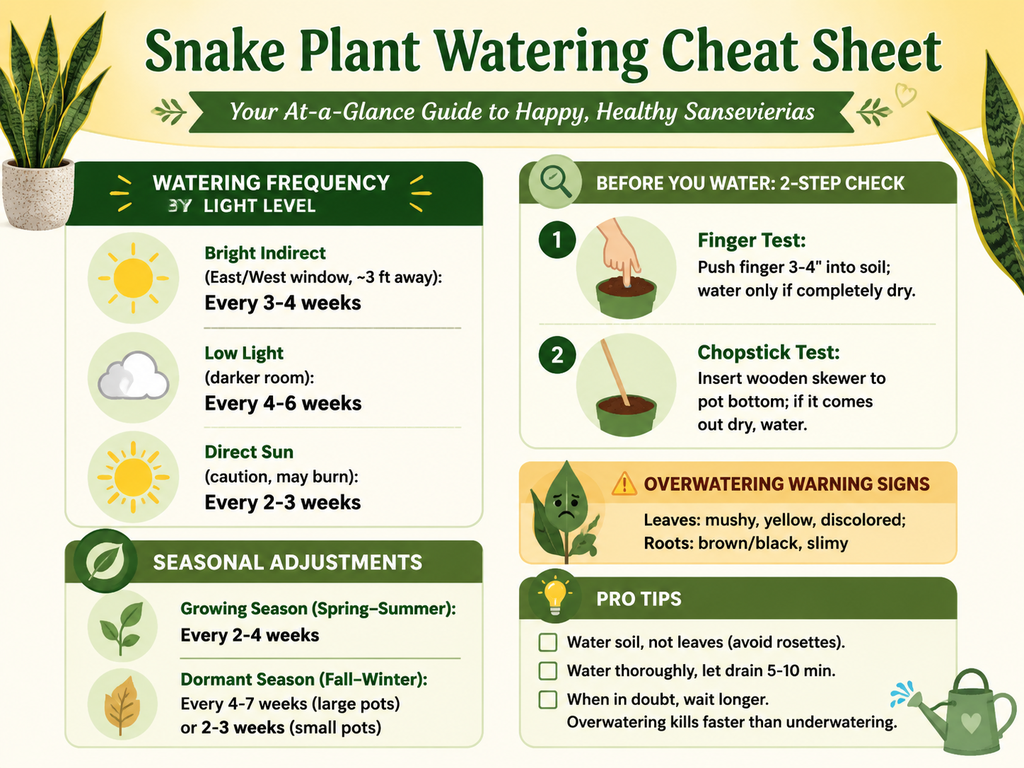
Short answer: water your snake plant every 2 to 8 weeks, and let light level decide where you land in that range. Snake plants are drought-tolerant, meaning they store water in their thick leaves and would rather be too dry than too wet. As a rule of thumb, never water more often than once every 3 to 4 weeks—overwatering is the fastest way to kill one.
The single biggest factor is how much light the plant gets. More light dries the soil faster and calls for more frequent watering; less light means the soil stays damp longer, so you wait.
Water by light and location
- Bright spot (south-facing window, lots of sun): about every 3 weeks. The soil dries out quickly here.
- Darker spot (low-light corner, north-facing room): about every 4 to 6 weeks. Always check the soil first—if it isn't dry, don't water.
Adjust for the season
Snake plants grow actively in the warmer months (their "growing season," roughly spring through fall) and rest in winter.
- Spring and summer: every 2 to 3 weeks.
- Fall and winter: every 4 weeks or more, stretching to 5 to 7 weeks for large pots.
Adjust for pot size
Small pots hold less soil and dry out faster than big ones.
- Small 4-inch pots: every 2 weeks in summer, every 2 to 3 weeks in winter.
- Large, established plants: noticeably less often—up to 5 to 7 weeks in winter.
The reliable test
Don't water on a fixed calendar—check the soil. Stick a finger into the soil up to your second knuckle. It should feel dry, or only barely damp, before you water again. When in doubt, wait. A snake plant recovers easily from being too dry, but rarely from being too wet.
The Finger Test: How to Know It's Actually Time to Water
Forget the calendar. Snake plants don't drink on a schedule, so the only reliable way to know when to water is to check the soil itself. Here's the two-second test to do it right.
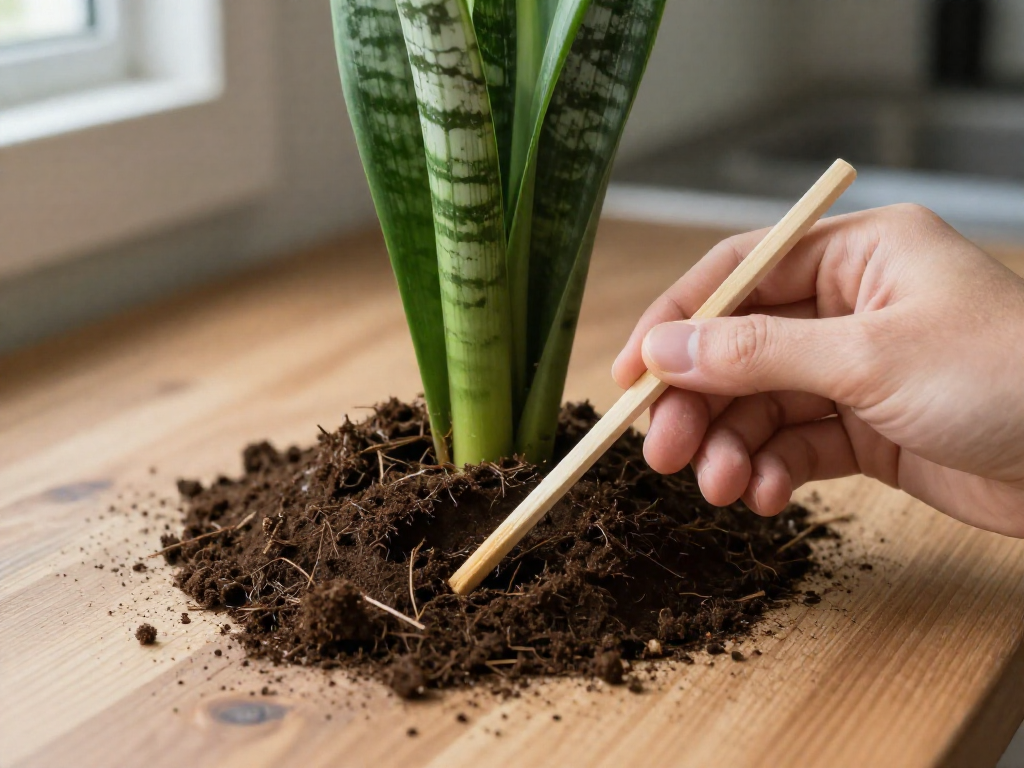
Stick your finger in the soil, 3–4 inches deep—that's roughly up to your second knuckle. If the soil feels completely dry at that depth, it's time to water. If you feel any moisture at all, stop: wait and re-check in about a week.
For deep or tall pots, your finger won't reach the bottom, where roots sit in the wettest soil. Push a wooden chopstick or bamboo skewer all the way down instead. Pull it out and look: if it comes up clean and dry, water. If it's damp or has soil clinging to it, the plant still has plenty to drink.
When in doubt, don't water. Snake plants (Sansevieria) can go weeks—even a month or more—between drinks, and they always suffer more from too much water than too little. Overwatering leads to root rot, the single biggest reason these otherwise decades-long plants fail indoors. Underwatering is easy to fix; a rotted root system usually isn't.
How to Water Correctly (Step by Step)
Once the soil is dry (see the finger test above), watering is simple. The goal is a deep drink followed by complete drainage, so the roots never sit in soggy soil.
- Water thoroughly over a sink. Pour water through the soil two or three times, letting it run out the drainage holes each round. This makes sure every root gets a good soak, not just the top layer.
- Let it drain for 5–10 minutes. Leave the plant in the sink so all the excess water can escape before you set it back in a decorative pot (a pot with no drainage hole that hides the plastic grower's pot).
- Pour on the soil only. Snake plants dislike wet leaves, so keep water off the foliage and out of the rosette—the center point where new leaves emerge. Water pooling there can rot new growth before it develops.
Skip the pebble myth. You may have heard that a layer of rocks in the bottom of a pot improves drainage. Horticulturists call this an old plant-care myth—it actually raises the waterline and can keep roots wetter. What matters is a pot with real drainage holes that let excess water flow straight out.
Do this every time and you'll avoid the mushy, yellowing leaves that come from water sitting where it shouldn't.
Where to Place Your Snake Plant
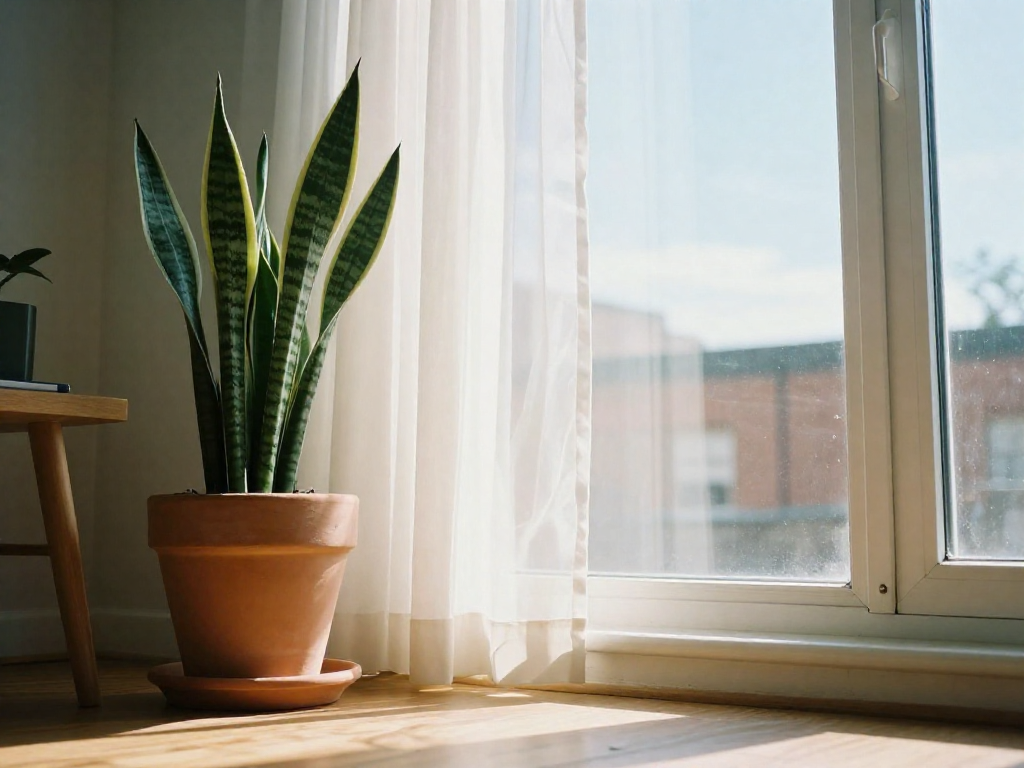
The sweet spot is bright indirect light—light that reaches the plant without the sun's rays hitting the leaves directly. In apartment terms, that means placing your snake plant within about 3 feet of an east- or west-facing window. Horticulturist Justin Hancock of Costa Farms calls this "ideal for the happiest, healthiest, strongest snake plant you can grow."
How Much Light It Wants
Aim for roughly 8–10 hours of indirect light a day. Snake plants can handle a few hours of direct morning sun, but hot afternoon rays from a south- or west-facing window will scorch the leaves quickly. If your only bright spot is a blazing south window, pull the plant back several feet or filter the light with a sheer curtain.
A quick minimum-light test: if there's enough light for you to comfortably read a book or magazine there throughout the day, your snake plant can survive.
Low Light and Darker Rooms
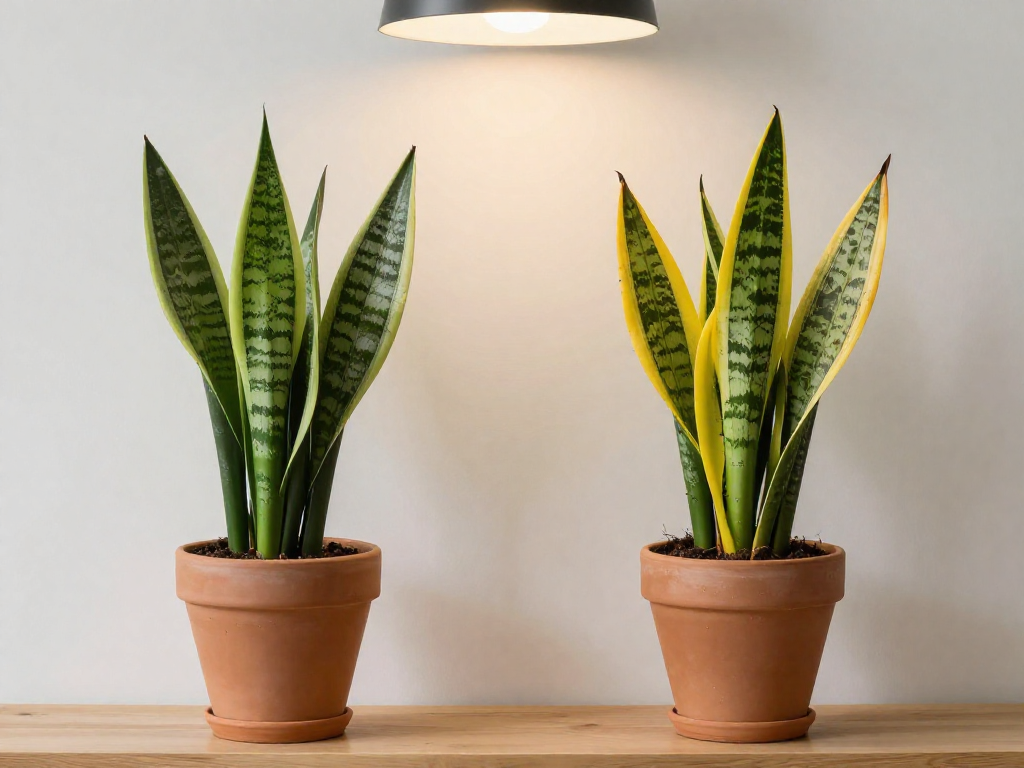
Snake plants tolerate low light, but tolerate isn't the same as love. In dim rooms, darker-leafed varieties (like plain green Dracaena trifasciata) hold up far better than brightly variegated ones—those with cream or yellow stripes. Variegated plants tend to fade and lose their patterning without enough light.
One heads-up for watering: the darker the spot, the slower the soil dries. A plant in a dim corner may only need water every 4–6 weeks, so always check the soil before reaching for the watering can.
No Good Window? Use a Lamp
Apartments don't always come with great light, and that's fine here. Snake plants "care more about the quantity of light than the source," per Hancock—so an ordinary grow light or bright LED lamp works as well as a window.
Temperature: Snake plants are happiest between 70–90°F. Keep them above 50°F and away from cold drafts, frost, and chilly windowsills in winter.
Troubleshooting: Reading Your Snake Plant's Signals
Your snake plant can't talk, but its leaves tell you exactly what's wrong. Here's how to read the signs before it's too late.
Mushy, yellow, or discolored leaves = overwatering
This is the most common problem, and it's the fastest way to kill a snake plant. When soil stays too wet, the roots begin to rot (rot means the roots decay and die). Slide the plant out of its pot and check: healthy roots are firm and pale, while rotting roots turn brown, black, or gray and feel slimy. Yellowing is often the earliest warning, so act at the first sign.
Droopy, sagging leaves = too little light
If your normally upright leaves start to flop and sag, the plant is asking for more light. Move it closer to a window with bright, indirect light.
Browning, scorched foliage = too much direct sun
Brown, crispy, or burnt-looking patches mean the plant is getting hit with too much harsh, direct sunlight. Pull it back from the window or filter the light with a sheer curtain.
No new leaves after a few months = unhappy in low light
A snake plant in low light won't wilt dramatically—it just quietly stops growing. If you see no new leaves after a few months, it likely needs a brighter spot.
How to rescue an overwatered plant
- Stop watering immediately.
- Check the roots for the brown, black, or slimy rot described above.
- Trim away any mushy roots and leaves with clean scissors.
- Repot in fresh, dry, well-draining mix and hold off on watering until the soil dries out.
Sources
- Water Your Snake Plant (Sansevieria) Properly — youtube.com
- Snake Plant Care: How to Grow this Diehard Houseplant — joyusgarden.com
- How to Care for Snake Plants - Sansevieria - A Beautiful Mess — abeautifulmess.com
- How Often Do You Water Snake Plants? — ourhouseplants.com
- How Often Should You Water a Snake Plant? — thespruce.com
- Snake Plant: Care & Growing Guide — thespruce.com
- Do Snake Plants Prefer Low Light? What Experts Say — southernliving.com
- 5 Symptoms of Overwatered Snake Plants — epicgardening.com
- Snake Plant Sunlight Requirements | Plant Addicts — plantaddicts.com
- How can you determine if your snake plant needs more or less water? — quora.com
FAQ
How often should I water a snake plant in winter?
In winter, water your snake plant far less often than in the warmer months—roughly once every 3 to 6 weeks, depending on your light and pot size. Larger plants in big pots can go 5 to 7 weeks, while small plants in 4-inch pots need water about every 2 to 3 weeks. The rule is simple: only water once the soil has dried out completely. Snake plants are drought-tolerant, and in a room with average humidity (30–50%) and a moderate temperature around 70°F, an indoor snake plant can easily go up to three weeks without water. When in doubt, wait—these plants tolerate underwatering far better than overwatering.
Can a snake plant survive in a room with no windows?
A snake plant can survive for a while in a windowless room, but it won't truly thrive—experts note it will slowly decline in very low light without obvious warning signs. If your room has enough light to comfortably read a book throughout the day, the plant can hang on. The catch is that it shows unhappiness by simply not producing new leaves rather than by wilting, so you may not notice it struggling for months. For a genuinely windowless space, add a grow light (see below). Also water much less in low light—about once every 4 to 6 weeks—because dim conditions dry the soil out slowly, and soggy soil in low light is a fast route to root rot.
Why are my snake plant's leaves turning yellow and mushy?
Yellow, mushy, discolored leaves are the classic sign of overwatering—the number one killer of snake plants. When soil stays too wet, the roots suffocate and begin to rot, turning brown, black, or gray with a slimy texture, and that damage shows up in the leaves. The usual cause is watering too frequently (for example, weekly) instead of letting the soil dry out fully between waterings. To recover, stop watering, remove the plant from any wet soil, trim away rotted roots and mushy leaves, and repot in fresh, well-draining mix. Going forward, only water when the soil is completely dry, and avoid getting water in the leaf rosettes where new growth forms.
How do I know if my snake plant needs water?
Check the soil, not the calendar. Stick your finger into the soil about 3 to 4 inches deep (roughly to your second knuckle); if it feels dry or only barely damp, it's time to water. If there's still moisture, wait and check again in a week. For a more reliable reading all the way through the pot, push a wooden chopstick or skewer down to the bottom—if it comes out dry, water; if it's damp, hold off. Depending on light and pot size, the soil might stay dry for two weeks, a month, or even longer. When it is time to water, water the soil thoroughly, let excess drain for 5 to 10 minutes, and keep water off the leaves.
Do snake plants need direct sunlight?
No—snake plants don't need direct sunlight, and too much hot, direct sun can actually scorch their leaves. Their sweet spot is bright, indirect light: about 8 to 10 hours a day, ideally within a few feet of an east-facing window, or near (but not right in) a south- or west-facing window. They'll tolerate a few hours of gentle direct sun and can survive in lower light, though darker-leafed varieties handle dim spots better while brightly variegated ones fade. Watch the leaves for feedback: droopy, sagging leaves signal too little light, while browning or burnt-looking foliage means too much sun.
Can I use a grow light instead of a window for my snake plant?
Yes. Snake plants don't need natural sunlight specifically—they care about the total amount of light, not the source—so a grow light works perfectly well as a stand-in for a window. This makes them a great choice for windowless rooms, dim corners, or offices. Aim to replicate bright indirect light, running the grow light for roughly 8 to 10 hours a day. Keep in mind that under artificial light the soil may dry more slowly than in a sunny window, so continue to water only when the soil is fully dry rather than on a fixed schedule.
See also
- Best low-light houseplants for apartments
- How to fix root rot in houseplants
- Beginner's guide to watering houseplants
- Choosing the right pot and drainage for indoor plants
- ZZ plant care: another near-indestructible option
Related articles

Pothos vs. Philodendron vs. Snake Plant: Which Should You Start With?
Pothos, philodendron, or snake plant—which easy houseplant is the best first choice for your apartment? A clear, plant-by-plant comparison for new plant parents.
Jul 14, 2026 · 7 min read
Jade Plant Care: The Easy Beginner Succulent Tree
Learn how to care for a jade plant indoors: watering, light, soil, plus simple pruning to shape a bushy little succulent tree. Beginner-friendly, step by step.
Jul 14, 2026 · 9 min read
Fiddle Leaf Fig Care: Why It's Fussy and How to Cope
Can a beginner keep a fiddle leaf fig alive? An honest, plant-by-plant care guide covering light, watering, drafts, and how to fix brown spots and leaf drop.
Jul 14, 2026 · 12 min read