Jade Plant Care: The Easy Beginner Succulent Tree
How do I care for a jade plant indoors?
On this page
Meet the Jade Plant: Your Low-Maintenance Succulent Tree
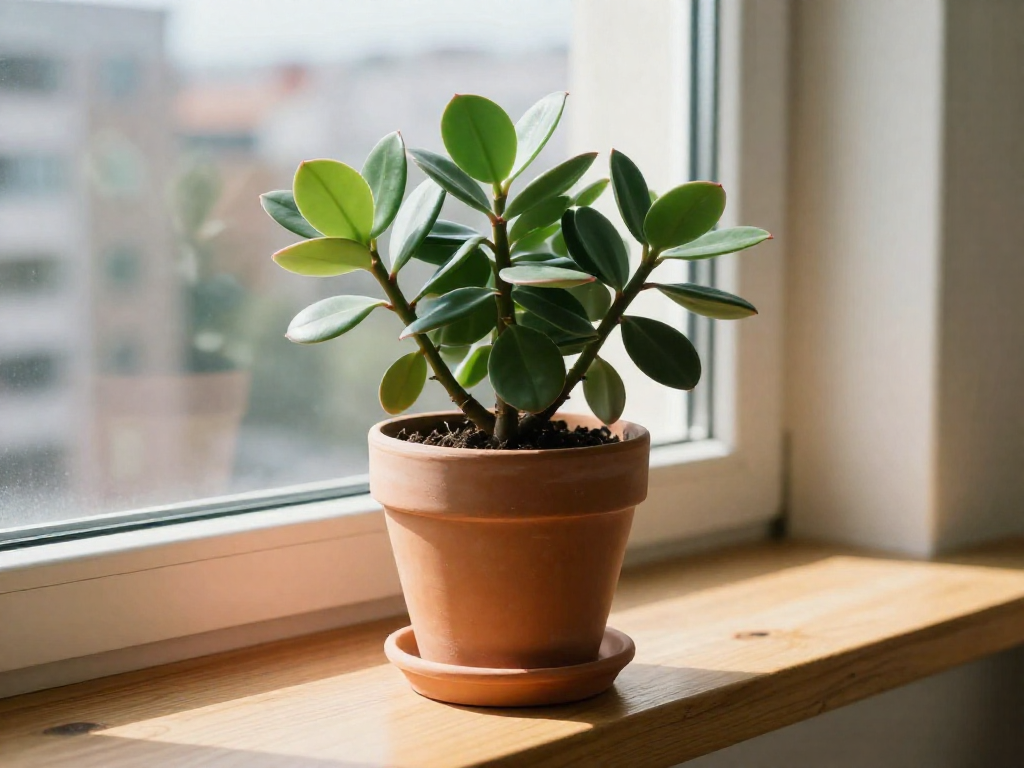
The jade plant (botanically Crassula ovata—the scientific name you'll see on plant tags) is a beginner-friendly succulent, a plant that stores water in thick leaves, so it forgives the occasional missed watering. Native to South Africa, it naturally grows into a small, tree-like shape, which makes it feel like a "real" tree without needing much space.
For apartment dwellers, that compact size is the big selling point. Jade plants are usually sold in 4-, 6-, and 8-inch pots and typically stay around 1 foot tall indoors. Want to keep it small? Choose a smaller pot—the tighter the pot, the more compact the plant stays.
Don't let "tree" scare you: jade is slow-growing but long-lived. It takes many years for a mature plant to reach several feet tall and wide, so yours will stay windowsill-sized for a long time.
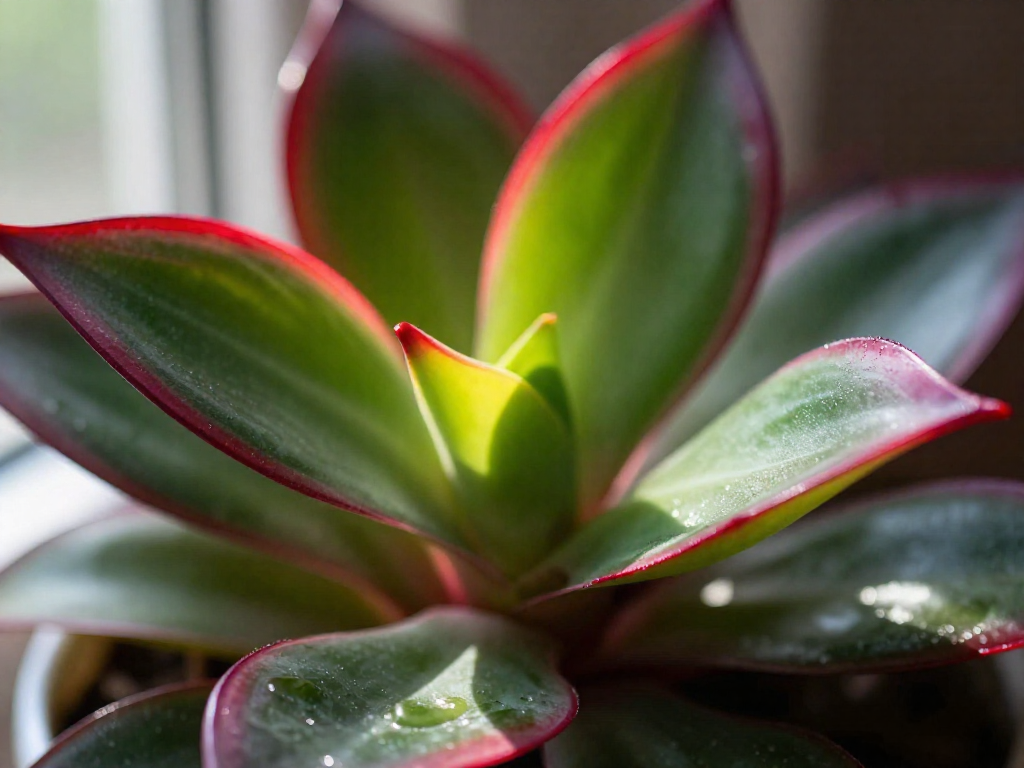
One thing that surprises new owners: the thick, glossy leaves may tint red at the edges in bright light. That's a healthy sign, not a problem—your jade is simply getting the sun it loves.
Light: Give It as Much Sun as You Can
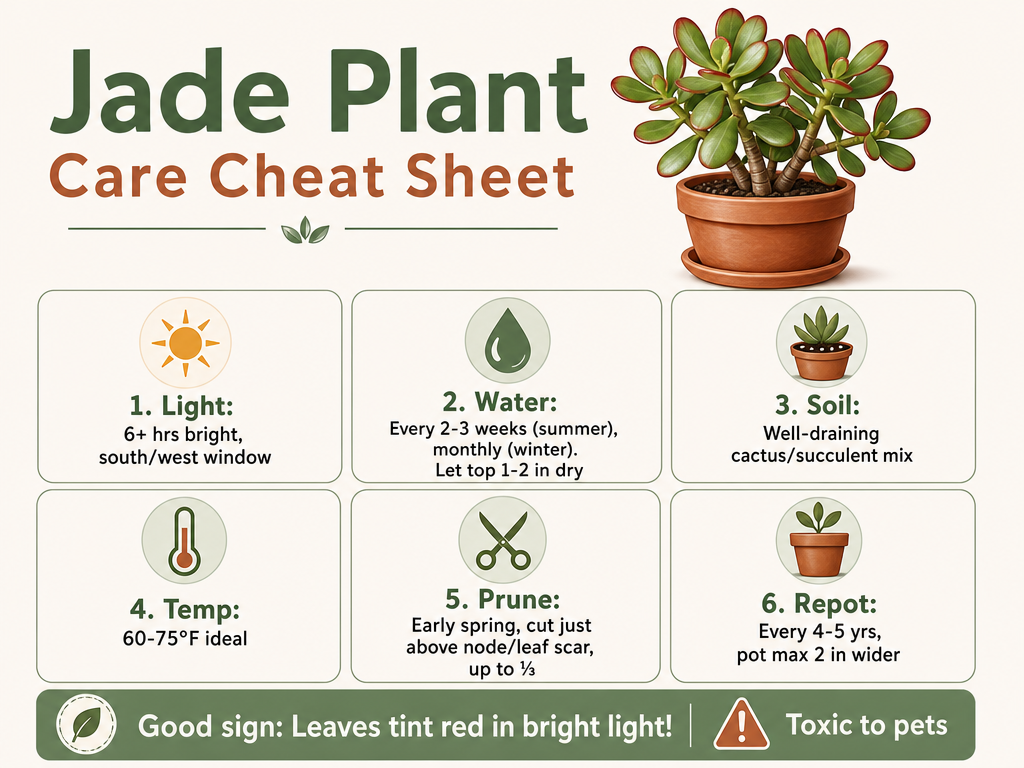
Light is the single most important thing you'll get right (or wrong) with a jade plant. Aim for at least 6 hours of bright, direct light every day. In an apartment, that usually means setting it on or right beside a south- or west-facing window—the sunniest spots you have.
One small caution: don't let the leaves press directly against hot window glass. On sunny afternoons that glass can heat up enough to scorch the leaves, leaving dry, discolored patches (sunburn). Just nudge the pot back an inch or two.
Jade is not a low-light plant, so skip the dim corner or the bathroom shelf. When it doesn't get enough light, it stretches toward the nearest window and grows "leggy"—long, thin, floppy stems with wide gaps between leaves—and its overall growth slows to a crawl.
If your apartment is genuinely dark, you have two good options: move the jade to the brightest window you own, or add an inexpensive LED grow light and run it several hours a day. Either one helps keep the plant compact, sturdy, and looking like the tidy little tree it's meant to be.
Watering: The Make-or-Break Skill (Less Is More)
If you only master one jade plant skill, make it watering—because overwatering is the number-one killer of these succulents. Jade plants (like all succulents, plants that store water in their leaves and stems) have shallow roots that rot easily when soil stays soggy. The good news: they'd much rather be too dry than too wet.
The rule: Let the top 1–2 inches of soil dry out completely before watering again. Not sure if it's dry? Stick your finger in up to the second knuckle. Indoors, this usually means watering every 2–3 weeks in the warmer months and only about once a month in winter, when growth slows. These are starting points, not a schedule—always check the soil first.
Read the Leaves
Your jade will tell you exactly what it needs:
- Shriveled or wrinkled leaves = thirsty. Give it a thorough drink.
- Squishy, waterlogged, or blistered leaves = too much water. Ease up on both frequency and amount.
- Leaf drop = a watering problem, usually overwatering.
When in Doubt, Wait
Jade tolerates drought far better than soggy roots. If you're unsure whether to water, skip it and check again in a few days. A slightly thirsty jade bounces back fast; a waterlogged one may rot before you notice. Erring on the dry side is almost always the safer choice.
Soil, Pots, and Repotting
Getting the container setup right is the second half of preventing root rot (watering is the first). The goal is fast-draining soil in a snug pot that never stays soggy.
Pick a Well-Draining Soil
Because jade is a succulent—a plant that stores water in thick leaves and stems—it needs soil that dries out quickly. The easiest option is a pre-mixed cactus/succulent soil. If you'd rather use regular potting soil, loosen it up by mixing in sand, perlite (lightweight white volcanic granules), or small pebbles so it won't hold water around the roots.
Choose a Snug Pot with Drainage
Always use a pot with at least one drainage hole. Pick one no more than 2 inches wider than the root ball—jade actually prefers to be a little crowded, and an oversized pot holds extra wet soil that invites rot.
Repot Rarely
Jade likes being root-bound, so don't rush to size up. Repot young plants every few years and mature plants only every 4 to 5 years. In between, just scrape off and replace the top layer of soil once a year to keep it fresh.
Temperature, Feeding, and Seasonal Care
Jade plants are comfortable in the same temperatures you are. Aim for 60–75°F indoors, which is why they thrive in most apartments. The key rule: keep them above 40°F year-round. Cold drafts, chilly windowsills in winter, or a spot near an AC vent can stress the plant and trigger leaf drop.
Feeding: Less Is More
Jade plants don't grow in rich soil in the wild, so they need very little fertilizer. Use a cactus fertilizer at half strength just a few times per growing season (spring through summer). Skip high-nitrogen plant foods. Over-fertilizing burns the roots—one of the easiest ways to harm an otherwise easygoing plant.
An Optional Summer Vacation
Jades enjoy time outdoors once nighttime temperatures stay at or above 65°F. Move yours to a shaded, protected spot first, then gradually shift it into more sun over a few days—outdoor sunlight is much stronger and can scorch leaves that aren't acclimated.
Don't expect flowers indoors, though. Jades rarely bloom in homes because they seldom get the extended, strong winter sun blooming requires.
Pruning to Shape a Bushy Little Tree
Here's the good news: a jade plant will grow into that classic miniature-tree shape on its own once it has a healthy root system and plenty of sun. Pruning doesn't create the shape from scratch—it refines it, encourages fullness, and keeps a leggy plant compact.
When and How to Prune
Prune in early spring, when the plant is heading into its active growing season. Work in two steps:
- Clean up first. Remove any misshapen, damaged, or unhealthy branches.
- Shape next. Picture the form you want, then cut back up to one-third of the total growth—no more in a single session.
Use sharp, sterile shears (wipe the blades with rubbing alcohol) and always cut just above a node or leaf scar. A node is a branching point; leaf scars are the small rings you'll see circling the stem where old leaves used to be. Cut about a quarter inch above one—not flush against it.
Why This Creates Fullness
Wherever you make a cut, the jade typically responds by pushing out two new branches just below it. So each snip roughly doubles the branching at that spot. Cut where you want the plant to look denser, and over time those doubled branches fill in a full, bushy canopy.
Don't Toss the Trimmings
Jade propagates easily, so turn cuttings into new plants. Let a stem cutting (or even a single plucked leaf) dry for a couple of days so the cut end calluses, then set it in dry potting mix.
One safety note: as your jade grows tall and top-heavy, move it into a heavier, wider pot so it won't tip over.
Troubleshooting and Safety
Most jade plant problems trace back to watering or light, and they're easy to spot once you know the signs.
Match the Symptom to the Cause
- Leaf drop and soft, squishy leaves: overwatering. Ease up on how often and how much you water, and check that the pot drains freely. Overwatering is the most common way beginners lose a jade.
- Wrinkled or shriveled leaves: underwatering. The plant is thirsty—give it a thorough drink.
- Long, stretched-out stems with sparse leaves (legginess): too little light. Move it to your brightest window.
Dealing with Pests
Jade plants can attract mealybugs (white, cottony patches, often under leaves), spider mites, and scale. Dip a cotton swab in rubbing alcohol and wipe the pests directly off the leaves and stems. Repeat every few days until they're gone.
Safety: Keep It Away from Pets
Jade plants are toxic to cats and dogs, so place yours where curious pets can't nibble. The sap can also irritate skin and cause a rash—wash your hands after pruning or handling cut stems.
Sources
- Home - Jade Plant (Crassula ovata) - Research Guides at New York Botanical Garden — libguides.nybg.org
- Jade Plant Care: Growing Crassula Ovata Indoors & Outdoors — joyusgarden.com
- Jade Plant: Houseplant How-To — extension.sdstate.edu
- How to Grow and Care for Jade Plants | ScottsMiracle-Gro US — scottsmiraclegro.com
- How to Make A Jade Plant Bushy: 1 EASY Way (with Photos) — ohiotropics.com
- 13 Common Problems With Indoor Jade Plants — epicgardening.com
FAQ
How often should I water a jade plant indoors?
Water an indoor jade plant about every 2 to 3 weeks during the warmer, sunnier months, and only about once a month in winter. Rather than sticking to a rigid schedule, check the soil first: let the top 1 to 2 inches dry out completely before watering again. Jade plants are succulents (plants that store water in their thick leaves and stems), so they hold moisture and rot quickly if kept in constantly wet soil. When you do water, soak the soil thoroughly and let all excess drain away.
Why is my jade plant dropping leaves?
Leaf drop is almost always a watering problem, and overwatering is the most common cause of jade plant failure. Look at the fallen or remaining leaves for clues: squishy, mushy, or waterlogged leaves (and blisters on the surface) mean too much water, so let the soil dry out more between waterings and make sure the pot drains freely. Shriveled or wrinkled leaves mean the plant is too dry and needs a drink. Cold can also trigger leaf drop, so keep your jade between 60 and 75°F ideally, and never below 40°F. Confirm the plant is in well-draining soil and getting plenty of light, then adjust watering accordingly.
How do I make my jade plant bushy instead of leggy?
First, address the cause: a leggy (tall, stretched, sparse) jade is usually short on light, so move it to your brightest window with at least 6 hours of sun. Then prune to force branching. In early spring, use clean, sterilized shears to cut a stem just above a node or a leaf scar (the rings on the stem where leaves used to grow), about a quarter inch above it. Wherever you cut, roughly two new branches will sprout just below that point, filling the plant out. You can safely remove up to about a third of the plant at once. Cut wherever you want more fullness, and repeat as it grows.
Are jade plants toxic to cats and dogs?
Yes. Jade plants (Crassula ovata) are toxic to both cats and dogs, so keep them out of reach of curious pets. The sap can also cause skin rashes in some people, so consider wearing gloves when pruning or propagating. If you have pets who like to chew on plants, place your jade somewhere they can't get to it, such as a high shelf, or choose a pet-safe plant instead.
Do jade plants need direct sunlight?
Yes, jade plants want as much bright light as possible, at least 6 hours a day, and they do best near a south- or west-facing window where they can catch direct sun. They are not suited to low light; without enough of it they grow leggy and stunted. One caution: don't let the leaves press against hot window glass, which can cause sunburn. In strong light, the leaf edges may tint an attractive red, which is normal and healthy.
Can I grow a new jade plant from a leaf or cutting?
Yes, jade plants are one of the easiest houseplants to propagate. For a stem cutting, break or snip off a piece, strip the lower leaves, and let the cut end dry (callus over) for a couple of days so it doesn't rot. Then set it in a well-draining cactus or succulent mix. You can also lay or gently insert a single healthy leaf into the soil. Keep the mix barely moist until roots form, then care for the new plant as usual. Letting the cut end dry before planting is the key step beginners often skip.
See also
- Best Low-Maintenance Succulents for Beginners
- How to Fix an Overwatered Houseplant
- Choosing the Right Pot and Drainage for Indoor Plants
- Pet-Safe Houseplants for Apartments
- How to Propagate Succulents from Cuttings
- Best Grow Lights for Low-Light Apartments
Related articles
Pothos vs. Philodendron vs. Snake Plant: Which Should You Start With?
Pothos, philodendron, or snake plant—which easy houseplant is the best first choice for your apartment? A clear, plant-by-plant comparison for new plant parents.
Jul 14, 2026 · 7 min read
Fiddle Leaf Fig Care: Why It's Fussy and How to Cope
Can a beginner keep a fiddle leaf fig alive? An honest, plant-by-plant care guide covering light, watering, drafts, and how to fix brown spots and leaf drop.
Jul 14, 2026 · 12 min read
Aloe Vera Care Indoors: Sun, Soil, and Watering
Learn how to grow aloe vera on a windowsill: how much sun it needs, the right soil and pot, and exactly how often to water without killing it.
Jul 14, 2026 · 9 min read