Aloe Vera Care Indoors: Sun, Soil, and Watering
How do I grow aloe vera on a windowsill?
On this page
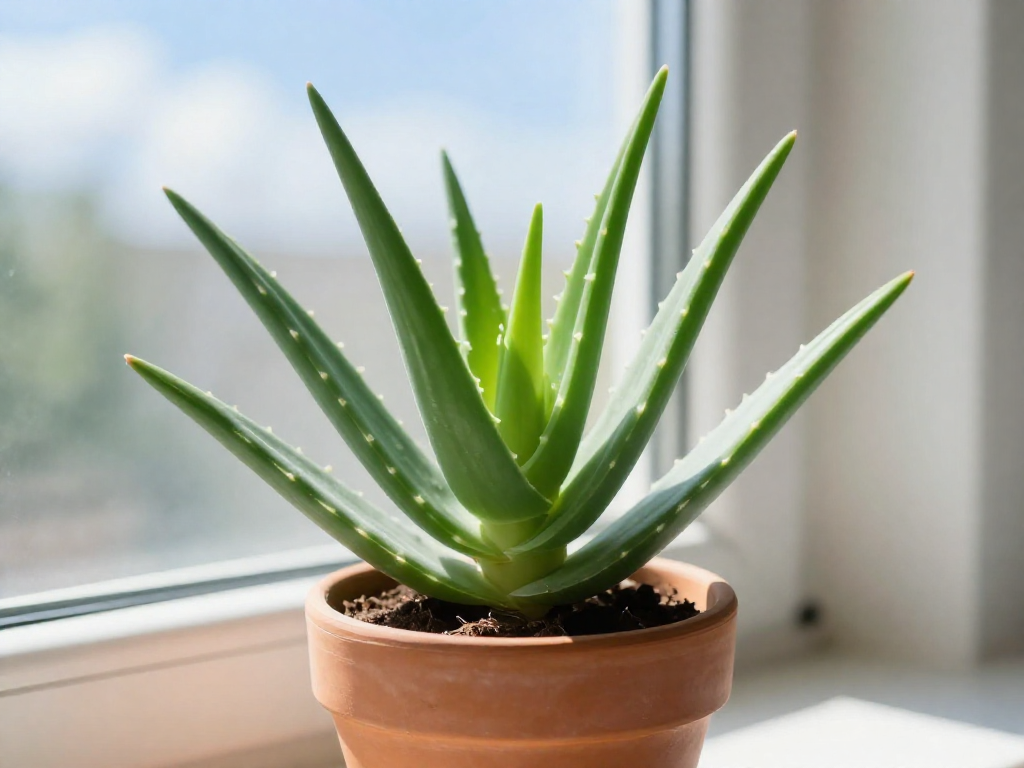
Meet Your Aloe Vera: A Desert Plant on Your Windowsill
To grow aloe vera on a windowsill, start by understanding what it is: a succulent (a plant that stores water in thick, fleshy leaves) native to dry, arid, desert-like climates. That single fact explains almost every care rule you'll follow.
Because aloe hoards water in its leaves, it survives long stretches without a drink. So the number one thing that kills indoor aloe isn't neglect—it's overwatering. When in doubt, wait.
In the wild, aloe is an understory desert plant, meaning it grows beneath larger plants and receives bright but filtered light. On your windowsill, that translates to lots of light, with a little shielding during the hottest, most intense part of the day.
A mature indoor plant reaches about 24 inches tall—compact enough for a small apartment. Best of all, aloe is forgiving and low-maintenance, and the gel inside its leaves is a well-known soothing remedy. If you can resist the urge to overwater, you're most of the way to a thriving plant.
How Much Sun Aloe Vera Needs Indoors
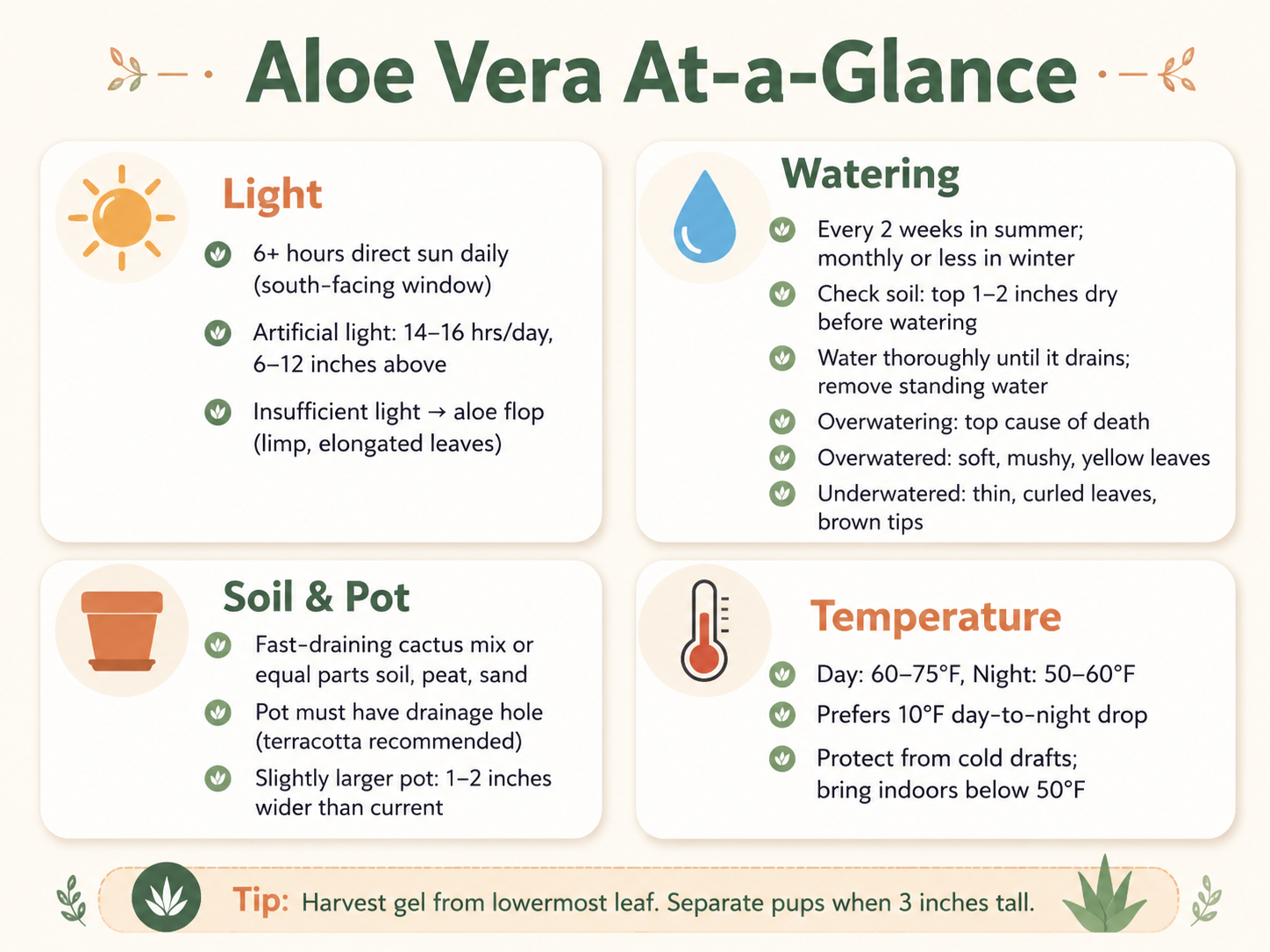
Aloe vera needs a lot of light to stay compact and upright. Aim for at least 6 hours of sunlight per day, which the New York Botanical Garden (NYBG) calls critical for keeping the plant healthy on a windowsill. The best spots are a south-facing or east-facing window, where the light is bright and lasts most of the day.
There's one catch. Harsh, direct sun during the hottest part of the day—especially in peak summer—can scorch the leaves, leaving white or brown spots. If your window gets intense midday heat, pull the plant back a foot or two so it gets bright, indirect light (strong daylight that doesn't fall directly on the leaves) during those hours. Morning and late-afternoon sun is gentler and rarely causes burns.
If Your Window Isn't Bright Enough
Small apartments don't always have a sunny window. If yours is dim, you can supplement with a white fluorescent light placed 6 to 12 inches above the plant. Because artificial light is weaker than daylight, run it for 14 to 16 hours per day to give the plant enough energy (NYBG).
The Warning Sign: "Aloe Flop"
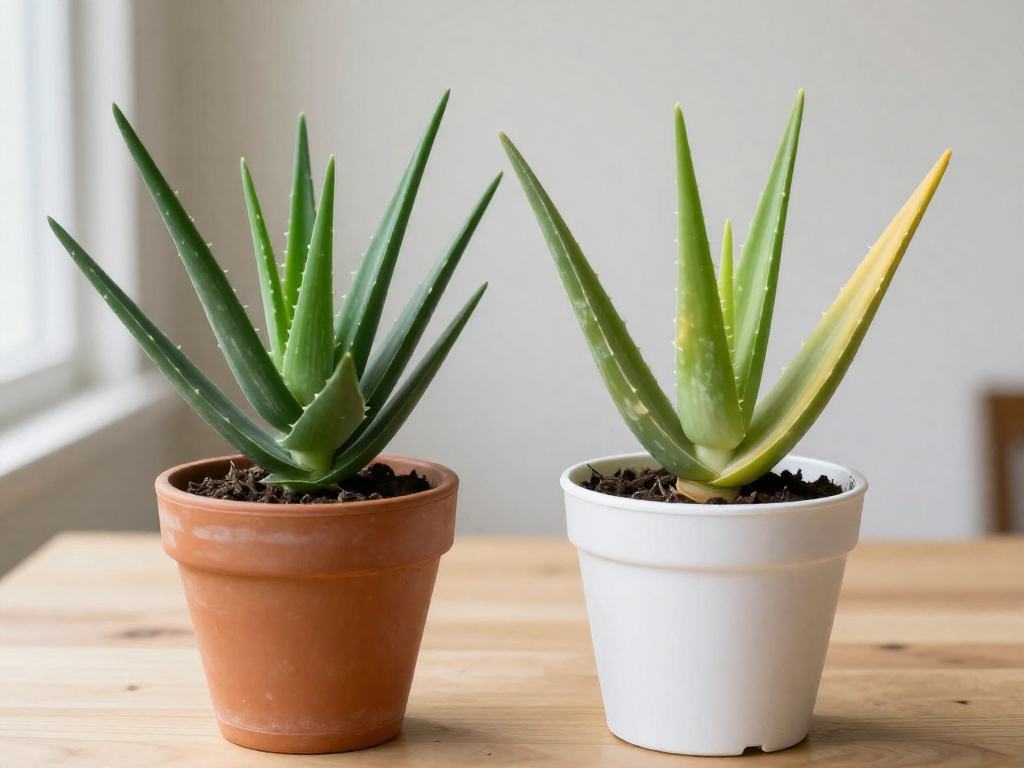
Too little light causes what growers call aloe flop. The leaves stretch out, thin, and lie flat instead of standing up, and the stem weakens until the plant topples. Botanists call this stretching etiolation. If you spot limp, elongated, flattened leaves, move your aloe to a brighter window—it's asking for more sun.
The Right Soil and Pot for Aloe Vera
Correct watering starts before you ever pick up a watering can. Aloe vera roots rot fast when they sit in soggy soil, so your soil and pot need to drain quickly. Get this setup right and you've won half the battle.
Use a fast-draining mix. Aloe wants soil that dries out quickly, not the dense stuff most houseplants use. Buy a commercial cactus or succulent mix, or make your own with equal parts regular potting soil, peat (a spongy organic material that lightens soil), and sand. The New York Botanical Garden recommends this loose, free-draining blend because moisture trapped around the roots can kill an aloe suddenly.
Always pick a pot with drainage holes. Without holes, water pools at the bottom and rots the roots — no soil mix can fix a pot that can't drain. A porous pot like terracotta (unglazed clay) helps even more, since it lets moisture evaporate through its walls.
Don't oversize the pot. Choose one only an inch or two wider than the current pot (about 5–10% larger), with the roots filling roughly two-thirds of the space. A too-big pot holds extra soil that stays wet, which leads to a weak root ball and rot.
How Often to Water Aloe Vera (and How)
The golden rule for aloe is simple: let the top inch of soil dry out completely before you water again. Aloe stores water in its thick leaves and thrives in dry soil, so it needs far less water than most houseplants. Overwatering is the number one reason aloe plants die, so when in doubt, wait.
Poke your finger into the pot up to the first knuckle (about an inch). If the soil is even slightly damp, don't water yet.
How Often
Follow the season, not a fixed calendar:
- Spring through fall (growing season): roughly every 2 weeks. Some sources suggest weekly, but always check the soil first rather than watering on autopilot.
- Winter (dormancy): much less often — about every 3 to 4 weeks, or not at all if your plant got plenty of water during the warm months. Dormancy just means the plant's growth naturally slows in winter.
Your apartment's light, humidity, and heating will shift these numbers, so the dry-soil test always wins over the schedule.
How to Water
When it's time, water properly:
- Soak thoroughly. Pour water evenly over the soil until it runs out the drainage holes at the bottom of the pot.
- Empty the tray. After about 15 minutes, dump any water sitting in the saucer. Aloe roots are shallow and rot quickly if they sit in standing water.
Do not mist aloe. It's a desert plant and doesn't need extra humidity — misting can actually invite rot and pests. Watering the soil, deeply but infrequently, is all your aloe wants.
Reading Your Aloe: Overwatered vs. Underwatered
Not sure why your aloe looks off? Most problems trace back to water. Here's how to tell the two apart at a glance.
Signs of overwatering:
- Soft, mushy, or yellowing leaves
- Browning at the base of the plant
- Dark, mushy roots (check by gently sliding the plant out of its pot)
Signs of underwatering:
- Thin, curled, or limp leaves
- Brown, crispy tips
Not a water problem? Two other look-alikes are worth ruling out:
- Flopping or stretching leaves point to too little light, not water. This is etiolation — when a plant grows leggy reaching for the sun. Move it to a brighter window (see the sun section above).
- Discoloration often means your aloe is chilled on a cold windowsill or sitting in a draft. Aloe prefers typical room temperatures (60–75°F by day) and dislikes cold spots.
Quick fix: When in doubt, cut back on water and improve drainage first. Aloe recovers from thirst far more easily than from rot, so it's safer to underwater than to overwater.
Temperature, Feeding, and Seasonal Care
Aloe is comfortable in the same temperatures you are. Aim for 60–75°F during the day and 50–60°F at night. That nighttime dip matters: aloe (and succulents in general) prefer at least a 10-degree drop from day to night, which most apartments provide naturally.
The main risk in a small space is cold. In winter, glass gets frigid, so keep the pot off a chilly windowsill and away from drafts from doors, AC units, or heating vents. A chilled or drafty aloe will discolor, so if a spot feels cold to your hand, move the plant a few inches back into the room.
Feeding
Aloe barely needs feeding. Only fertilize during the March–September growing season, using a balanced organic houseplant food at half strength (dilute it to half the label's recommended amount). Somewhere between once a month and once every three months is plenty. Skip high-nitrogen formulas, which push weak, floppy growth rather than the firm, compact leaves you want.
Taking it outside
Aloe can live outdoors year-round only in warm regions—roughly USDA zones 8–11 (a US map region based on winter lows). Everywhere colder, treat outdoor time as a summer vacation and bring the plant inside once nights drop below 50°F.
Bonus: Harvesting Gel and Growing New Plants from Pups
Once your aloe is thriving, it can pay you back in two satisfying ways.
Harvesting gel. Cut or snap a piece from the lowermost leaf, closest to the base. A yellowish sap called latex will seal the cut on its own within a few hours, so there's no need to bandage the plant. If you want to save a whole leaf, wrap it in plastic and keep it in the fridge for up to two days.
Growing new plants from pups. Mature aloe sends up small offshoots at its base called pups—baby plants that share the parent's roots. Once a pup is about 3 inches tall, gently dig it up (snip the connecting stem if needed, but avoid cutting the pup's own roots). Plant it in a roughly 2-inch pot, burying it to the base of its first leaf. Wait two days before watering, then water weekly whenever the soil dries out.
Sources
- Aloe Houseplants - Research Guides at New York Botanical Garden — libguides.nybg.org
- Growing Aloe | ScottsMiracle-Gro US — scottsmiraclegro.com
- How to Tell It's Time to Water Your Aloe—Before It's Too Late — thespruce.com
- How Often To Water Your Aloe Vera Plant — southernliving.com
- A Step-by-Step Guide to Repotting Aloe Vera (+ 5 Best Practices) — rosysoil.com
- How Much Direct or Indirect Sunlight Do Aloe Vera Plants Need? — epicgardening.com
FAQ
How often should I water an aloe vera plant indoors?
Water indoor aloe vera roughly every two weeks during spring through fall, but only after checking that the top 1 to 1.5 inches of soil is completely dry. Because aloe stores water in its thick leaves and thrives in dry soil, overwatering is the single most common cause of death. Water thoroughly until it drains from the pot's drainage holes, then empty any water left in the saucer after 15 minutes. In winter the plant goes dormant (a rest period when growth slows), so cut back to watering every three or four weeks, or skip it entirely if the soil stays moist.
Can aloe vera survive on a windowsill without direct sun?
Not for long. Aloe vera needs a minimum of about six hours of bright light per day, so a sunny windowsill is ideal—an east- or south-facing window works well. Without enough light the plant will stretch, lose its compact shape, and eventually topple as its stem weakens. If your only window gets harsh midday sun, use bright but indirect light, since intense direct rays during the hottest hours can scorch leaves and leave white or brown spots. A window that stays too dim will not sustain a healthy aloe.
Why are my aloe vera leaves turning yellow and mushy?
Yellow, soft, or mushy leaves are the classic sign of overwatering, which is the top reason aloe plants die. When the soil stays wet, the shallow roots rot and can no longer support the leaves, which may also brown at the base. Let the soil dry out completely—the top inch or more should be bone dry—before watering again, and make sure the pot has drainage holes and fast-draining soil. If the roots have turned dark and mushy, trim away the rotted parts and repot in fresh cactus mix. (By contrast, thin, curled, or limp leaves with brown tips point to underwatering instead.)
What kind of soil and pot does aloe vera need?
Aloe vera needs a fast-draining, sandy mix—either a commercial cactus/succulent mix or equal parts potting soil, peat, and sand. Trapped moisture around the roots can kill the plant quickly, so drainage is essential. Choose a porous pot such as terracotta, which lets moisture evaporate, and always make sure it has drainage holes. Pick a pot only about an inch or two (roughly 5 to 10 percent) wider than the current one; an oversized pot holds too much damp soil and raises the risk of root rot. Ideally the roots should fill about two-thirds of the container.
Why is my aloe vera drooping or falling over?
Drooping, flattened, or elongated leaves—sometimes called 'aloe flop'—usually mean the plant isn't getting enough light. Without at least six hours of bright light a day, aloe stretches toward the light (a process called etiolation) and its stem and leaves lose the strength to stay upright, so the plant leans or topples. Move it to a brighter east- or south-facing window. Note that mushy, collapsing leaves can instead signal overwatering and root rot, so check whether the soil is soggy and the base is soft before deciding the cause.
Can I grow aloe vera under a grow light?
Yes. If no window is bright enough, a grow light or a white fluorescent light placed 6 to 12 inches above the plant gives good results. Because artificial light is weaker than sunlight, run it for at least 14 to 16 hours per day to match the aloe's need for strong, extended light. This keeps the plant compact and prevents the stretching and flopping that come from too little light—a practical option for apartments with limited natural sun.
See also
- Best Low-Light Houseplants for Small Apartments
- How to Choose the Right Pot and Drainage for Houseplants
- Cactus and Succulent Soil: What to Use and Why
- How to Save an Overwatered Houseplant
- Beginner's Guide to Grow Lights for Apartments
Related articles
Pothos vs. Philodendron vs. Snake Plant: Which Should You Start With?
Pothos, philodendron, or snake plant—which easy houseplant is the best first choice for your apartment? A clear, plant-by-plant comparison for new plant parents.
Jul 14, 2026 · 7 min read
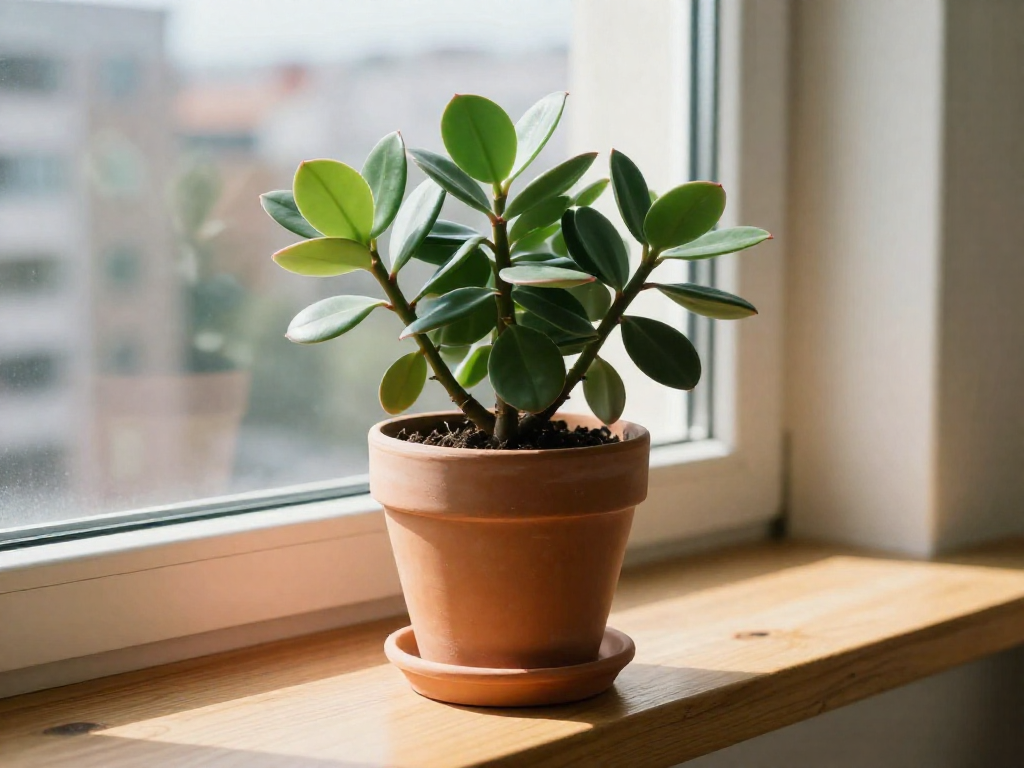
Jade Plant Care: The Easy Beginner Succulent Tree
Learn how to care for a jade plant indoors: watering, light, soil, plus simple pruning to shape a bushy little succulent tree. Beginner-friendly, step by step.
Jul 14, 2026 · 9 min read
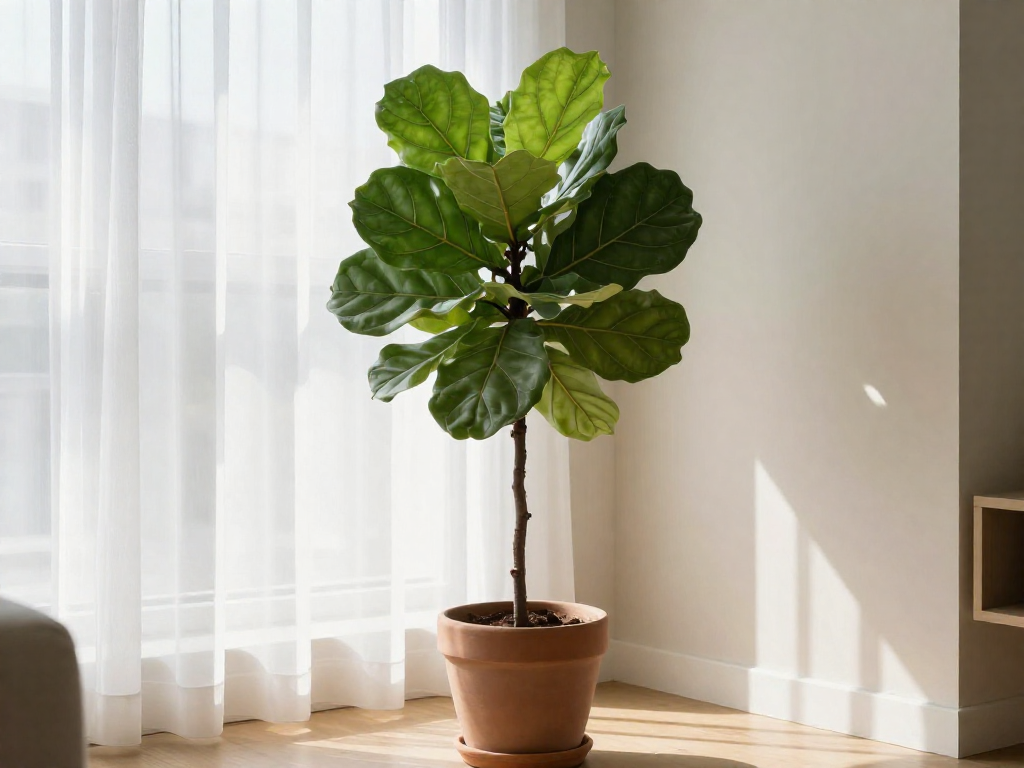
Fiddle Leaf Fig Care: Why It's Fussy and How to Cope
Can a beginner keep a fiddle leaf fig alive? An honest, plant-by-plant care guide covering light, watering, drafts, and how to fix brown spots and leaf drop.
Jul 14, 2026 · 12 min read