Fiddle Leaf Fig Care: Why It's Fussy and How to Cope
Can a beginner keep a fiddle leaf fig alive?
On this page
Open by naming the tension every new plant parent feels: the fiddle leaf fig is the most Instagrammed houseplant in America, yet it has a reputation for dying the moment you look at it wrong. Be honest up front that experts (The Spruce, NYBG) call it finicky and not low-maintenance, but reassure the reader with a real example (blogger Jaclyn James) that a beginner CAN keep one alive with a simple, consistent routine. Frame the whole piece as "here's exactly why it's fussy, and here's the coping system that works."
Is a Fiddle Leaf Fig Really Beginner-Friendly? An Honest Answer
Short answer: yes, a beginner can keep a fiddle leaf fig alive — but only with the right routine. This plant is not low-maintenance, and pretending otherwise sets you up to fail. The Spruce puts it plainly: fiddle leaf figs are "not a particularly low-maintenance plant" and are "picky about growing conditions," making them a better fit for people with some houseplant experience. The Coastal Gardener agrees, calling them "finicky." So if this is your first plant, go in with your eyes open.
That said, "finicky" is not the same as "impossible." Beginners succeed every day by following a simple, consistent system. Blogger Jaclyn James admits she was intimidated because the plant "can be challenging," yet kept hers thriving using a basic moisture-meter routine — checking soil moisture before every watering instead of guessing. A repeatable routine, not gardening talent, is what keeps these plants alive.
Why It's Everywhere (and Why That's a Trap)
The fiddle leaf fig became "the new IT plant" on Pinterest and Instagram during the houseplant boom — in 2018, 34.4 million American homes owned houseplants. The problem is that gorgeous photos hide the care involved.
Why It's Fussy in the First Place
Ficus lyrata is a tropical rainforest tree native to West Africa, where it can grow up to 40 feet tall under a protective canopy of mature trees (about 10 feet indoors). The plant on your windowsill is an immature tree living far from that humid, filtered-light home. That mismatch — a rainforest giant squeezed into an apartment corner — is the root of nearly every problem you'll face.
What this guide gives you: the exact conditions and a coping routine to beat the odds — covered plant-by-plant in the sections below.
Why the Fiddle Leaf Fig Is So Fussy (The Root Causes)
The fiddle leaf fig isn't out to get you—it's just a rainforest tree living in the wrong place. Understanding why it struggles makes its needs far easier to meet than memorizing a list of rules.
It's a rainforest understory tree
In the wild, Ficus lyrata grows beneath the canopy of West African rainforests. That single fact explains almost everything it wants in your apartment: fast-draining soil (its roots never sit in standing water), bright but filtered light (strong sun softened by the trees above), and steady warmth and humidity. When you give it those conditions, the fussiness largely disappears.
Nearly every big problem traces to three causes
According to the Houseplant Resource Center, most serious fiddle leaf fig problems come down to just three things: too much water, not enough light, and poor drainage. If you can get watering, light, and a well-draining pot right, you've prevented the majority of issues before they start.
It hates sudden change
This plant is extremely sensitive to its environment. The New York Botanical Garden notes it prefers steady room temperatures of 65–75°F and reacts to temperature swings and drafts by dropping leaves—what NYBG calls "the language of distress." Keep it away from heating vents, AC units, and drafty doorways, and make any change (like a winter temperature drop) gradually.
Two quick things to know before you buy
- Naming confusion: "Fiddle leaf fig" can refer to Ficus lyrata (what stores sell) or Philodendron bipennifolium. The retail plant is almost always Ficus lyrata.
- Safety flag: Fiddle leaf figs are toxic to children and pets if chewed or ingested, so place yours out of reach.
Light: The Brightest Spot Without Direct Sun
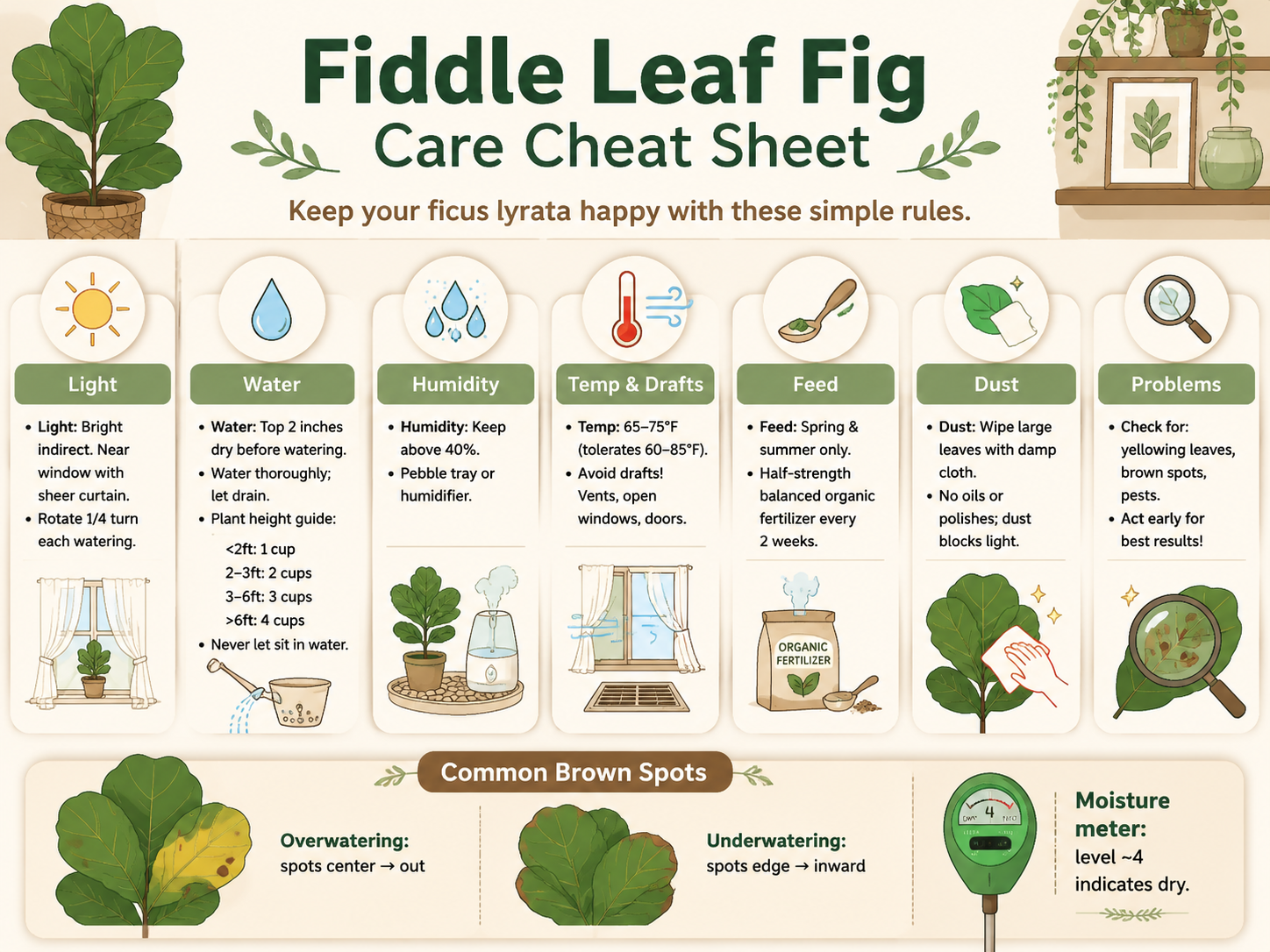
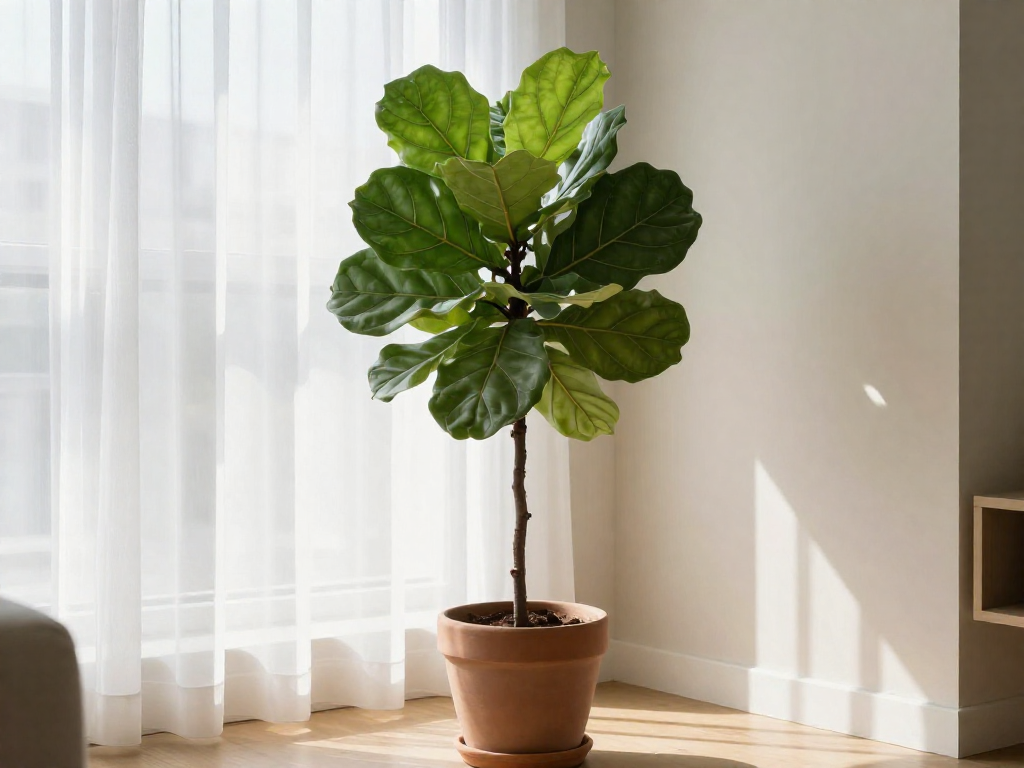
Light is where most fiddle leaf figs succeed or fail, so get this one rule right: put your plant in the brightest room you have, but far enough from the window that direct sun rays never land on the leaves. Direct rays can scorch the foliage, while a dim corner slowly starves the plant. If your only bright spot gets strong afternoon sun, hang a sheer curtain between the window and the plant for extra protection (New York Botanical Garden).
Fiddle leaf figs love gentle morning sun, so an east-facing window is often ideal. Avoid the classic beginner mistake of tucking this tree into a shady corner "for decoration" — it needs a well-lit spot to stay healthy (Oak Hill Gardens).
How to tell it wants more light: watch for long, drooping limbs with leaves spaced far apart, or thin, "leggy" growth (spindly stems that stretch toward the light). These are signs the plant is reaching for a brighter source and isn't getting enough.
Rotate for even growth. Because the plant leans toward light, give it a quarter turn every time you water (or once a week if that's easier to remember). This keeps all sides evenly lit and helps the tree grow straight and balanced instead of lopsided (NYBG).
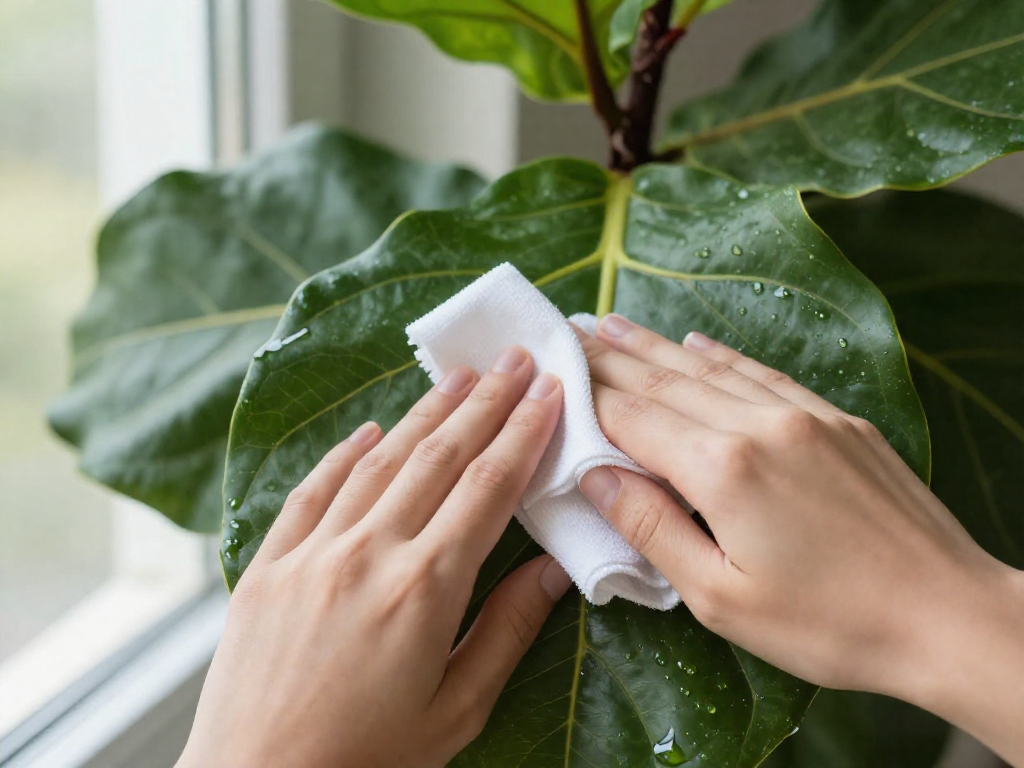
Keep the leaves clean. Those big, glossy leaves collect dust, and dust physically blocks photosynthesis — the process plants use to turn light into energy. When the leaves are coated, the plant behaves as if it's light-starved even in a bright room. Wipe them regularly with a damp cloth, supporting each leaf with your other hand. Skip leaf-shine sprays, polishes, and oils: they build up over time and create even more of a light block (NYBG).
Watering Without Killing It (The #1 Cause of Death)
If your fiddle leaf fig is struggling, here's the blunt truth: you are probably over-watering. Too much water is among the most frequent causes of fig failure, according to the New York Botanical Garden (NYBG). In the wild, this plant grows in soil that drains very fast, so its roots rot easily when they sit soggy. Nervous new plant parents tend to reach for the watering can too often—and love it to death.
The Simple Rule
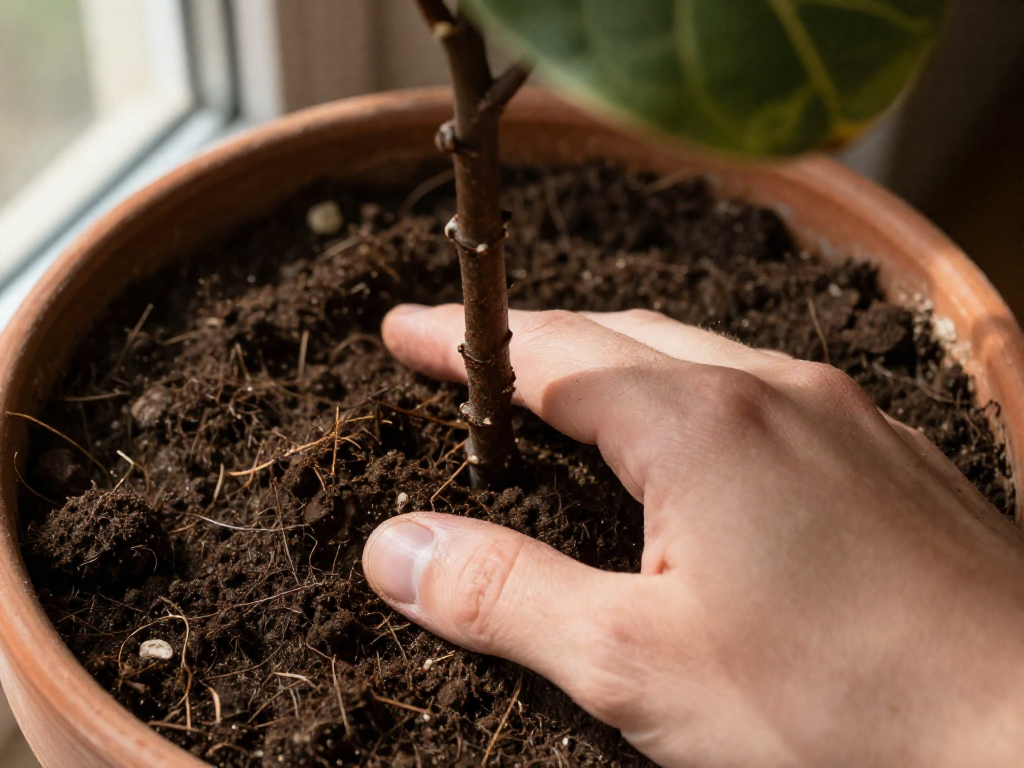
Water only when the top two inches of soil feel dry to your finger. If you prefer gadgets, a moisture meter (a cheap probe you push into the soil near the roots) should read almost dry before you water again. For most apartment figs, this works out to about once a week. Pick a set day and stick to it so the plant settles into a rhythm—watering more often is how over-watering starts.
How Much Water to Give
Match the amount to your plant's height:
| Plant height | Water per week |
|---|---|
| Under 2 ft | 1 cup |
| Over 2 ft | 2 cups |
| 3–6 ft | 3 cups |
| Over 6 ft | 4 cups |
The Right Method
Water thoroughly until it drains out the bottom of the pot. Wait 15 minutes, then empty the run-off dish. Never let the pot sit in standing water—that's a fast track to root rot.
Watch for soil shrinkage, where the soil dries out so much it pulls away from the sides of the pot. When that happens, your next pour runs straight down the gap and misses the roots entirely, leaving the plant thirsty even though you "watered" it. This wet/dry seesaw stresses the plant badly, so don't let the soil get that far gone.
Season and Water Quality
Plants drink more slowly in low-light months (roughly October–February), so ease off. But watch out: a cold winter with the heat blasting can dry the soil out faster than usual, so keep checking rather than assuming.
Finally, consider your tap water. The chlorine and fluoride in most municipal supplies can cause brown spots or browning leaf edges. If you're seeing that, try leaving water out overnight or switching to filtered water.
Temperature, Humidity & Drafts
Fiddle leaf figs are dramatic about their environment, and sudden leaf drop is usually their way of protesting a temperature swing or a draft—not normal aging. Get these three factors steady and you'll head off most surprise leaf loss.
Keep Temperatures Steady (65–75°F)
Aim for consistent household temperatures of 65–75°F, with good air circulation. The plant tolerates a wider 60–85°F range, but it's the change it hates, not the number. It's very sensitive to swings and reacts by dropping leaves. If you want to lower temps toward 65°F in winter, do it gradually—no sudden shifts.
Protect It From ALL Drafts
This is the one most beginners miss. Keep your fig away from AC vents, heat vents, open windows, and open doors. The New York Botanical Garden notes these environmental shifts are "poorly tolerated." Oak Hill Gardens puts it bluntly: a fig placed near or against a heating or AC vent "will surely kill your plant, so move it IMMEDIATELY." If yours sits near a vent, relocate it today.
Humidity: Aim for 30–65%
Fiddle leaf figs like humidity between 30 and 65%. Keeping it above 40% is enough to prevent brown leaf tips (the dry, crispy edges you'll see in over-dry air). In dry winter months, stand the pot on a pebble tray (a shallow dish of wet pebbles that raises local humidity) or run a small humidifier nearby.
Tip: A cheap hygrometer—a gadget that measures humidity—takes the guesswork out. Check it, then adjust.
Pot, Soil & Feeding
Two silent killers hide here: a pot that can't drain, and a feeding routine that's too generous. Get these right and you remove a huge share of the problems that doom beginner fiddle leaf figs.
The pot: drainage is non-negotiable
Many fig problems start with a pretty decorative pot that has no drain hole (an opening in the base that lets excess water escape). Water pools at the bottom, the roots sit wet, and root rot follows.
The simplest fix is a two-pot setup: keep your plant in a plain plastic nursery pot (the flimsy grower's pot with holes in the bottom) and slip that inside your decorative container. To water, lift the nursery pot out, water at the sink, let it drain completely, then set it back. If you'd rather plant directly, only use a pot with a drain hole.
Soil that drains fast
Fiddle leaf figs come from habitats where soil drains quickly, so they hate staying soggy. Use a conventional soil-based potting mix with added perlite (small white volcanic granules that keep soil loose and airy) for extra drainage.
Repot rarely — they like it tight
This plant actually prefers to be slightly root-bound (roots filling the pot snugly). Only repot when roots poke above the soil line or out the drain hole, and then move up just one pot size, ideally in spring. The new pot should still feel a little tight.
Feed lightly, spring and summer only
Feed only during the active growing season (spring and summer) with a balanced organic fertilizer at half the label strength, every other week. Skip feeding in fall and winter. Over-feeding backfires: it causes leaves to drop and burns the leaf margins (edges) brown.
Troubleshooting: Brown Spots, Leaf Drop & Root Rot
Before you panic, know that most fiddle leaf fig problems trace back to three causes: too much water, not enough light, and poor drainage. Your job is to read the symptoms and match them to the right fix.
Brown Spots: Read the Direction
The direction the spots spread tells you what's wrong:
- Center-out spreading (spots start in the middle and move toward the edges) usually means overwatering. Look for supporting clues: yellowing leaves, dropping leaves, and wet, muddy soil.
- Edge-inward (spots start at the leaf edges and move in) with crispy, dry leaves and bone-dry soil means underwatering.
Same symptom, opposite cause — so always check the soil before reacting.
Leaf Drop: Normal or Alarming?
Leaf drop is the trickiest symptom because over- and under-watering look almost identical, and both cause leaves to fall. Don't guess: stick a finger two inches into the soil and check dryness before you water, rather than following a fixed schedule.
To tell normal from alarming:
- Normal: the oldest, lowest leaves slowly yellow and drop with age. This happens gradually.
- Alarming: sudden leaf drop, especially higher up. This is the plant's "language of distress" — often from temperature swings, cold drafts, or a watering problem.
- New plants: a fig you just brought home will often drop some lower leaves while it acclimates (adjusts to its new spot). Give it a few weeks before intervening.
Root Rot: Act Fast
Root rot is the emergency. The signs are black, mushy, foul-smelling roots, yellowing leaves, and brown spots that spread quickly across older leaves. Left alone, it can kill a plant in a week or two.
If you suspect it, move immediately:
- Unpot the plant and inspect the root ball.
- Trim away any black, mushy, or smelly roots with clean scissors.
- Remove no more than about 10% of the leaves at once, so you don't shock an already-stressed plant.
- Repot in fresh, fast-draining soil (a standard potting mix with added perlite works well) in a pot with a drainage hole.
The Outdoor Rescue
If you have the climate for it, moving a struggling fig outside can drive fast recovery. Place it in bright shade — out of direct afternoon sun, with nights no cooler than 50°F and days no hotter than about 95°F. The extra light and airflow often revive a plant faster than anything you can do indoors.
A Simple Beginner Routine That Works
Once you understand why a fiddle leaf fig gets fussy, keeping one alive comes down to one thing: a consistent routine. Here's a plan you can actually follow.
Start by buying smart. At the store, choose a tree with no brown spots and no torn or damaged leaves. A healthy plant gives you the best head start.
Then run this weekly checklist:
- Check the soil. Feel the top 2 inches. Water only if it's dry — never on a fixed calendar day. (Overwatering is the #1 killer.)
- Water thoroughly when needed, letting it drain fully; empty the run-off tray after 15 minutes.
- Rotate a quarter turn so every side gets equal light and the plant stays balanced.
- Dust the leaves so they can soak up light.
- Glance for early brown spots so you catch trouble before it spreads.
In spring and summer only, add a balanced fertilizer at half strength every other week — over-feeding drops leaves.
Real-world proof: beginner blogger Jaclyn James, who felt intimidated at first, kept a moisture meter reading around 4, watered every 4–7 days, fed at half strength, and rotated and dusted regularly. Her tree was thriving in about two months.
The secret is a consistent spot and schedule so the plant can acclimate. Understand the "why," stay steady, and yes — a beginner can absolutely keep a fiddle leaf fig thriving.
Sources
- Home - Fiddle-leaf fig (Ficus lyrata) - Research Guides at New York Botanical Garden — libguides.nybg.org
- Fiddle Leaf Fig Houseplant - Proper Care | The Coastal Gardener — ucanr.edu
- Beginners Guide to Fiddle Leaf Figs - Jaclyn James Company — jaclynjames.co
- The Ultimate Guide to Watering Your Fiddle Leaf Fig Plant — fiddleleaffigplant.com
- Stop What's Causing Brown Spots on Fiddle Leaf Fig Leaves Quickly — fiddleleaffigplant.com
- How to Treat Brown Spots on Fiddle Leaf Fig Leaves [& Save Your Plant Fast!] — youtube.com
- I have a very large fiddle leaf fig that is losing leaves like crazy - NYBG Mertz Library Reference — libanswers.nybg.org
- How to Grow and Care for Fiddle Leaf Fig — thespruce.com
- A Complete Guide to Saving Your Dying Fiddle Leaf Fig Tree — oakhillgardens.com
- Sick Fiddle Leaf Fig Plant? Take it Outside for a Fast Recovery! — houseplantresourcecenter.com
See also
- Best low-maintenance houseplants for beginners
- How to tell if you're overwatering your houseplants
- How to fix root rot in indoor plants
- Choosing the right pot and drainage for houseplants
- Best plants for low-light apartments
- Pet-safe houseplants for small spaces
Related articles
Pothos vs. Philodendron vs. Snake Plant: Which Should You Start With?
Pothos, philodendron, or snake plant—which easy houseplant is the best first choice for your apartment? A clear, plant-by-plant comparison for new plant parents.
Jul 14, 2026 · 7 min read
Jade Plant Care: The Easy Beginner Succulent Tree
Learn how to care for a jade plant indoors: watering, light, soil, plus simple pruning to shape a bushy little succulent tree. Beginner-friendly, step by step.
Jul 14, 2026 · 9 min read
Aloe Vera Care Indoors: Sun, Soil, and Watering
Learn how to grow aloe vera on a windowsill: how much sun it needs, the right soil and pot, and exactly how often to water without killing it.
Jul 14, 2026 · 9 min read