How Often Should You Water Houseplants? A Beginner's Method
How do I know when to water my houseplants?
On this page
Open by naming the reader's real problem: they keep asking "how often should I water?" and hoping for a number like "once a week." Reveal the counterintuitive truth up front—there is no universal number, and following a fixed schedule is actually the #1 way beginners kill plants (via overwatering). Then promise the fix: a 10-second finger test that replaces the calendar and works for almost any plant. Set the tone as reassuring and permission-giving ("you don't need a green thumb, just one finger").
Why There's No "Right" Watering Schedule
If you're hoping for a number—water every 7 days, or every Monday—here's the honest answer: there isn't one. Horticulture experts agree that no single schedule fits every plant, because too many things change how fast soil dries out. Your plant's type, the light it gets, your room's temperature and humidity, the pot's size and material (plastic holds moisture longer than terracotta), the potting mix, and even the season all shift the answer week to week.
That's exactly why a fixed calendar backfires. "Every Monday" ignores the reality that your plant drinks far more during bright summer weeks than during dark, cool winter ones. Watering on autopilot means you'll sometimes pour water into soil that's still soaking, and other times leave a thirsty plant bone-dry for days.
The stakes are real. A large share of houseplants die from overwatering (watering too often, before the soil has dried) and underwatering—and rigid schedules push you toward both. In fact, these are the two most common reasons beginner plants fail.
So let's drop the idea of a schedule entirely. The goal isn't a date on the calendar; it's a quick 10-second check you do before every watering to see whether the plant actually needs it. Once you learn that check—covered next—you'll never have to guess, and you'll water each plant right no matter the season.
The Finger Test: Your 10-Second Method
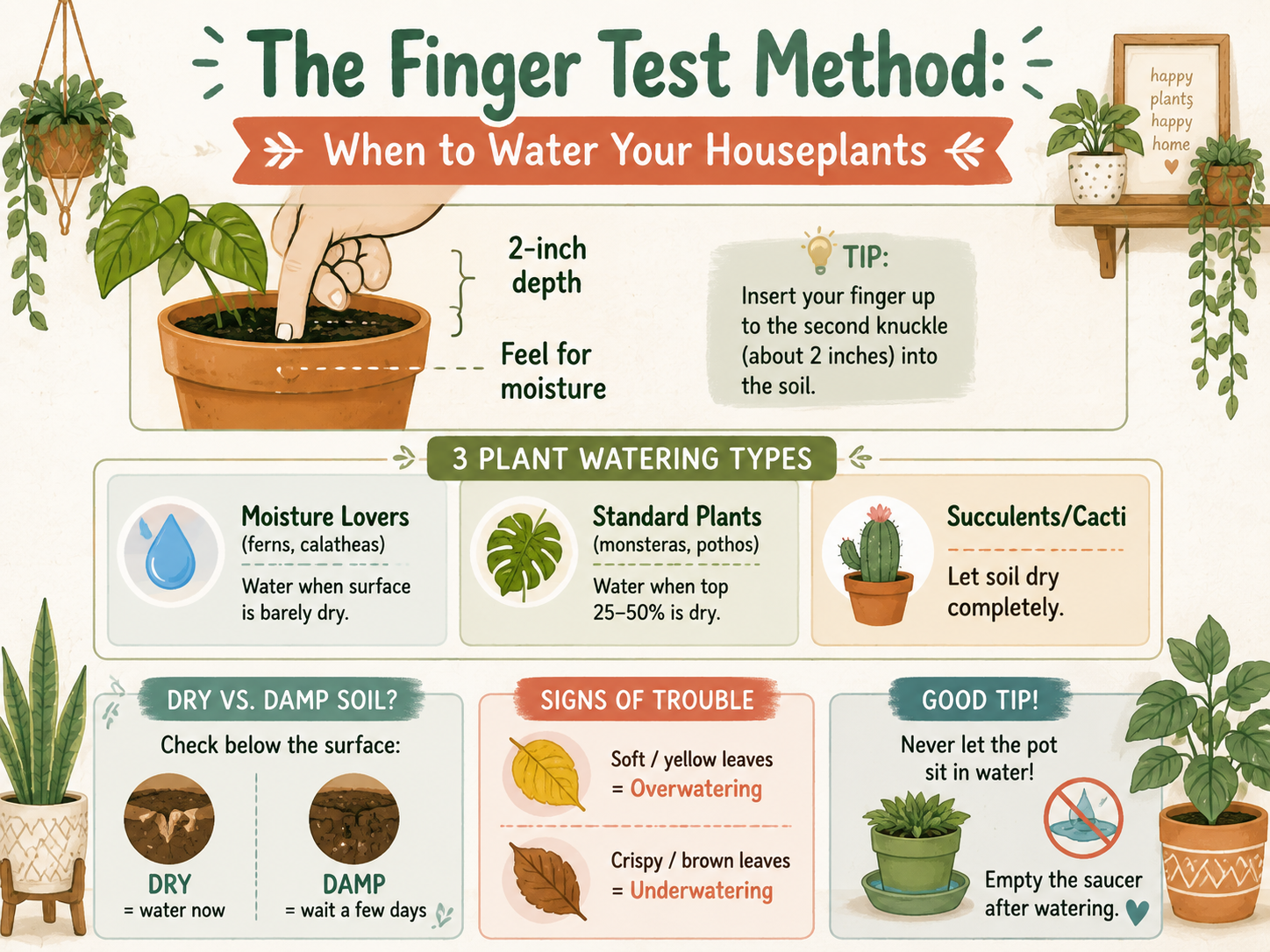
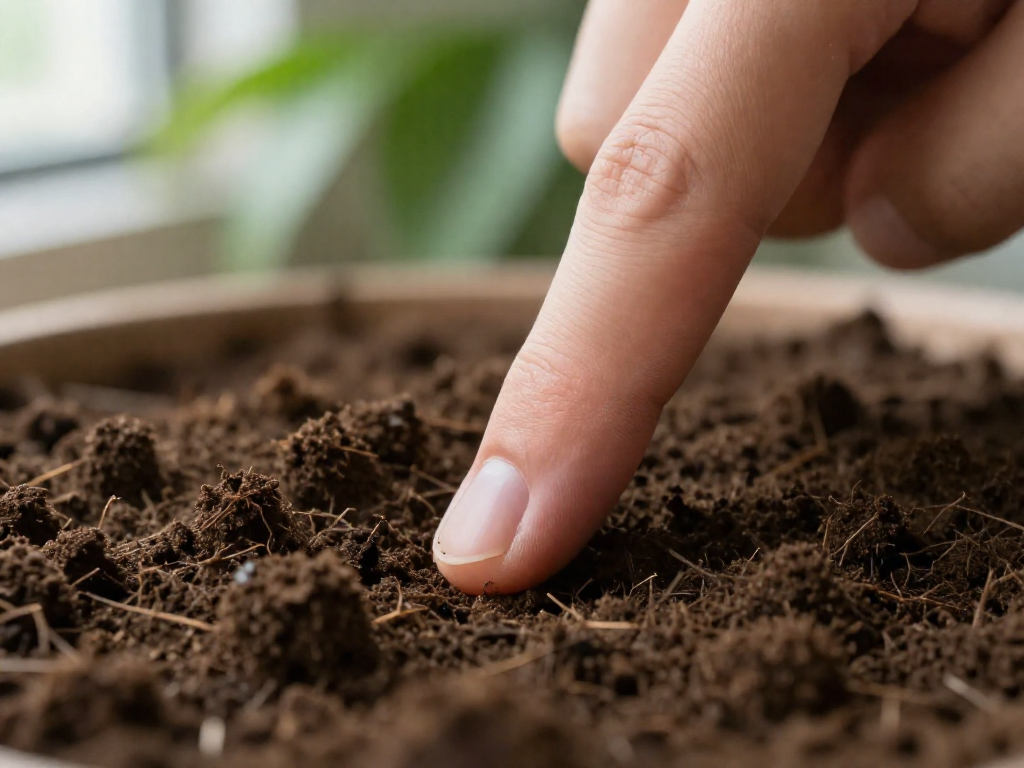
Here's the whole method in one move: stick your index finger into the soil about two inches deep—roughly up to your second knuckle for most tropical houseplants (the leafy, jungle-type plants most people keep, like pothos, monstera, and philodendron).
Then read what you feel:
- Dry at that depth? It's time to water.
- Damp or cool? Wait a few days and check again.
That's it. No schedule, no calendar reminders, no guessing. Do this every time before you reach for the watering can.
Why two inches, not the surface
The top layer of soil dries out first because it's exposed to air and light. But your plant doesn't drink from the surface—it drinks through roots sitting a few inches down. So dry-looking topsoil tells you almost nothing about whether the roots are actually thirsty. Pushing your finger down to two inches puts you where the roots live, which is why horticulture extension programs (university-run gardening resources) recommend testing to a two-inch depth rather than judging by the surface.
A quick rule for beginners: when in doubt, wait. Most houseplants recover easily from being a little too dry, but soggy soil suffocates roots and is much harder to fix.
One exception to know
The finger test works for the vast majority of houseplants, but succulents and cacti are the outliers—they want their soil to dry out almost completely, so you'll water them far less often. Snake plants sit in the same low-water camp; their soil can stay dry for two weeks, a month, or longer between drinks.
Troubleshooting: your finger won't go in
If you can't push your finger a full two inches down, take it as a signal, not a dead end. It usually means one of two things: the potting mix is too dense and compacted, so it needs a more porous, airy mix, or the plant has outgrown its pot and become root bound—the roots have filled the container with little soil left. Both are fixable with a repot, which we'll cover later.
Adjust the Test by Plant Type
The finger test works for almost every plant—but the dryness threshold you're checking for changes depending on what you're growing. Applying one rule to every plant is the single most common way beginners get watering wrong. Here's how to adjust.
Moisture-Lovers: Water When the Surface Is Barely Dry
Ferns and calatheas like their soil to stay consistently damp. For these, water as soon as the very top of the soil feels just barely dry to the touch. Don't wait for it to dry down two inches—by then, these thirsty plants are already stressed.
Standard Plants: Water When the Top 25–50% Is Dry
This covers most tropicals you'll bring home: pothos, monstera, philodendron, and similar. Insert your finger about two inches into the soil, roughly to your second knuckle. If the top quarter to half of the soil feels dry at that depth, it's time to water. If it's still damp, wait a few days and check again.
Succulents and Cacti: The Big Exception
Succulents (plants that store water in thick leaves or stems) and cacti break the rule. Let their soil dry out completely—all the way to the bottom of the pot—before watering again. These plants are far more likely to die from too much water than too little, so when in doubt, wait.
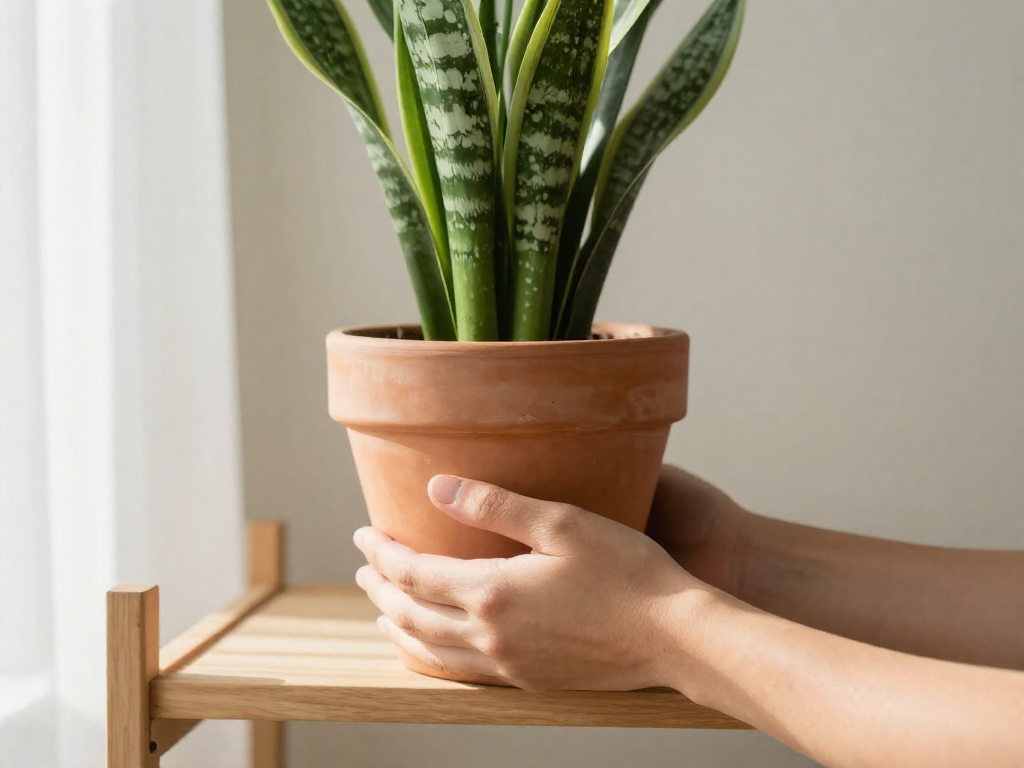
Snake plants are a good example of just how long "completely dry" can take. Stick your finger in up to the second knuckle; the soil should feel dry, or barely damp at most, before you water. In practice, that might mean the soil stays dry for two weeks, a month, or even longer between waterings.
When you're unsure which camp a new plant falls into, err on the side of underwatering. Most houseplants recover from a missed watering far more easily than from soggy, waterlogged roots.
Two Backup Checks: Pot Weight and a Moisture Meter
The finger test is reliable, but it isn't always practical—maybe the pot is too deep, the soil is packed tight, or you just don't want dirt under your nails. Here are two backups.
Lift the pot
A dry pot weighs noticeably less than a freshly watered one, because water is heavy. Right after you water, pick up the pot and note how heavy it feels. A few days later, lift it again. Once you've done this a couple of times per plant, you'll start to recognize each one's "heavy" (just watered) versus "light" (time to water) feel. It's a surprisingly accurate check once your hands learn the difference.
Use a moisture meter—with a grain of salt
A moisture meter is a cheap probe you push into the soil to read how wet it is. It's genuinely helpful, but treat it as a second opinion, not gospel—cheap meters can drift or read oddly in dense soil. As a general rule, a reading below 3 means it's time to water. If the meter and your finger disagree, trust your finger.
One thing that changes everything: pot material
Pot material affects how fast soil dries. Unglazed terracotta (clay) is porous and lets water evaporate through its walls, so it dries out faster than plastic or glazed pots. The same plant in terracotta will need water more often than in plastic—so calibrate your checks to the pot it's actually in.
How to Actually Water (So You Don't Undo Your Good Check)
Timing is only half the job. Once the finger test says it's dry, how you water matters just as much—bad technique can rot roots even on a perfect schedule.
Soak it thoroughly. Water slowly from the top until you see water running out the drainage holes at the bottom. This wets the entire root ball, not just the surface, so every root gets a drink.
Empty the saucer. The tray under the pot catches that runoff. Dump it out within a few minutes—never let the pot sit in standing water. Roots left soaking in a puddle can't get oxygen, and that's the fast track to root rot (roots that turn brown, soft, and mushy from suffocating in wet soil).
Understand what "overwatering" really means. Here's the misconception that trips up nearly every new plant parent: overwatering isn't about giving too much water in one session—it's about watering too often. A deep, thorough soak is exactly what your plant wants. The problem is pouring more in before the soil has dried out again.
So the whole method comes together like this:
- Wait until the finger test says the soil is dry (how dry depends on your plant type—see the section above).
- Water deeply until it drains from the bottom.
- Empty the saucer.
- Then wait, and don't water again until the finger test tells you to.
Water deeply, then leave it alone. That rhythm—soak, then wait—is what keeps roots healthy.
Reading the Plant: Over- vs. Underwatering
Here's the confusing part: a drooping, wilting plant can mean it's too dry or too wet. Wilting alone tells you almost nothing. So before you reach for the watering can, do the one thing that settles it—check the soil first.
The one-rule decision
Stick your finger an inch into the soil, then follow this:
- Dry soil + wilting = it needs water. Give it a thorough drink.
- Damp soil + wilting = likely root rot. Do not add more water. Root rot means the roots have suffocated from too much moisture and can no longer "drink," so the plant wilts even though there's plenty of water around it. (Root rot is decay of the roots caused by soil that stays too wet.)
That single check—dry versus damp—resolves most beginner watering panic.
Back it up with texture and color
If you want a second opinion, feel a leaf and look at its color:
| Signal | Too dry (underwatered) | Too wet (overwatered) |
|---|---|---|
| Leaf texture | Crisp, dry, brittle | Soft, limp, mushy |
| Color | Gray-green, drooping | Yellowing or dropping leaves |
Overwatered leaves feel soft and mushy because the roots are rotting; underwatered leaves feel dry and brittle because they've run out of water to hold.
When you truly can't tell, underwater
If the soil test and the leaves still leave you guessing, err on the side of less water. Most houseplants bounce back from a little thirst far more easily than from rot—a thirsty plant usually perks up within hours of watering, while rotted roots often can't be undone. Waiting a day to re-check the soil rarely hurts.
Sources
- Watering | Houseplants | Illinois Extension | Illinois — extension.illinois.edu
- Watering Indoor Plants | University of Maryland Extension — extension.umd.edu
- The Ultimate Guide to Setting Up a Watering Routine for Common Houseplants - Soltech — soltech.com
- Overwatering potted plants – 6 common signs you're giving them too much water — treleaf.shop
- Watering Indoor Plants, A Complete Guide | Joy Us Garden — joyusgarden.com
- Reading the Leaves: Signs of Overwatering and Underwatering & How to Know the Difference — rockledgegardens.com
- 5 Symptoms of Overwatered Snake Plants — epicgardening.com
- Signs of overwatering plants - how to identify and fix overwatered plants — carpathen.com
FAQ
How often should I water houseplants in winter versus summer?
There's no fixed number that works year-round, because watering frequency depends on light, temperature, and humidity—all of which shift with the seasons. In summer, more light and warmth dry the soil faster, so most houseplants need water more often. In winter, lower light and cooler temperatures slow growth and evaporation, so plants use less water and the soil stays moist longer. Instead of counting days, check the soil: insert your finger about two inches down and water only when it feels dry at that depth. Simply doing this soil check regularly will automatically adjust your watering to the season.
Should I water on a fixed day each week to stay consistent?
No. Watering on a fixed calendar day (like every Monday) is one of the most common ways beginners kill houseplants, because a schedule ignores changes in season, light, humidity, pot size, and the plant itself. On a set schedule you'll often water when the soil is still wet, which suffocates the roots and leads to root rot. Build consistency around a habit instead of a calendar: check the soil at the same time each week with the finger test, then water only if the top two inches feel dry. That keeps you attentive without forcing water on a plant that doesn't need it yet.
How deep should I stick my finger to test the soil?
Insert your finger about two inches into the soil—roughly up to your second knuckle. This checks moisture below the surface, where the roots actually drink, since dry-looking topsoil doesn't mean the deeper root zone is dry. If the soil feels dry at that depth, it's time to water; if it's still damp, wait a few days and check again. Two things to note: succulents and cacti are exceptions and should dry out much more before watering, and if your finger can't push two inches down, the mix may be too dense or the plant may be root bound (its roots have filled the pot), which is a sign it needs repotting.
Is it better to underwater or overwater a houseplant?
When in doubt, underwater. Most houseplants are far more resilient to being too dry than to being too wet, and overwatering—meaning watering too frequently—is the leading cause of houseplant death, especially among beginners. Too much water fills the air pockets in the soil, cutting off oxygen to the roots and causing root rot, which is hard to reverse. A thirsty plant, by contrast, usually perks back up soon after a good drink. The goal isn't to water sparingly on purpose, but to wait until the soil is genuinely dry (using the finger test) before watering thoroughly—so err toward waiting a day longer rather than watering a day early.
Why is my plant wilting even though the soil is still wet?
Wilting is a confusing signal because it can mean either too little or too much water. When the soil is still wet and the plant is drooping, the problem is usually overwatering: the roots have been sitting in soggy soil, suffocated from lack of oxygen, and can no longer take up water even though it surrounds them—so the plant wilts as if thirsty. A quick check is leaf texture. Overwatered plants often have soft, mushy, or limp leaves (their roots are rotting), while underwatered plants have crisp, dry, brittle leaves in dry soil. Some plants, like the peace lily (Spathiphyllum), dramatically wilt when thirsty but can also wilt from overwatering, so always confirm by feeling the soil. If it's soggy, stop watering, empty any drainage saucer, and let the soil dry out.
Do plants in terracotta pots need more water than plastic ones?
Yes. Plants in unglazed terracotta (clay) pots typically need watering more often than the same plants in plastic pots, because clay is porous—water evaporates through the pot walls, so the soil dries out faster. Plastic and glazed pots hold moisture longer, meaning you water less frequently. This makes terracotta a helpful choice if you tend to overwater, since it's more forgiving of a heavy hand. Whatever pot you use, don't rely on the material alone to tell you when to water—keep using the two-inch finger test. And regardless of pot type, make sure it has a drainage hole, and never let the plant sit in the water that collects in the saucer, as that keeps the roots waterlogged.
See also
- Best Potting Mix for Beginner Houseplants
- How Much Light Does My Houseplant Really Need?
- Signs of Root Rot and How to Save an Overwatered Plant
- Choosing the Right Pot: Terracotta vs. Plastic vs. Ceramic
- Snake Plant Care Guide for Beginners
- Pothos Care: The Easiest Houseplant for New Plant Parents
Related articles
A Beginner's Glossary of Houseplant Terms
Confused by plant jargon? This plain-language glossary defines the houseplant terms beginners hit most—nodes, variegation, perlite, root-bound and more.
Jul 14, 2026 · 6 min read
How to Clean Dusty Houseplant Leaves (and Why It Matters)
Dusty leaves block light and slow plant growth. Learn the simple, safe way to clean houseplant leaves by type—plus what to avoid, like leaf shine sprays.
Jul 14, 2026 · 6 min read
Winter Houseplant Care: Watering and Light When Days Get Short
Learn how to care for houseplants in winter: cut back watering, boost light and humidity, and pause feeding so your plants survive short, dark days.
Jul 14, 2026 · 11 min read