Monstera Deliciosa Care: Fenestrations, Light, and Watering
How do I care for a monstera and get it to grow split leaves?
On this page
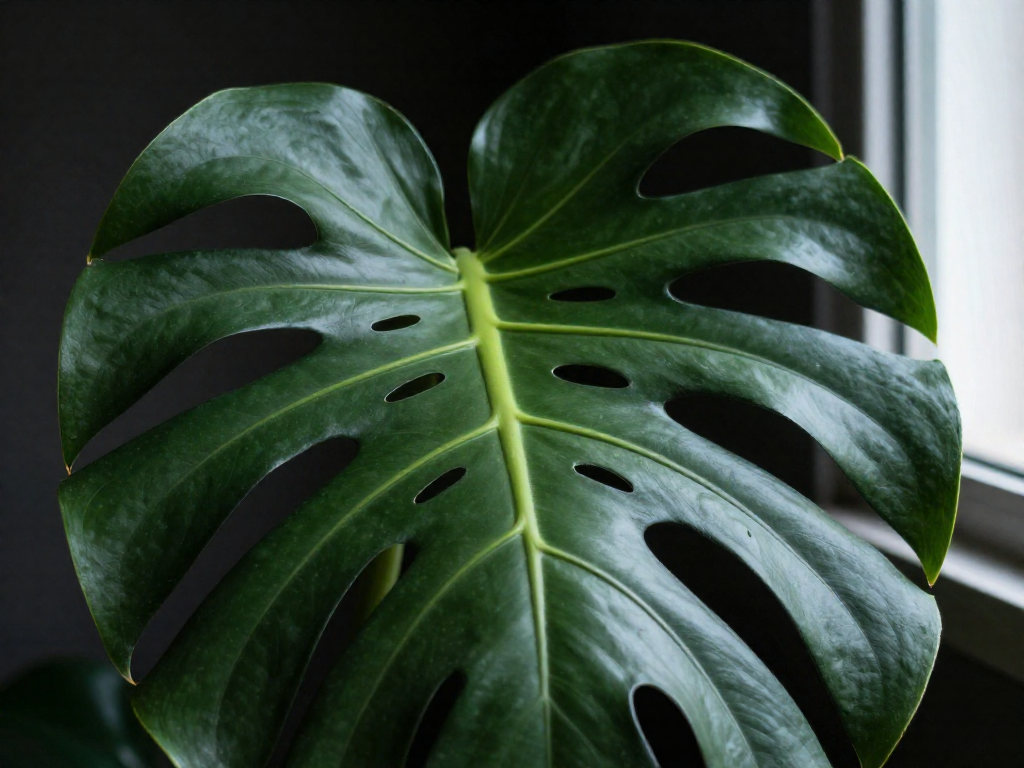
What Fenestrations Actually Are (and Why Monsteras Make Them)
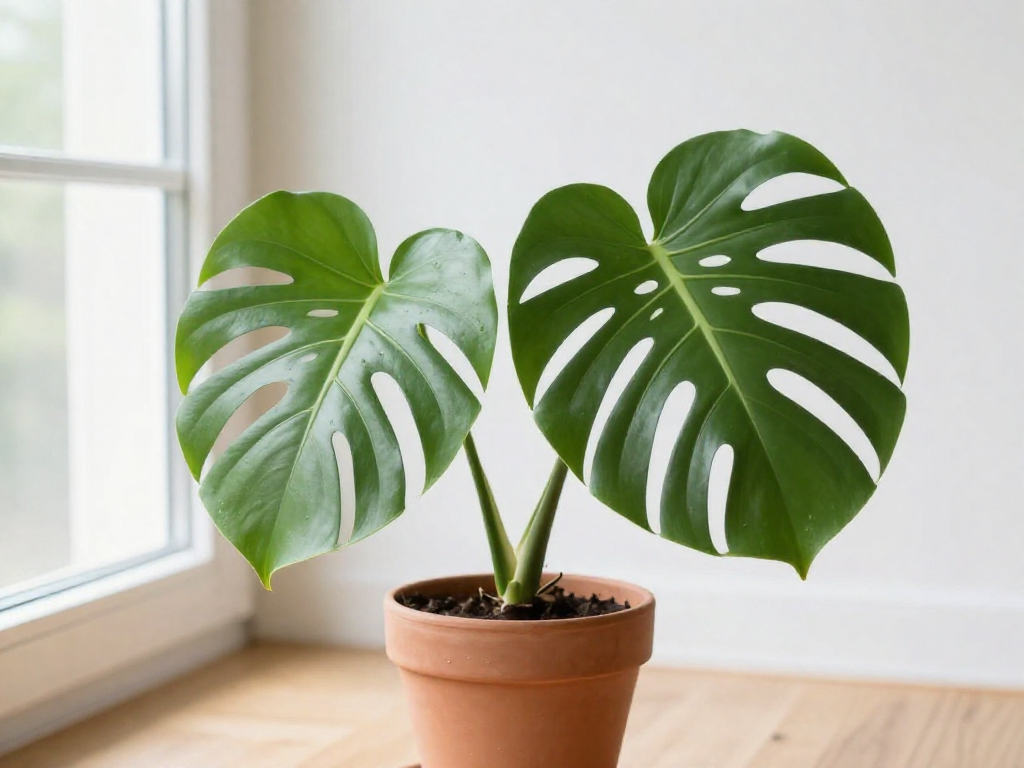
Fenestration (from the Latin word for "window") is the botanical term for the natural holes and splits in a Monstera's leaves. It's the exact feature you probably bought the plant for—and understanding why it happens makes the rest of this guide click into place. Short version: fenestrations are a rainforest adaptation, and your Monstera will only make them once its conditions and size are right.
The rainforest reason
Monsteras evolved on the floor and trunks of dense tropical forests, where most sunlight is blocked by taller trees. The holes and splits help the plant capture "sun flecks"—small, shifting beams of light that slip through the canopy—so more of each leaf catches usable light. The gaps also let heavy rain pass straight through instead of pooling on the leaf surface and weighing it down.
Why the plant "chooses" to split
Here's the catch: a split leaf actually photosynthesizes less efficiently than a solid one, because it has less chlorophyll (the green pigment that converts light into energy) per leaf. So a Monstera doesn't split every leaf automatically—it only does so when the trade-off is a net gain.
The leading theory explains when that gain happens: fenestrations let the plant climb tall without shading out its own lower leaves. As a Monstera grows up a tree (or a moss pole in your apartment), light passes through the holes in the upper leaves and still reaches the leaves below. Without that, the lower foliage gets shaded, yellows, and dies. Splitting up top keeps the whole plant fed.
An honest caveat
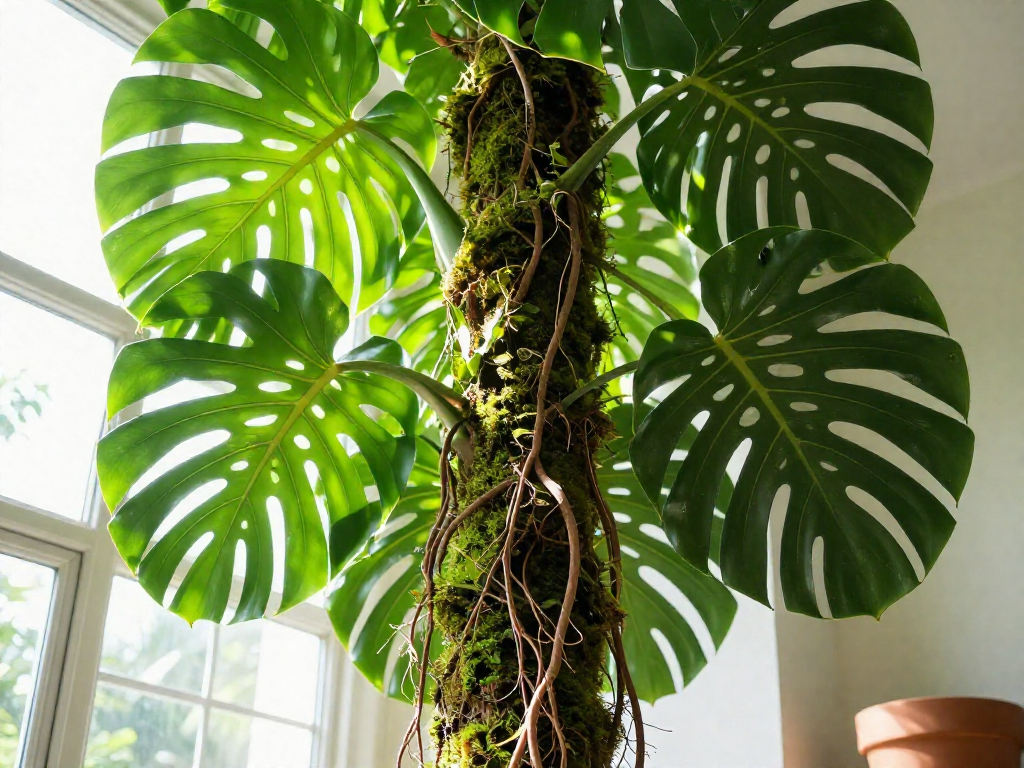
The exact trigger for fenestration is still partly a mystery. Scientists point to a mix of factors—age, size, light, and water—rather than one switch. In practice, that usually means a Monstera that's a couple of years old, climbing something, and getting bright light. We'll turn each of those into specific steps in the sections ahead.
The Real Reasons Your Monstera Isn't Splitting Yet
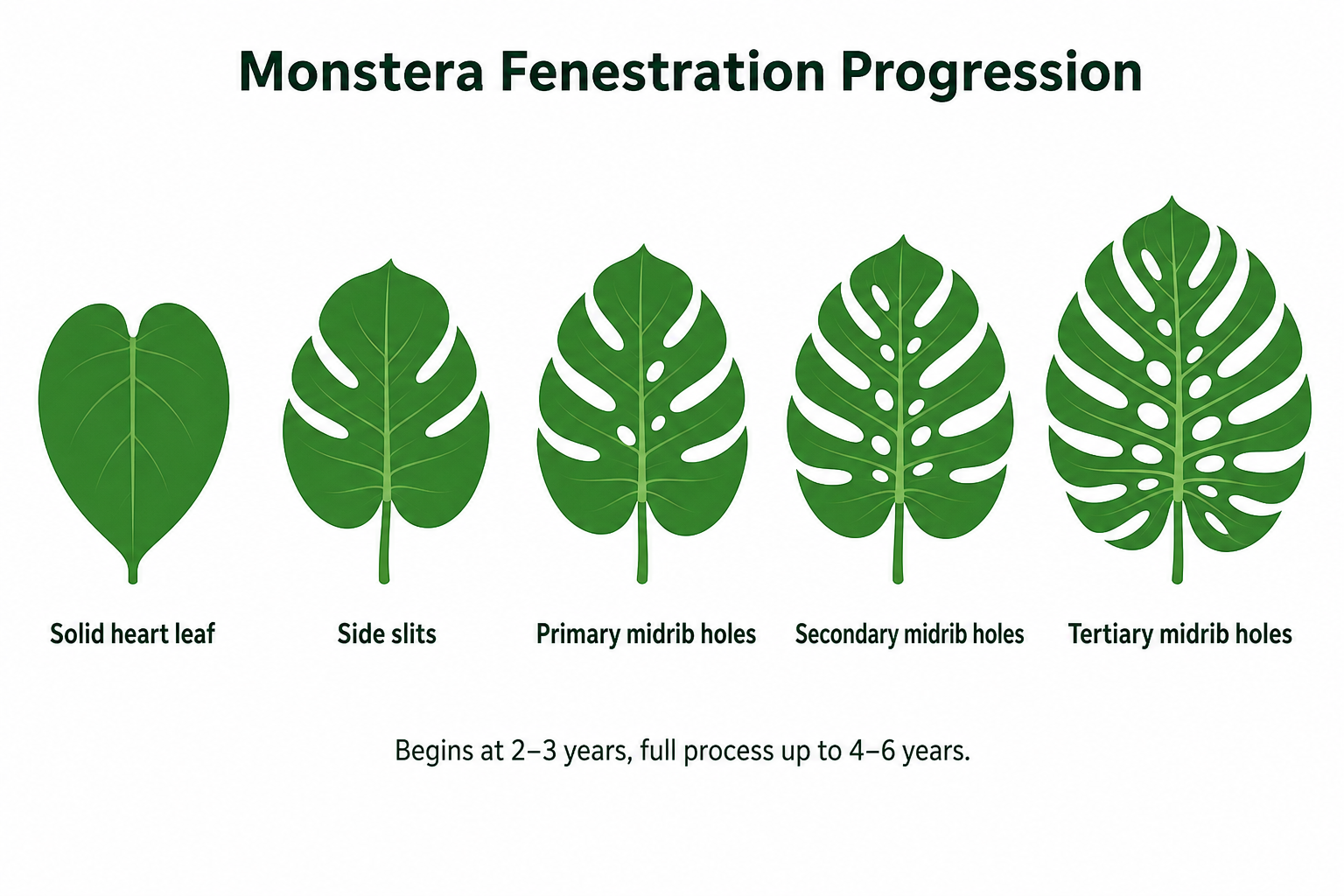
If your monstera looks like a bushy pile of solid, heart-shaped leaves with no holes, you're not doing anything wrong—it's almost certainly just not ready yet. Fenestration (the botanical term for the natural holes and splits in the leaves) is driven by a handful of specific conditions, and most young plants simply haven't met them.
Here's what actually triggers those splits:
- It's a size thing, not an age thing. Before they mature, monsteras pour their energy into making lots of small leaves rather than big ones. Splits typically begin only once the stem lengthens and the plant starts to climb upward.
- Give it time. As a rough guide, first holes tend to appear around 2–3 years old, or once the plant reaches roughly 3 feet wide and tall. The full progression—from side slits to holes near the leaf's central vein (the midrib)—can take about 4–6 years to complete.
- Bright light is non-negotiable. Monsteras develop fenestrations to let light pass through to their lower leaves as they climb a tree in the wild. In low light, a monstera does the opposite: it pushes out small leaves with no splits to conserve energy. Put it in the brightest spot you have (near an east, west, or lightly filtered south window), and add a grow light if your apartment is dim.
- Climbing is the actual trigger. It's the upward growth toward light that produces the holes—no upward trajectory, no fenestrations. Giving your plant a moss pole or trellis to climb encourages the mature, split-leaf growth. A monstera left to sprawl sideways will stay juvenile far longer.
- Genetics play a role. Some cultivars fenestrate more readily than others. If you specifically want a heavily split, variegated plant, a Thai Constellation is a more reliable bet than a Monstera 'Albo Variegata.'
The takeaway: an established plant, high light, and something to climb are the three levers you control. Nail those, be patient, and the splits will follow.
Two Myths to Stop Believing About Split Leaves
If you're chasing those signature holes and slits (called fenestrations), two common beliefs will waste your effort—or damage your plant.
Myth 1: "My solid leaf will split as it gets older"
It won't. A Monstera leaf unfurls either already split or not split at all, and its shape is locked in from that moment. The leaf will keep enlarging after it opens, but a leaf that emerged solid stays solid forever. So don't wait around watching an existing leaf, hoping it will eventually crack open—it never will.
Myth 2: "I can just cut my own splits into a leaf"
Please don't. Slicing splits into a leaf yourself doesn't fool anyone. The plant treats the cut as a wound and seals itself off to keep diseases out, so the edges turn brown and ragged. You'll be left with a damaged, discolored leaf—not a convincing fenestration.
The reframe: grow the conditions, not the individual leaf
Here's the mindset shift that actually works: you can't force any single leaf to split. What you can do is set the right conditions—bright light, a support to climb, and a plant that's matured past its first couple of years—so that future leaves emerge already fenestrated.
In short: stop working on the leaf you have, and start working on the next one.
Light: The Single Biggest Lever
If you only fix one thing, make it light. A monstera in bright light grows much bigger and faster and is far more likely to develop fenestrations (the splits and holes in mature leaves). Push it into medium or low light and you get the opposite: leggy, stretched growth, droopy leaves, and a higher risk of root rot and pests. You'll struggle to get big, split leaves in anything less than bright light.
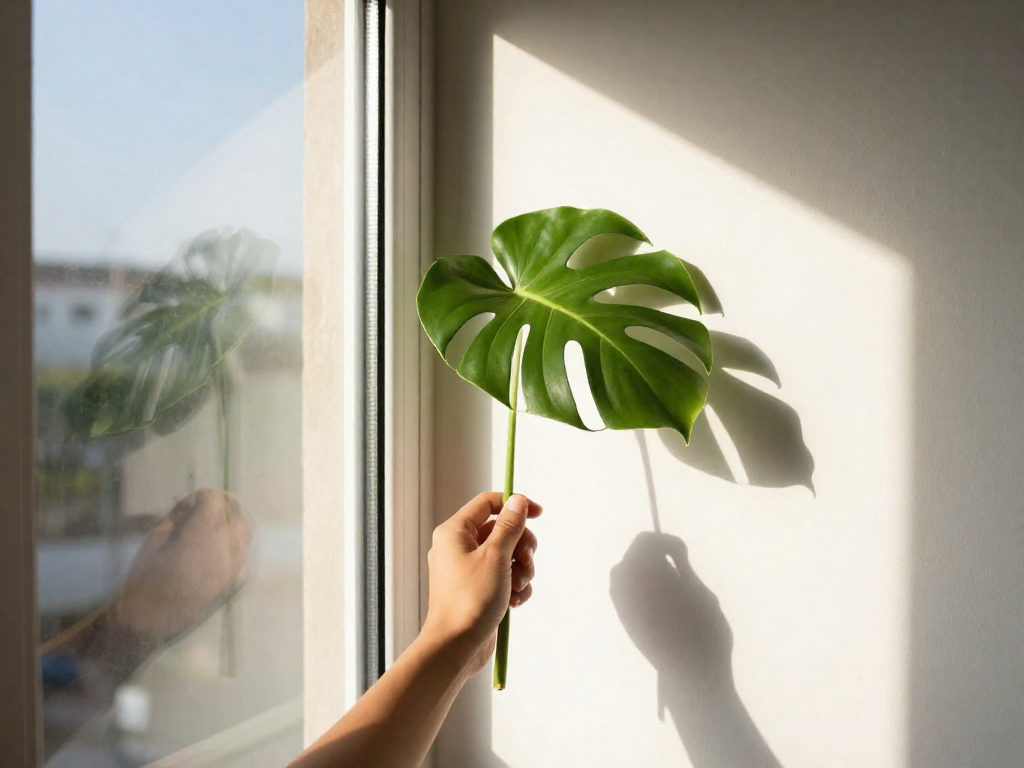
Aim for bright indirect light. "Indirect" means the light is strong but not hitting the leaves as direct beams. The easiest way to tell the difference is the shadow test: hold your hand between the light and a surface. If the shadow has sharp edges, that's direct light. If the edges are fuzzy but you can still tell what's casting the shadow, that's indirect—exactly what you want.
Rough targets you can aim for
Light is often measured in foot-candles (FC), a unit of brightness. For a monstera:
- ~100 FC is about the minimum to keep it alive
- ~200 FC is where it starts to thrive and split
- 2–3 hours of direct sun is tolerable and can actually help (gentle morning sun over harsh afternoon sun)
A free light-meter app on your phone gets you close enough to check a spot.
How many hours?
Monsteras come from Central America, so they've evolved to expect roughly 11–14 hours of daylight. Indoors, anywhere from 8 to 16 hours is fine, so most US apartments are already in range.
Apartment reality check
Not every window delivers bright indirect light—north-facing rooms, deep interiors, and shaded courtyards often fall short. If yours can't hit those targets, add a grow light on a timer. It's the most reliable fix in a small space and costs less than replacing a plant that never split.
Fun fact: Monstera seedlings are skototropic—unlike almost every other seedling, they grow toward shade, not light. In the wild that's how they find a tree trunk to climb. Your grown plant, though, wants all the bright light you can give it.
Watering Without Killing It
The single most useful habit you can build is this: check the soil, don't follow a schedule. Once a week, stick a finger into the pot and feel how dry it is. Water only when the soil is nearly completely dry all the way down—not just at the surface. If it still feels damp, wait and check again in a few days. That one rule prevents most beginner Monstera deaths.
Forget the "top inch dry" rule
You'll see the advice to water once the top inch of soil is dry. Ignore it. In bright light, the top inch can dry out just hours after watering while the bottom half of the pot is still soggy. Water on that signal and you'll keep the roots sitting in wet soil. Instead, make sure most of the soil is dry before you water again.
Overwatering is about frequency, not amount
Here's the part that trips people up: overwatering comes from watering too often, not from pouring too much in one go. As long as your pot has drainage holes and a decent soil mix, a thorough soak is fine—the excess just drains away. Problems start when you water again before the soil has dried out.
Droopy leaves? Check before you pour
Drooping usually means overwatering, not thirst. (It can also just be gravity—as a Monstera climbs, its leaves sit farther from the roots and naturally sag a little.) So when leaves droop, resist the reflex to reach for the watering can. Feel the soil first. If it's wet, watering more will only make things worse.
What to use: if you're happy to drink your tap water, so is your Monstera. If you don't drink it, use filtered water instead.
Soil, Pot & Repotting for Big Healthy Roots
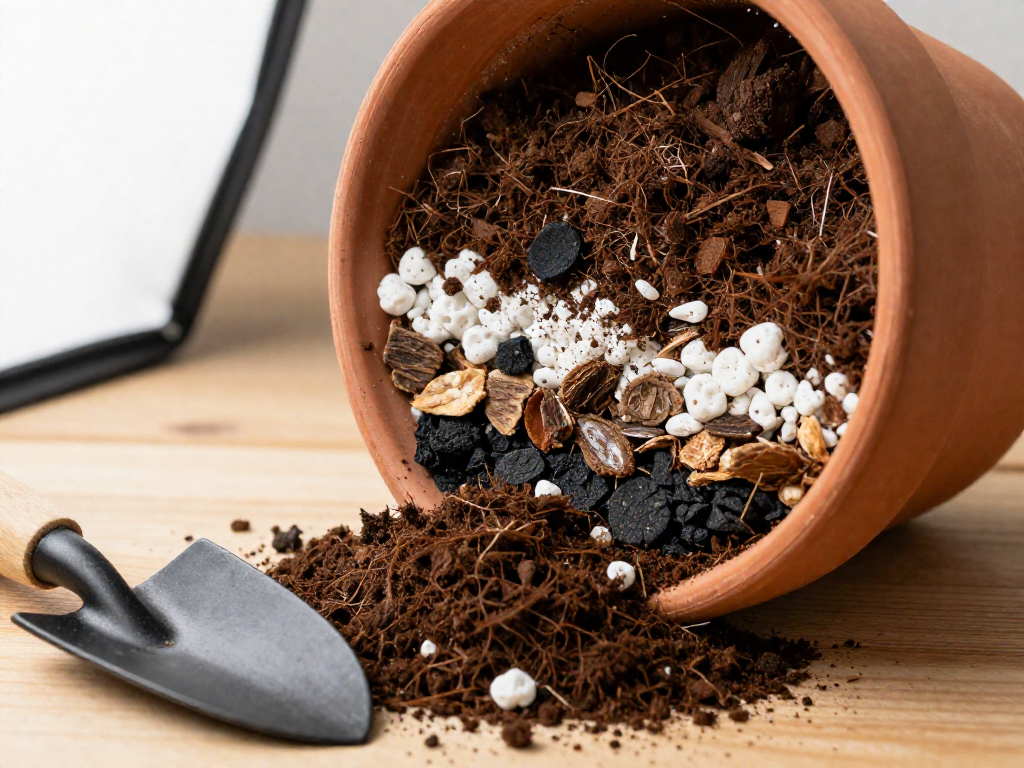
Monstera roots are thick and rope-like (some people say they look like Udon noodles), and they need air as much as water. The goal is a chunky, airy mix—one that holds a little moisture but drains fast so roots never sit in soggy soil.
An easy recipe: standard houseplant potting soil plus perlite (the white volcanic pieces that create air pockets), orchid bark (chunky wood chips that keep the mix loose), and a handful of horticultural charcoal (a soil additive that helps with drainage and keeps things fresh). Roughly equal parts soil and add-ins works well.
Always use a pot with drainage holes. This is the single most forgiving thing you can do—excess water escapes instead of pooling at the bottom, which is where root rot (roots dying from staying wet too long) starts.
When and how to repot
Repot when you see two signs together: roots poking out of the drainage holes, and soil that dries out much faster than it used to. Both mean the plant has outgrown its home.
When you size up, go no more than 2 inches larger in diameter than the current pot. A pot that's too big holds more soil than the roots can drink, so that soil stays wet for days—again inviting root rot. Small, steady upgrades keep roots healthy and growth moving toward those splits.
Climbing Support, Humidity & Feeding (The Fenestration Boosters)
Once light, water, and soil are dialed in, these three extras nudge your Monstera toward bigger, more split-heavy leaves. Fenestration just means the natural holes and splits in the leaves.
Give it something to climb
In the wild, a Monstera climbs tree trunks—and climbing is a real trigger for splitting. Add a moss pole or a couple of bamboo stakes and gently secure the stem with soft Velcro plant tape. The aerial roots (the thick roots that grow off the stem, not the soil) will grab onto the support and anchor the plant as it gets taller. Without support, a growing Monstera sprawls sideways and flops over the pot.
Raise the humidity
Monsteras aren't fussy about humidity, but a little more of it can increase leaf size and the odds of getting fenestrated leaves, since it mimics their tropical home. It also buffers you against the occasional missed watering. In a dry apartment, group plants together or run a small humidifier nearby.
Feed during the growing season
Fertilize with a balanced houseplant food in spring and summer, when the plant is actively growing—roughly once a month. Skip feeding in fall and winter. If a mature leaf comes in with no holes at all, that can be a sign of a nutrient deficiency, so feeding often helps.
Two quick habits
- Dust the leaves. Dust blocks light and hurts photosynthesis. Wipe leaves with a soft, damp rag a few times a year—skip pricey leaf-shine products.
- Rotate the pot a quarter turn each time you water so every side gets even light and grows evenly.
Quick-Reference Monstera Care Cheat Sheet
Save this summary for the essentials at a glance:
- Light: Bright indirect light (near a window, but out of harsh direct sun). Add a grow light if your space is dim.
- Water: Only when the soil is mostly dry—not just the top inch. Check weekly, water if dry, wait if it isn't.
- Soil: Chunky and airy. Mix houseplant potting soil with perlite and orchid bark, and always use a pot with drainage holes.
- Support: Add a moss pole. Climbing encourages the plant to grow bigger, split leaves (fenestrations).
- Extras: Some humidity, feed in spring and summer, and wipe dust off leaves a few times a year so they can absorb light.
- Expectations: Splits usually start once the plant is a couple of years old and roughly 3 feet tall—it's more about size than age.
New leaves unfurl either split or not; an unsplit leaf won't develop holes later.
Sources
- How to Get Fenestrations (Splits & Holes) In Monstera Deliciosa Leaves - Planet Houseplant — planethouseplant.com
- How to Get Holes & Splits in Monstera Leaf? Fenestration Process – Leafy Island — leafyisland.com
- Why Do Monstera Plants Have Holes? Understanding Their Unique Leaves - Treleaf — treleaf.shop
- All About Monstera Leaves: Holes, Yellowing, and More - The Spruce — thespruce.com
- Monstera Deliciosa Light Requirements - Planet Houseplant — planethouseplant.com
- Monstera Deliciosa Watering Requirements - Planet Houseplant — planethouseplant.com
- Monstera Deliciosa Care: A Complete Guide - Here She Grows — hereshegrows.com
- Bright Indirect Light "Requirements" by Plant Type - House Plant Journal — houseplantjournal.com
FAQ
Why does my Monstera have leaves with no holes or splits?
Solid, whole leaves are completely normal on a young or under-lit Monstera. Fenestrations (the natural holes and splits Monsteras are famous for) develop with maturity, size, and strong light, not automatically. A plant under two years old focuses on producing lots of leaves quickly rather than large split ones, and a Monstera in medium or low light won't fenestrate at all—it will actually push out smaller leaves to conserve energy. If your plant is young or sitting away from a bright window, whole leaves are expected. Move it into bright indirect light, give it a support to climb, and keep it healthy, and split leaves will follow as it grows.
How old does a Monstera have to be before the leaves split?
Most Monsteras start producing their first holes and splits at around 2 to 3 years old, but it's really about size and growth stage rather than age alone. Splits tend to begin once the plant starts climbing and its stem gets long, and many plants don't develop the characteristic deep cuts until they've reached roughly three feet in width and height. The full maturation process—from solid heart-shaped leaves through side slits and progressively more interior holes—takes about 4 to 6 years. So if your plant is young or hasn't started climbing yet, be patient and focus on bright light and a support to speed things along.
Will an existing solid Monstera leaf develop splits over time?
No. A Monstera leaf unfurls either with splits or without them, and a solid leaf will not develop holes later. Once a new leaf opens, it will grow larger, but its shape won't change. So don't wait for your existing whole leaves to transform—the splits you're after will appear on new leaves the plant produces as it matures and grows in good light. To encourage those future leaves to fenestrate, give the plant bright indirect light and let it climb a support.
Can I cut splits into my Monstera leaves myself?
No, don't do this. If you cut into a Monstera leaf, the plant seals off the wound to keep out disease, which causes the cut edges to turn brown. You'll end up with damaged, discolored leaves rather than natural-looking fenestrations. The only reliable way to get splits is to let the plant produce them itself by giving it what it needs: maturity, bright indirect light, and something to climb.
How much light does a Monstera need to grow fenestrations?
Bright indirect light is essential—you'll struggle to get large, fenestrated leaves in anything less. Fenestrations are tied to the plant's climbing, light-seeking growth: as it grows upward toward brighter light, holes let light pass through to the lower leaves. Without that upward trajectory and strong light, you won't get splits, and in low light the plant produces small leaves to save energy. Place your Monstera near a bright window (you can check light quality by shadows—sharp shadows mean direct light, fuzzy but recognizable shadows mean bright indirect light). If natural light is lacking, add a grow light. Monsteras can tolerate 2–3 hours of direct sun and do best with plenty of bright indirect light throughout the day.
How often should I water a Monstera deliciosa?
Don't water on a fixed schedule—check the soil instead, roughly once a week, and water only when most of the soil has dried out. Ignore the common "water when the top inch is dry" advice: in bright light the top inch can dry within hours while the bottom of the pot is still saturated, so make sure most of the soil is dry before watering. Overwatering comes from watering too frequently, not from using too much water at once, so as long as your pot has drainage holes and an airy soil mix, water thoroughly each time. If leaves droop, check the soil before reaching for the watering can—drooping is more often caused by overwatering than underwatering. Tap water is fine if you'd drink it yourself; otherwise use filtered.
Is a Monstera the same as a split-leaf philodendron?
Not exactly. "Split-leaf philodendron" is a common nickname for Monstera deliciosa, but it's technically inaccurate. Monstera was once classified in the Philodendron genus but was later found to be an entirely different species. Both plants belong to the same larger family—the arum (aroid) family, which also includes peace lilies, anthuriums, and alocasias—so they're relatives, but a Monstera deliciosa is its own distinct plant, not a true philodendron.
Does a moss pole really help a Monstera make split leaves?
Yes. Monsteras are natural climbers, and giving them a moss pole (or bamboo stakes) to grow up genuinely encourages fenestration. Splits tend to begin once the plant starts climbing and its stem lengthens, because that upward, light-seeking growth is what drives the holes—they let light reach the lower leaves. A support also keeps a large plant from sprawling everywhere, and the plant's aerial roots will anchor to it as it grows. Secure the stem gently to the pole with plant tape or Velcro ties, and pair the support with bright indirect light for the best chance of big, split leaves.
See also
- Bright Indirect Light Explained: How to Read the Light in Your Apartment
- How to Water Houseplants Without Overwatering (Beginner Guide)
- Best Soil Mixes for Aroids and Tropical Houseplants
- How and When to Repot a Houseplant
- Using a Moss Pole: Training Climbing Houseplants Indoors
- Do You Really Need a Humidifier for Your Houseplants?
- Beginner-Friendly Houseplants for Small Apartments
Related articles
Pothos vs. Philodendron vs. Snake Plant: Which Should You Start With?
Pothos, philodendron, or snake plant—which easy houseplant is the best first choice for your apartment? A clear, plant-by-plant comparison for new plant parents.
Jul 14, 2026 · 7 min read
Jade Plant Care: The Easy Beginner Succulent Tree
Learn how to care for a jade plant indoors: watering, light, soil, plus simple pruning to shape a bushy little succulent tree. Beginner-friendly, step by step.
Jul 14, 2026 · 9 min read
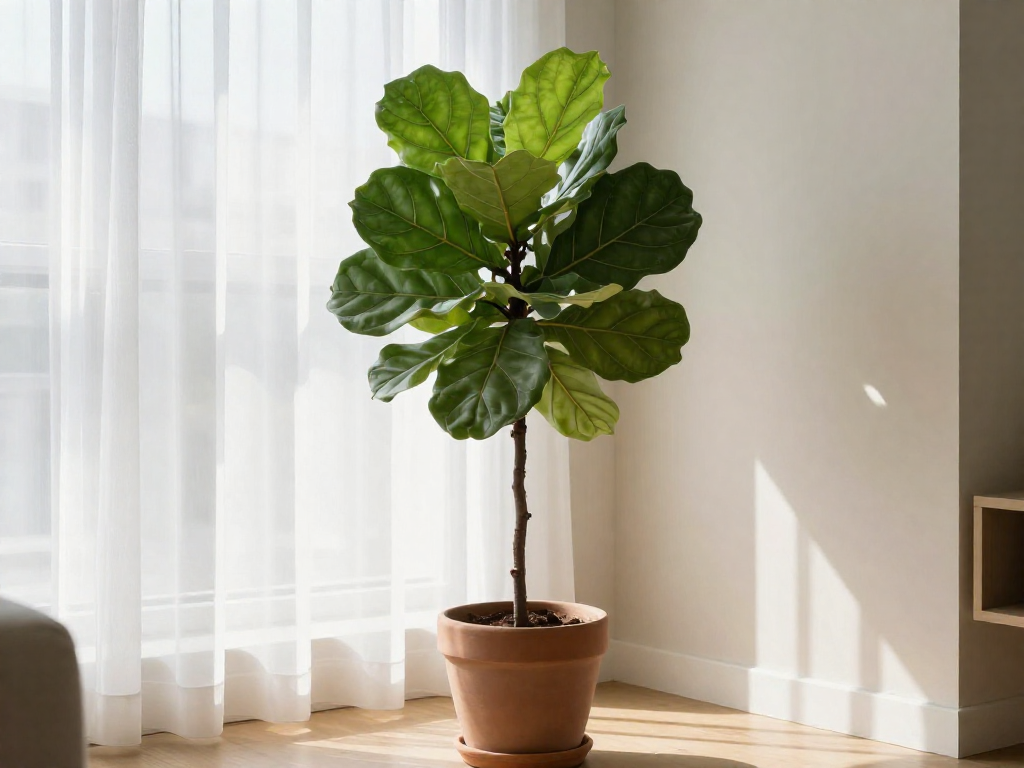
Fiddle Leaf Fig Care: Why It's Fussy and How to Cope
Can a beginner keep a fiddle leaf fig alive? An honest, plant-by-plant care guide covering light, watering, drafts, and how to fix brown spots and leaf drop.
Jul 14, 2026 · 12 min read