Pothos Care for Beginners: Watering, Light, and Growth
How do I keep a pothos alive and thriving as a beginner?
On this page
Why Pothos Is the Perfect First Plant
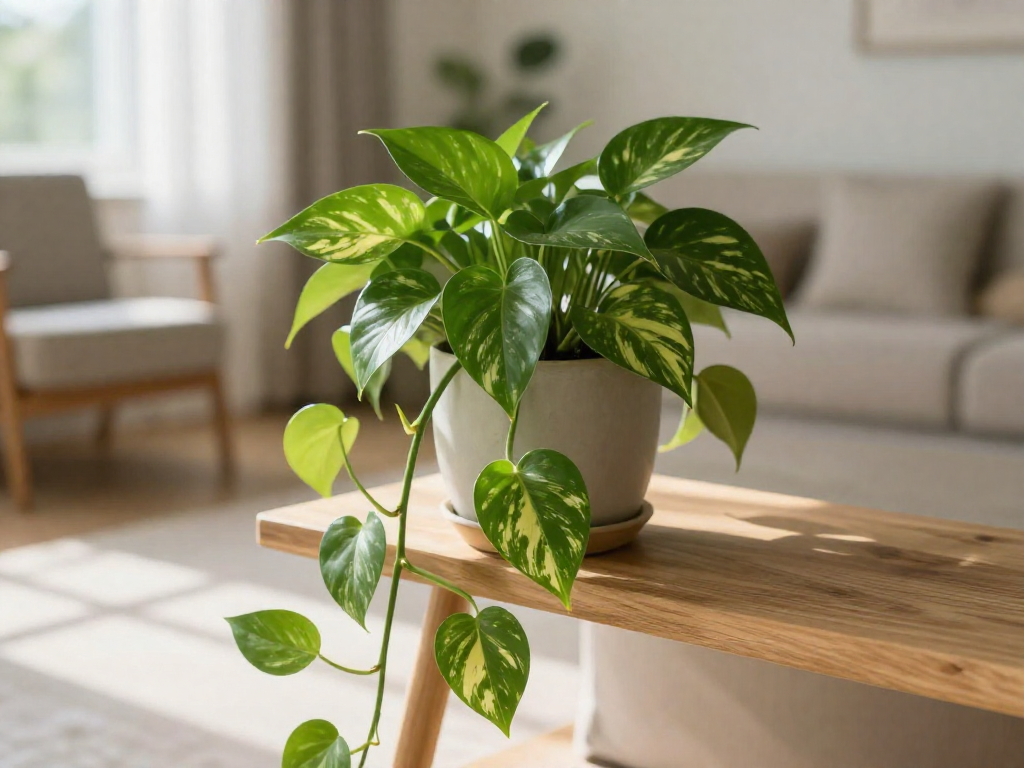
If you want a houseplant that survives a beginner's learning curve, pothos (Epipremnum aureum)—also called devil's ivy or golden pothos—is the one to start with. Native to Southeast Asia, it's widely recommended by extension horticulturists as a starter plant precisely because it forgives mistakes.
Here's why it's so hard to kill:
- It's tough. Pothos tolerates a bit of soggy soil and a forgotten watering or two without giving up, which is why it's considered one of the easiest houseplants to keep alive.
- It grows fast. In good conditions, a pothos can add 12 to 18 inches of vine in a single month—so your care actually shows visible, rewarding results.
- It tells you what it needs. Droopy top leaves usually mean "water me," and a thirsty pothos revives quickly once you do.
One safety note: Pothos contains calcium oxalates (natural crystals in the plant's tissue) that are mildly toxic to pets and children if chewed. Keep it up on a shelf or in a hanging planter, out of reach.
The mindset to carry into the rest of this guide: pothos is adaptable and hard to kill. Relax, follow a simple routine, and you'll do fine.
How to Water Pothos (the Finger-Test Routine)
The single most reliable way to water pothos is simple: water when the top 1 to 2 inches of soil feels dry. No calendar, no guesswork—your finger tells you exactly when.
The finger test (your one core habit)
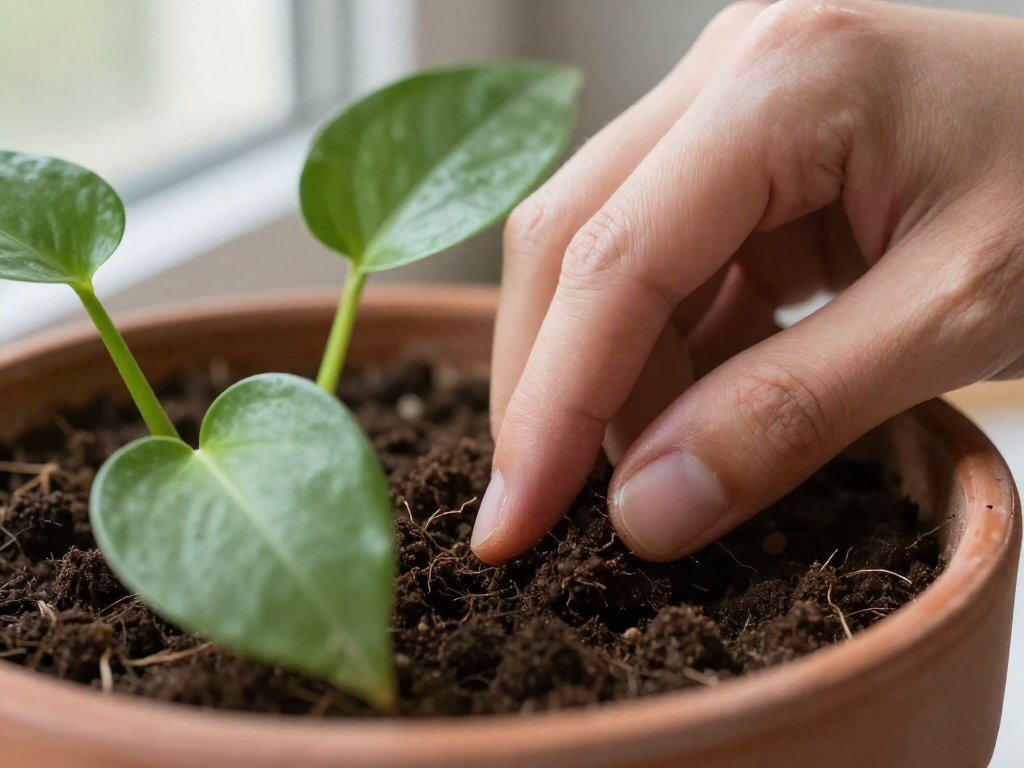
Push your index finger straight down into the soil, about 1 to 2 inches deep (roughly to your second knuckle).
- Feels dry at that depth? Water now.
- Still cool or damp? Wait a few days and check again.
That's it. Pothos is somewhat drought tolerant and actually prefers to dry out a bit between drinks, so when in doubt, wait. Overwatering—not underwatering—is the most common way beginners lose this plant.
A loose schedule (backup, not a rule)
Most pothos need water every 1 to 2 weeks, but that's just a ballpark. Instead of watering on a fixed day, get in the habit of checking at least once a week and letting the soil decide. Your apartment's light, heat, and humidity all change how fast the soil dries.
Growing season vs. winter:
- Spring and summer (active growth): often 1 to 2 times per week.
- Winter (slower growth): roughly every 2 weeks.
Always re-test with your finger before pouring—these are starting points, not instructions.
Top watering vs. bottom watering
Both work, and both require a pot with drainage holes (non-negotiable—without them, water pools at the bottom and rots the roots):
- Top watering: Pour water over the soil until it runs out the drainage holes. This also flushes out mineral buildup. Empty the saucer afterward so the pot never sits in standing water.
- Bottom watering: Set the pot in a bowl of water for 10 to 30 minutes and let the soil soak it up through the holes, then drain.
Bonus tip: lift the pot
Once you know your plant, you can skip the finger test entirely. Heavy pot = still wet. Light pot = thirsty. After a few waterings, you'll feel the difference instantly.
Overwatering vs. Underwatering: Reading the Signs
Most pothos problems come down to one question: too much water or too little? As a beginner, you're far more likely to overwater than underwater a pothos, so start there when something looks off.
Signs You're Overwatering
Overwatering is the more dangerous mistake because it leads to root rot (when roots suffocate and decay in soggy soil). Watch for:
- Yellow leaves — the most common symptom, often starting at the edges and spreading across the leaf
- Soft or translucent leaves, sometimes with black or brown spots
- Soggy, waterlogged soil that smells musty or unpleasant
- Fungus gnats — tiny flies that thrive in constantly wet soil
Try lifting the pot, too: saturated soil is noticeably heavier than soil that's ready for a drink.
Root rot warning: If the lower stems and vines feel mushy or squishy, act now. Slide the plant out of its pot, trim away any black, mushy roots, and either repot in fresh dry soil or snip a healthy vine to propagate (grow a new plant from a cutting). Waiting rarely ends well.
Signs You're Underwatering
Underwatering is easier to fix. Look for:
- Droopy leaves at the top of the plant
- Crispy brown tips or edges
- Leggy or bare vines with wide gaps between leaves
- Soil pulling away from the sides of the pot, cracked or dusty-dry to the touch
The good news: a thirsty, drooping pothos usually perks back up within hours of a thorough watering, as long as it hasn't gone too long. Still, don't wait for leaves to shrivel before watering — check the top inch of soil at least once a week and water when it's dry.
Light: Where to Put Your Pothos
Pothos grows fullest, fastest, and healthiest in bright indirect light—strong daylight that doesn't fall directly on the leaves. A spot near a window with a sheer curtain filtering the sun is close to ideal.
Which window is best?
In most apartments, an east-facing window is the sweet spot. Morning light is bright but gentle, so it rarely stresses the plant. Here's a quick guide:
- East-facing: usually the best choice—bright, soft morning sun.
- West- or south-facing: works well, but soften it with a sheer curtain or set the plant a few feet back so the afternoon sun isn't harsh.
- North-facing: perfectly fine, just expect slower growth.
Can pothos handle low light?
Yes—pothos is famously tough and will survive in a dim corner or under office lighting. But survival isn't the same as thriving. In prolonged low light, vines stretch out and grow "leggy" (long gaps between leaves), new leaves come in smaller, and variegation (the cream or white markings on the leaves) fades.
Watch out for direct sun
Harsh direct sun—especially strong afternoon light through a west or south window—scorches the leaves. You'll see pale, bleached, crispy patches (leaf burn) within days, and those spots don't recover. When in doubt, add a curtain.
Variegated types need more light
Cultivars like Marble Queen, N'Joy, and Pearls & Jade have less chlorophyll in their light-colored areas, so they need brighter light to keep their pattern. In low light they revert toward solid green; move them somewhere brighter and new leaves usually return with color.
No bright window? Use a grow light
For dark apartments, an LED grow light placed about 12 to 24 inches (30–60 cm) from the plant gives pothos the light it needs to stay full and colorful.
Temperature, Humidity, and Feeding
Pothos is a warm-climate plant, so normal apartment temperatures suit it well. Aim for a range of 65 to 80°F—right where most homes already sit. The main thing to avoid is cold: keep your pothos away from drafty windows, exterior doors, and AC vents in winter, since temperatures below 50°F can damage or kill it.
Humidity is rarely a dealbreaker. Pothos is happy at 40 to 60% humidity, which most apartments provide on their own. If your air runs dry (common with winter heating), you can nudge it up with a small humidifier, a pebble tray (a shallow tray of water and pebbles set under the pot), or the occasional misting. None of these are required—consider them bonus comfort, not survival needs.
For feeding, pothos is a light eater. Apply a balanced houseplant fertilizer once a month in spring and summer, following the package directions for dilution. Then stop fertilizing in winter, when growth naturally slows and the plant isn't using the extra nutrients—feeding during dormancy can do more harm than good.
Helping Your Pothos Grow: Repotting and Propagation
Once your watering and light routine is dialed in, two simple habits keep a pothos thriving for years: repotting it as it grows and propagating cuttings to make new plants for free.
When and How to Repot
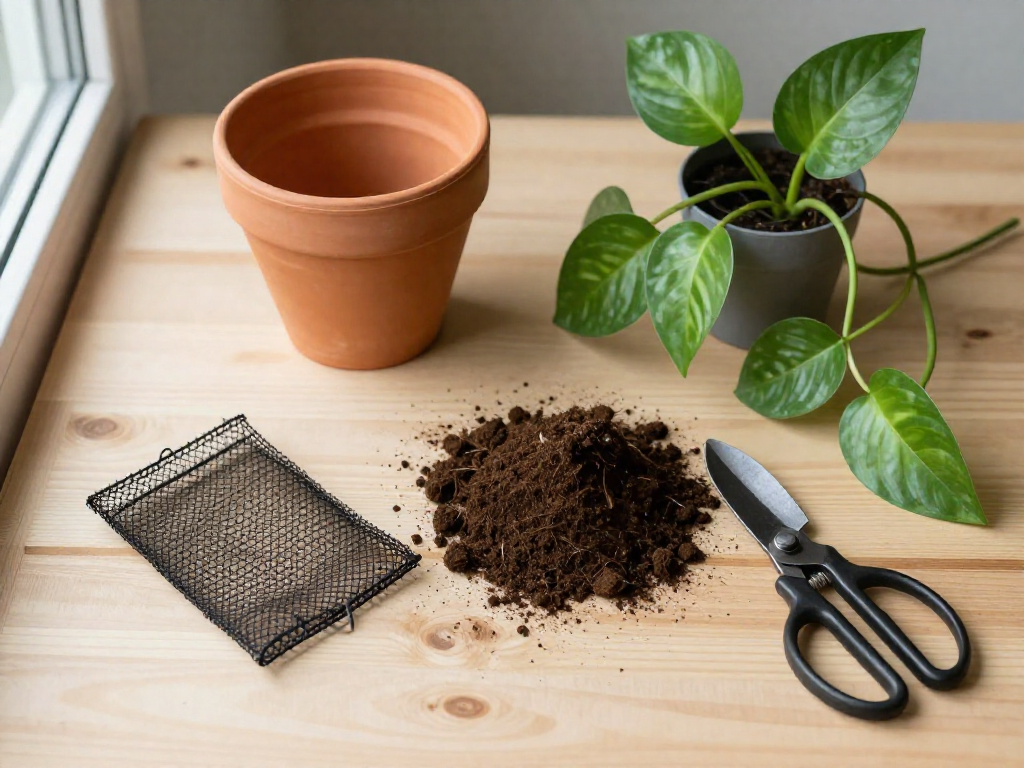
Pothos grow fast, so plan to repot every 1 to 2 years. The clearest signal it's time is roots poking out through the drainage holes at the bottom of the pot. When that happens, move your plant into a container only 1 to 2 inches larger in diameter and slightly deeper. Resist the urge to jump to a huge pot: too much extra soil holds water your plant can't use, which invites root rot. Spring is the ideal time, since your pothos is actively growing and recovers quickly. Gently loosen the roots, set the plant at the same depth it was before, fill in with fresh potting soil, and water thoroughly.
Propagating for Free Plants
Propagation—growing a new plant from a piece of the old one—is where pothos really shines, and it couldn't be easier:
- Find a node (the small bump on the stem where a leaf attaches and roots emerge).
- Cut just below that node with clean scissors.
- Place the cutting in a glass of water and set it in bright, indirect light.
- Once roots are a couple inches long and well established, pot the cutting in soil.
Trimming this way also encourages bushier, fuller growth on the parent plant—so one pothos can gradually green up your whole apartment.
Quick-Reference Pothos Care Routine
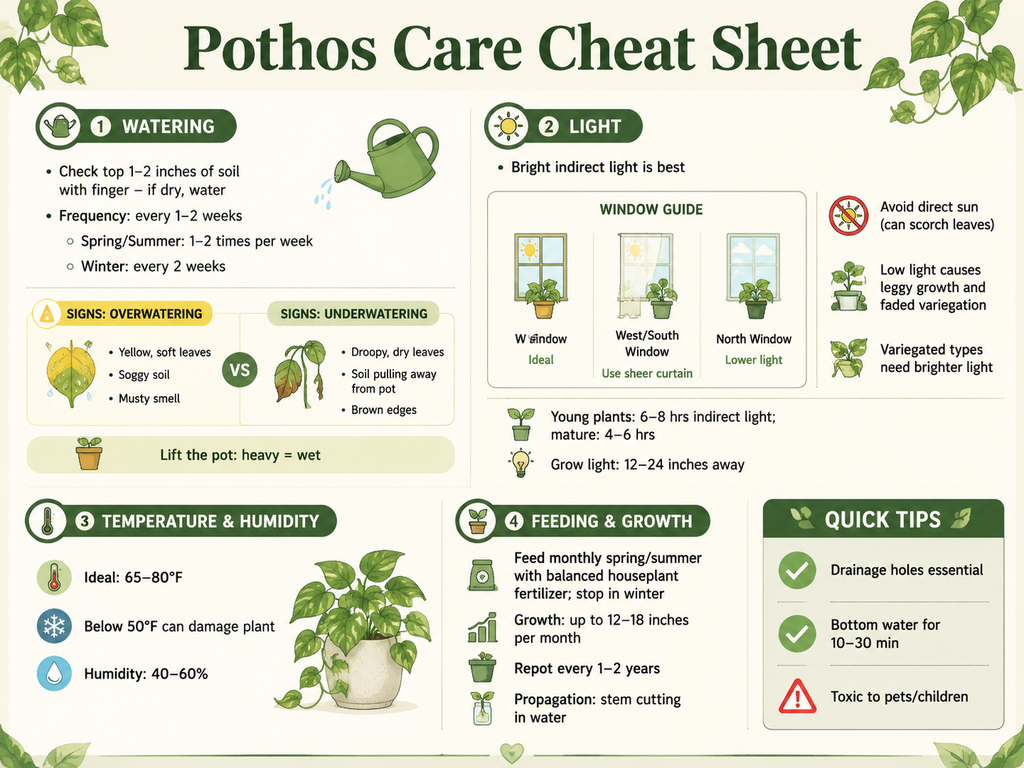
Save this cheat sheet and check it whenever your pothos needs attention.
- Water: Check weekly with the finger test—water when the top 1 to 2 inches of soil feel dry. Expect to water once or twice a week in spring and summer, and about every two weeks in winter.
- Light: Bright, indirect light. An east-facing window is ideal for gentle morning sun. Keep it out of harsh, direct afternoon sun, which scorches leaves into pale, crispy patches.
- Temperature & humidity: 65 to 80°F with 40 to 60% humidity—normal apartment conditions work fine.
- Feeding: A balanced houseplant fertilizer once a month in spring and summer; stop in winter when growth slows.
- Grow: Repot every 1 to 2 years into a pot 1 to 2 inches larger. Propagate by cutting just below a node and rooting it in water.
Sources
- How Often to Water Pothos? — spider-farmer.com
- 9 Signs of Overwatering Your Pothos — backyardboss.net
- How Often Should You Water A Pothos - Simple Guide — leaaverygear.com
- How to Water Pothos the Right Way (So It Thrives for Years to Come) — marthastewart.com
- Pothos Light Requirements (Why Yours May Not Be Thriving Indoors) — airenrich.com
- How Much Light Do Pothos Need — mars-hydro.com
- Bright Indirect Light “Requirements” by Plant Type — houseplantjournal.com
- Indoor Pothos Plant Care Growing Guide — provenwinners.com
- Pothos (Devil’s Ivy, Golden Pothos): House Plant How-To — extension.sdstate.edu
FAQ
How often should I water my pothos?
Water your pothos when the top 1-2 inches of soil feels dry, not on a fixed schedule. Use the finger method: push your index finger about one to two inches into the soil and water only if it feels dry at that depth; if it's still damp, wait. In practice this usually means watering about once a week in spring and summer (the active growing season) and roughly every two weeks in winter, when growth slows. Environmental factors like light and heat change how fast the soil dries, so check the plant at least once a week and decide based on the soil rather than the calendar. Pothos are forgiving and tolerate an occasional missed watering, so when in doubt, wait a day rather than overwater.
Why are my pothos leaves turning yellow?
Yellow leaves are most often a sign of overwatering, which is the most common mistake with pothos. Overwatered plants show yellowing that can start at the leaf edges and spread across the whole leaf, along with soft or translucent leaves, soggy soil, and sometimes a musty smell. Left unchecked, this leads to root rot, which shows up as mushy, squishy stems and black or brown spots. Check by feeling the soil and lifting the pot: waterlogged soil is much heavier than soil that needs water. If you suspect root rot, remove the plant, trim any mushy roots, and repot in fresh soil. Also make sure your pot has drainage holes so excess water can escape. Note that a single older leaf yellowing near the base can simply be normal aging.
Can a pothos survive in low light or a windowless room?
Pothos can survive in low light, which is part of why they're such popular beginner plants, but 'survive' isn't the same as 'thrive.' In prolonged low light, growth slows, new leaves come in smaller, vines stretch and get leggy with more bare space between leaves, and variegated types lose their cream or white markings. They tolerate very low light down to around 50 foot-candles but will just barely hang on. A truly windowless room has essentially no usable light, so the plant will decline over time. If that's your only option, add an LED grow light positioned about 12 to 24 inches (30 to 60 cm) from the plant, or rotate the pothos into a brighter room for part of each week. For real growth, aim for bright indirect light instead.
How do I know if my pothos is getting too much sun?
The clearest sign of too much sun is leaf scorch: pale, bleached, or crispy patches on the leaves, usually where the strongest light hits. This most often happens with harsh direct sunlight, especially strong afternoon sun from a west- or south-facing window in summer. Damage can appear within days, and burned spots don't fully recover, so it's best to act early. Faded, washed-out (rather than dark green) leaves can also signal excessive light. Pothos does best in bright indirect light, meaning light that reaches the plant without the sun's rays landing directly on the leaves. It tolerates only about 3-4 hours of direct sun. If you see scorching, move the plant back from the window or soften the light with a sheer curtain.
Is pothos safe for cats and dogs?
No, pothos is not safe to eat and should be kept away from cats and dogs. Its leaves and stems contain calcium oxalates, natural crystals that are mildly toxic to pets and children if chewed or swallowed. Ingestion can cause mouth irritation, drooling, and stomach upset. It is not usually life-threatening in small amounts, but it's genuinely unpleasant for the animal. Because pothos vines trail and are easy for curious pets to reach, place yours on a high shelf, in a hanging planter, or in a room your pets can't access. If you think your cat or dog has eaten part of a pothos, contact your veterinarian or a pet poison helpline for guidance.
How do I propagate a pothos in water?
Propagating pothos in water is easy and one of the best ways to get free new plants. First, find a node, the small bump on the stem where a leaf meets the vine and where roots emerge. Using clean scissors, cut the stem just below a node so your cutting includes at least one node and a leaf or two. Place the cutting in a glass of water with the node submerged and the leaves above the waterline, and set it in bright indirect light. Refresh the water every few days to keep it clean. Roots typically form over the following weeks. Once the roots are a couple of inches long and well established, pot the cutting up in fresh potting soil and care for it like a mature pothos.
Why is my variegated pothos turning all green?
A variegated pothos turning solid green is almost always a light problem. Variegated types like Marble Queen, N'Joy, and Pearls & Jade have leaf sections with less chlorophyll (the green pigment plants use to make energy from light). In low light, the plant compensates by producing more chlorophyll, so new leaves come in greener and the cream or white patterning fades. The fix is more light: move the plant to a brighter spot with several hours of bright indirect light, such as near an east-facing window. New growth should return with better variegation, though existing all-green leaves won't change back. Just avoid harsh direct sun, which can bleach and scorch the leaves; if leaves look pale and washed out, that's a sign of too much light instead.
See also
- Beginner houseplant watering guide: the finger test explained
- How to propagate houseplants in water for beginners
- Best low-light houseplants for apartments
- Understanding indirect vs. direct light for indoor plants
- Pet-safe houseplants for small spaces
Related articles
Pothos vs. Philodendron vs. Snake Plant: Which Should You Start With?
Pothos, philodendron, or snake plant—which easy houseplant is the best first choice for your apartment? A clear, plant-by-plant comparison for new plant parents.
Jul 14, 2026 · 7 min read
Jade Plant Care: The Easy Beginner Succulent Tree
Learn how to care for a jade plant indoors: watering, light, soil, plus simple pruning to shape a bushy little succulent tree. Beginner-friendly, step by step.
Jul 14, 2026 · 9 min read
Fiddle Leaf Fig Care: Why It's Fussy and How to Cope
Can a beginner keep a fiddle leaf fig alive? An honest, plant-by-plant care guide covering light, watering, drafts, and how to fix brown spots and leaf drop.
Jul 14, 2026 · 12 min read