Small-Space Plant Display Ideas for Tiny Apartments
How can I display plants when I have no space?
On this page
Why Vertical Is the Answer When You Have No Floor Space
Short answer: when you can't spread out, grow up. Growing plants upward instead of outward is the single most effective way to add greenery in a small apartment, because it uses vertical air space you're already ignoring instead of the floor and counters you can't spare. Hanging pots, wall shelves, and trailing (downward-growing) plants let you fill empty corners and blank walls while keeping the room itself uncluttered.
This matters because most renters are squeezed on exactly the two things that make floor-based plant displays hard: space and permission. According to renter surveys, nearly 30% say a lack of storage is their top frustration, and around 65% live under deposit rules that limit permanent wall modifications. Going vertical sidesteps both, especially with no-drill options like tension rods, peel-and-stick shelves, and hanging hardware that comes down cleanly when you move.
There's a design payoff, too. Trailing plants—varieties whose stems grow downward rather than upright, such as pothos or spider plant—cascade over the edges of shelves, mantels, and bookcases. That draping foliage softens hard corners and blank edges, so a single plant doubles as living decor.
Every idea in the list below builds on this one principle: claim the vertical space in your apartment first, and the floor takes care of itself.
No-Drill Wall Shelves and Floating Displays
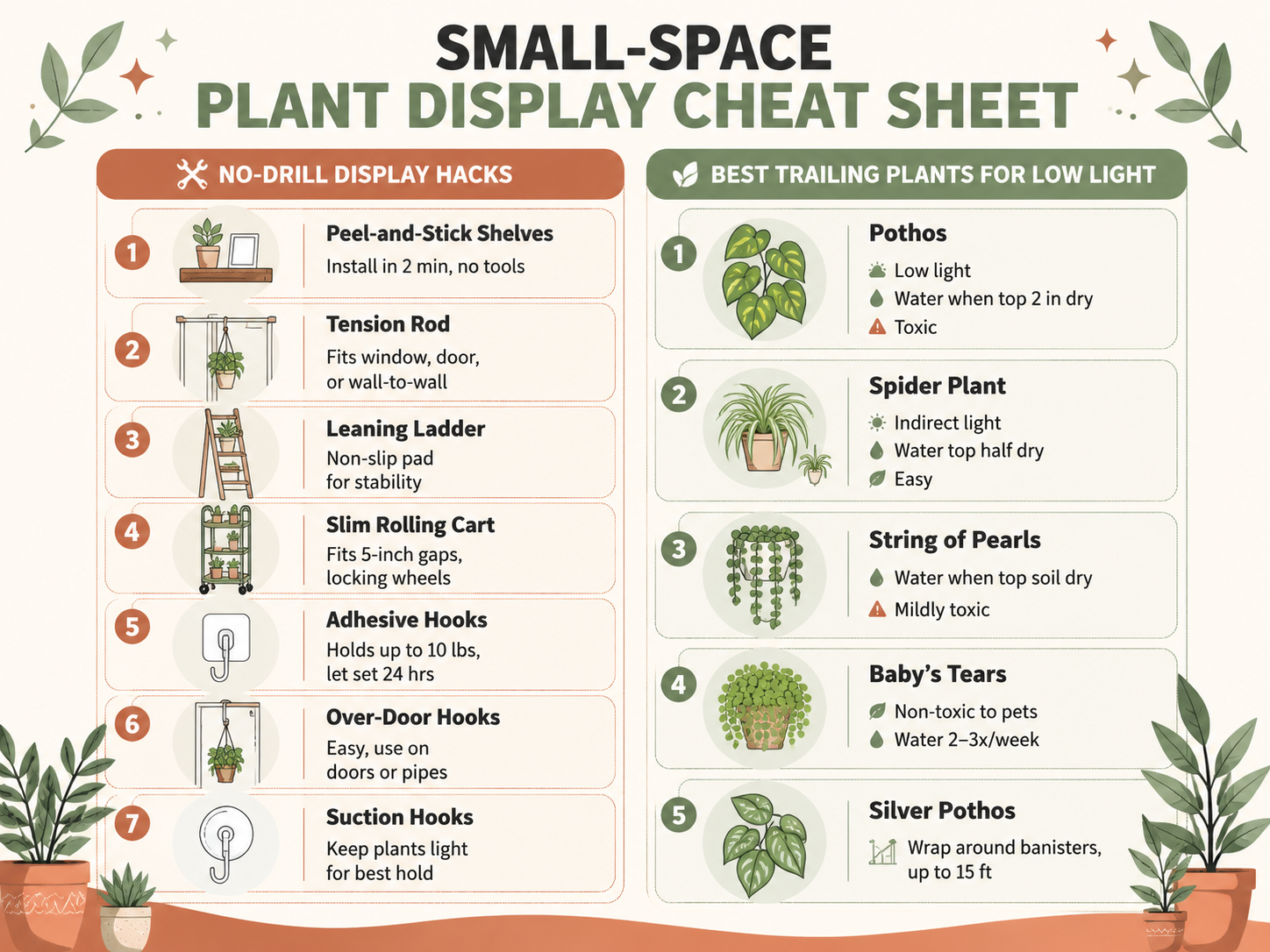
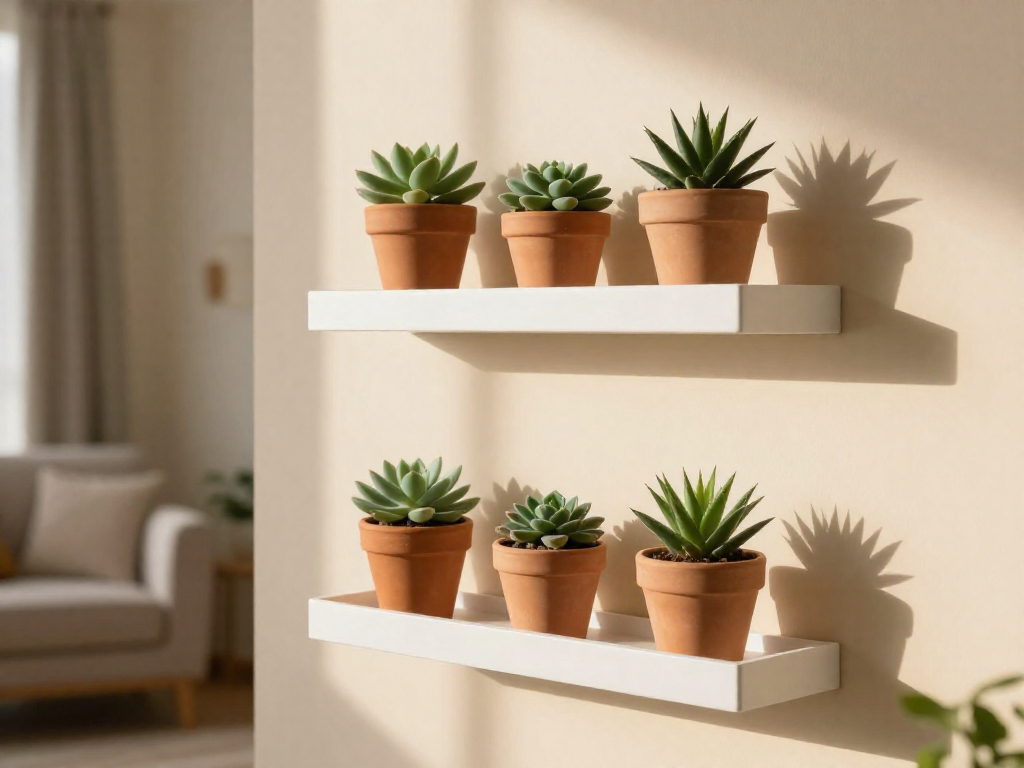
If you can't put holes in the wall, peel-and-stick floating shelves are your easiest starting point. They're a renter's dream: no drill, no wall anchors, and no security deposit drama. Each one installs in about 2 minutes with no tools—grab a tape measure if you don't trust yourself to eyeball a straight line. When you move out, they peel off cleanly and leave the wall damage-free.
The trade-off is weight. Adhesive shelves are built for lightweight items, so think small: a single succulent (a low-water plant with thick, moisture-storing leaves), a tiny pot of pothos, or a propagation jar. Skip the heavy ceramic planters and anything full of wet, dense soil.
Build a Mini Plant Gallery
Instead of one lonely shelf, install two or three in a staggered pattern—one higher, one lower, one off to the side. This creates a "gallery wall" effect that fills vertical space and makes even a couple of small plants feel like an intentional display. Leave enough room above each shelf for the plant to grow, and give trailing plants space to drape down toward the shelf below.
A Note on Heavy-Duty Adhesive Hooks
If a shelf feels like overkill, modern adhesive hooks are surprisingly strong—many now hold up to 10 lbs and come in finishes like matte black or brushed nickel. Two rules make them last: clean the wall first (wipe away dust and oils so the adhesive grips), and let it set for 24 hours before hanging anything. Rushing this step is the number one reason hooks fall.
Hang Plants From the Ceiling Without Drilling
Ceiling space is the biggest untapped display area in a small apartment, and you can use it without a single hole in the wall. The one rule that ties every method below together: keep your plants as light as possible. Because you're not sinking a permanent hook into a ceiling joist with a drill, no-drill hardware holds far less weight than a drilled anchor would. Choose small pots, plastic or resin over ceramic or terracotta, and lightweight potting mix rather than heavy garden soil.
Tension Rods
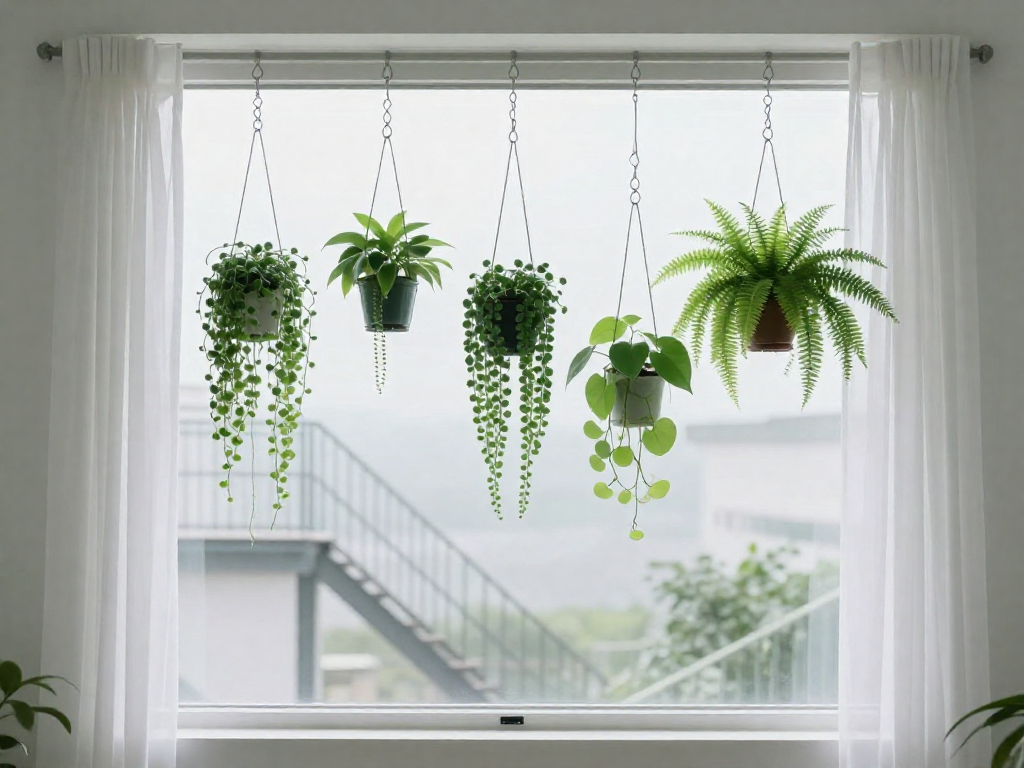
A tension rod (a spring-loaded pole that wedges itself in place with pressure, no hardware needed) is the most flexible option. Run one across a window, skylight, or door frame, or wall-to-wall in a narrow spot like a hallway or above a kitchen counter. For a freestanding version, use the IKEA-style setup: stand two tension rods floor-to-ceiling and lay a third rod across them to hold your hanging pots.
Heavy-Duty Suction Hooks
Heavy-duty suction hooks can carry a fair amount of weight and stick to any smooth, non-porous surface like a window or tiled wall. You can also buy suction plant pots with the mount built right in. Even so, keep the plant light and check the suction seal periodically so nothing works loose over time.
Macramé Hangers
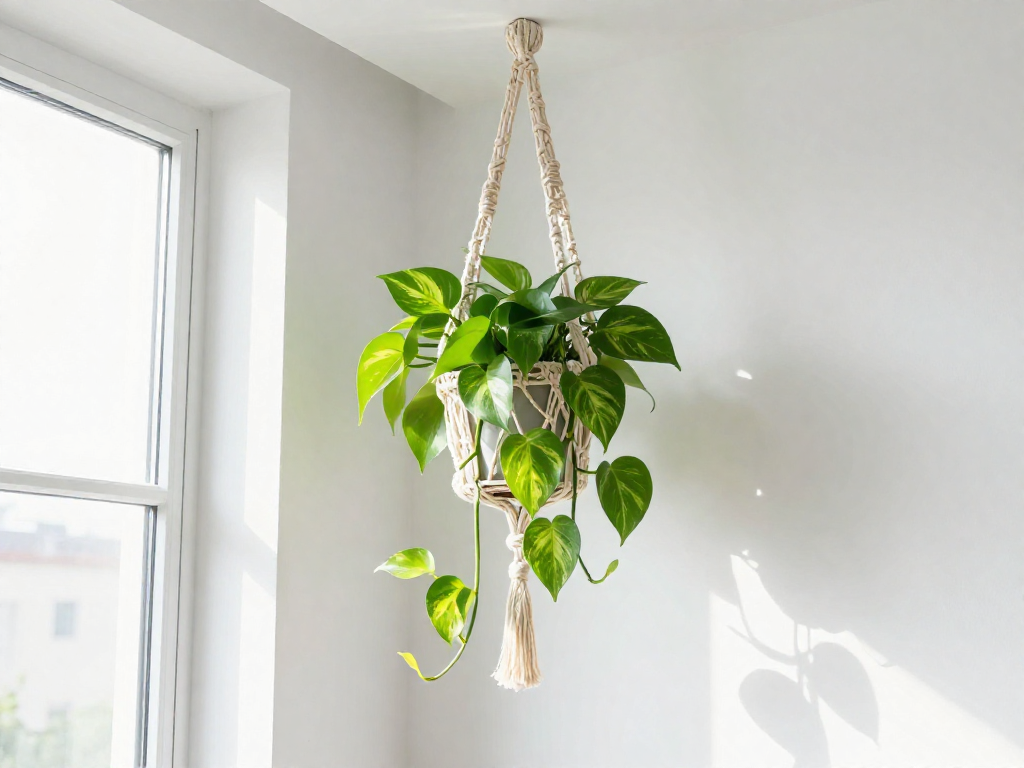
A macramé hanger (a knotted rope or cord sling that cradles a pot) lets greenery fill empty corners without using floor or shelf space. Hang one from any of the supports above and let a trailing plant cascade down—it softens hard edges and draws the eye upward, making a tight room feel taller.
Freestanding and Furniture-Based Displays
If your lease bans wall damage—or you just don't want to patch holes when you move—you can still build a full plant display using furniture and freestanding pieces. None of these ideas require touching a wall.
Leaning ladders and shelves
A ladder or shelf that leans against the wall gives you vertical display space with zero drilling. Just prop it up and set pots on the rungs or tiers. Old wooden ladders look especially charming with trailing plants draping between the steps. On smooth or hardwood floors, slip a non-slip pad (a thin rubber gripper) under each leg so the whole thing doesn't slide when you lift a pot on or off.
Add hooks to your own furniture
You may not be able to drill your walls, but your own furniture is fair game. Sturdy wooden bookshelves and cupboards can take small screw-in hooks for lightweight hanging pots. Over-door hooks are cheap and need no tools at all—and they aren't just for doors. Use them on exposed pipes, shelf edges, and ledges wherever you need a quick hanging point.
Slim rolling carts
A narrow rolling cart turns a gap as small as 5 inches into mobile plant space—perfect for the sliver between a fridge and a counter or a sofa and a wall. Choose one with locking wheels so it stays put once you position it, then roll it toward the window on gray days and back out of the way when you need the floor.
The Best Trailing Plants for Small Spaces
Now that you have shelves, hooks, and hangers in place, here are the trailing plants (varieties whose stems grow downward and cascade over the edge) that fill them best. All four are beginner-friendly and forgiving of the imperfect light most apartments get.
Pothos (Epipremnum aureum)
The easiest place to start. Pothos tolerates low light—even artificial light—and its vines can reach up to 15 feet, so a single pot can drape down a bookshelf or wrap around a railing. Water only when the top 2 inches of soil feel dry.
- Light: Full shade to bright, indirect
- Water: When the top 2 inches of soil are dry
- Soil: Well-draining potting mix
- Toxicity: Toxic to pets and children (contains calcium oxalate crystals)
String of Pearls (Senecio rowleyanus)
A trailing succulent (a water-storing plant with thick, bead-like leaves) that thrives in a hanging pot. It's low-maintenance and needs infrequent watering.
- Light: Bright, indirect
- Water: Only when the top of the soil is dry
- Soil: Fast-draining succulent/cactus mix
- Toxicity: Mildly toxic; may cause irritation or stomach discomfort if eaten
Baby's Tears (Pilea depressa)
The safe pick if you have curious cats, dogs, or kids—it's non-toxic to pets and humans. Its dense, tiny leaves cascade into a lush green curtain.
- Light: Bright, indirect
- Water: 2–3 times a week; keep soil lightly moist
- Soil: Standard well-draining mix
- Toxicity: Non-toxic to cats, dogs, and humans
Spider Plant (Chlorophytum comosum)
Adaptable and hard to kill, but its roots are sensitive to rot—always use a pot with a drainage hole.
- Light: Indirect light
- Water: When the top half of the soil is dry
- Soil: Well-draining mix in a pot with drainage
- Toxicity: Non-toxic to pets
Want more vertical coverage? String of hearts and English ivy are two more compact trailers that fill downward space nicely.
Styling Tips: Turn Plants Into a Display, Not Clutter
A few plants can look like a mess or like a magazine spread—the difference is placement, not quantity. Here's how to make yours look intentional.
Let trailing plants spill. Position trailing (downward-growing) plants where their stems can cascade—the tops of shelves, bookcases, or a window frame. The falling greenery softens hard edges and draws the eye, doing the styling work for you.
Fill vertical gaps with one plant. Wrap the stems of a silver pothos, or any long trailing vine, around banisters, stair railings, or a pole. A single plant can dress an entire stairway this way, no extra pots required.
Group by leaf shape for depth. Cluster plants with different leaf shapes and sizes—a broad leaf, a fine trailing vine, an upright stem—so the arrangement reads as layered rather than repetitive.
Check weight limits first. Before mounting anything on a balcony or railing, confirm your building's load limits and lease rules. Water alone weighs about 8.3 pounds per gallon, and many leases restrict railing-mounted fixtures.
Sources
- 12 Renter-Friendly Wall Storage Hacks (No Drilling!) - Smart Space Tips — smallspacetips.com
- How to hang plants from the ceiling without drilling: 5 hacks for renters — theplantsproject.com.au
- Apartment Friendly Shelves No Drill - TikTok — tiktok.com
- 17 Hanging Indoor Plants That Are Surprisingly Easy to Care For — lowlightleaf.com
- Trailing Houseplants – Tagged "Low Light"– Quirky Plants — quirkyplants.co.uk
- Top 30 Best Hanging House Plants to Elevate Every Home — planetdesert.com
- 16 Low-Light Hanging Plants to Try Growing — thespruce.com
- 20 BEAUTIFUL LOW LIGHT HANGING PLANTS TO TRY THIS WINTER - A Lovely Place Called Home — alovelyplacecalledhome.com
- Hydroponic Apartment Garden: Vertical Systems for Small Spaces — soilfreeharvest.com
- Best Indoor Garden Systems for Apartments and Small Spaces — letpot.com
See also
- Best Low-Light Houseplants for Dim Apartments
- How to Water Houseplants Without Overwatering
- Pet-Safe Houseplants for New Plant Parents
- Pothos Care Guide for Beginners
- Renter-Friendly Ways to Add Greenery Without Damaging Walls
Related articles
Should Beginners Buy Fake Plants Instead? An Honest Take
Wondering if real plants are worth it when your apartment is dark? An honest, evidence-based look at when to buy real, go fake, or add a grow light.
Jul 14, 2026 · 6 min read
How to Buy a Healthy Houseplant at the Store
Learn how to pick a healthy houseplant and avoid a sick one. A simple store checklist for inspecting roots, leaves, and pests before you buy.
Jul 14, 2026 · 11 min read
Essential Tools New Plant Parents Actually Need
The tools you actually need to start caring for houseplants—a minimal, under-$15 kit for apartment dwellers, plus the gadgets you can skip.
Jul 14, 2026 · 6 min read