Essential Tools New Plant Parents Actually Need
What tools do I need to start caring for plants?
On this page
Open by naming the trap most new plant parents fall into: buying a shelf full of gadgets before owning a single healthy plant. Reframe the question from "what should I buy?" to "what problem am I actually solving?" Promise a genuinely minimal kit—most items under $15, a couple under $5—that you can build gradually, starting with what comes home alongside the plant.
The Real Fundamentals Come First (Before Any Tool)
Before you buy a single gadget, know this: three things decide whether a houseplant lives or dies, and none of them are tools. Get these right and the "kit" below just makes good habits easier.
The three genuine fundamentals:
- Right light. Match the plant to the spot. A low-light plant on a dim shelf or a sun-lover far from a window will slowly decline no matter what you buy.
- Moist, not soaked, soil. Water when the soil is dry, not on a fixed schedule. Overwatering is the number one beginner plant killer.
- Drainage holes. Use pots with holes in the bottom so extra water can escape. Without them, roots sit in water and rot.
Here's the trap that catches most new plant parents: a drooping plant looks thirsty, so you water it—but drooping often means the soil is too wet, not too dry. When in doubt, wait and check the soil first.
No tool fixes a plant in the wrong spot with the wrong light. Think of the kit ahead as support for good habits, never a substitute for them.
The 5-Tool Starter Kit (Each Under $15)
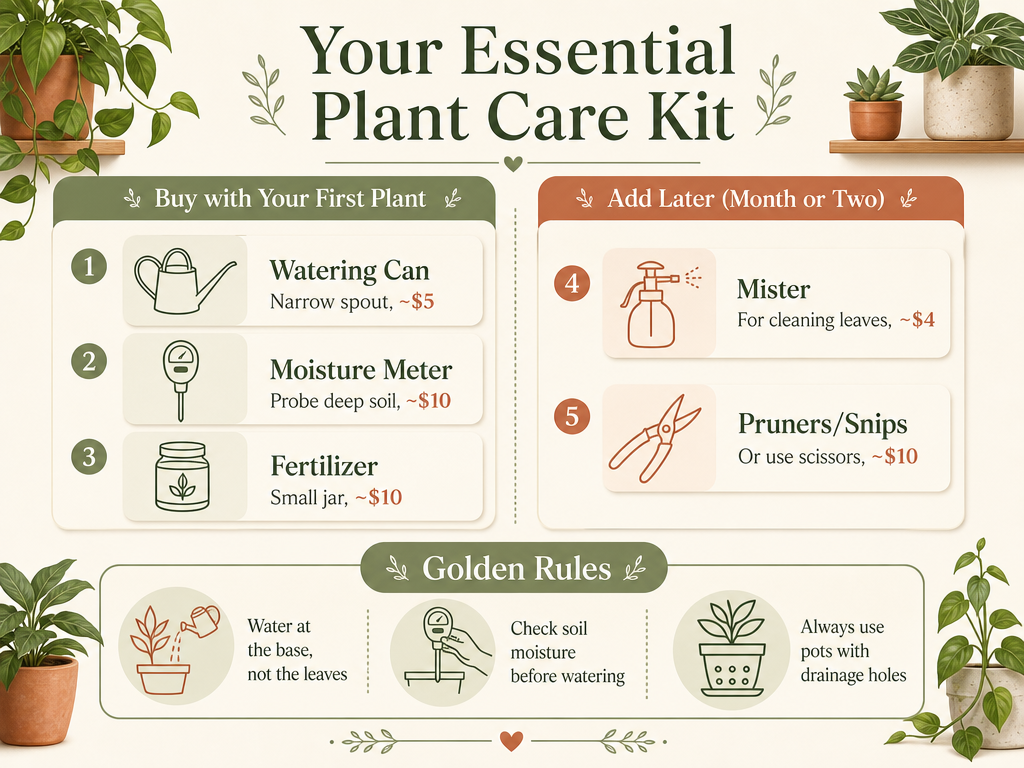
Here it is—the whole kit. Five tools, each with a version under $15, and a couple you can grab for under $5. You don't need to buy them all at once; the first three can come home with your plant, and the last two can wait a month or two.
1. A watering can with a long, narrow spout (~$5–7)
A small plastic can with a long, thin spout lets you water at the base of the plant—the soil—instead of splashing the leaves. That matters: wet foliage with poor airflow raises the risk of fungal problems (the mold-like diseases that spot and rot leaves). The narrow opening also slows the flow, giving you more control if you tend to overwater. Skip the glass or pitcher; the spout is the whole point.
2. A small jar of balanced fertilizer
You don't need a giant bottle. A small jar of any well-balanced houseplant fertilizer—powder, liquid, or slow-release granules—can last a year or two. Feed only during the growing season, spring and summer, and follow the label. More isn't better: over-fertilizing burns roots and damages plants.
3. A moisture meter (for deep pots)
Watering is the number-one plant killer for beginners, which makes this the tool that saves the most plants. Even when the top of the soil feels dry, most roots sit halfway down the pot or deeper—past where your finger reaches. A meter reads down where the roots actually live. Buy it once you have pots too deep to check by finger; a basic model is inexpensive.
4. Clean, sharp scissors or snips
You don't need dedicated pruners. A clean, sharp pair of scissors cleanly cuts off dead or yellow leaves (rather than tearing them) and works for propagation—growing new plants from cuttings. Floral snips are nice, but scissors do the same job.
5. Optional: a mister
Nice-to-have, not essential. Misting doesn't actually raise a room's humidity, but tropical plants used to regular rain seem to enjoy it, and it keeps dusty leaves clean. A basic one costs a few dollars and lasts years.
Buy It With the Plant vs. Add It Later
You don't need the whole kit on day one. Split your buying into two phases so you spend money only when a plant actually gives you a reason to.
Come home with the plant. Three tools earn their spot right away: a watering can (any small one works), a way to read your light (even a free phone light-meter app), and a small jar of balanced fertilizer—one that lasts a year or two, since more isn't better.
Add it later. A moisture meter—a probe that reads how wet the soil is deeper than your finger can reach—is worth buying only once you have pots too deep to finger-check. Most roots sit halfway down or lower, so that's when it starts paying off. Pruners and a mister can wait a month or two, until you actually see leggy growth or crispy leaf tips.
The rule that keeps your kit lean: buy for the problem in front of you, not one you might have someday. Chronic overwatering points to a moisture meter; crispy tips point to dry air. Let the plant tell you what it needs next.
The Honest Truth About Moisture Meters
A moisture meter is the most-hyped tool in beginner plant care, and it can help—but only if you understand what it's actually doing. Here's the nuance most listicles skip.
It doesn't measure water. A basic meter reads electrical conductance—how easily a tiny current passes between two probes—and then estimates moisture from that. The problem: mineral salts, hard tap water, and compacted soil all change conductance too, so the number can drift without your soil actually being wetter or drier.
The scale is smaller than it looks. That reassuring "1–10" dial is often narrower in practice. In one hands-on test, a bone-dry pot never dropped below about 2.5 (the same reading it gave in open air), and a soaked pot topped out near 9—so your real working range is closer to 6 points, not 10. Treat it as "dry / damp / wet," not a precise score.
Use it to train your senses, then set it aside. The meter's best job is teaching you what "ready to water" looks and feels like—especially in deep pots where roots sit well below finger reach. Once your instincts catch up, most people stop needing it.
A few buying notes:
- Match probe length to pot depth; short probes suit indoor pots.
- Skip Wi-Fi "smart" meters—a simple, single-function one is plenty.
Gadgets and 'Drainage' Myths You Can Skip
Before you add anything to your cart, here's what you can leave out—and why it won't hurt your plants.
- Skip the mister as a "core" tool. Misting doesn't actually raise the humidity in your room. It can keep leaves clean and tropical plants enjoy it, but it's a nice-to-have you can add later—not something to buy on day one.
- Don't put rocks or gravel in the bottom of the pot. This is an old plant-care myth. What actually drains water is a well-aerated, fast-draining potting mix plus a pot with a drainage hole (an opening in the bottom that lets excess water escape). If you're worried about mix falling through the hole, lay a coffee filter or small screen over it.
- Pass on dedicated pruners. A clean, sharp pair of scissors works just as well for snipping off dead or yellow leaves—much better than tearing them off by hand.
- Never use outdoor or garden soil indoors. It's dense and holds too much water, which can lead to root rot. Use a bagged indoor potting mix instead.
- Adjust timing, not gear. Water in the morning to reduce fungal risk, and water less in fall and winter when growth slows. Good habits cut your need for extra tools.
Right-Size Your Kit to Your Space
The five-tool list is a starting point, not a shopping order. Someone with three plants needs a different kit than someone with thirty, and a dry north-facing apartment (little direct sun, drier air) has different needs than a home full of bright south-facing windows.
Instead of copying the list, map your problems to tools:
- Chronic overwatering? A moisture meter reaches deeper than your finger, where most roots actually sit.
- Crispy leaf tips? That points to dry air, not a tool you can buy your way out of quickly.
- Tiny flies in the soil? Those are fungus gnats, a sign of soil staying too wet.
Then run each purchase through one test: does it fix a recurring failure or remove guesswork from a decision you keep getting wrong? If it does neither, skip it. Buy for the problem in front of you, not one you might have someday.
Sources
- Plant Care Kit: 5 Houseplant Essentials Beginning Gardeners Need — joyusgarden.com
- BEGINNER PLANT CARE KIT: 5 Essentials To Get You Started — youtube.com
- Best Tools for Houseplants: A Plant Parent's Guide — modernsprout.com
- Soil Moisture Meters - Do They Work — gardenmyths.com
- Moisture meters in the Houseplants forum - Garden.org — garden.org
- The 6 must-have essentials I keep in my plant care kit | Homes and Gardens — homesandgardens.com
- What can I put in the bottom of my indoor planter for drainage? — quora.com
- Growth Medium 101: The Best Potting Soil For Indoor Plants - Part 1 — treleaf.shop
- Indoor Plant Care Guide: Best Watering Cans and Methods - Soltech — soltech.com
- 6 Best Soil Moisture Meters: Keep Your Soil Just Wet Enough - Gardening Products Review — gardeningproductsreview.com
- The 9 Best Soil Moisture Meters The Spruce Has Tested — thespruce.com
See also
- How to tell how much light your apartment window actually gets
- Best low-light houseplants for small apartments
- How often to water common houseplants: a plant-by-plant guide
- Why your houseplant is drooping: overwatering vs underwatering
- Choosing pots with drainage for small spaces
Related articles
Should Beginners Buy Fake Plants Instead? An Honest Take
Wondering if real plants are worth it when your apartment is dark? An honest, evidence-based look at when to buy real, go fake, or add a grow light.
Jul 14, 2026 · 6 min read
How to Buy a Healthy Houseplant at the Store
Learn how to pick a healthy houseplant and avoid a sick one. A simple store checklist for inspecting roots, leaves, and pests before you buy.
Jul 14, 2026 · 11 min read
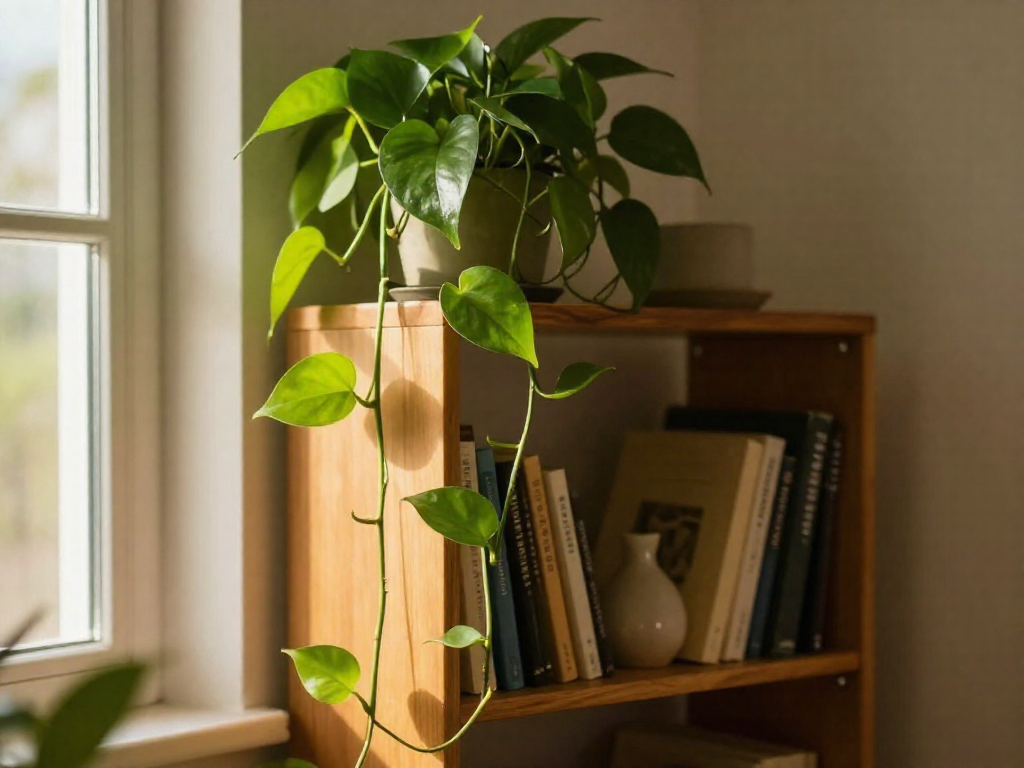
Best Hanging Plants for Small Apartments
The best trailing plants for small apartments—easy, space-saving picks for hooks and shelves, with light and watering tips for beginner plant parents.
Jul 14, 2026 · 7 min read