Best Hanging Plants for Small Apartments
Which trailing plants work well hung in small spaces?
On this page
Why Hanging Plants Are Perfect for Small Apartments
If you're a new plant parent in a studio, rental, or dorm, hanging plants solve the biggest problem you face: not enough room. Because they hang from the ceiling, a wall hook, or the edge of a shelf, they let you enjoy greenery without giving up precious floor or shelf space—which is exactly why they're ideal for small homes and apartments.
They're also great for putting overlooked areas to work. An empty corner, the space above a bookcase, or a bare stretch of wall becomes a spot for living decor.
The secret is choosing trailing plants—plants that grow downward in long, cascading vines or stems rather than spreading outward. Picks like pothos and string of pearls fill that vertical space while keeping the room feeling open and uncluttered.
When we say "small space," we mean apartments, studios, dorms, and rentals—anywhere square footage is tight and you want plants that stay out of the way.
What "Low Light" Actually Means in an Apartment
When a plant is labeled "low light," it does not mean it can live in the dark. In apartment terms, low light means a room that has windows but gets little direct sun—think a spot a few feet back from a window, or a north-facing window with a shaded city view. Most trailing plants on this list will grow happily there.
The trade-off is speed, not health: in low light many houseplants grow more slowly but stay green and stable. If you want faster, fuller growth, move the plant closer to a brighter window.
How to gauge your hanging spot before buying: on a sunny afternoon, hold your hand where the pot will hang and look at the shadow it casts on the wall.
- Crisp, sharp shadow = bright light
- Soft, fuzzy shadow = medium light
- Barely-there shadow = low light
If you can comfortably read a book there without a lamp during the day, it counts as usable light for these plants.
8 Best Hanging Plants for Small Apartments
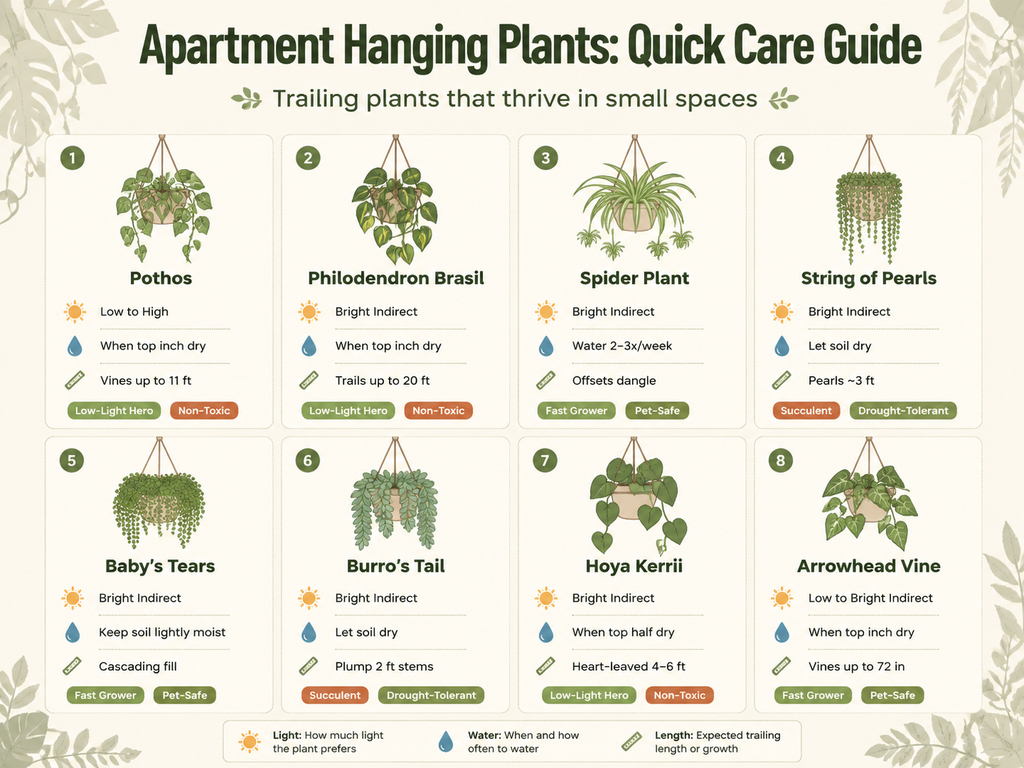
Each pick below trails well in tight spaces and asks little of a first-time plant parent. For every plant you'll find a quick care summary covering light, water, soil, and toxicity (whether it's safe around cats and dogs), plus the best way to display it. "Indirect light" means bright light that doesn't hit the leaves directly—a spot a few feet back from a window, or beside one with a sheer curtain.
1. Pothos (Epipremnum aureum)
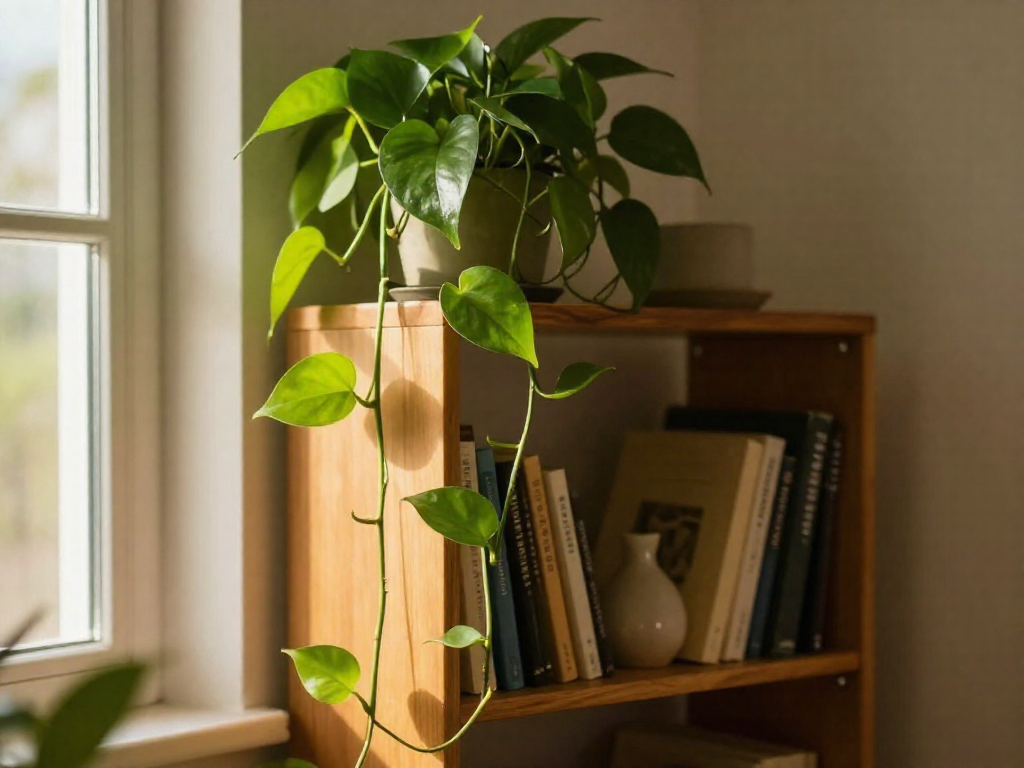
The most forgiving plant on this list. Pothos adapts to almost any spot, grows fast, and looks great cascading from a shelf or trailing several feet from a basket. It's easy to trim and re-root, so you can shape it as it grows.
- Light: Low to bright indirect
- Water: When the top inch of soil is dry
- Soil: Standard well-draining potting mix
- Toxicity: Toxic to cats and dogs
- Best display: Hanging basket, high shelf, or bookcase top so the stems spill down
2. String of Pearls (Senecio rowleyanus)
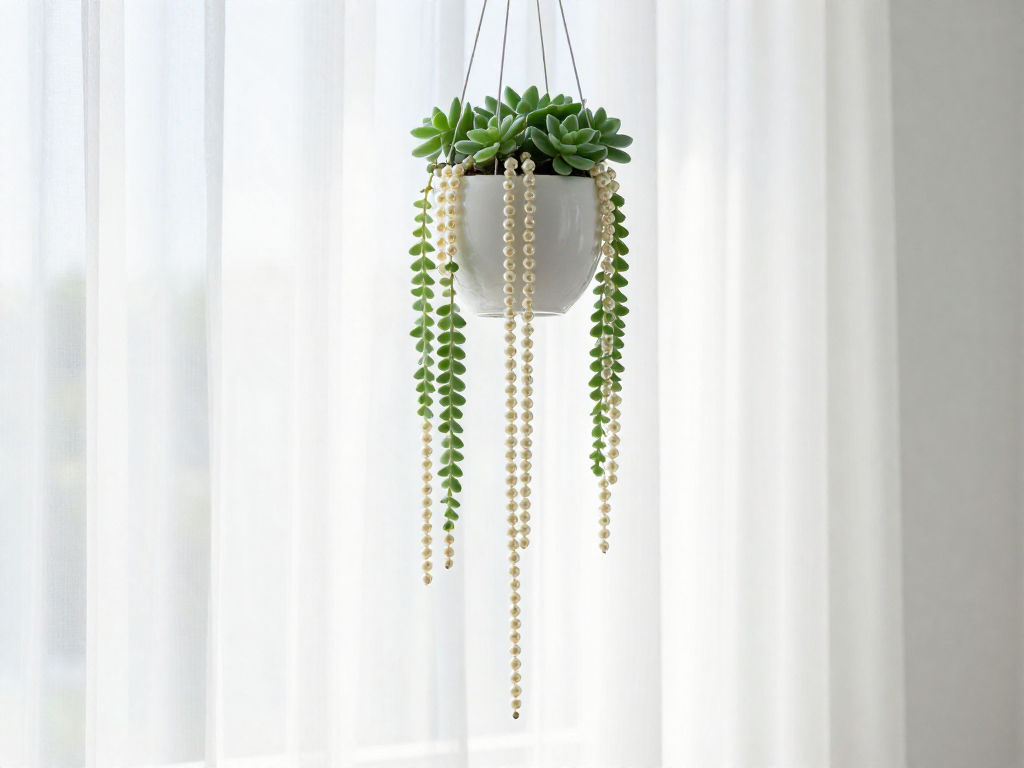
A trailing succulent (a water-storing plant) with round, bead-like leaves that dangle like a pearl necklace, reaching about 2–3 feet. It's eye-catching but wants more sun and less water than most.
- Light: Bright indirect, near a window
- Water: Sparingly—only when the top of the soil is dry
- Soil: Fast-draining cactus/succulent mix
- Toxicity: Mildly toxic if eaten; keep out of pets' reach
- Best display: Hook near a bright window so the strands hang free
3. Burro's Tail (Sedum morganianum)
Another succulent, with plump, round leaves packed along trailing stems that look like clusters of tiny green grapes. Low-maintenance and beginner-friendly—just handle it gently, since the leaves drop easily.
- Light: Bright indirect (tolerates lower light)
- Water: When the mix is fully dry
- Soil: Fast-draining succulent mix
- Toxicity: Generally considered non-toxic, but not meant to be eaten
- Best display: Hanging pot where the heavy stems can drape without brushing surfaces
4. Philodendron Brasil
Full, variegated leaves on trailing vines make this a lush, low-effort choice. It tolerates dim corners well and can trail many feet if you let it.
- Light: Low to bright indirect
- Water: When the top half of the soil is dry
- Soil: Well-draining potting mix
- Toxicity: Toxic to cats and dogs
- Best display: Wall-mounted hanger or high shelf in a lower-light room
5. Spider Plant (Chlorophytum comosum)
A classic beginner's plant—adaptable, quick to bounce back, and it sends out baby "spiderettes" you can pot up for free plants.
- Light: Moderate to bright indirect; tolerates low
- Water: When the top half of the soil is dry
- Soil: Standard mix in a pot with drainage holes (to prevent root rot)
- Toxicity: Non-toxic—safe for cats and dogs
- Best display: Hanging basket so the arching leaves and spiderettes cascade
6. Inch Plant (Tradescantia)
Stays just 2–4 inches tall but trails up to about 24 inches, with colorful striped foliage. It likes a bit more attention around moisture and humidity.
- Light: Bright indirect
- Water: Keep lightly, evenly moist
- Soil: Well-draining potting mix; enjoys higher humidity
- Toxicity: Mildly toxic; sap can irritate pets and skin
- Best display: Hanging basket or wall-mounted container
7. Baby's Tears (Pilea depressa)
Tiny, bright green leaves on cascading stems create a soft, carpet-like curtain. The standout feature: it's completely pet-safe.
- Light: Bright indirect
- Water: Loves moisture—water roughly 2–3 times a week to keep it from drying out
- Soil: Moisture-retentive but draining mix
- Toxicity: Non-toxic to cats, dogs, and humans
- Best display: Hanging pot where the dense stems can spill over all sides
8. Satin Pothos / Arrowhead Vine
Two compact options that trail as they mature. Satin (silver) pothos has velvety leaves flecked with silver; arrowhead vine (Syngonium) starts as a small tabletop mound, then vines out—up to several feet—once established.
- Light: Bright indirect; both adapt to lower light
- Water: When the topsoil dries
- Soil: Well-draining potting mix
- Toxicity: Toxic to cats and dogs
- Best display: Start on a shelf or tabletop, then move to a hanging basket as the vines lengthen
Pet owner note: If you share your space with cats or dogs, the spider plant and baby's tears are your safest bets. The rest are best hung high—on a ceiling hook or wall bracket—out of curious reach.
How to Hang and Care for Your Plants (Beginner Basics)
Once you've picked a plant, a safe, simple setup keeps it thriving. Here's how to hang and maintain trailing plants in a small apartment—no gardening experience required.
Hang It Safely (and Renter-Friendly)
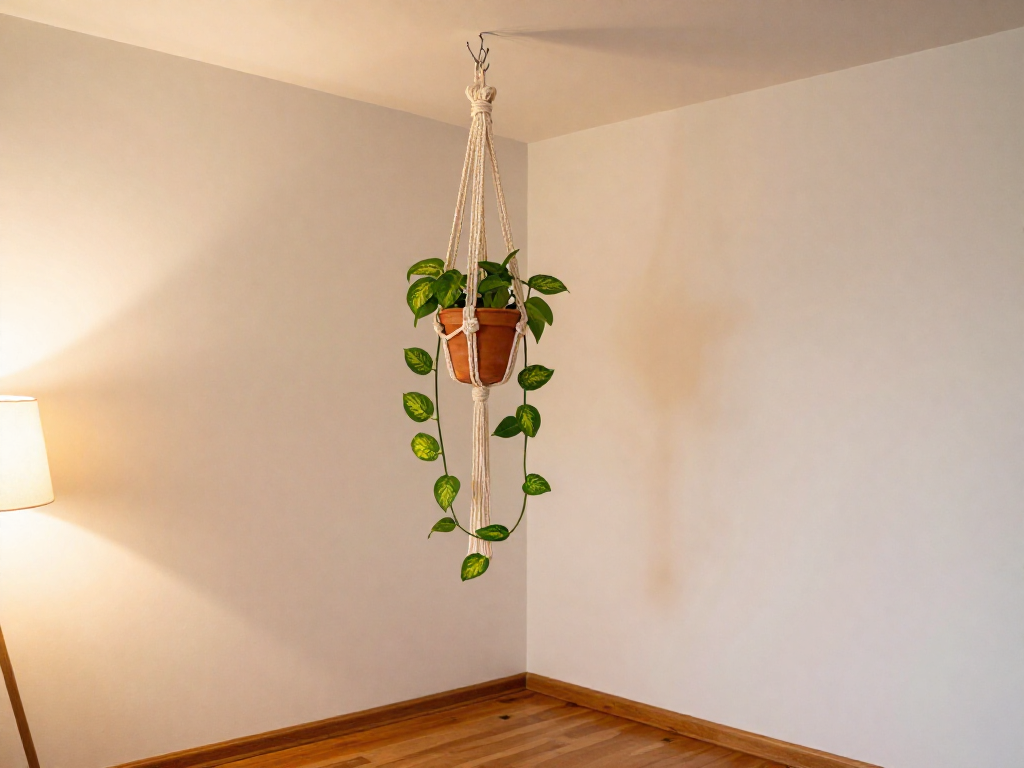
For lightweight plants like pothos or spider plants, a self-adhesive ceiling hook or a wall-mounted planter avoids drilling and protects your deposit. For heavier pots, drill into a stud or ceiling joist and use a hook rated well above the pot's soaked weight, since wet soil is much heavier than dry. A macramé hanger (a knotted rope holder) spreads the load and works with almost any pot.
Use Pots With Drainage
Always choose a pot with a drainage hole—the opening at the bottom that lets excess water escape. Without it, water pools and causes root rot (when roots sit in soggy soil and decay). Tuck a saucer or removable liner underneath to catch drips.
Water Without the Mess
Check the top of the soil first: for most trailing plants, water when the top inch is dry; succulents like string of pearls prefer the soil almost fully dry. Take the pot down to a sink to water, let it drain fully, then rehang—this avoids drips and overwatering, the fastest way to kill a pothos.
Rotate and Trim
Turn the pot a quarter-turn each week so all sides get even light and growth stays balanced. Pinch or snip leggy, bare stems back to a leaf to encourage fuller, bushier vines.
Pet-Safe vs. Toxic Hanging Plants
If you share your apartment with a cat or dog, check a plant's toxicity before you buy—not after your pet takes a bite. "Toxic" here means the plant can cause symptoms like drooling, vomiting, or mouth irritation if chewed, not that it's deadly on contact.
Pet-safe picks: Baby's Tears (Pilea depressa) and Spider Plant (Chlorophytum comosum) are non-toxic to cats and dogs, so they're the safest bet for curious pets.
Mildly toxic (keep out of reach): String of Pearls (Senecio rowleyanus), pothos (Epipremnum aureum), and philodendron can irritate if eaten.
Since these are hanging plants, use them to your advantage: mount toxic species high on a wall bracket or ceiling hook where trailing stems stay above nose and paw level.
Quick reference:
| Plant | Pet-safe? |
|---|---|
| Baby's Tears | ✅ Yes |
| Spider Plant | ✅ Yes |
| String of Pearls | ⚠️ Mildly toxic |
| Pothos | ⚠️ Mildly toxic |
| Philodendron | ⚠️ Mildly toxic |
When in doubt, hang it high or skip it.
Sources
- 15 Best Small Houseplants for Tiny Spaces and Apartments — provenwinners.com
- 17 Hanging Indoor Plants That Are Surprisingly Easy to Care For — lowlightleaf.com
- Top 30 Best Hanging House Plants to Elevate Every Home | Planet Desert — planetdesert.com
- Top 10 Low-Light Plants to Add Life to Your Apartment — whiterivernursery.com
- 20 BEAUTIFUL LOW LIGHT HANGING PLANTS TO TRY THIS WINTER - A Lovely Place Called Home — alovelyplacecalledhome.com
- How to Care For String Of Pearls: A Beautiful Hanging Succulent — joyusgarden.com
- String of Pearls Plant 'Care and Growers Guide' - Planet Desert — planetdesert.com
- Pothos Plant Care: The Easiest Trailing Houseplant (2026 Guide) — joyusgarden.com
- 5 Low-Light, Low-Maintenance Houseplants for Small Apartments - Soltech — soltech.com
See also
- Best low-light houseplants for apartments
- How to water houseplants without overwatering
- Pet-safe houseplants for cat and dog owners
- Pothos care guide for beginners
- String of Pearls care guide
- Small-space plant setups for renters
Related articles
Should Beginners Buy Fake Plants Instead? An Honest Take
Wondering if real plants are worth it when your apartment is dark? An honest, evidence-based look at when to buy real, go fake, or add a grow light.
Jul 14, 2026 · 6 min read
How to Buy a Healthy Houseplant at the Store
Learn how to pick a healthy houseplant and avoid a sick one. A simple store checklist for inspecting roots, leaves, and pests before you buy.
Jul 14, 2026 · 11 min read
Essential Tools New Plant Parents Actually Need
The tools you actually need to start caring for houseplants—a minimal, under-$15 kit for apartment dwellers, plus the gadgets you can skip.
Jul 14, 2026 · 6 min read