How to Buy a Healthy Houseplant at the Store
How do I pick a good plant and avoid a sick one?
On this page
Why the Healthiest-Looking Plant Isn't Always the Best Buy
To pick a good plant and avoid a sick one, don't trust looks alone—check the roots, leaf undersides, and container for pests before you buy. Store lighting, misting, and fresh grooming can make a struggling plant look picture-perfect, while the real trouble hides where you can't see it at a glance.
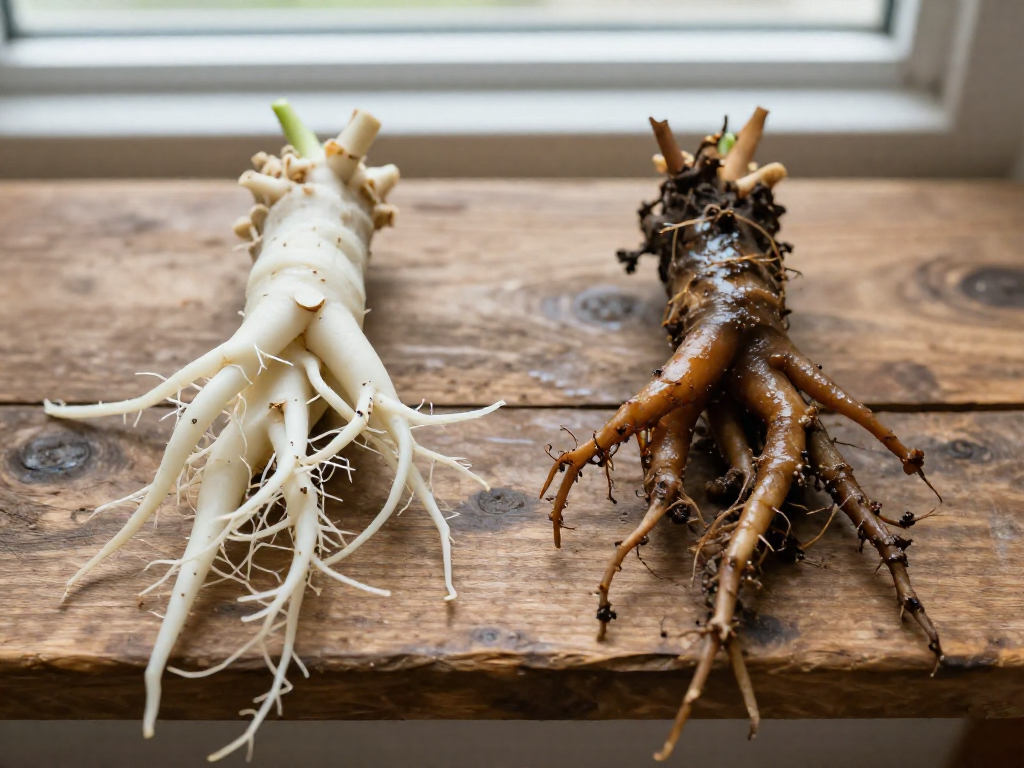
The clearest health signals are out of sight. Healthy roots are white to pale tan; brown, grey, black, or slimy roots mean the plant is failing. Pests like spider mites (tiny web-spinning bugs) and soft scale (small brown bumps that leave leaves sticky) gather on leaf undersides and around the root ball.
That matters because one cheap, infested plant can spread pests to every other plant you own. So we'll walk through a simple checklist: roots, leaves, pests, and a final gut check before you head to the register.
Check the Roots First (The #1 Thing Most Buyers Skip)
Everyone eyeballs the leaves. Almost nobody checks the roots — and the roots are where most store-bought plants quietly fail. Roots are the part of the plant that pulls up water and nutrients, so if they're rotting or crammed into a solid ball, no amount of good light at home will fix it. Spend 30 seconds here and you'll dodge most of the sick plants on the shelf.
How to actually look at the roots
You don't need to make a mess. Grab the plant by its main stem between your thumb and forefinger, then tug the pot downward while lifting the plant up. You only need a few inches of the root ball to judge it. For a fuller look, tip the plant on its side and gently tap the whole root ball out of the pot.
Short on nerve or space? Just tip the pot and peek at the roots poking out of the drainage holes at the bottom. It's not as thorough, but it catches the worst offenders.
What healthy roots look like
Healthy roots are white to pale tan, firm, and odorless, often with fleshy white tips. Color matters far more than size — plants naturally vary in how much root they grow, so don't be impressed by a big root mass or worried by a modest one.
The ideal plant to buy shows a few white roots around the perimeter with plenty of dark soil still visible between them. It's fine if the root ball crumbles slightly as it slides out — that's a sign the roots haven't taken over.
When to pass it up
Put it back if you see any of these:
- Brown, grey, black, or slimy roots — a sign of root rot (roots that have died and started to decay).
- Soft roots that fall apart when you touch or pull them.
- A sour or foul smell from the soil or roots.
- Root-bound signs: roots poking through the drainage holes, a dense hard ball of white roots circling the soil with almost no dirt left between them, or a plant that won't slide out at all.
White and firm? Buy it. Dark, mushy, or a solid knot of roots? Leave it for someone else.
Inspect the Leaves (Top and Underside)
After the roots, the leaves tell you the most about a plant's health. Scan both the top and the underside of several leaves, looking for discoloration, spots, drying, wilting, or curling.
Read the label before you panic. Some "off" colors are completely normal for the variety. Many plants are bred to have yellow-green (chartreuse), variegated (leaves patterned with two or more colors), or deep dark foliage. Check the plant tag first so you don't skip a healthy plant over a color that's supposed to be there.
What real problem signs look like:
- Brown spots can mean insect damage or fungal/viral disease.
- Curling leaves often signal drought stress, but can also point to pests.
- Brown blotches ringed with yellow usually mean a fungus.
- Water-soaked, splotchy patches usually mean bacteria.
- Tiny black specks or yellow stippling often mean spider mites — pinhead-sized pests. Check for fine webbing on the leaf surface or where the leaf meets the stem; trapped dust can make undersides look dirty.
Watch for one dangerous clue: a plant that's wilting or drooping while its soil is soaking wet. That's not thirst — it's likely root rot, where damaged roots can't move water up to the leaves. Watering more only makes it worse, so leave that plant behind.
Finally, skip any plant with lots of yellowing or dropped leaves you can't explain. On younger plants, that can come from root rot, inconsistent watering, over-fertilizing, cramped roots, or pests — all reasons to choose a cleaner specimen.
Hunt for Hidden Pests Before You Bring It Home
A single infested plant can spread pests to every other plant in your apartment, so spend two minutes on a careful pest check before you pay. Most houseplant pests are tiny insects or mites that hide on the undersides of leaves and the exterior of the root ball (the mass of roots and soil that holds the plant together). Turn a few leaves over and glance at the soil surface — a 10X magnifying lens or your phone's zoom makes small insects and eggs much easier to spot.
Here's what to look for:
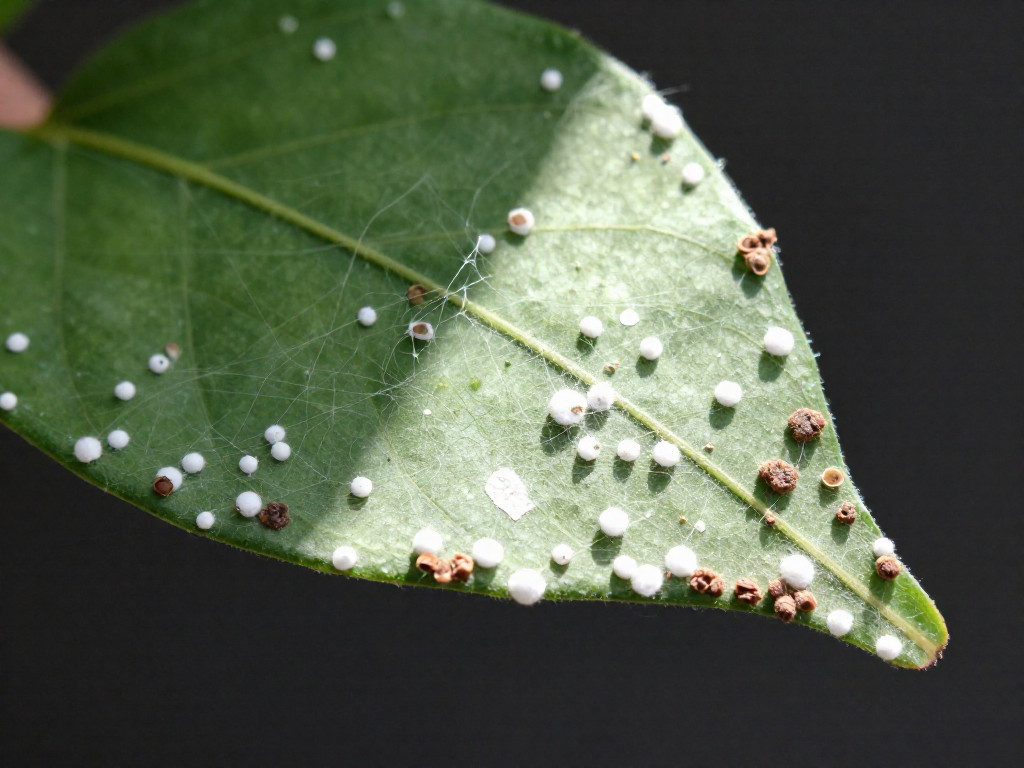
- Scale: Sticky, clear shiny residue on the leaves or under the plant is honeydew, the excrement scale insects leave behind — a reliable warning sign. Then look for small brown "scab"-like bumps (often about 1/16 to 1/4 inch) on stems and leaf undersides; those bumps are the insects.
- Mealybugs: Look for white, cottony fuzz tucked into the axils — the joints where a leaf meets the stem.
- Spider mites: Check for fine webbing at the leaf-stem juncture and yellow stippling (tiny pale dots) across the leaves. The mites themselves are almost too small to see, so the webbing and speckling are your best clues.
Don't stop at the plant itself. Inspect the container, the soil surface, and the pot rim too, since pests and eggs often ride along on the pot rather than the foliage. If you spot any of these signs, put the plant back — it's not worth risking your whole collection.
Your 60-Second In-Store Inspection Checklist
Before you head to the register, run through this quick checklist. Screenshot it and pull it up next time you're standing in the plant aisle.
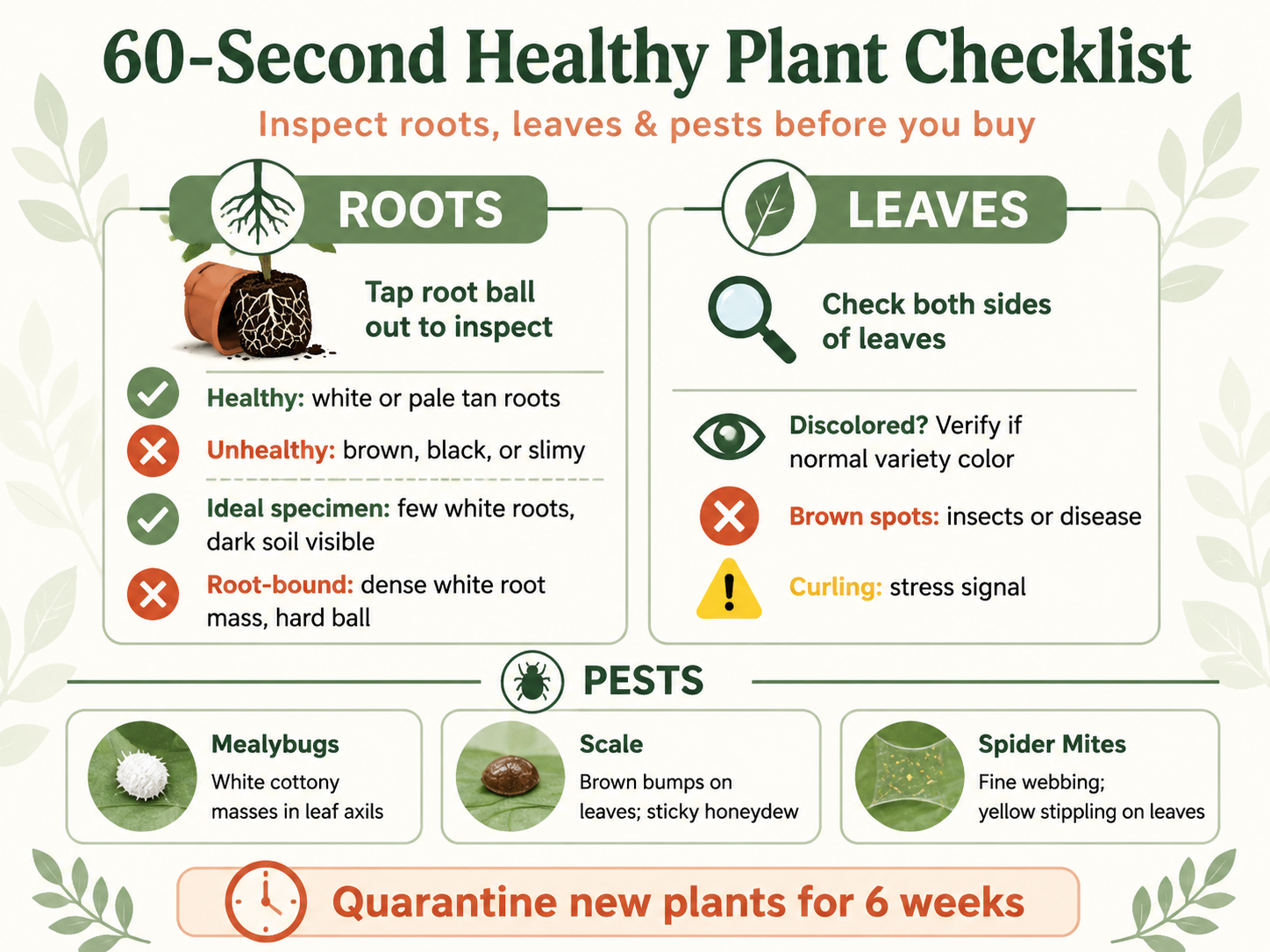
- Roots: Slide the plant out a few inches. You want white or pale-tan roots that are firm to the touch, with plenty of dark soil still visible. Pass on anything brown, grey, black, slimy, or wound into a hard ball of roots with no soil left (that's root-bound).
- Leaves: Look for even color that's normal for the variety. Skip plants with unexplained brown or yellow spots, curling, wilting, or dried-out edges — these can signal pests, disease, or watering problems.
- Undersides & stem axils: Check leaf undersides and the spots where leaves meet the stem. No fine webbing (spider mites), no cottony white fuzz (mealybugs), no small brown bumps (scale).
- Container & soil: No sticky residue on leaves or pot, no tiny flying gnats, no mushy or sour smell from the soil.
- Overall: The plant should stand sturdy and upright, and match the care and species info on its plant tag.
- When in doubt, put it back. If a plant is hard to remove from its pot or something feels off, choose another. There's always a healthier one.
After You Buy: Quarantine Before You Introduce It
Even a careful in-store inspection can miss trouble. Pest eggs and larvae hitchhike in soil and on leaf undersides, then hatch days later. That's why every new plant should spend time in quarantine — kept apart from your other plants so any hidden pest can't spread.
Isolate the new plant for at least 3–6 weeks. Keep it in a separate room from your existing plants during this window. Extension experts recommend a minimum of three weeks, and six weeks is safer if you can manage it.
Tight on space? You don't need a spare room. A bright bathroom, a windowsill in a room where you keep no other plants, or a single dedicated shelf all work. The goal is simply distance — no touching leaves, no shared drip trays.
Re-inspect before combining. At the end of quarantine, check the leaf undersides again (where pests hide most often). A 10x magnifying lens helps you spot tiny mites, fine webbing, or sticky residue. If it's clean, it's ready to join your collection.
One hard call: if a small plant turns out heavily infested, it's usually best to discard it rather than nurse it back — it's faster and protects the rest of your plants.
Sources
- How to Identify and Fix a Root-Bound Plant — thespruce.com
- How to Choose Healthy Plants at the Garden Center — provenwinners.com
- Know Your Roots for Optimum Plant Health – Logee's Plants — logees.com
- Common Houseplant Insects & Related Pests | Home & Garden Information Center — hgic.clemson.edu
- Insect Pests of Houseplants | Mississippi State University Extension Service — extension.msstate.edu
- Keep Checking for Insects on Houseplants | Yard and Garden — yardandgarden.extension.iastate.edu
- Common Houseplant Pest Identification and How to Get Rid of Fungus Gnats, Spidermites, Scale, White Flies and Mealybugs — growingjoywithmaria.com
- Managing Houseplant Pests | Colorado State University Extension — extension.colostate.edu
- Yellow Leaves on Plants: Diagnose & Fix the Cause – Dragonfly Farm & Nursery — dragonflyfarmlanglois.com
- Identifying Common Houseplant Problems | ScottsMiracle-Gro US — scottsmiraclegro.com
- 7 Houseplants That Actually Like to Be Root Bound | Gardening Know How — gardeningknowhow.com
FAQ
How can I tell if a store plant is root-bound?
Do two quick checks. First, tip the pot over and look at the drainage holes at the bottom—roots poking out through them are a strong sign the plant is root-bound (its roots have outgrown the container). Second, gently slide the plant out by holding the main stem between your thumb and forefinger and tugging down on the pot; you only need to expose a few inches of the root ball to judge. A dense mass of white roots wrapped into a hard ball, or a plant so difficult to remove it won't budge, means it's severely root-bound—pass on it. The ideal plant shows a few white roots around the edges with plenty of dark soil still visible, and the root ball may crumble slightly as it comes out.
What color should healthy plant roots be?
Healthy roots are white to pale tan, firm, and free of any bad smell. Slightly tannish roots still indicate a healthy system. Avoid plants with brown, grey, black, or slimy roots, or roots that are soft and fall apart when you touch them—these signal rot or a collapsed root system. Color matters far more than size when judging root health, since roots naturally vary in how large they grow between species. If you can see roots at the drainage holes, check their color there; rotted roots are dark brown or black, mushy, and smell sour or foul.
Is it okay to slide a plant out of its pot at the store?
Yes—checking the root ball is one of the most reliable ways to judge a plant's health, and it's a normal part of inspecting before you buy. Grab the plant by its main stem between your thumb and forefinger and gently tug downward on the pot; you only need to expose a few inches of the root ball to see what you need. Alternatively, turn the plant on its side and tap the entire root ball out to examine root color. Be gentle so you don't damage the plant, and settle it carefully back into its pot afterward. If it's stuck and won't come out, that difficulty itself is a red flag for a severely root-bound plant.
What are the most common pests to look for on houseplants?
The most common culprits are small insects and mites that hide on the undersides of leaves: aphids, whiteflies, mealybugs, scale, thrips, and spider mites. Learn each one's telltale sign. Mealybugs gather in the axils where leaves meet the stem and look like tufts of white cotton or waxy filaments. Scale appears as brown bumps or 'scabs' on stems and leaf undersides; a clear, sticky substance (honeydew) on the leaves or beneath the plant, sometimes with black sooty mold, is often the first clue. Spider mites are nearly invisible to the naked eye but leave fine webbing on leaf surfaces or where the leaf meets the stem, along with yellow stippling. Always inspect the plant and its container before buying—most pests live on the exterior of the root ball and the leaf undersides, so a 10X magnifying lens helps you spot small pests and their eggs. If a small plant is heavily infested, it's usually better to skip it than try to rescue it.
My new plant's leaves are yellow — did I buy a sick plant?
Not necessarily—yellow leaves have several causes, so investigate before you worry. First, check the label to confirm the color isn't normal for that variety, since some plants naturally have yellow (chartreuse), variegated, or dark foliage. If the yellowing is genuine, common causes on younger plants include root rot, inconsistent watering, over-fertilizing, pot-bound roots, or pests. A key clue: if the plant is drooping while its soil is soggy, suspect root rot, not thirst—watering more will only make it worse (check the roots for dark, mushy, foul-smelling rot). Pest-driven yellowing tends to look irregular and patchy rather than following an even, predictable pattern. Also inspect for leaf spots: brown blotches ringed with yellow suggest a fungus, water-like splotches suggest bacteria, and tiny black spots can mean spider mites. A little yellowing from transport stress can be harmless, but discoloration paired with spots, wilting, curling, or pests is a reason to reconsider the purchase.
How long should I quarantine a new houseplant?
Keep every new plant isolated from your existing houseplants for at least three weeks, and ideally up to six weeks, in a separate area of your home. This waiting period lets any hidden pests—eggs, larvae, or immature stages that hitchhiked in on the plant, soil, or leaves—reveal themselves before they can spread to the rest of your collection. At the end of quarantine, give the plant a careful inspection, paying particular attention to the undersides of the leaves where pests hide most. If it's clean, it's safe to move in with your other plants.
See also
- Best low-light houseplants for apartments
- How to get rid of common houseplant pests
- Root rot: how to spot, treat, and prevent it
- Beginner watering guide for houseplants
- How to set up a healthy plant corner in a small apartment
Related articles
Should Beginners Buy Fake Plants Instead? An Honest Take
Wondering if real plants are worth it when your apartment is dark? An honest, evidence-based look at when to buy real, go fake, or add a grow light.
Jul 14, 2026 · 6 min read
Essential Tools New Plant Parents Actually Need
The tools you actually need to start caring for houseplants—a minimal, under-$15 kit for apartment dwellers, plus the gadgets you can skip.
Jul 14, 2026 · 6 min read
Best Hanging Plants for Small Apartments
The best trailing plants for small apartments—easy, space-saving picks for hooks and shelves, with light and watering tips for beginner plant parents.
Jul 14, 2026 · 7 min read