Best Plants for a Windowless Office or Bathroom
What can grow with almost no natural light?
On this page
The Honest Truth About "No Light" Rooms
Here's the short answer: almost nothing grows in true darkness. If a room gets zero natural light and the lights are off most of the day, you'll need a grow light—no plant on this list can beat that. So before you buy anything, let's clear up what "low light" actually means.
"Low light" means tolerates low light, not needs it. When a plant is labeled low light, it's telling you it can survive dim conditions—not that it prefers them. A snake plant will hang on in a shadowy corner, but it grows fuller and faster with a bit more brightness (Ohio Tropics). It'll never reach its full potential in the dark.
"Low light" still means some light. Even shade-tolerant plants need consistent ambient (indirect, all-around) light to photosynthesize—the process plants use to turn light into energy. A truly dark corner will slowly starve a low-light plant over several months (Soltech).
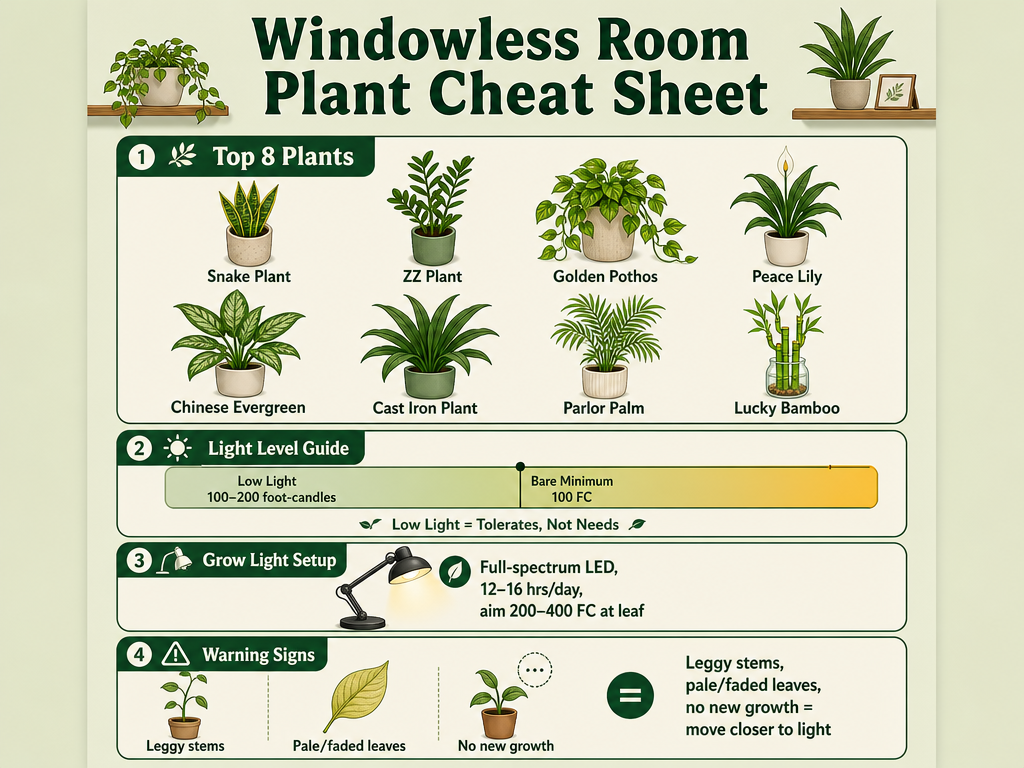
A simple benchmark: low light is roughly bright enough to read a newspaper (UMN Extension)—about 50–200 foot-candles, the unit growers use to measure light intensity (Houseplants Nook).
Why do these plants cope at all? Many are tropical understory plants that naturally grow beneath a dense forest canopy, so they're built for dimness (Proven Winners).
The reality check: overhead office or ceiling lights do count as a light source. A bathroom that stays dark most of the day does not.
Windowless Office vs. Windowless Bathroom: They're Not the Same
Both rooms are in the title, but they usually offer very different amounts of light—so treat them as two separate problems.
The windowless office. If ceiling lights (fluorescent or LED) stay on for 8 or more hours a day, that's a real, usable light source. Plant expert Raffaele Di Lallo of Ohio Tropics says he has personally kept pothos, peace lily, Chinese evergreen (Aglaonema), parlor palm, and lucky bamboo alive with nothing but fluorescent ceiling lights. If that describes your office, you can likely skip the grow light.
The windowless bathroom. Bathroom lights typically switch on for only a few minutes at a time. If the room sits dark for most of the day—getting artificial light for an hour or so total—you'll likely need a grow light, as Southern Living points out. Bathrooms do add humidity, which ferns and Chinese evergreen enjoy, but that humidity bonus rarely makes up for a light shortage.
Your decision cue: count the hours your lights are actually on each day, not whether the room "feels" bright. Eight-plus hours of overhead light? Pick from the plant list below. Less than that? Plan on a grow light.
8 Best Plants for a Windowless Office or Bathroom
These eight picks tolerate the dimmest rooms in a typical apartment. A quick note on the label: "low light" means a plant tolerates low light, not that it needs it (Ohio Tropics). Every plant here will grow faster and look fuller with a little light—so treat these as survivors, not miracle workers.
One measurement you'll see below: foot-candles (fc) is a simple unit for how bright a spot is. "Low light" indoors is roughly 100–200 fc, which overhead office or ceiling lights can provide (Costa Farms).
1. Snake Plant (Dracaena trifasciata)
The toughest of the bunch. In real-world low-light tests it outlasts nearly everything else. It does better with some light but tolerates the least. Water every 2–3 weeks when the soil is dry all the way through; overwatering is the only real risk. Toxic to pets if eaten.
2. ZZ Plant (Zamioculcas zamiifolia)
The most reliable choice for a truly windowless room—it can go months without water (Southern Living). The trade-off: it grows very slowly in dim light and still wants the bare minimum (~100 fc). Water only when the soil is fully dry. Toxic to pets.
3. Golden Pothos (Epipremnum aureum)
The least fussy trailing plant, cheap and sold everywhere. Great draped over a shelf or filing cabinet. Water when the top inch of soil is dry, roughly every 7–10 days. Toxic to pets.
4. Peace Lily
The one plant here that can actually flower under ceiling lights (Costa Farms). Bonus: it droops dramatically when thirsty and perks back up within hours of watering, so it tells you exactly when it needs a drink. Toxic to pets.
5. Chinese Evergreen (Aglaonema)
Does well even in rooms lit only by artificial light (Proven Winners). Wants humidity and moderate, even watering—a good bathroom pick. Toxic to pets.
6. Cast Iron Plant (Aspidistra)
Named for good reason: it shrugs off low light, dry air, and irregular watering. Slow but nearly unkillable. Pet-safe.
7. Heart-Leaf Philodendron
A classic foolproof trailing office plant (Gardening Know How). Care mirrors pothos: water when the top inch dries out. Toxic to pets.
8. Lucky Bamboo (Dracaena sanderiana)
Not actually bamboo—it's a dracaena (Southern Living). Grows in plain water or soil, making it the ideal low-maintenance desk plant. Change the water every 1–2 weeks. Toxic to pets.
Bathroom bonus: ferns and parlor palms love bathroom humidity, but they usually need a grow light in a windowless space—so add one before you commit.
When You Actually Need a Grow Light (and Which One)
Here's the honest bottom line: no houseplant truly thrives in the dark. If your office or bathroom gets zero natural light—or only a flick of the overhead switch for an hour a day—a grow light isn't a nice-to-have. Think of it as the equivalent of a window, not an optional add-on.
Skip it, and even the champions on this list slowly fade. Snake plants, ZZ plants, pothos, peace lily, and Chinese evergreen can coast for months on stored energy, but without light to replace it, they decline leaf by leaf. Poor or missing light is the #2 cause of houseplant death after overwatering, so a grow light directly attacks the risk that kills most plants in dark rooms.
The setup that works:
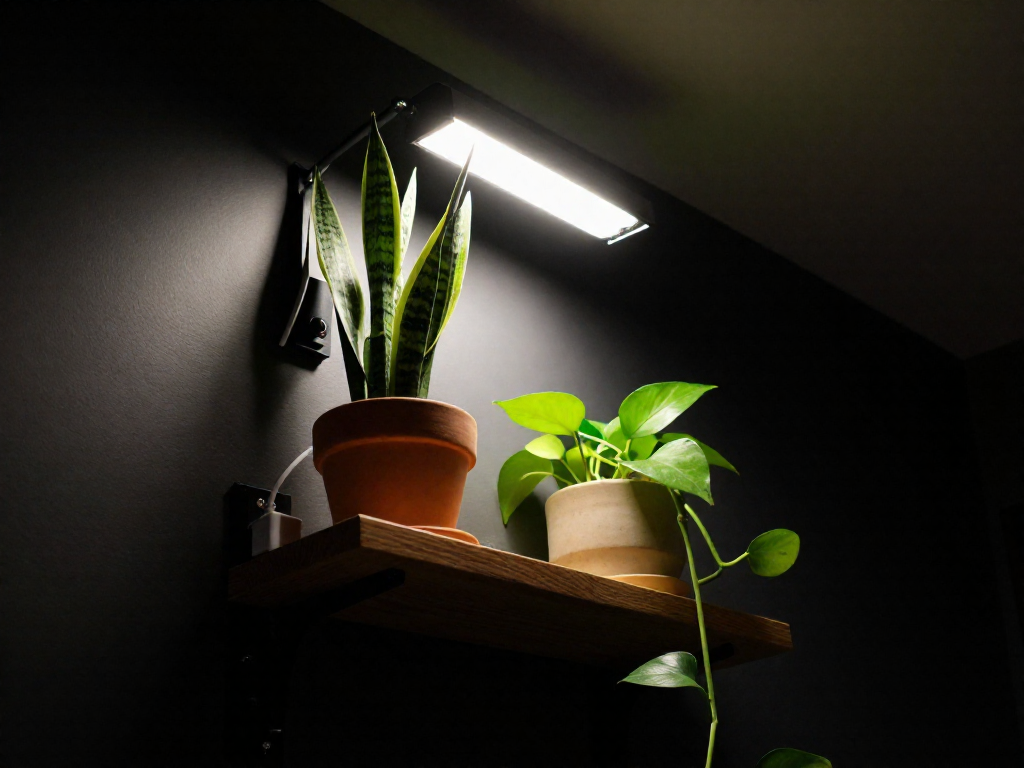
- Type: A full-spectrum LED (one that mimics the full color range of sunlight).
- Timer: Run it 12–16 hours a day. Put it on a plug-in timer so you never have to remember.
- Brightness at the leaf: Aim for roughly 200–400 foot-candles (a foot-candle, or "fc," measures how much light lands on a surface). A cheap phone light-meter app gets you in the ballpark.
Mind the distance. Light drops off fast the farther a plant sits from the bulb. Grower Darryl Cheng measured 200–300 fc at close range in a windowless bathroom—but beyond about 12 inches, that same fixture only cut it for a true "low light" plant like pothos. Keep leaves within a foot of the light and you'll cover everything on this list.
One light, one timer, one foot of clearance—that's the whole recipe for keeping plants alive where a window can't.
Care Adjustments That Keep Low-Light Plants Alive
Most windowless-room plants don't die from neglect—they die from care habits meant for a sunny windowsill. In a dim room, plants grow slowly and use less energy, so your job is mostly to do less. Here's what to change.
Water less, and never on a schedule. Plants in low light dry out much more slowly than plants in the sun, which makes overwatering the number one killer. Skip the calendar. Instead, feel the soil: push a finger about an inch (2–3 cm) down and only water when it's dry. If you're unsure, a cheap soil moisture meter takes the guessing out of it.
Feed at least once a month. Confined to a small pot with limited soil, and unable to rely on strong light to make their own carbohydrates (the sugars plants produce for energy), these plants need a nutrient boost. Use a balanced houseplant fertilizer roughly monthly during active growth.
Dust the leaves. Big, broad leaves collect dust that clogs the pores they breathe and gather light through. Wipe them with a damp cloth, or set the plant in the shower for a gentle rinse every few weeks.
Rotate the pot a quarter-turn each time you water so growth stays even—and watch for early warning signs, covered next.
Warning Signs Your Plant Needs More Light
Plants can't tell you they're starving for light, but they'll show you. Watch for these symptoms and act before the plant declines too far to recover:
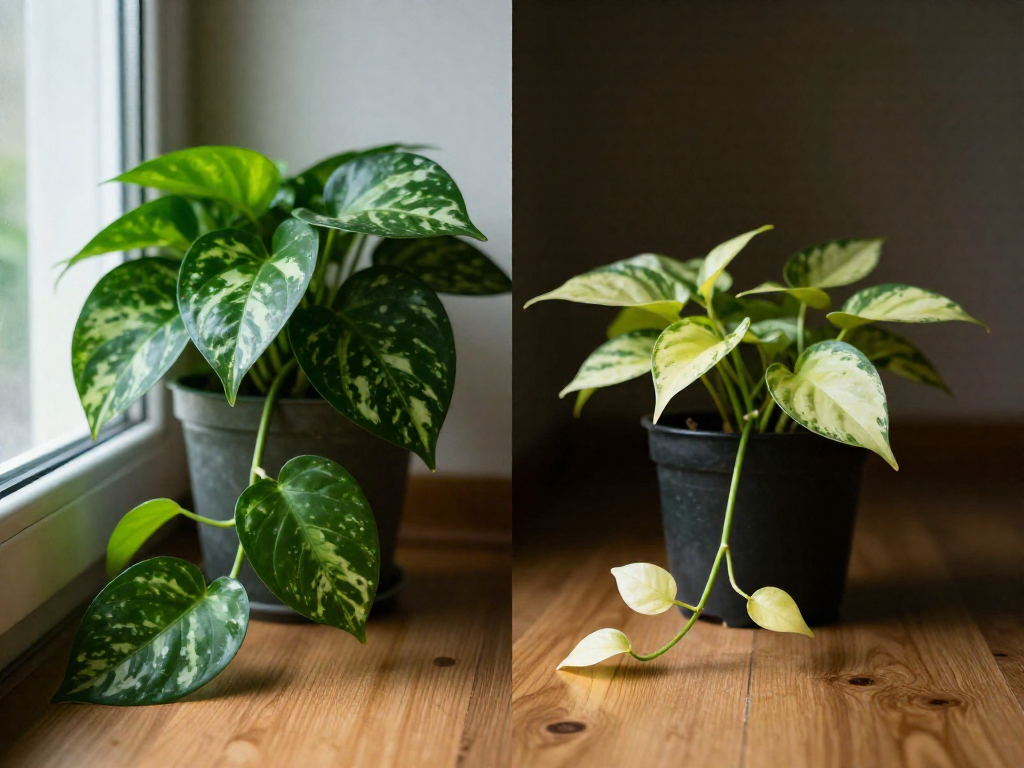
- Leggy, stretched stems. Long gaps between leaves and stems leaning hard toward any light source mean the plant is straining to reach it. ("Leggy" just means stretched out and sparse.)
- Pale or yellowing leaves. Without enough light, leaves fade from healthy green toward pale green, yellow, or even white, and older leaves near the base may drop.
- No new growth at all. If nothing new has appeared in weeks, the plant is coasting on stored energy.
- Variegation fading. A variegated plant (one with white, cream, or yellow patterns) reverting to solid green is trying to squeeze more light out of every leaf.
The fix: move the plant closer to your light source, rotate it a quarter-turn each week so all sides get exposure, or add a grow light (or lower an existing one closer to the leaves).
Sources
- 20 Best Plants For Windowless Room — youtube.com
- Houseplant Light Guide for your indoor plants — thursd.com
- 7 Houseplants That Can Grow In A Windowless Room — southernliving.com
- houseplants for no window areas (yes it can be done) — ohiotropics.com
- Lighting for indoor plants and starting seeds — extension.umn.edu
- How to Choose the Right Light for your Indoor Plants — costafarms.com
- Plant Light Calculator: How Much Light Does My Plant Need? - Soltech — soltech.com
- 14 Low-Light Houseplants That Thrive in Dim Spaces — provenwinners.com
- Grow Lights Part 1: A few grow lights I've used — houseplantjournal.com
- Windowless Houseplants: Learn About Using Plants For A Windowless Room — gardeningknowhow.com
- Indoor Plant Light Chart (Lux + Foot-Candles): 50 Popular Houseplants — houseplantsnook.com
See also
- Snake Plant care guide for beginners
- How to choose and set up a grow light
- ZZ plant care: the near-unkillable houseplant
- Pothos care and propagation for new plant parents
- How often to water houseplants without overwatering
- Best low-light houseplants for a dark apartment
Related articles
Should Beginners Buy Fake Plants Instead? An Honest Take
Wondering if real plants are worth it when your apartment is dark? An honest, evidence-based look at when to buy real, go fake, or add a grow light.
Jul 14, 2026 · 6 min read
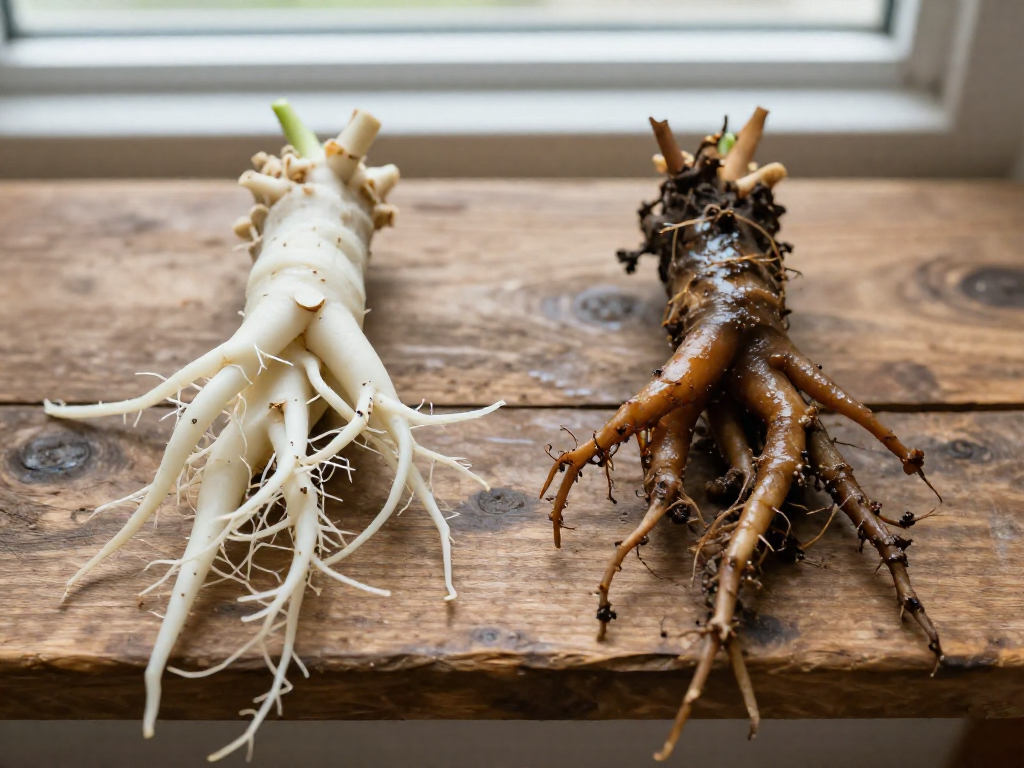
How to Buy a Healthy Houseplant at the Store
Learn how to pick a healthy houseplant and avoid a sick one. A simple store checklist for inspecting roots, leaves, and pests before you buy.
Jul 14, 2026 · 11 min read
Essential Tools New Plant Parents Actually Need
The tools you actually need to start caring for houseplants—a minimal, under-$15 kit for apartment dwellers, plus the gadgets you can skip.
Jul 14, 2026 · 6 min read