Do You Need a Grow Light? A Beginner's Guide for Apartments
Should I buy a grow light and which kind?
On this page
The Short Answer: When a Grow Light Is Actually Worth It
Quick verdict: You probably need a grow light if your apartment has few or small windows, north-facing rooms (which get the least direct sun), or if you want to grow sun-loving plants like succulents, citrus, or herbs indoors. If you only keep true low-light plants—pothos, snake plant, or ZZ plant—near a window that gets any daylight, you can likely skip it.
Here's the catch most beginners miss: even a bright, sunny window delivers far less light than outdoor full sun. Sun-loving plants that thrive on a patio often struggle on a windowsill, so a supplemental light closes that gap (Soltech).
Winter is the real tipping point. Shorter, darker days can turn a formerly happy plant into a struggling one. One plant parent in a Seattle apartment with a single usable window gets by on natural light in spring and summer, but says a grow light is "100% necessary" for her plants' health once winter arrives (Kayla Lynn).
Bottom line:
- Buy one if you have low light, want sun-lovers, or notice plants declining in winter.
- Skip it if you keep only low-light plants near a decent window.
Not sure which camp you're in? The rest of this guide helps you confirm the diagnosis—and pick the right light if you need one.
How to Tell If Your Plant Isn't Getting Enough Light
Before you buy anything, let your plant tell you whether it's starving for light. These are the most common signs of light deficiency (not getting enough light to grow well):
- Leggy or sparse growth — long, stretched stems with big gaps between leaves as the plant reaches for a window
- Small or stunted new leaves compared to older ones
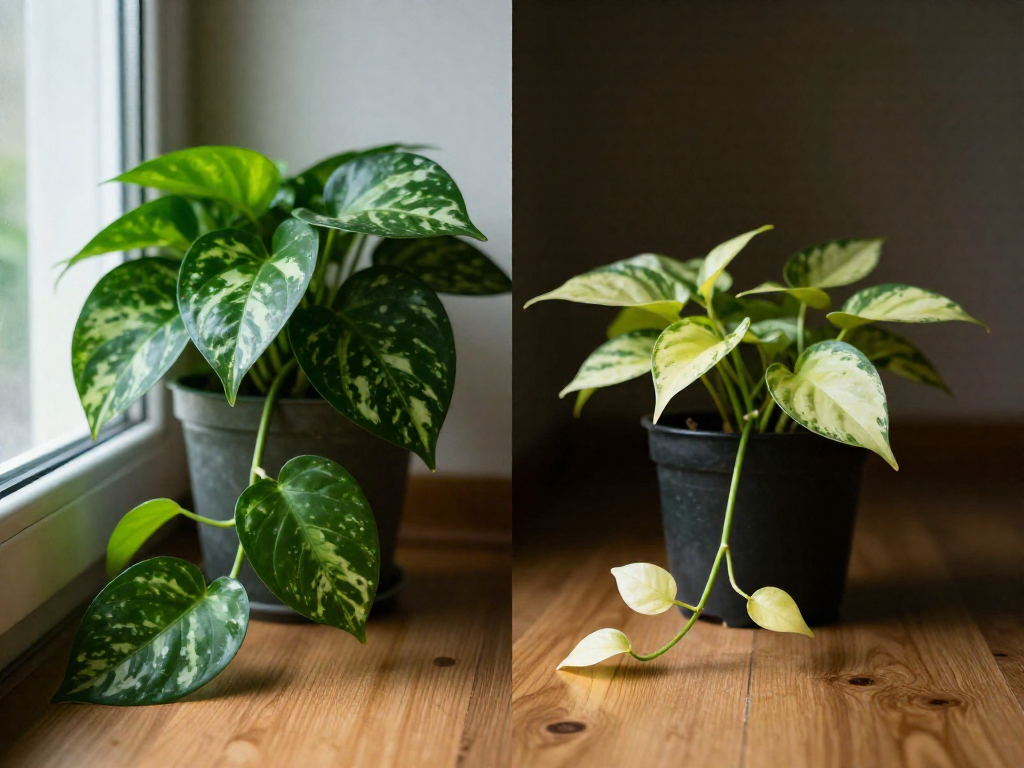
- Loss of variegation — patterned leaves fading to plain green
- Yellowing leaves that drop, especially lower ones
- No new growth at all for weeks or months
If you see several of these, the fix usually isn't more fertilizer or a bigger pot—it's more light.
Match the plant to its light category first
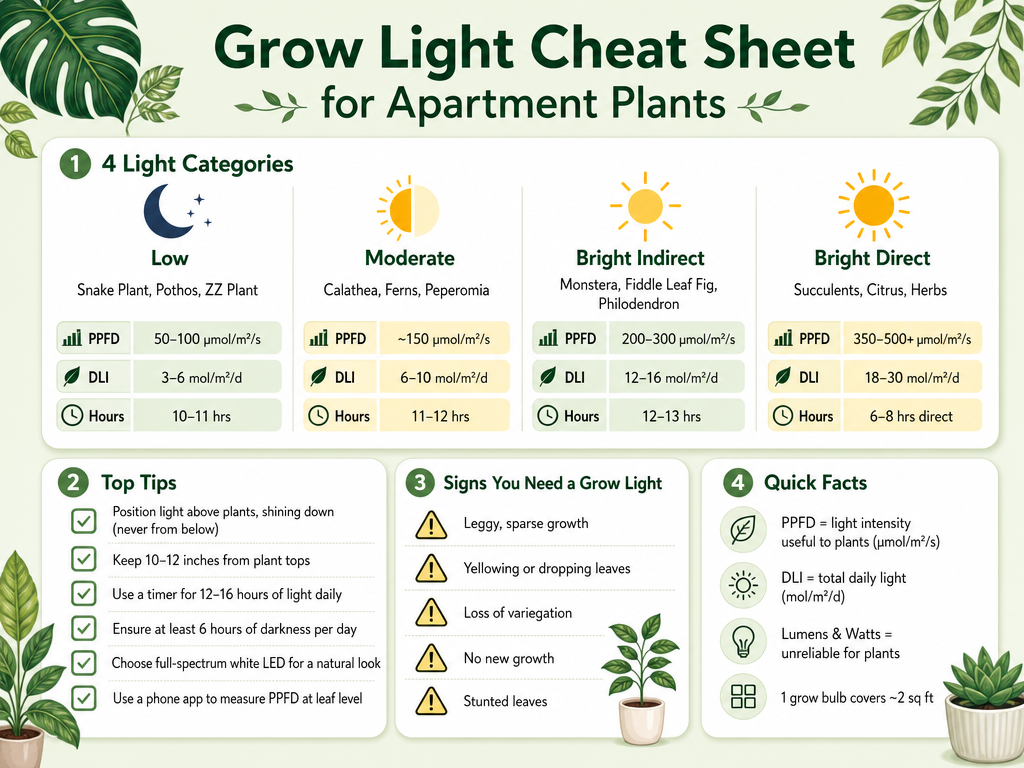
Light category is the single most important care factor, more than watering, pot size, or feeding. Most houseplants fall into one of four categories:
- Low light: snake plant, pothos, ZZ plant
- Moderate indirect: calathea, ferns, peperomia
- Bright indirect: monstera, fiddle leaf fig, philodendron
- Bright direct: succulents, citrus, herbs
Figure out which category your plant needs, then look at where you can actually put it. If your brightest spot can't meet what the plant wants—common in a north-facing apartment or during short winter days—that's exactly the gap a grow light is meant to bridge. The symptoms above are your evidence; the category tells you how far off you are.
Light Specs Decoded: What Actually Matters (and What to Ignore)
Grow light boxes are covered in numbers, but only a couple of them tell you whether your pothos will actually grow. Here's how to shop on the right specs.
Ignore watts and lumens
Watts measure how much electricity a fixture uses, not how much usable light it produces. Lumens measure brightness as your eye sees it—and because green and yellow light look bright to humans, lumens can be inflated without adding any of the light your plant can use (Iowa State). Skip both when comparing grow lights.
The two numbers that matter: PPFD and DLI
Plants care about PAR (photosynthetically active radiation)—the red and blue wavelengths they actually use for growth. Two measurements track it:
- PPFD (photosynthetic photon flux density) = how strong the light is right at leaf level, in µmol/m²/s. Always measure it where the leaves sit, not at the bulb (Iowa State).
- DLI (daily light integral) = how much light the plant gets over a full day, combining intensity and hours (Growlightmeter).
Think of PPFD as the strength of the shower and DLI as how full the bucket gets by day's end.
Target numbers for common apartment plants
Match the light to your plant's category:
| Plant type | PPFD (µmol/m²/s) | DLI (mol/m²/day) |
|---|---|---|
| Low-light (pothos, snake, ZZ, peace lily) | 50–100 | 5–10 |
| Moderate | ~150 | 6–10 |
| Bright indirect (monstera, philodendron) | 200–300 | 8–12 |
| Sun-lovers (succulents, herbs, citrus) | 350–500+ | 20–25 |
Good news for beginners: most foliage houseplants only need a DLI of 3–6, so you don't need a powerful (or pricey) light (Iowa State, Growlightmeter, Soltech).
What about Kelvin?
Kelvin describes light color (warm vs. cool white), not the exact wavelengths a plant uses—so it won't tell you if a bulb delivers enough red and blue. Use it only as a rough guide, and favor a "full spectrum" grow light instead (Iowa State).
Choosing a Grow Light: Type, Spectrum, and Color
Once you know a grow light makes sense for your space, picking one comes down to three decisions: type, spectrum, and color.
Start with the type: LED. For apartments, LED grow lights are the easy winner. They're energy-efficient, long-lasting, and produce very little heat—which matters when a fixture sits close to your plants, since excess heat from other bulb types can stress or scorch foliage. Fluorescent lights are cheaper and fine for seedlings, but LEDs are the best all-around pick for houseplants.
Choose full-spectrum (labeled "daylight"). Full-spectrum means the light covers a balanced range of wavelengths—the closest reproduction of natural sunlight—so it suits most plants and every stage of growth. You'll sometimes see "blue for leafy growth, red for flowering," but full-spectrum gives you both without guesswork. A fixture actually sold as a grow light guarantees these red and blue wavelengths; a standard bulb only qualifies if it's specifically labeled full-spectrum (or "daylight").
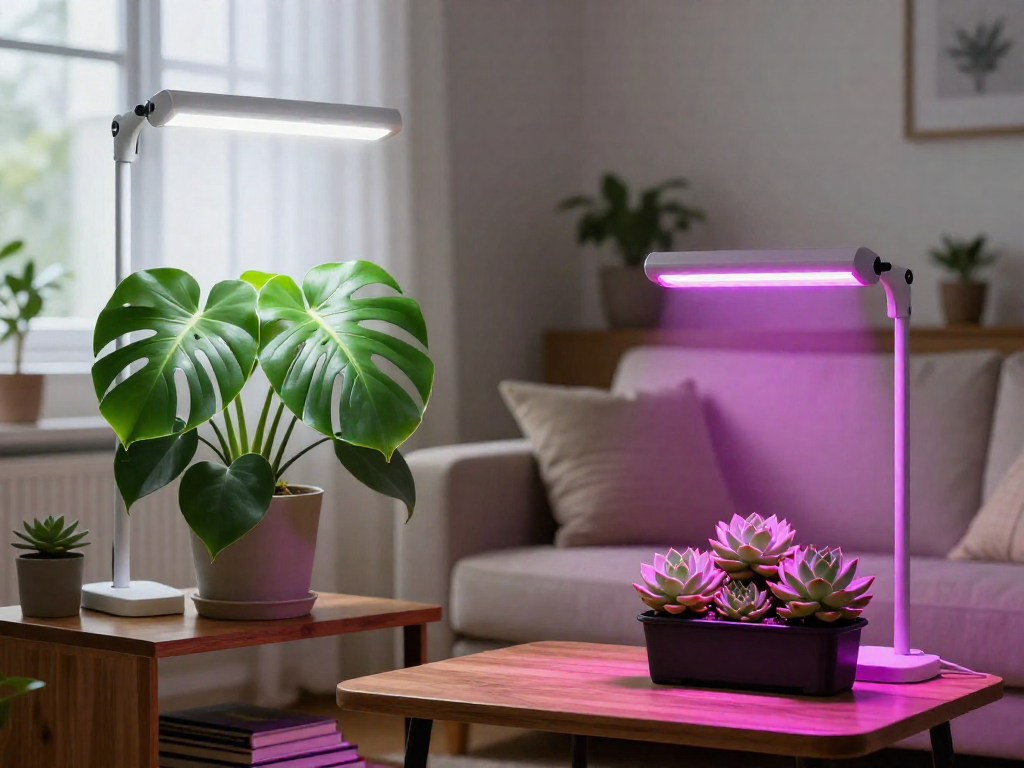
Pick a whiteish-yellow color over pinkish-purple. Many LEDs come in a pinkish-purple glow that can make your living room feel like a lab. Whiteish-yellow full-spectrum LEDs do the same job for your plants while keeping your space looking normal—an easy quality-of-life choice for a light you'll run for hours daily.
Check coverage before you buy. One bulb may only light about 2 square feet, so a shelf of plants might need several lights. A rough sizing rule is 20–40 watts per square foot of growing space. If you're covering a small cluster, one solid LED fixture is usually enough to start.
Setup: Placement, Distance, and How Many Hours
Once you've picked a light, getting the setup right is what separates healthy growth from scorched leaves. The good news: the rules are simple and forgiving.
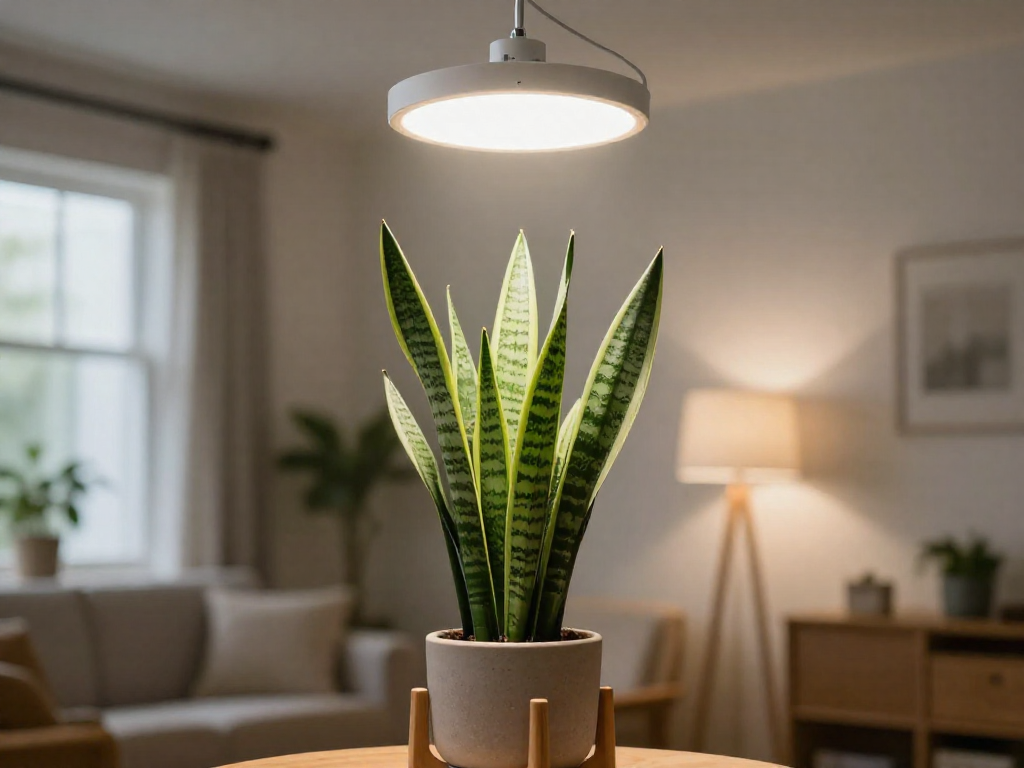
Position the light above your plants, shining down. Grow lights should mimic the sun, so hang or mount them overhead. Avoid clamp lights that sit on the floor and shine upward—the sun doesn't shine from below, and plants won't respond well to it.
Keep it about 10–12 inches above the tops of your plants. This spacing gives even coverage without stress. Never go closer than 6 inches, as intense light at close range can burn foliage. If leaves near the light look bleached or crispy, raise the fixture an inch or two.
Run the light 12–14 hours a day for most houseplants. Start in that range and adjust based on how your plant responds—more if it looks leggy or pale, less if you see signs of stress. Common low-light plants like pothos, snake plants, and ZZ plants sit at the lower end.
Give plants darkness, too. Never leave lights on 24/7. Plants need at least 6 hours of dark each day; continuous light causes leaf burn and stunted growth. More is not better here.
Seedlings are the exception. Young seedlings do best with 14–18 hours early on. Reduce the hours as they mature toward the standard 12–14.
Use an outlet timer. Plug your light into a cheap plug-in timer and set it once. It turns the light on and off automatically so you never have to remember—the single easiest way to keep a consistent schedule.
Measuring Light Without Spending a Fortune
You don't need lab gear to check your light. Professional quantum meters (devices that measure PPFD, the amount of usable light actually reaching the leaves) are accurate but pricey—overkill for a windowsill or two. For most apartment growers, a free smartphone light-meter app is close enough to make a good decision.
Just know the catch: phone apps only give a rough estimate. Phones lack a standardized light sensor, so apps calculate brightness from the camera. That's fine for sorting "plenty" from "not enough," not for precise numbers.
Two quick rules:
- Always measure at foliage level—right where the leaves sit—not up at the window or bulb. Light drops off fast with distance.
- Use foot-candles (FC) as your yardstick. Near 1000 FC of indirect light is excellent for almost any houseplant. 400–800 FC is good, 200–400 FC is acceptable, and under 200 FC your plant is just surviving.
Take a reading on a bright day at midday. If you're consistently under 200 FC, that's your signal a grow light will help.
Sources
- Important Considerations for Providing Supplemental Light to Indoor Plants | Yard and Garden — yardandgarden.extension.iastate.edu
- Lighting for Houseplants — growlightmeter.com
- Plant Light Calculator: How Much Light Does My Plant Need? - Soltech — soltech.com
- How Long Should Grow Lights Be On for Indoor Plants — spider-farmer.com
- How Long Should Grow Lights Be On — mars-hydro.com
- How to Use Grow Lights for Houseplants | The Sill — thesill.com
- Grow Lights 101: Raising Houseplants in a Low-Light Home | Kayla Lynn | Lifestyle + Plants — kayla-lynn.com
- Bright Indirect Light “Requirements” by Plant Type — houseplantjournal.com
- The Beginner's Guide to Lighting for Houseplants — growlightmeter.com
- LED Grow Light Wattage Guide for Beginners — LED Grow Lights Depot — ledgrowlightsdepot.com
See also
- Best low-light houseplants for apartments
- How to figure out how much light your window gets
- Snake plant care guide for beginners
- Pothos care: the beginner-proof houseplant
- Winter houseplant care in small spaces
Related articles
Should Beginners Buy Fake Plants Instead? An Honest Take
Wondering if real plants are worth it when your apartment is dark? An honest, evidence-based look at when to buy real, go fake, or add a grow light.
Jul 14, 2026 · 6 min read
How to Buy a Healthy Houseplant at the Store
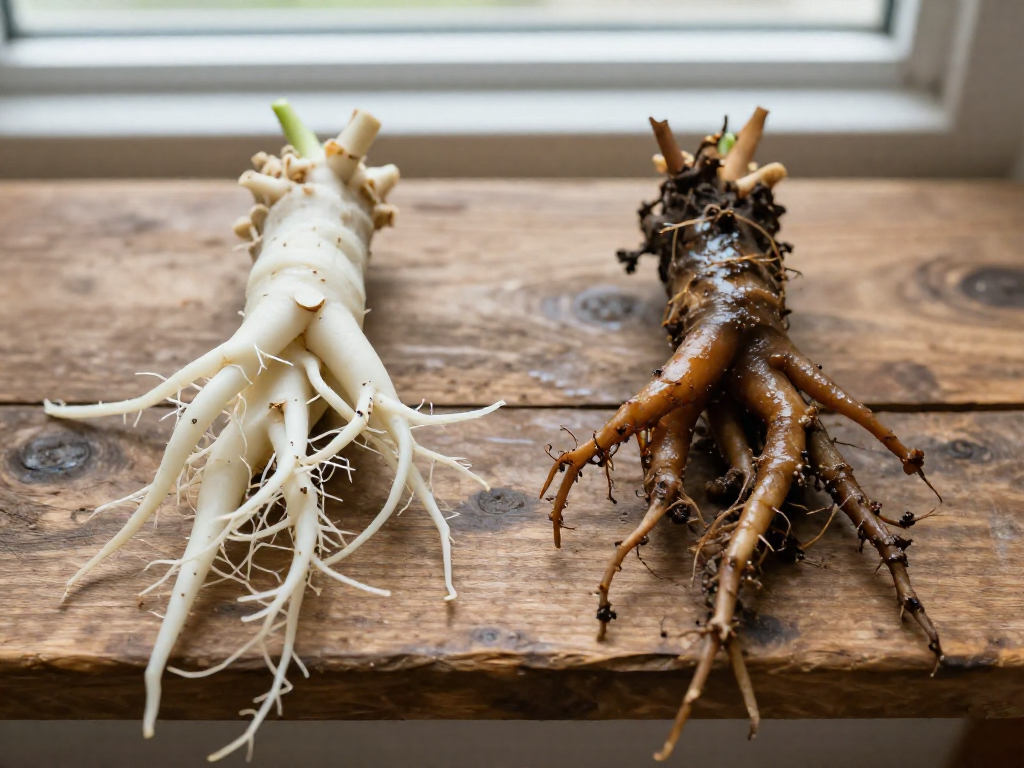
Learn how to pick a healthy houseplant and avoid a sick one. A simple store checklist for inspecting roots, leaves, and pests before you buy.
Jul 14, 2026 · 11 min read
Essential Tools New Plant Parents Actually Need
The tools you actually need to start caring for houseplants—a minimal, under-$15 kit for apartment dwellers, plus the gadgets you can skip.
Jul 14, 2026 · 6 min read