Best Pet-Safe Houseplants for Cats and Dogs
Which houseplants are safe for my pets?
On this page
How to Actually Verify a Plant Is Pet-Safe
Before you trust any list—including this one—learn the quick check that lets you vet plants yourself. It takes about two minutes and it's the difference between a real pet-safe plant and a lucky guess.
1. Confirm the botanical (scientific) name. A botanical name is the two-word Latin name every plant has, like Chlorophytum comosum for the spider plant. Common names are unreliable: they're inconsistent and often shared by several species with completely different safety profiles. Find the Latin name on the plant tag or ask the seller, then verify that exact name—not the nickname.
2. Check both ASPCA lists. The ASPCA keeps separate non-toxic lists for cats and dogs. Cats and dogs can react differently to the same compound, so a truly safe plant should appear on both lists. Showing up on one alone isn't enough.
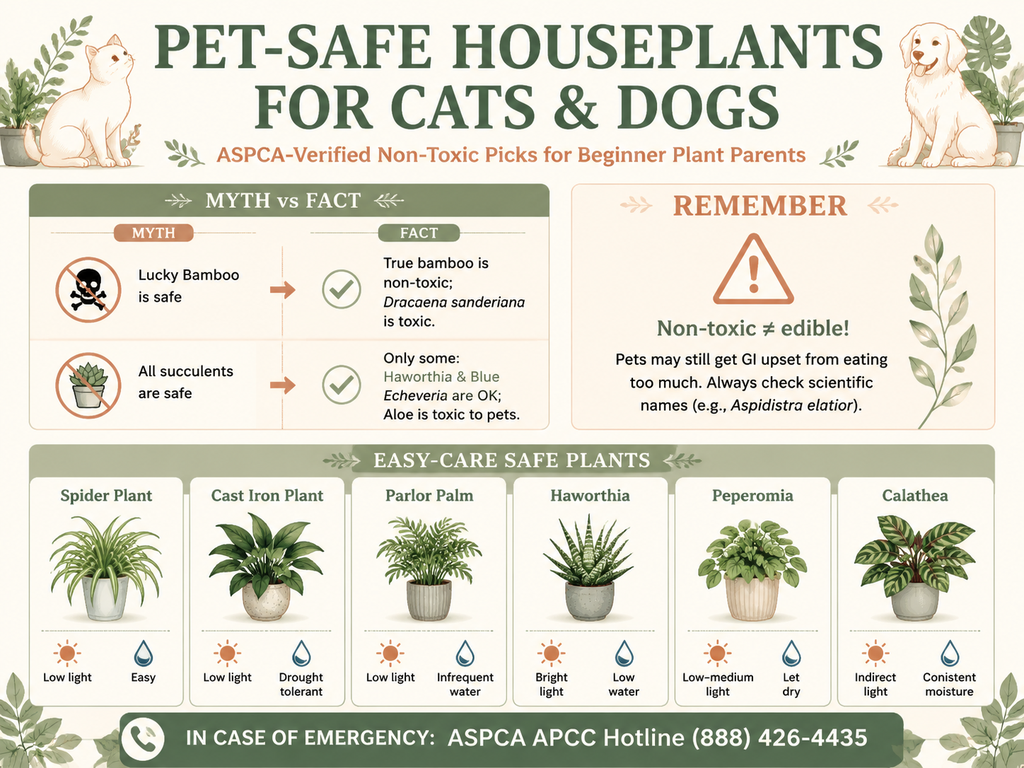
3. Remember "non-toxic" ≠ "safe to eat." Non-toxic means not poisonous—not designed to be eaten. A dog that devours a whole fern can still vomit from the fiber. Keep plants out of reach if your pet is a determined chewer.
Watch for name traps:
- "Lucky Bamboo" (Dracaena sanderiana) is not bamboo and is toxic to cats and dogs. True bamboo is fine.
- Aloe vera is a popular succulent but is toxic to cats.
- Succulents are a mixed bag—check every species individually.
Save this number now: the ASPCA Animal Poison Control Center hotline, (888) 426-4435. If you suspect your pet ate something questionable, call it or your vet immediately.
The 15 Best Pet-Safe Houseplants for Beginners
Every plant below is non-toxic to cats and dogs according to the ASPCA and horticultural sources, and every one is forgiving enough for a first-time plant parent in a small apartment. Each entry lists the same quick-reference details: botanical name, difficulty, light, water, mature size, and a pet note. (A quick term to know: indirect light means bright light that doesn't fall directly on the leaves — think a few feet back from a sunny window.)
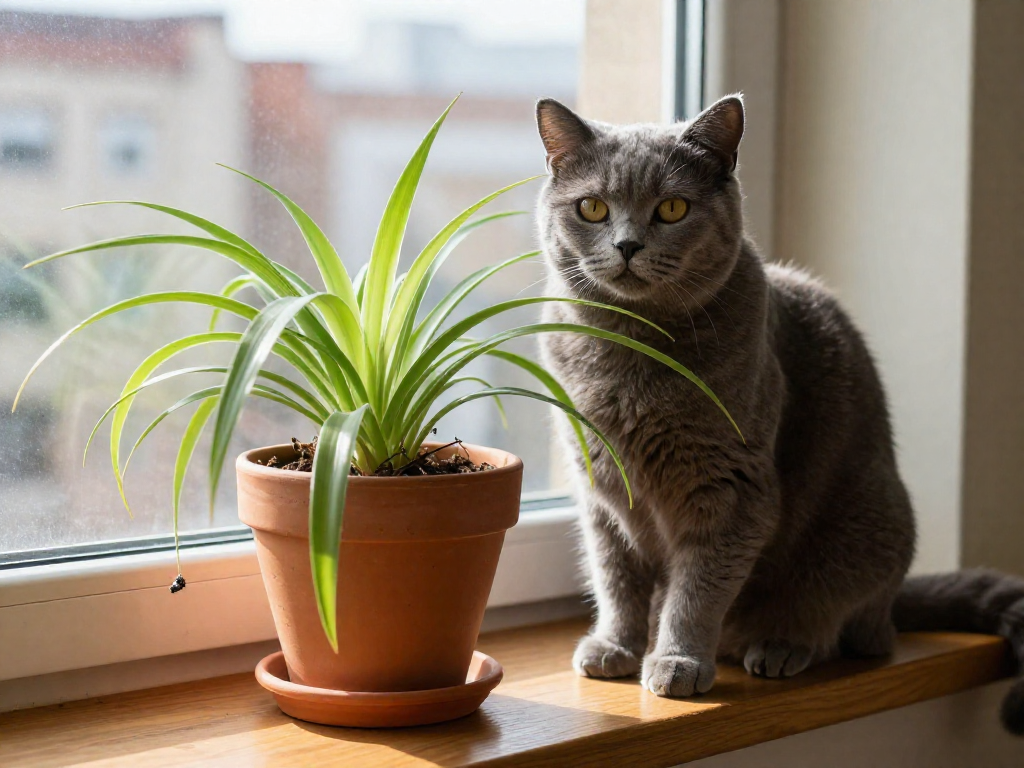
1. Spider Plant (Chlorophytum comosum)
- Difficulty: Very easy
- Light: Low to bright indirect
- Water: Every 7–10 days when the top inch of soil is dry; also roots in a glass of water
- Size: About 2 ft wide with arching leaves
- Pet note: Non-toxic to cats and dogs; also filters formaldehyde, xylene, and toluene from the air.
2. Cast Iron Plant (Aspidistra elatior)
- Difficulty: Very easy — "nearly indestructible; thrives on neglect"
- Light: Low
- Water: Drought-tolerant; water when soil is dry, roughly every 10–14 days
- Size: Up to 3 ft tall with leaves about 2 ft long
- Pet note: Pet-safe and ideal for people who forget to water.
3. Parlor Palm (Chamaedorea elegans)
- Difficulty: Easy
- Light: Low to medium indirect
- Water: Infrequent; let the top inch dry between waterings
- Size: Up to 6 ft tall indoors
- Pet note: Safe for cats and dogs; built for low-light rooms and forgetful waterers.
4. Boston Fern (Nephrolepis exaltata 'Bostoniensis')
- Difficulty: Moderate
- Light: Bright indirect
- Water: Keep soil consistently moist; loves humidity (bathrooms and kitchens are great)
- Size: 1–3 ft wide
- Pet note: A classic non-toxic fern — just give it more humidity than the others.
5. Baby Rubber Plant / Peperomia (Peperomia obtusifolia)
- Difficulty: Very easy
- Light: Low to medium
- Water: Tolerates inconsistent watering; let it dry out between drinks
- Size: Up to 1 ft tall
- Pet note: The entire Peperomia family is non-toxic — perfect for beginners.
6. Calathea / Rattlesnake Plant (Calathea spp.)
- Difficulty: Moderate
- Light: Indirect
- Water: Consistent moisture; likes humidity
- Size: About 2 ft tall and wide
- Pet note: Pet-safe, air-purifying, and prized for its patterned foliage.
7. Chinese Money Plant (Pilea peperomioides)
- Difficulty: Easy
- Light: Bright to medium indirect
- Water: When the top inch is dry
- Size: About 1 ft tall
- Pet note: Fast-growing and pet-safe; it produces free "pups" (baby offshoots) you can pot up and share.
8. Burro's Tail (Sedum morganianum)
- Difficulty: Easy (beginner succulent)
- Light: Bright
- Water: Sparingly; every 2–3 weeks once soil is fully dry
- Size: Trailing stems up to 2 ft
- Pet note: A pet-safe succulent for people who forget to water.
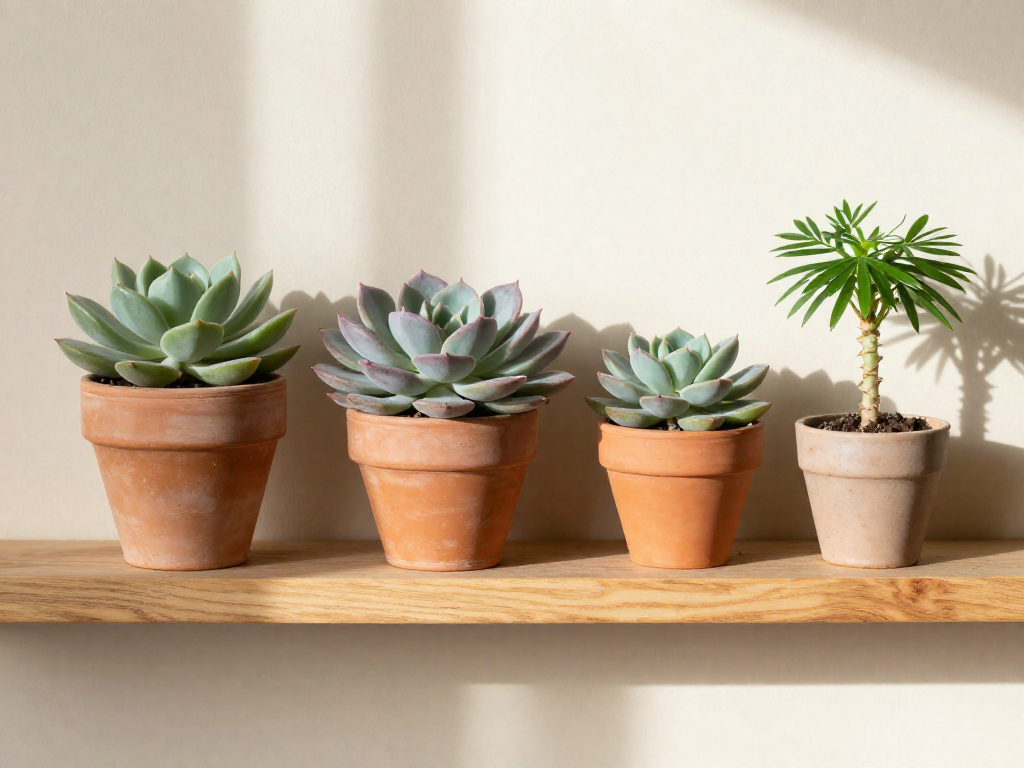
9. Haworthia (Haworthia spp.)
- Difficulty: Easy
- Light: Bright indirect
- Water: Sparingly, like other succulents
- Size: Small, under 6 in
- Pet note: Looks like aloe but is non-toxic — the safe aloe substitute (true aloe is toxic to pets).
10. Blue Echeveria (Echeveria spp.)
- Difficulty: Easy
- Light: Bright
- Water: Every 2–3 weeks when fully dry
- Size: Compact rosette, under 1 ft
- Pet note: Confirmed non-toxic by the ASPCA. Important: not all succulents are pet-safe — always check the exact species.
11. Hens and Chicks (Sempervivum spp.)
- Difficulty: Easy
- Light: Bright
- Water: Sparingly
- Size: Low clustering rosettes
- Pet note: Non-toxic to cats, dogs, and horses; multiplies into offsets you can separate.
12. Money Tree (Pachira aquatica)
- Difficulty: Easy
- Light: Medium indirect
- Water: Keep slightly moist — it dislikes being under-watered
- Size: 3–6 ft as an indoor tree
- Pet note: A pet-safe indoor tree; just don't let it dry out completely.
13. Staghorn Fern (Platycerium bifurcatum)
- Difficulty: Moderate
- Light: Bright indirect
- Water: Soak the root ball weekly; it's an epiphyte (a plant that naturally grows on other surfaces rather than in soil)
- Size: 1–2 ft when mounted
- Pet note: Non-toxic and space-saving as a mounted or shelf display.
14. African Violet (Saintpaulia spp.)
- Difficulty: Easy
- Light: Bright indirect
- Water: Keep soil lightly moist; water from below to protect the leaves
- Size: Compact, under 8 in
- Pet note: A pet-safe flowering pick for small surfaces and windowsills.
15. Phalaenopsis Orchid & Christmas Cactus
- Difficulty: Easy to moderate
- Light: Bright indirect
- Water: Orchid — water weekly, let it drain fully; Christmas cactus — when the top inch is dry
- Size: Compact tabletop plants
- Pet note: Both are pet-safe blooms confirmed on the ASPCA list, giving you flowers without the risk.
Any of these will thrive in an apartment and shrug off a missed watering or two. If you're truly new, start with the Spider Plant, Cast Iron Plant, or a Peperomia — then branch out as your confidence grows.
Best Pet-Safe Picks for Low Light & Small Spaces
Apartments come with real limits: north-facing windows, cramped shelves, and an easy-to-forget watering can. Here's how to match the pet-safe plants above to your actual space.
Lowest-light champions. If your room only gets weak or indirect sun, start with the Cast Iron Plant (Aspidistra elatior), Parlor Palm (Chamaedorea elegans), or Spider Plant (Chlorophytum comosum). All three tolerate low light—the Spider Plant just grows more slowly there.
Smallest footprint. For a windowsill or a crowded shelf, reach for Haworthia, African Violet, Peperomia, or Pilea (Chinese Money Plant). Baby rubber plants (a Peperomia) top out around 1 foot, so they won't outgrow tight spots.
"I forget to water" picks. Serial under-waterers should choose the Cast Iron Plant (nearly indestructible and drought-tolerant), Burro's Tail (a succulent that prefers dry spells), or Haworthia. Skip thirsty options like the Money Tree here.
Vertical and hanging options. To keep leaves out of a curious cat or dog's reach, hang a Spider Plant, Burro's Tail, or Staghorn Fern high on a wall or from a ceiling hook.
One reminder: non-toxic means not poisonous, not snack-safe. A pet that chews any plant can still get an upset stomach, so placement matters even with safe picks.
Popular Plants to Avoid (The Toxic Look-Alikes)
Some of the most common plants sold to beginners are toxic to pets—and a few are deceptive look-alikes that slip past even careful shoppers. Here are the biggest traps.
- Aloe vera — A wellness-store staple, but it's toxic to cats (per the ASPCA). If you want that same chunky, low-water look, choose Haworthia instead—a small succulent that's pet-safe and just as easy.
- "Lucky Bamboo" (Dracaena sanderiana) — Despite the name, this isn't actually bamboo, and it's toxic to cats and dogs. Real bamboo (the Bambusoideae family) is fine, but the twisted stalks sold as "lucky bamboo" are not.
- Not all succulents are safe. "Succulent" describes a shape, not a safety level—some are non-toxic (like Blue Echeveria and Hens & Chicks), others aren't. Verify each species on its own.
The reliable move: When you're unsure, check the plant's botanical (scientific) name—not its common name—against the ASPCA toxic plant list before you buy.
Keeping Plants and Pets Coexisting Peacefully
Choosing a non-toxic plant is only half the job. "Non-toxic" means not poisonous — not safe to eat in quantity. A dog that gobbles a whole Boston fern can still vomit from the fiber, so smart placement keeps everyone happy.
- Elevate or hang the greenery. Put plants on high shelves, wall hooks, or macramé hangers so curious mouths can't graze. This alone prevents most chewing and the GI upset that follows over-eating.
- Give chewers their own plant. Offer cat grass or a designated safe plant to redirect the nibbling instinct away from your display shelf.
- Watch for symptoms anyway. Even with pet-safe plants, keep an eye out for vomiting or diarrhea after your pet snacks. If it persists or worsens, call your vet.
- Save the hotline now. Program the ASPCA Animal Poison Control Center number — (888) 426-4435 — into your phone so it's ready if you ever need it.
A little planning lets your apartment jungle and your pets share the space peacefully.
Sources
- Liven Up Your Space With These Pet-Friendly Plants! | ASPCA — aspca.org
- Toxic and Non-toxic Plants: Boston Fern | ASPCA — aspca.org
- Toxic and Non-Toxic Plant List — Cats | ASPCA — aspca.org
- 30+ Pet-Safe Houseplants for Dogs & Cats (ASPCA Verified) | ToxiPets — toxipets.com
- 25 Cat-Safe Plants That Grow Well In Low-Light Conditions — thespruce.com
- Cat-Friendly Plants 'Top 34 Nontoxic & Easy-Care' Varieties | Planet Desert — planetdesert.com
- Non-Toxic Houseplants for Pets | Petitti Garden Centers — petittigardencenter.com
- Pet-Safe Plants Guide: ASPCA-Verified Non-Toxic Plant List – Root & Reach Botanicals — rootandreachbotanicals.com
- Guide: Beginner Pet Safe Plants - Leaf and Paw — leafandpaw.com
See also
- Best Low-Light Houseplants for Dark Apartments
- Easiest Houseplants for Total Beginners
- How to Water Houseplants Without Killing Them
- Small-Space Plant Setups for Tiny Apartments
- Best Air-Purifying Houseplants for Renters
Related articles
Should Beginners Buy Fake Plants Instead? An Honest Take
Wondering if real plants are worth it when your apartment is dark? An honest, evidence-based look at when to buy real, go fake, or add a grow light.
Jul 14, 2026 · 6 min read
How to Buy a Healthy Houseplant at the Store
Learn how to pick a healthy houseplant and avoid a sick one. A simple store checklist for inspecting roots, leaves, and pests before you buy.
Jul 14, 2026 · 11 min read
Essential Tools New Plant Parents Actually Need
The tools you actually need to start caring for houseplants—a minimal, under-$15 kit for apartment dwellers, plus the gadgets you can skip.
Jul 14, 2026 · 6 min read