11 Best Low-Light Houseplants for Dark Apartments
Which houseplants survive in low light?
On this page
What "Low Light" Actually Means (Before You Pick a Plant)
Which houseplants survive in low light? The short answer: snake plant, ZZ plant, pothos, Chinese evergreen, and a handful of others ranked below—but only if your room is genuinely "low light" and not simply dark. Getting that distinction right is the difference between a thriving plant and a slow decline, so read this first.
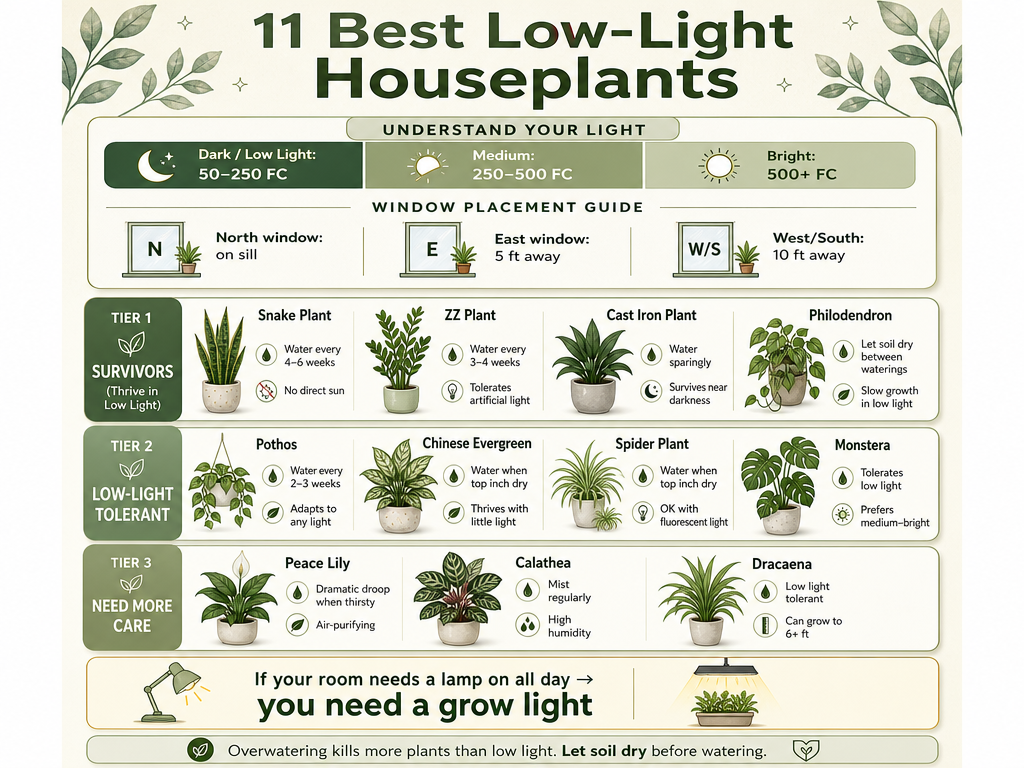
Low light is a measurable range, not the absence of light. Horticulturally, it means roughly 50–250 foot-candles (538–2,690 lux)—a foot-candle is just the amount of light cast by a single candle one foot away. In plain terms: there's enough natural daylight to read a book comfortably, but no direct sun ever hits the plant. This is what you get several feet from a window or in a north-facing room. Costa Farms rates its low-light picks at 100–200 foot-candles and notes that 100 FC is the bare minimum even a tough ZZ plant needs.
No plant survives complete darkness. Every plant photosynthesizes, meaning it uses light to make food. A windowless closet or a room that's dim even at noon won't work for any of them.
"Tolerate" and "thrive" aren't the same. A plant that merely tolerates low light will survive a while, stop growing, and may drop leaves. Only a few truly thrive in dim rooms—that's exactly what our ranking below sorts out.
Quick self-check: If you need a lamp on all day to function in the room, you need a grow light, not a tougher plant. To measure precisely, use a free foot-candle app on your phone, and check your window direction with the phone's compass to gauge how much light actually reaches that corner.
1. Snake Plant (Sansevieria) — The Most Forgiving Pick
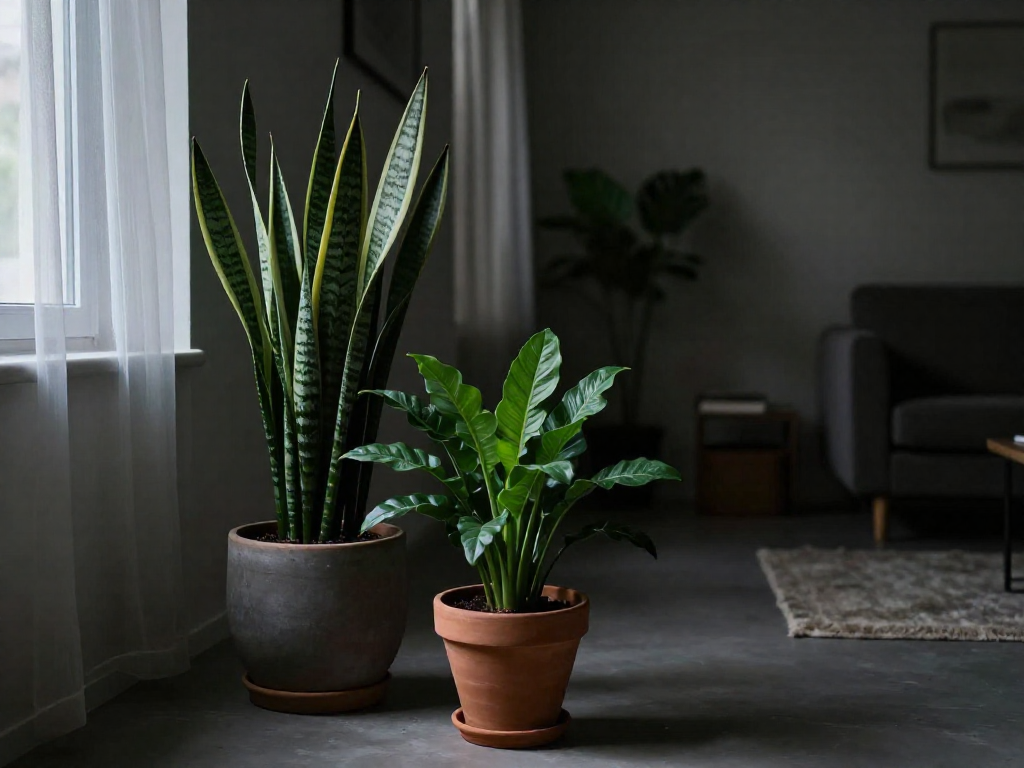
If you only trust yourself with one plant, make it a snake plant. It's the most bulletproof pick on this list because it tolerates bright, medium, or low light—one of the few plants that genuinely survives a dim corner instead of just tolerating it briefly. Point a phone compass at your window: a north-facing spot with no direct sun is perfect, and the plant is fine several feet back from brighter windows too.
The bigger risk isn't darkness—it's you. Snake plants are killed by overwatering and the root rot it causes, not by low light. Water only when the soil is completely dry, which can mean 4–6 weeks between waterings (and even longer in winter). When in doubt, wait. Avoid direct sun, which scorches the leaves; medium light is ideal, but low light is genuinely fine.
Quick-reference care
- Light: Low to bright indirect; avoid direct sun
- Water: Only when soil is fully dry (~4–6 weeks)
- Soil: Fast-draining cactus/succulent mix
- Toxicity: Toxic to cats and dogs if eaten
Best for hallways, bedrooms, and anyone who forgets to water.
2. ZZ Plant (Zamioculcas zamiifolia) — Survives on Artificial Light Alone
If your darkest corner gets no natural daylight at all, the ZZ plant is your pick. It's one of the very few houseplants that can grow anywhere in a home or office—including rooms lit only by artificial light, like a windowless bathroom or an office cubicle.
The secret is underground. ZZ plants grow from rhizomes (thick, fleshy underground stems that store water), which let them coast through long dry spells. Water only when the soil is completely dry—often just once every 3–4 weeks. Overwatering is the main way people kill them, so when in doubt, wait.
It's a slow grower that can eventually reach about 5 feet tall, and it shrugs off drought, low humidity, and low light. Brighter (indirect) light rewards you with showy new growth, but it isn't required for the plant to stay healthy.
Quick care summary:
- Light: Low to bright indirect; tolerates artificial light alone
- Water: Only when soil is fully dry (~every 3–4 weeks)
- Soil: Well-draining potting mix
- Toxicity: Toxic to pets and people if ingested—keep out of reach
Best for: windowless offices and dark apartment corners.
3. Pothos (Epipremnum aureum) — Adapts Instead of Declining
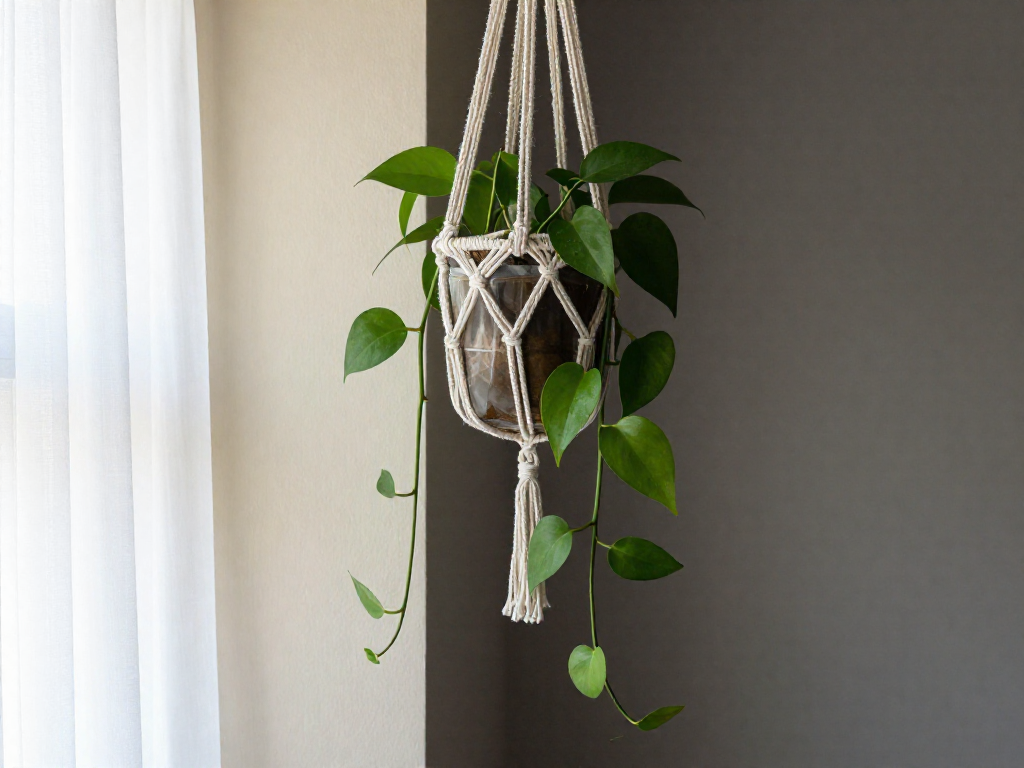
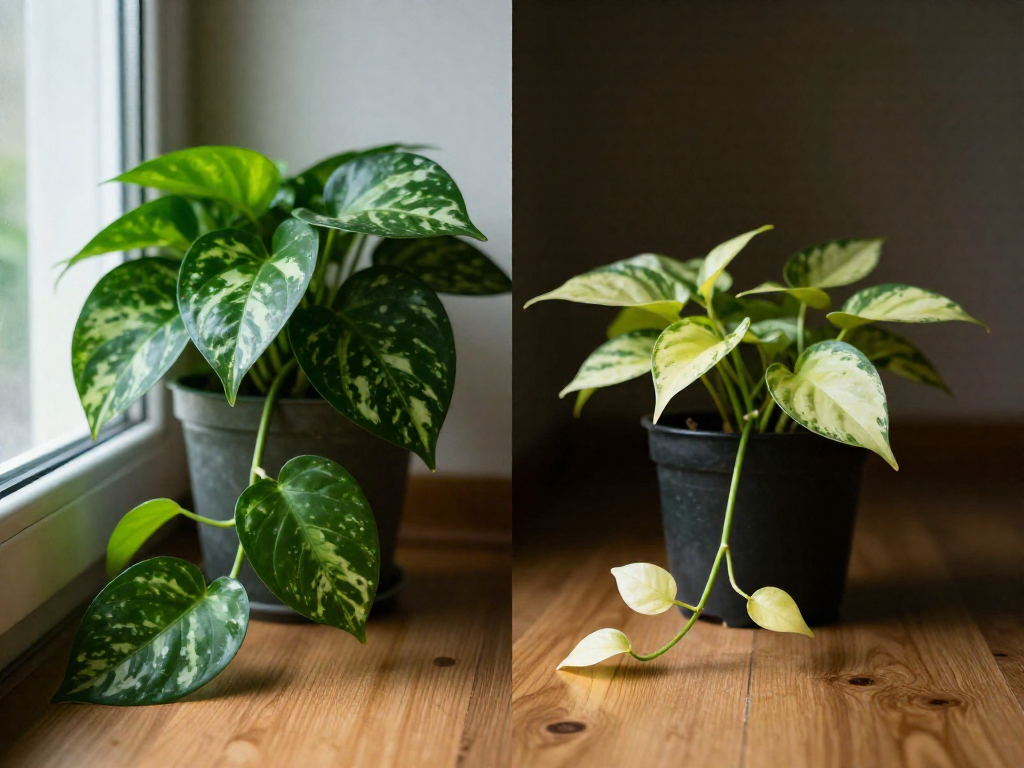
Pothos is the trailing plant that bends to your apartment instead of the other way around. It tolerates most light from low to bright—the one thing to avoid is direct sun, which can scorch the leaves. In a dim corner it doesn't quietly die; it simply grows slower, with longer stretches of bare stem between leaves. Give it a brighter (but still indirect) spot and it fills out lush and full.
Watering is refreshingly hands-off: roughly every 2–3 weeks, once the soil has nearly dried out. Pothos also tells you exactly what it needs. Drooping, limp leaves mean it's too dry—give it a drink. Yellowing leaves mean too much water, so ease off and let the soil dry more between waterings.
With its cascading vines, pothos is the go-to for shelves, mantels, and high corners where trailing growth looks its best.
Quick care summary
- Light: Low to bright indirect; no direct sun
- Water: Every 2–3 weeks, when soil nearly dries
- Soil: Standard well-draining potting mix
- Toxicity: Toxic to cats and dogs if eaten
4. Cast Iron Plant (Aspidistra) — Named for Surviving the Impossible
The cast iron plant (Aspidistra) earned its name honestly: it's known for surviving low light and less-than-ideal conditions that would kill fussier plants. Expect deep green, slightly arching leaves and a slow but steady growth habit. This is the plant garden-center experts reach for when a room feels genuinely hopeless — a dim corner, a north-facing hallway, a spot you'd swear is too dark for anything green.
It won't grow fast, but it tolerates neglect remarkably well. When a space feels truly impossible for plants, start here.
Quick-reference care
- Light: Low to medium indirect light; ideal for the darkest, most difficult rooms.
- Water: Let the top inch of soil dry between waterings; less often in dim, low-humidity spaces.
- Soil: Standard well-draining potting mix.
- Toxicity: Generally considered pet-safe, though it's best to keep any houseplant out of reach.
5. Philodendron — Glossy and Adaptable
If you want a leafy plant that moves easily from room to room, the philodendron is one of the most forgiving picks. It tolerates low to medium indirect light (bright light with no direct sun hitting the leaves) and adapts without fuss. In dim corners the leaves grow more slowly, but they stay glossy and full instead of going leggy or dropping.
Watering is simple: let the top of the soil dry slightly before watering again, and avoid leaving the roots wet. Garden-center experts named philodendron among their four fail-proof low-light plants. Choose a trailing variety for shelves or a hanging pot, or an upright type for floor and tabletop spots.
Quick care summary
- Light: Low to medium indirect
- Water: When the top of the soil is slightly dry
- Soil: Well-draining potting mix
- Toxicity: Toxic to pets and people if eaten; keep away from cats, dogs, and kids
6. Chinese Evergreen (Aglaonema) — Thrives Almost Anywhere
The Chinese evergreen (Aglaonema) is one of the few plants that genuinely thrives on very little light rather than just tolerating it. A simple guideline: if there's enough light to comfortably read a book for most of the day without flipping on a lamp, this plant will be happy.
Its biggest draw is the patterned foliage — leaves streaked with silver, cream, or pink — which adds real color to a dim room without needing any direct sun. That makes it a standout pick when you want visual interest in a corner where flowering plants won't cooperate.
It's also low-maintenance and beginner-friendly. Let the top inch of soil dry before watering (dark rooms tend to be less humid, so it drinks slowly).
Quick care summary
- Light: Low to medium, indirect
- Water: When top inch of soil is dry
- Soil: Well-draining potting mix
- Toxicity: Toxic to pets and people if eaten
7. Peace Lily (Spathiphyllum) — Flowers for Dark Corners
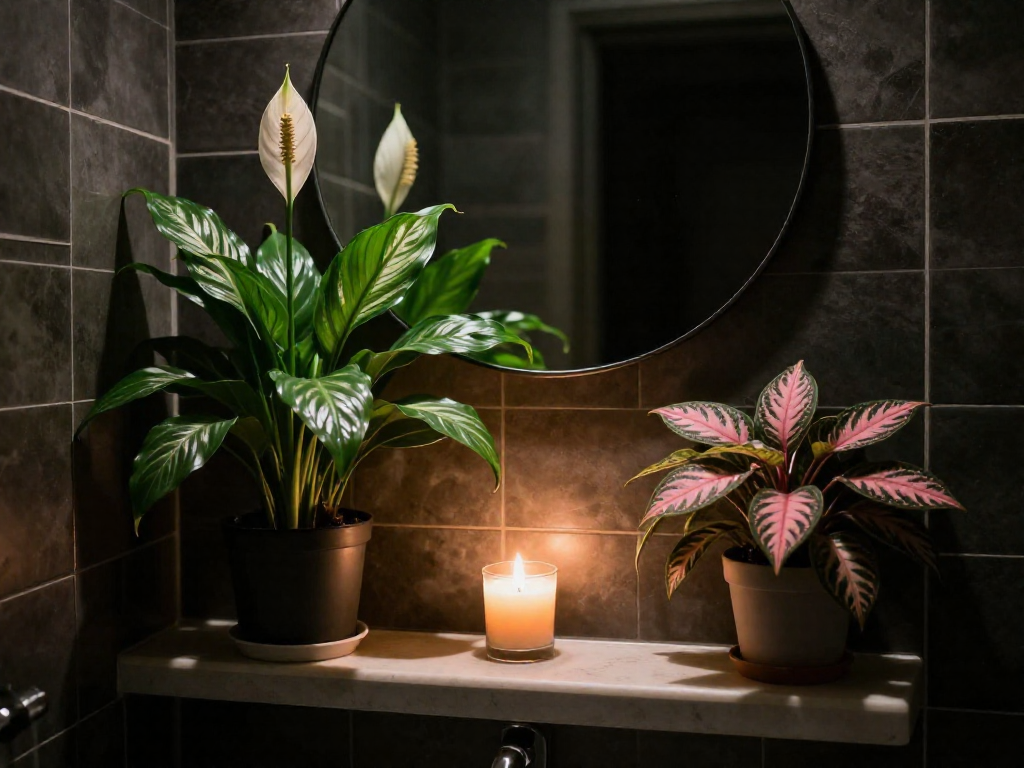
Most low-light plants stay green, but the peace lily can actually bloom in a dim room—producing striking white flowers (technically a modified leaf called a spathe) that bring elegance to corners where nothing else flowers. It's also valued as an exceptional air-purifying plant, and Costa Farms lists it among houseplants that grow in low light.
Best of all for beginners: it tells you when it's thirsty. The leaves droop visibly when the soil dries out, then perk back up within hours of watering—an easy, built-in cue so you rarely over- or under-water.
Quick care summary
- Light: Low to medium; avoid direct sun.
- Water: When the top inch of soil is dry, or as soon as leaves droop.
- Soil: Standard well-draining potting mix.
- Toxicity: Toxic to cats, dogs, and humans if ingested—keep out of reach.
8. Spider Plant (Chlorophytum comosum) — Happy Under Fluorescent Light
If your space has no window at all, the spider plant is your friend. It does best in a bright spot, but it tolerates medium and low light and is just as happy under fluorescent lights as under the sun. That makes it a natural fit for offices, bathrooms, and windowless nooks lit only by a ceiling fixture.
It's also hard to kill. Its thick roots store water, so it shrugs off the occasional missed watering. Bonus: healthy plants send out baby "pups" (small offshoots) you can snip and root in water for free new plants.
Quick care summary
- Light: Low to medium; fine under fluorescent light
- Water: When the top inch of soil is dry
- Soil: Standard well-draining potting mix
- Toxicity: Non-toxic to cats and dogs
9. Dracaena / Corn Plant — Grows Into an Indoor Tree
If you want a floor plant with height, the corn plant (Dracaena spp.) delivers. Proven Winners describes it as easy to grow and tolerant of a wide range of light—low to high—and capable of growing into an indoor tree of 6 feet or more, making it a great way to fill vertical space.
One honest caveat: this is the brighter end of "low light," not the dimmest corner. Costa Farms rates a dracaena's needs at roughly 200 foot-candles (medium light), versus the ~100 FC minimum a ZZ plant tolerates. (A foot-candle is a measure of light intensity.) Give it a spot with some ambient daylight—near a north-facing window or a few feet from a brighter one—and it'll stay full instead of leggy.
Quick care:
- Light: Medium; brighter end of low light
- Water: When the top inch of soil is dry
- Soil: Well-draining potting mix
- Toxicity: Toxic to cats and dogs
Snake plants (#1) belong to the same expert-endorsed group of forgiving, sculptural picks.
10. Calathea / Prayer Plant — Bold Foliage With a Trade-Off
If you want patterned leaves instead of plain green, the calathea (also called a prayer plant) delivers. Just know the trade-off up front: it tolerates low light, but its bold markings fade and look muted in dim rooms. It truly shines in bright indirect light—light that reaches the plant without the sun's rays hitting the leaves directly. Direct sun scorches it, so avoid sunny windowsills.
Calatheas love humidity, which makes a darker bathroom one of the better low-light homes for them.
Quick-reference care:
- Light: Bright indirect preferred; low light is a compromise
- Water: Keep soil lightly moist; don't let it fully dry out
- Soil: Well-draining potting mix
- Toxicity: Non-toxic to cats and dogs
Choose it for looks—just expect quieter colors in a dark space.
11. Nerve Plant & Mother Fern — Small-Space and Terrarium Picks
Rounding out the list are two compact, humidity-loving plants for tiny dark spots like a windowless bathroom shelf or an enclosed terrarium (a sealed or partly closed glass container that traps moisture).
Nerve plant (Fittonia) is a low, creeping tropical with striking white, pink, or red leaf veining. Place it near a north- or east-facing window, keep humidity high, and it shines in a tabletop terrarium.
Mother fern (Asplenium) has waxy dark-green leaves and tolerates low light near a north-facing window.
Both stay small enough for tabletop displays but need more humidity than the tougher plants above—group them together, set them on a pebble tray, or keep them in a bathroom.
Quick care: Light: low to medium indirect. Water: keep soil lightly, evenly moist. Soil: rich, well-draining potting mix. Toxicity: both non-toxic to pets.
How to Keep Low-Light Plants Alive (Watering, Rotation & Grow Lights)
Picking the right plant is only half the job. The two things that actually kill houseplants are, in order, overwatering and the wrong light—not low light itself. Nail the routine below and almost every plant on this list will survive.
Water less, not more
Dark rooms usually have lower humidity, which means soil dries out slower—so your plant needs water less often, not more. The rule for every plant here: stick a finger in and only water when the top inch of soil is dry. For snake plants and ZZ plants, that can mean 4–6 weeks between waterings (longer in winter). If you want to remove the guesswork, a cheap moisture meter (a probe that reads how wet the soil is) tells you exactly when to water.
Match distance to your window
Low light doesn't mean no light—every plant needs some to make food. Use your phone's compass to check which way your window faces, then place accordingly:
- North-facing: no direct sun, so plants can sit right on the sill.
- East-facing: set the plant at least 5 feet back.
- West- or south-facing: at least 10 feet back to avoid harsh direct sun.
Want to verify the actual brightness? A free foot-candle app (foot-candles measure light intensity) confirms you're in the low-light range of roughly 50–250.
Rotate—and know when to add a grow light
Turn each pot a quarter-turn every week or two so it doesn't grow lopsided reaching toward the window.
Finally, be honest about your room. If it's so dark you keep a lamp on all day, no "tolerant" plant will thrive there—and popular picks like ficus, money trees, and rubber trees will fail no matter what. Add an inexpensive grow light instead; it's cheaper than replacing dead plants.
Sources
- How much light houseplants actually need | Popular Science — popsci.com
- How to Choose the Right Light for your Indoor Plants – Costa Farms — costafarms.com
- The Easiest Indoor Plants that Thrive in Low Light — roomfortuesday.com
- Low-Maintenance Houseplants You'll Love — costafarms.com
- 3 Hard-to-Kill Houseplants for Beginners (and one picky one) - Sargent's - Rochester, MN — sargentsgardens.com
- Houseplants for Dark Rooms – Happy Houseplants — happyhouseplants.co.uk
- 14 Low-Light Houseplants That Thrive in Dim Spaces — provenwinners.com
- 6 Best Low Light Indoor Plants | Low Light Houseplants | Plants.com — 1800flowers.com
See also
- Best grow lights for windowless apartments
- How to water houseplants without overwatering
- North-facing window plant guide
- Bathroom plants that thrive in humidity
- Snake plant care guide for beginners
- How to propagate pothos and spider plants
Related articles
Should Beginners Buy Fake Plants Instead? An Honest Take
Wondering if real plants are worth it when your apartment is dark? An honest, evidence-based look at when to buy real, go fake, or add a grow light.
Jul 14, 2026 · 6 min read
How to Buy a Healthy Houseplant at the Store
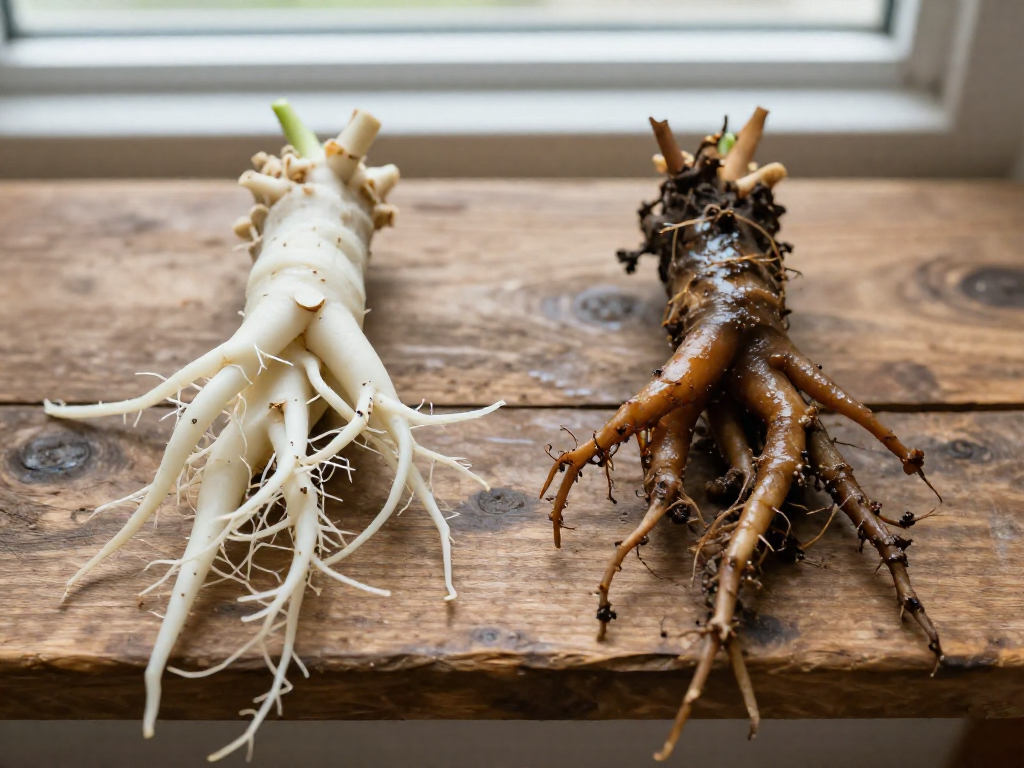
Learn how to pick a healthy houseplant and avoid a sick one. A simple store checklist for inspecting roots, leaves, and pests before you buy.
Jul 14, 2026 · 11 min read
Essential Tools New Plant Parents Actually Need
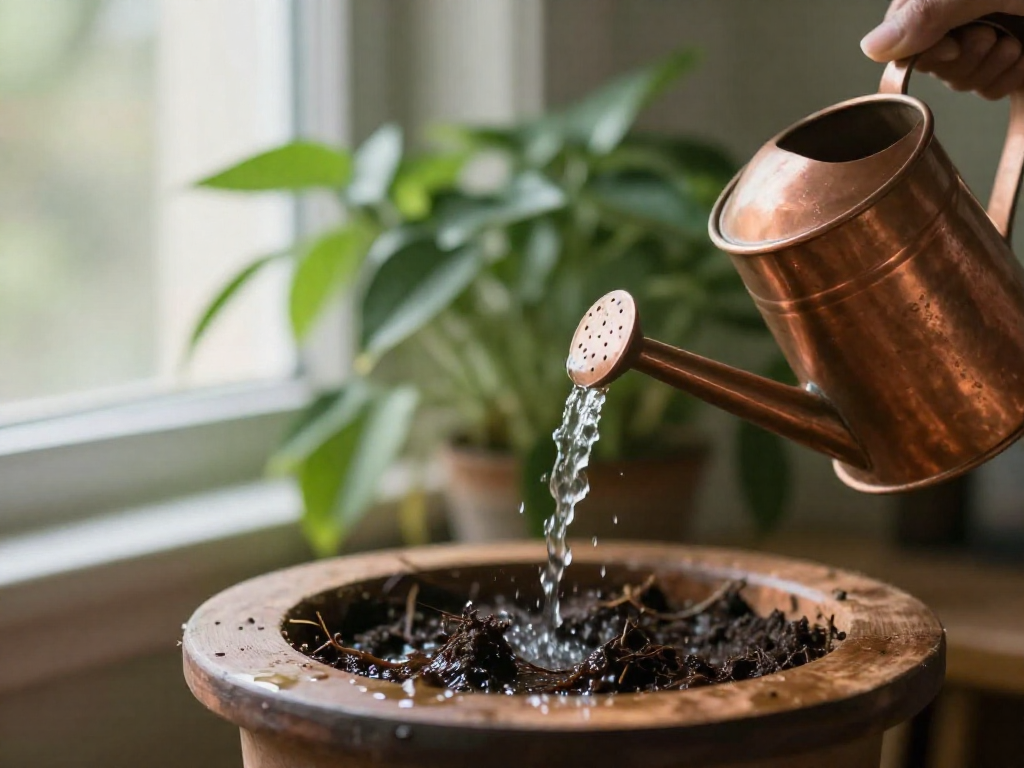
The tools you actually need to start caring for houseplants—a minimal, under-$15 kit for apartment dwellers, plus the gadgets you can skip.
Jul 14, 2026 · 6 min read