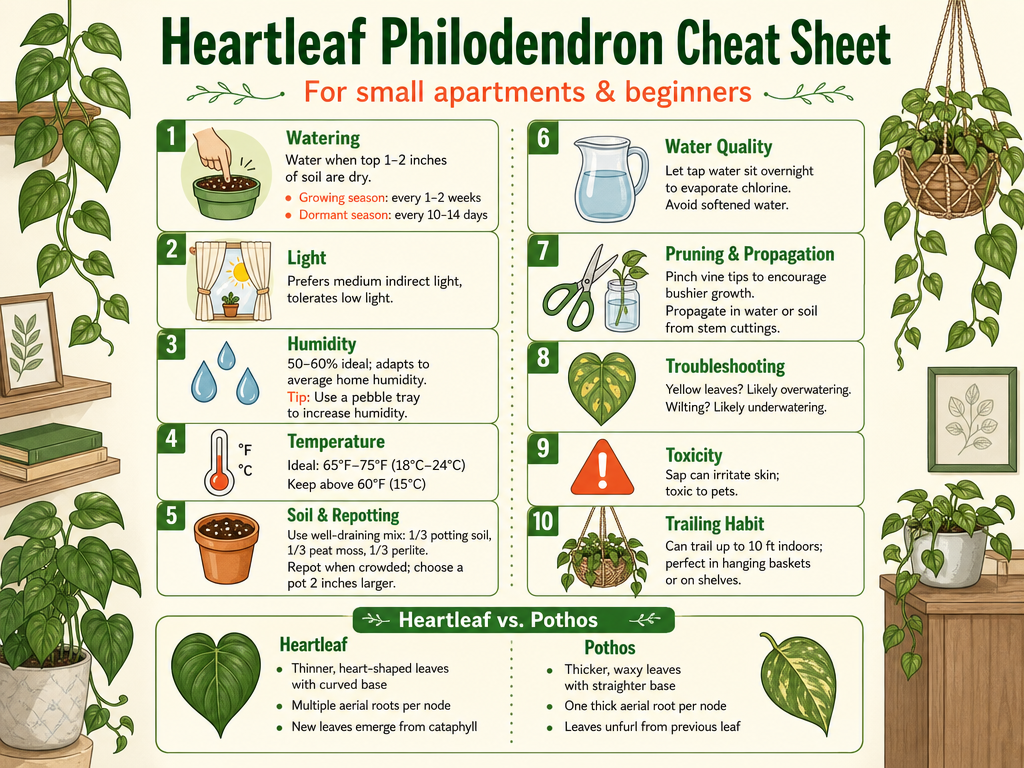
Philodendron Heartleaf Care for Small Apartments
How do I care for a heartleaf philodendron?
On this page
Meet the Heartleaf Philodendron (and Why It Loves Apartments)
The heartleaf philodendron (Philodendron hederaceum) is an evergreen trailing vine native to Tropical America, prized for its soft, glossy, heart-shaped leaves that measure about 2–3 inches wide. If you're a first-time plant parent in a small space, this is one of the most forgiving houseplants you can pick—and it even helps filter some toxins from your indoor air.
Why is it so easygoing? In the wild it grows as an epiphyte, meaning it climbs on other trees for support without feeding off them (it isn't a parasite). Living on the shady forest floor, it's adapted to low, dappled light—so it tolerates the imperfect lighting common in apartments far better than sun-hungry plants.
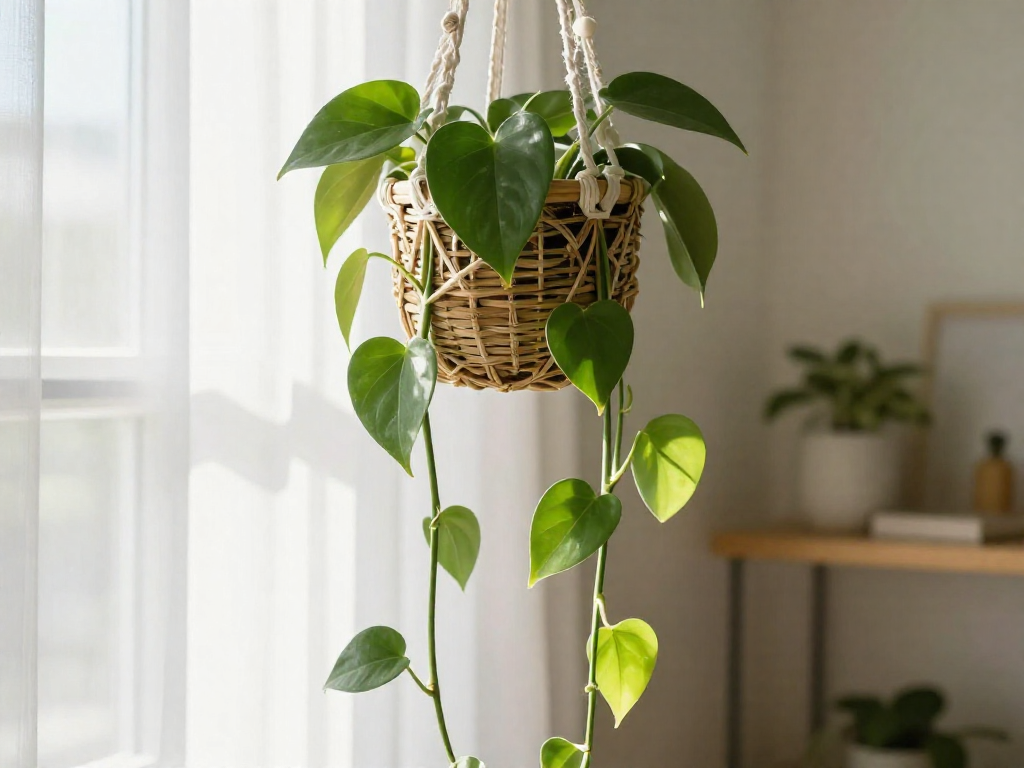
It's also compact when you get it. Young plants often start around 6 inches tall, then grow steadily. Left untrimmed, the vines can trail up to 10 feet indoors, cascading beautifully from a hanging basket or climbing a small trellis—so you can scale it to fit your space.
Light: Where to Place It in a Small Space
The heartleaf philodendron thrives in medium indirect light—bright light that doesn't hit the leaves directly. It also tolerates low indirect light, which makes it forgiving in apartments where windows are limited or shared with a neighboring building.
Keep it out of direct sun. Harsh, unfiltered rays will scorch the heart-shaped leaves, leaving crispy brown patches. Bright shade or sunlight softened by a sheer curtain is ideal.
Light also shapes how your plant grows. More light means faster, bushier growth and larger leaves. In dimmer corners it still survives, but expect slower growth and more spacing between leaves (leggy vines).
Where to put it in a small apartment:
- Near an east-facing window, where morning light is gentle and won't burn the foliage.
- A few feet back from a bright south or west window, or behind a sheer curtain to filter the intensity.
- On a shelf or bookcase in a well-lit room—a great space-saver.
- Trailing from a hanging basket, letting the vines cascade to fill vertical space you can't use for pots.
If your only option is a dim corner, the heartleaf will manage—it evolved on shaded forest floors—but rotate it toward the light every couple of weeks so it grows evenly instead of leaning.
Watering: A Simple Routine You Can Trust
Watering a heartleaf philodendron comes down to one habit: check the soil before you pour. Stick your finger into the pot. When the top 1–2 inches feel dry, it's time to water. If it still feels damp, wait a few days and check again. This single test replaces any rigid schedule and keeps you from guessing.
How to water the right way
Water thoroughly with lukewarm (room-temperature) water until it runs out the drainage holes at the bottom of the pot. This makes sure the whole root ball gets a drink, not just the surface. Then let the excess drain away completely. Never let the plant sit in a saucer of water—soggy roots are the number one killer of houseplants. If your pot sits in a saucer or decorative cover, empty it a few minutes after watering.
Adjust with the seasons
Your plant drinks more when it's actively growing and less when it rests:
- Spring and summer (growing season): often once or twice a week
- Fall and winter (dormant season): every 10–14 days, sometimes less
Dormant simply means the plant slows its growth and needs less water—not that it's dying.
Light changes the math
Brighter light speeds up growth and dries the soil faster, so a plant in a bright spot will need water more often than one in a dim corner. Let the soil be your guide rather than the calendar: the finger test always wins. Over a few weeks you'll learn your plant's rhythm and watering will feel automatic.
Water Type, Humidity, and Salt Buildup
The water you use matters more than most new plant parents expect. Straight-from-the-tap water usually contains chlorine and dissolved salts that can slowly brown or "burn" leaf edges. The easy fix: fill your watering can and let the tap water sit out overnight before using it, which gives the chlorine time to evaporate. Avoid water from a home water softener—it's high in salt and hard on the plant. If you can collect rainwater or use distilled water, that's ideal, especially in hard-water areas.
Humidity in a Dry Apartment
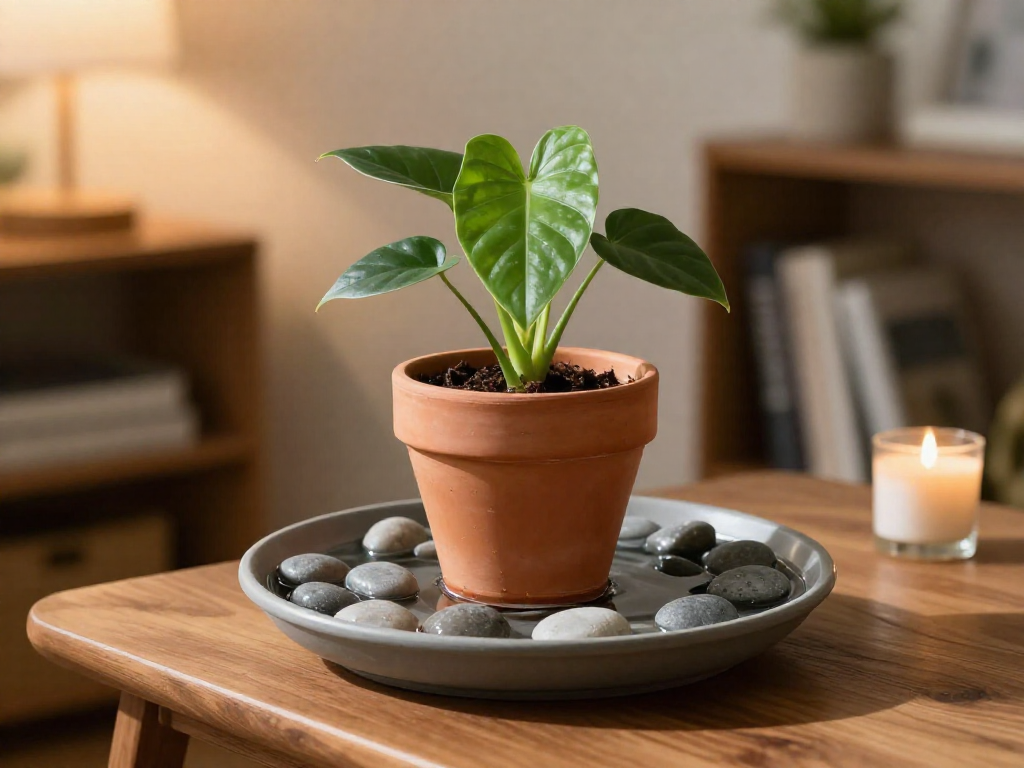
Heartleaf philodendron is a tropical plant, so it prefers moderate to high humidity—around 50–60%. The good news for apartment dwellers: it adapts well to average household air. If your space is dry (common with winter heating), you can raise humidity a couple of easy ways. Set the pot on a pebble tray—a shallow dish of pebbles and water that adds moisture as it evaporates, without letting roots sit in water. Grouping plants together also creates a slightly more humid microclimate.
Flush Out Salt Buildup
Over time, salts from tap water and fertilizer collect in the soil. Every couple of months, flush the pot: take it to the sink and run water through until it drains freely. Yellow-tinted drainage water is your sign it was overdue.
Heartleaf Philodendron vs. Pothos: How to Tell Them Apart
If your plant has trailing, heart-shaped leaves, you may be wondering whether you actually have a heartleaf philodendron or a pothos (also sold as Devil's Ivy). It's the most common mix-up in the plant world—and easy to see why. Both are climbing vines in the arum family (Araceae, the botanical group that includes peace lilies and monsteras), and both are beginner-friendly. But they're two different plants: the heartleaf philodendron comes from the Caribbean, while pothos originated in Southeast Asia.
Here's how to tell them apart at a glance.
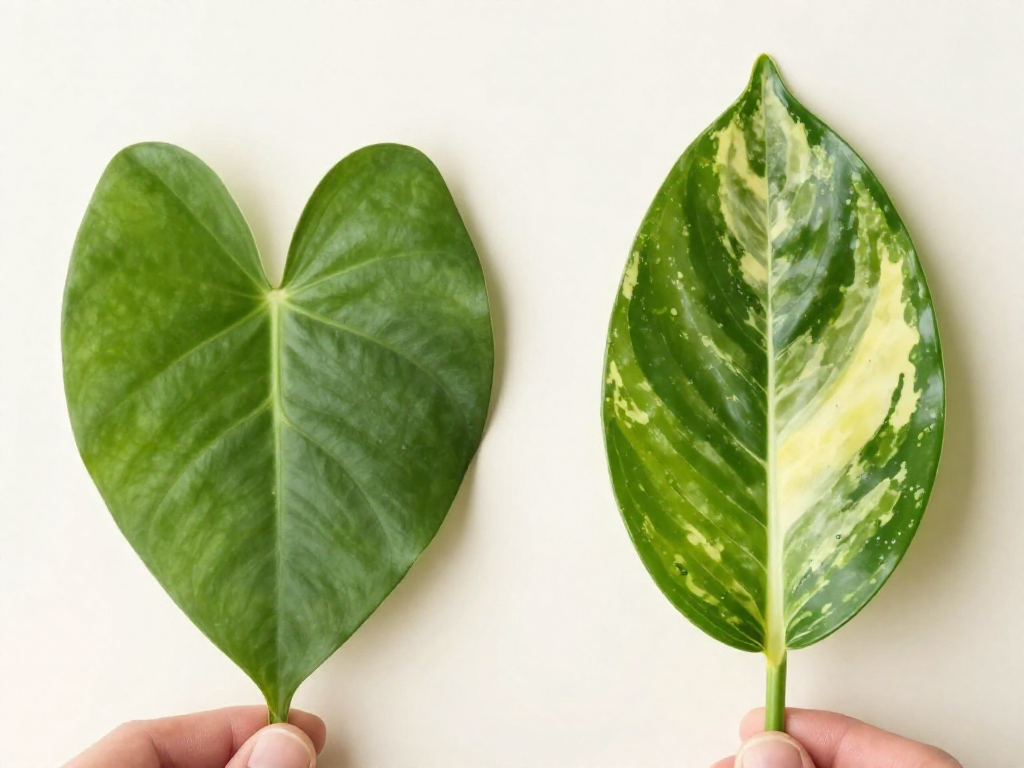
Look at the leaves. Philodendron leaves are thinner, softer, and more matte, with a base that curves inward like the dip at the top of a heart. Pothos leaves are thicker, waxier, and often streaked with yellow or white (variegation), with a straighter, flatter base.
Check the aerial roots. These are the small roots that grow along the vine at each node (the point where a leaf meets the stem). Pothos grow one thick, stubby root per node. Philodendrons grow several thin, spindly roots clustered together—sometimes two to six.
Watch new growth. A new philodendron leaf pushes out of a cataphyll—a thin, waxy protective sheath that later turns brown, papery, and drops off. A new pothos leaf simply unfurls from the previous leaf, with no sheath.
Care differs slightly. Both are similar to grow, but the heartleaf philodendron is a little less drought-tolerant and prefers a bit more bright, indirect light to stay full and healthy.
Pruning, Shaping, and Propagating
One of the best things about the heartleaf philodendron is how easily you can shape it—and turn one plant into several for free.
Pinch to Keep It Full
Leggy, sparse vines are common in low light. To fix this, pinch off the growing tip (the very end of a vine) just above a leaf. This tells the plant to branch out, creating a fuller, bushier look. Prune more often for a compact plant on a shelf, and less if you want long, wild trails cascading from a hanging basket.
Always use disinfected scissors to avoid spreading disease. Wipe the blades with 90% rubbing alcohol, or dip them in a 1:9 bleach-to-water solution before you cut.
Propagate New Plants
Those trimmed cuttings can become new plants:
- Cut a vine just below a leaf node—the small bump on the stem where a leaf and roots emerge.
- Root it in a glass of water, changing the water every few days, or plant the cutting directly in moist soil.
You can also divide the root clump when repotting. Gently separate a section with its own roots—a good moment to check that the roots look healthy and white, not brown or mushy.
Potting, Soil, and Temperature
Getting the container and soil right is what keeps your heartleaf philodendron's roots healthy—and it's easier than it sounds in a small apartment.
Pot Size
When you repot, choose a container no more than 2 inches wider than the current one. Heartleaf philodendrons actually do well slightly pot-bound (roots filling most of the pot), because a snug pot lets the soil dry out faster between waterings and lowers the risk of root rot. Only size up when roots are crowding the surface or the soil dries out too quickly to keep up with watering.
Soil Mix
Standard bagged potting soil is often too dense and holds too much water on its own. For better drainage, blend roughly 1/3 potting soil, 1/3 peat moss, and 1/3 perlite (the white volcanic-glass bits that keep soil airy). Always use a pot with a drainage hole so excess water can escape.
Feeding and Temperature
Fertilize lightly once or twice a month with a balanced houseplant fertilizer during spring and summer, when the plant is actively growing; skip feeding in fall and winter. Keep it in a comfortable 65–75°F range, and never let it sit below 60°F—so avoid cold drafts near windows, AC units, and exterior doors.
Troubleshooting and Safety
Heartleaf philodendrons are forgiving, so most problems trace back to watering. Use these signs to diagnose quickly:
- Yellow leaves that drop: Usually overwatering. Let the top inch of soil dry out before watering again, and never let the pot sit in standing water.
- Wilting or limp leaves: Usually underwatering. Water thoroughly with lukewarm water until it drains from the bottom.
- Soft, black, or mushy stems: A sign of rot. Trim away the affected parts with disinfected scissors and repot in fresh, well-draining soil.
Recovery tip: After correcting watering, give the plant a few weeks in bright, indirect light before expecting new growth.
Safety: Philodendrons belong to the arum family (Araceae) and are toxic if eaten. The sap can irritate skin and cause mouth burning if ingested. Wear gloves when pruning, wash your hands afterward, and keep the plant out of reach of children and pets.
Sources
- Heartleaf Philodendron Plant Care Guide — healthyhouseplants.com
- Philodendron — thesill.com
- Heartleaf Philodendron Care 101 - Tips & Mistakes to Avoid — rootedhues.com
- Pothos vs. Philodendron: Learn Which Houseplant Is Better for You — thespruce.com
- Know your plants: how to tell the difference between a philodendron and a pothos — stamenandstemblog.com
- How do I care for a philodendron? | Yard and Garden — yardandgarden.extension.iastate.edu
- How to grow philodendrons / RHS Growing Guide — rhs.org.uk
- Philodendron Brasil Care: An Easy Care, Jazzy Trailing Houseplant — joyusgarden.com
FAQ
How often should I water a heartleaf philodendron?
Water when the top 1-2 inches of soil feel dry to the touch—stick your finger in to check. In an apartment, that usually means once or twice a week during spring and summer (the growing season) and only every 10-14 days in fall and winter, when growth slows. Water thoroughly until it drains from the bottom, then empty the saucer; never let the plant sit in standing water. Overwatering is the most common way people kill this plant, so when in doubt, wait a day. If more light reaches your plant, it will dry out faster and need water more often.
Is a heartleaf philodendron the same as a pothos?
No—they look alike and are both easy trailing vines in the arum family (Araceae), but they're different plants. Heartleaf philodendron (Philodendron hederaceum) has thinner, softer, distinctly heart-shaped leaves whose base curves inward like the top of a heart. Pothos (Epipremnum aureum) has thicker, waxier leaves that are often flecked with yellow or white variegation and have a straighter base. Their stems and aerial roots also differ: pothos grows one thick aerial root per node, while philodendron grows several thin, spindly ones. Care is similar, though heartleaf philodendron is a bit less drought-tolerant and likes slightly more light.
Can a heartleaf philodendron survive in low light?
Yes. In the wild it's an epiphyte (a plant that grows harmlessly on trees rather than in soil) adapted to the dim forest floor, which is why it tolerates the low-light corners common in apartments. That makes it one of the best choices for a north-facing room or a spot away from windows. That said, "tolerates" isn't the same as "thrives"—in bright, indirect light it grows faster and fuller, while in very low light it grows slowly and gets leggy with sparse leaves. Avoid direct sun, which can scorch the leaves. A few feet from an east- or north-facing window is ideal.
Are heartleaf philodendrons toxic to cats and dogs?
Yes. Like all philodendrons, it contains calcium oxalate crystals that make the sap poisonous, so keep it away from cats, dogs, and small children. If a pet or child chews the leaves, it can cause mouth and throat irritation, drooling, and stomach upset—rarely lethal, but genuinely uncomfortable. The sap can also irritate skin, so consider wearing gloves when pruning or repotting. In a small apartment, a hanging basket or a high shelf is a good way to keep curious pets out of reach. If ingestion happens, call your vet or a pet poison line.
How do I make my heartleaf philodendron bushier?
Pinch or snip off the growing tips of the vines just above a leaf node (the small bump where a leaf meets the stem). This signals the plant to branch out from that point, filling in the gaps instead of trailing longer and thinner. Use clean scissors—wipe them with 90% rubbing alcohol or a 1:9 bleach-to-water solution first—and prune during the active growing season in spring and summer for the fastest fill-in. Don't toss the cuttings: place a cutting with at least one node in water or moist soil and it will root into a new plant, which you can tuck back into the same pot for extra fullness. Adequate light also keeps growth compact rather than leggy.
What kind of soil does a heartleaf philodendron need?
Use a well-draining mix that holds some moisture but never stays soggy. Plain indoor potting soil is often too dense and retains too much water; a reliable blend is equal parts (about one-third each) potting soil, peat moss, and perlite, which keeps roots aerated and prevents waterlogging. Always plant in a pot with a drainage hole. When repotting, go up only one size—no more than about 2 inches wider than the current pot—since this plant is happy slightly pot-bound, and an oversized pot holds excess wet soil that invites root rot.
See also
- Pothos care guide for beginners
- Best low-light houseplants for apartments
- How to propagate trailing houseplants in water
- How to fix overwatered houseplants
- Non-toxic houseplants safe for pets
Related articles
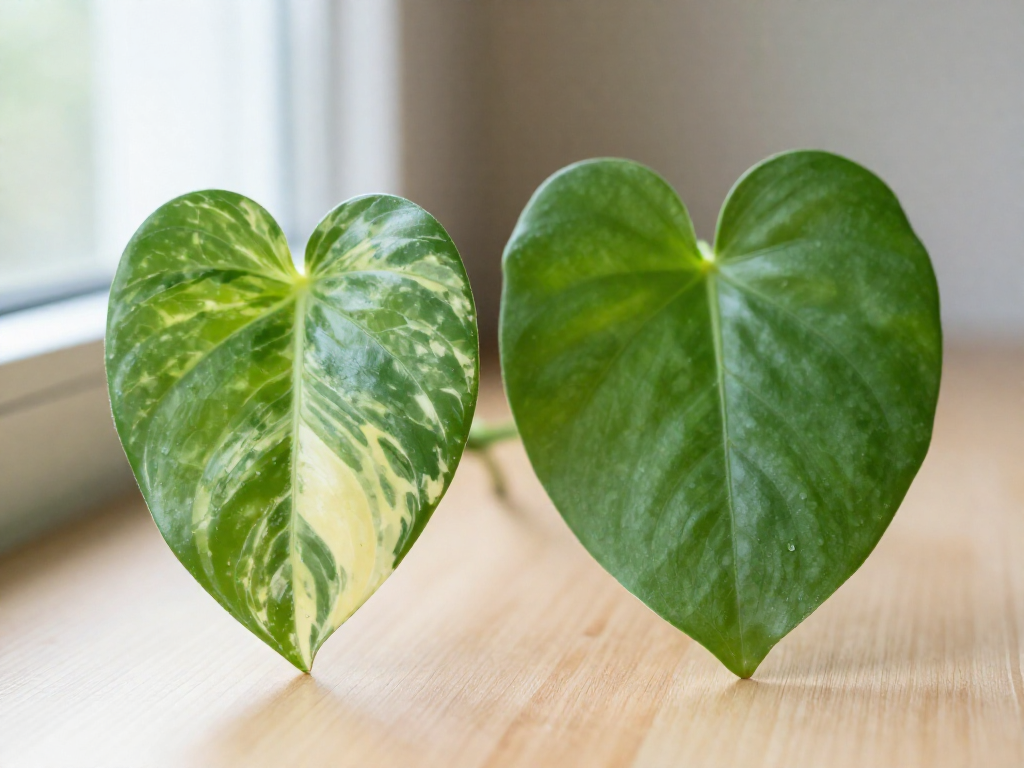
Pothos vs. Philodendron vs. Snake Plant: Which Should You Start With?
Pothos, philodendron, or snake plant—which easy houseplant is the best first choice for your apartment? A clear, plant-by-plant comparison for new plant parents.
Jul 14, 2026 · 7 min read
Jade Plant Care: The Easy Beginner Succulent Tree
Learn how to care for a jade plant indoors: watering, light, soil, plus simple pruning to shape a bushy little succulent tree. Beginner-friendly, step by step.
Jul 14, 2026 · 9 min read
Fiddle Leaf Fig Care: Why It's Fussy and How to Cope
Can a beginner keep a fiddle leaf fig alive? An honest, plant-by-plant care guide covering light, watering, drafts, and how to fix brown spots and leaf drop.
Jul 14, 2026 · 12 min read