Peace Lily Care: Reading the Droop and Reliable Blooms
How do I care for a peace lily and get it to flower?
On this page
Why Your Peace Lily Droops (and What It's Telling You)
If your peace lily's leaves have gone limp and floppy, you're seeing its most useful trait: it's one of the few houseplants that clearly tells you when something is wrong. The droop is a signal to read, not just a problem to fix. Learn to read it correctly and you're most of the way to a healthy, blooming plant.
The classic thirsty droop
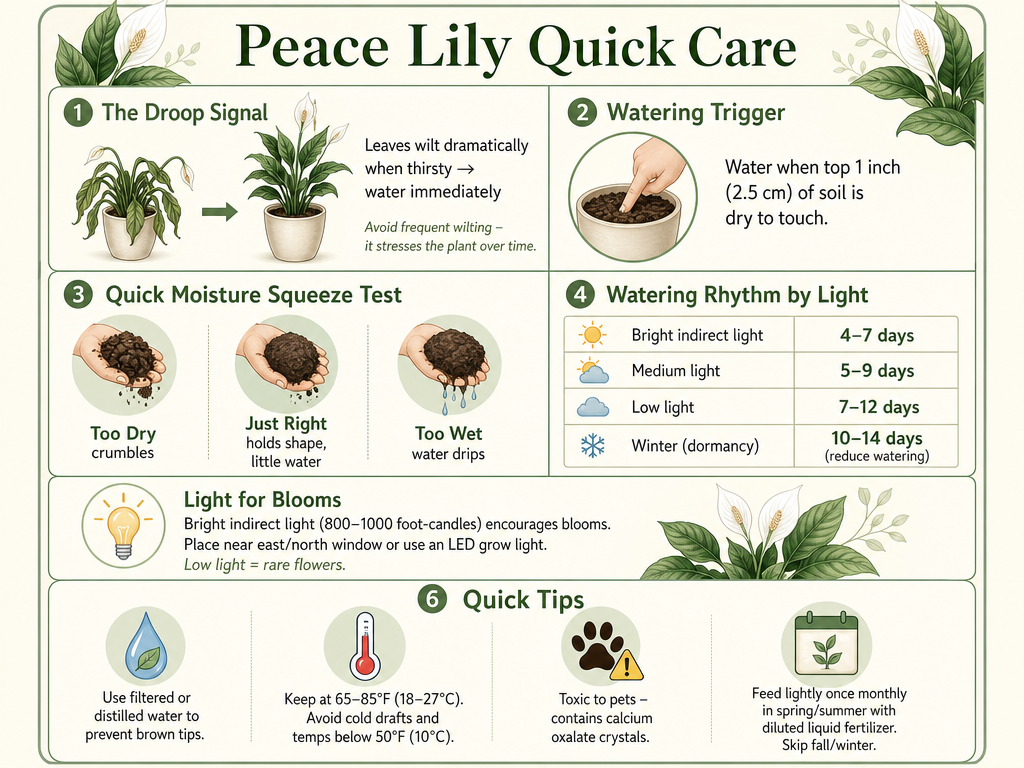
Peace lilies are famous for dramatically wilting when they're thirsty. Water them and they usually perk back up within a few hours—sometimes so fast it's almost startling. This "droop test" is why they have a reputation as forgiving, communicative plants.
The catch: overwatering droops too
Here's where new plant parents get tripped up. Both underwatering and overwatering make a peace lily droop, so the leaves alone don't tell the full story. You have to check the soil to know which one you're dealing with.
- Thirsty droop: soil is dry, and the plant bounces back within hours of watering.
- Overwatered droop: soil is soggy, leaves often curl inward, and it stays limp even after watering.
To check, push a finger 2–3 inches into the soil. It should feel only slightly moist, not saturated. Soggy soil plus a droop points to overwatering, which can lead to root rot (roots that are black, mushy, or smell sour)—a problem that can kill the plant within a couple of weeks if it isn't corrected.
Don't let the droop be your schedule
It's tempting to just wait for the wilt every time, but don't. Frequent wilting stresses the plant and leads to yellowing or browning leaf edges over the long run.
The reframe: treat the droop as a backup alarm, not your primary watering schedule. Water on a rhythm based on the soil (covered next), and let the droop be the occasional "hey, you forgot me" reminder—not your only cue.
The Right Way to Water a Peace Lily
Waiting for the droop is stressful and hard on the plant. A better habit is simple: water when the top inch (about 2.5 cm) of soil feels dry to the touch. Stick your finger straight into the pot—if the first knuckle comes out with dry soil, it's time to water. If it still feels moist, wait a day or two and check again.
The soil-squeeze test
For a quick confidence check, use the squeeze test. Dig in about a knuckle deep, pull out a pinch of soil, and roll it into a ball:
- Little to no water when squeezed: perfect—the soil is just right.
- Water drips out: too wet, so hold off on watering.
- Won't hold a ball shape: too dry, so it's time to water.
Checking for overwatering
Peace lilies hate soggy roots, so it's worth confirming the pot isn't staying too wet. Feel the soil 2 to 3 inches deep—it should be only slightly moist, never saturated. Soaked soil this far down is a sign you're watering too often, which can lead to root rot (decayed roots that can no longer take up water).
How to water
When it's time, water thoroughly:
- Pour room-temperature water evenly over the soil. Cold water can shock the roots.
- Keep going until water drains out the bottom of the pot.
- Always empty the saucer afterward. Peace lilies dislike "wet feet"—sitting in standing water is a fast track to root rot.
That's the whole method: check the top inch, water until it drains, and dump the saucer. Follow this and you won't need the dramatic droop to tell you what to do.
How Often to Water: Light and Season, Not the Calendar
The most common beginner mistake is watering a peace lily "every Sunday" no matter what. A rigid weekly schedule works against your plant: in winter it delivers water the roots can't use (a fast track to overwatering and root rot), and in summer it can leave a fast-growing plant thirsty between waterings.
Instead, tie how often you water to light and season. More light means faster growth and quicker-drying soil, so brighter plants drink more often:
- Bright indirect light (near an east- or north-facing window, no direct sun on the leaves): roughly every 4–7 days
- Medium light: about every 5–9 days
- Low light: around every 7–12 days
Season matters just as much. During the warm active-growth months, when your plant is pushing out new leaves and flowers, you may water once or twice a week. In winter dormancy—the rest period when growth slows and no new leaves or blooms appear—cut back to about every 10–14 days.
Treat these ranges as starting points, not rules. Always confirm by feeling the soil: if the top inch is dry, it's time to water. Light and season tell you roughly how often; the soil tells you when.
The #1 Killer: Overwatering and Root Rot
The fastest way to lose a peace lily is to love it with too much water. Consistent overwatering leads to root rot (a decay of the roots caused by sitting in soggy, airless soil), and once rot sets in, an overwatered peace lily can collapse and die within a couple of weeks.
Warning signs
Watch for these red flags:
- Persistent drooping that doesn't bounce back after you water
- Stunted or stalled growth
- A stem base that turns brown or black and feels soft or mushy
To confirm, gently slide the plant out of its pot and inspect the roots. Healthy roots are firm and pale. Rotting roots turn brown or black, feel soft and slimy, and give off a rancid, swampy smell.
Rot-droop vs. thirst-droop
Both too much and too little water make a peace lily droop, so check the soil before you reach for the watering can, every time. Push a finger 2 to 3 inches into the soil:
- Bone dry? It's thirsty—water thoroughly.
- Soggy and wet? Overwatering is the likely culprit; let it dry out before watering again.
Prevention
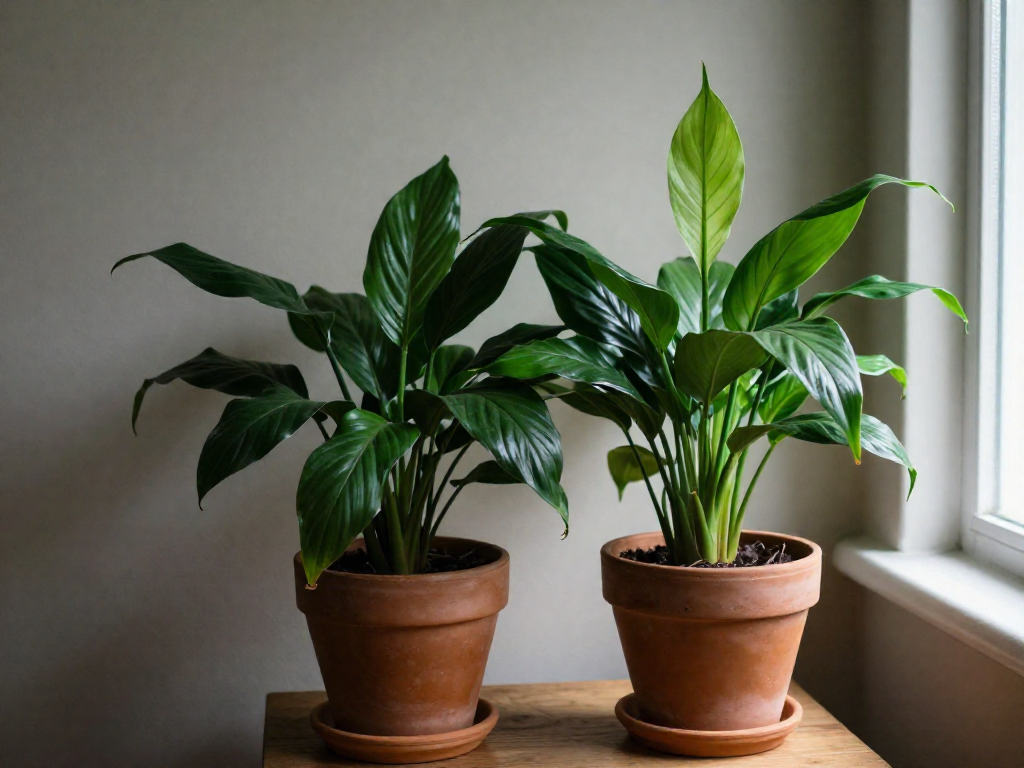
Stop rot before it starts. Use a pot with drainage holes, empty the saucer after every watering so roots never sit in standing water, and choose a breathable terra-cotta or clay pot that wicks away excess moisture.
Getting Reliable Blooms: It's Almost All About Light
If your peace lily isn't flowering, the cause is almost always the same: not enough light. Peace lilies tolerate low light, which is why they're sold as "low-light" plants—but they rarely bloom in deep shade. Tolerating a spot and thriving in it are two different things.
Brighter light means more flowers
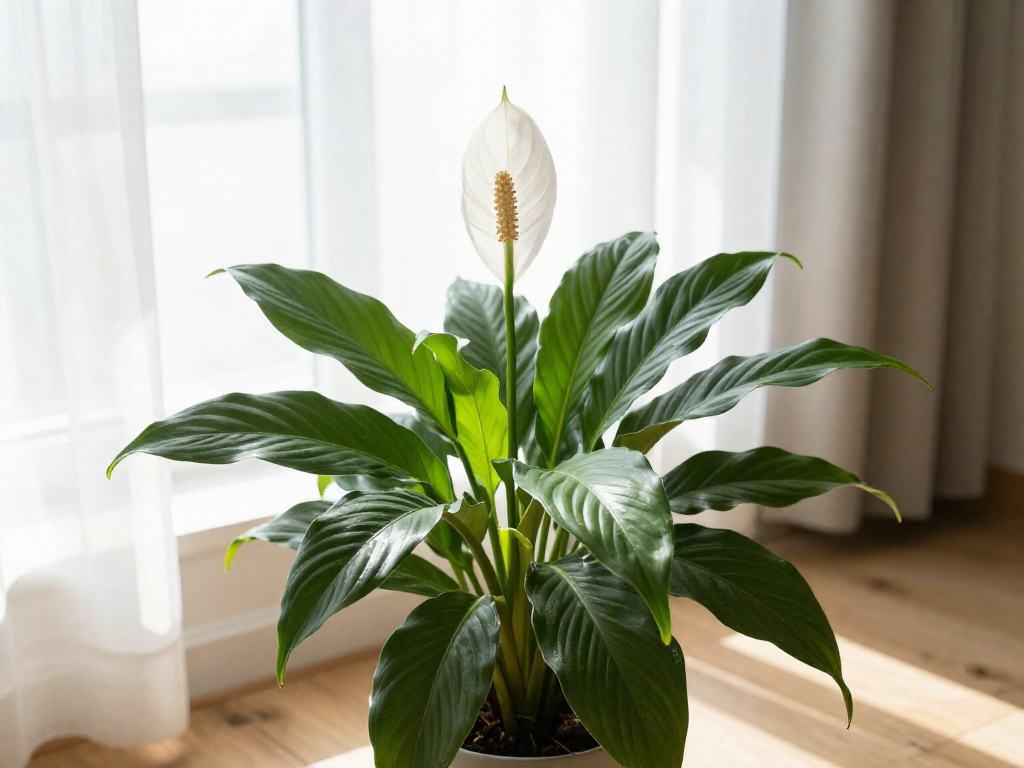
Flowering likelihood rises directly with brightness. In low-to-medium light, a bloom is a rare event. Near a bright window, a healthy plant can flower most of the year, sometimes producing several white blooms (called spathes—the leaf-like hood around the flower spike) at once.
The fix is simple: move your plant to bright, indirect light—strong daylight that never falls directly on the leaves. An east- or north-facing window is ideal. If your apartment is short on natural light, a full-spectrum LED grow light run 10–12 hours a day works just as well and is often the most reliable option in a small space.
The other factors (and why they matter less)
- Don't rush to repot. Peace lilies bloom best when slightly root-bound—meaning the roots fill the pot. Only repot in early spring once roots poke through the drainage holes.
- Consistency beats any single fix. Stable light, warmth (65–80°F), and humidity do more than any one adjustment. Peace lilies come from tropical rainforests, so steady, mild conditions signal that it's safe to flower.
- Go easy on fertilizer. It's the least important factor for blooming. Feed lightly—a balanced liquid fertilizer diluted to half strength, about once a month in spring and summer, and none in fall or winter. Over-feeding causes salt buildup and leaf burn, not more flowers.
Bottom line: give it more light, keep conditions steady, and be patient. The blooms follow the light.
The Rest of the Basics: Light Feeding, Water Quality, and Temperature
Once your watering and light are dialed in, a few supporting habits keep the leaves green and tip-free.
Feed lightly. Peace lilies aren't heavy feeders. Use a balanced liquid houseplant fertilizer (one with roughly equal N-P-K, the three numbers on the label) diluted to half strength, once a month in spring and summer. Skip fall and winter entirely. Over-fertilizing leaves salt in the soil and scorches leaf edges, so when in doubt, feed less.
Watch your water quality. Peace lilies are sensitive to fluoride and chlorine in tap water, which often shows up as brown leaf tips. If you're seeing that, switch to filtered, distilled, or collected rainwater. Room-temperature water is easiest on the roots.
Keep them warm and draft-free. Aim for 65–80°F—normal apartment range. Keep the plant away from cold windows, AC vents, and exterior doors in winter, and never let it sit below 50°F.
A little humidity helps. Dry apartment air (especially with winter heat) contributes to brown tips too. Wipe dust off the leaves occasionally and boost humidity with a nearby pebble tray or grouping plants together.
A Safety Note: Peace Lilies and Pets
Before you find the perfect spot, know this: peace lilies are mildly toxic to humans, cats, and dogs. All parts of the plant contain calcium oxalate crystals—tiny, needle-like crystals that irritate soft tissue when chewed or swallowed.
If a curious pet or child bites a leaf, expect mouth irritation, swelling, and stomach upset rather than a life-threatening emergency. Still, it's worth avoiding. Place your peace lily out of reach—a high shelf or hanging spot—away from nibbling pets and small hands.
Quick Rescue: Reviving a Drooping Peace Lily
When your peace lily suddenly flops, don't reach for the watering can on reflex. Both too much and too little water cause the same dramatic droop, so the soil tells you which problem you're dealing with.
Step 1: Check the soil first. Push a finger in about 2 to 3 inches deep before you do anything else.
- If it's dry: Water thoroughly until it drains from the pot's holes, then empty the saucer so the roots aren't sitting in standing water. A thirsty peace lily often perks up within a few hours.
- If it's wet: Don't add more water. Let the soil dry out, and slide the plant out to inspect the roots. Healthy roots are firm and pale; roots that are brown, black, mushy, or smell rancid signal rot and need trimming.
Step 2: Reset the conditions. Return the plant to bright, indirect light and keep temperature and watering stable.
Most peace lilies recover within a few days once you've fixed the root cause—not the symptom.
Sources
- Bring Serenity Home: Your Complete Peace Lily Care Guide - Soltech — soltech.com
- Peace Lily 101: Light, Water, and Fertilizer Schedule – Leaves and Soul — leavesandsoul.com
- Sad Peace Lily Will Recover With A Little Care — flowershopnetwork.com
- Symptoms of Overwatering a Peace Lily and How to Fix it — backyardboss.net
- How Often and How Much to Water a Peace Lily (Complete Guide) — lowlightleaf.com
- Growing Peace Lilies: How To Care For Spathiphyllum — Plant Savvy — plantsavvy.com
- How often should I fertilize my indoor peace lily? - Quora — quora.com
- How to Grow and Care for Peace Lily Plants — thespruce.com
- Best Way to Care for A Peace Lily Plant – Now & Forever Flower Boutique — nowandforeverflowers.com
- Peace Lily Plant Drooping: Causes, Quick Fixes, and Prevention Guide — lowlightleaf.com
FAQ
How do I know if my peace lily is drooping from too much or too little water?
Both underwatering and overwatering make a peace lily droop, so the soil tells them apart, not the leaves. Push a finger 2 to 3 inches into the soil. If it's dry, the plant is thirsty—water thoroughly and it should perk up within a few hours. If the soil is soggy or waterlogged, you're overwatering, which can cause root rot (roots turn brown or black, feel mushy, and smell rancid). A quick squeeze test helps: roll a bit of soil into a ball. If it holds together and releases little to no water, moisture is ideal; if water drips out, it's too wet; if it won't form a ball, it's too dry.
Why won't my peace lily flower indoors?
The most common reason is not enough light. Peace lilies tolerate low light but rarely bloom in deep shade—they need bright, indirect light (light strong enough to read by without straining, but not direct sun) to produce their white blooms. Move yours near an east- or north-facing window, or add a full-spectrum LED grow light. Be patient: peace lilies are notoriously reluctant to bloom away from their native rainforest, so consistent conditions—steady bright light, warmth of 65–85°F, and decent humidity—matter more than any single trick. Fertilizer has little effect on blooming compared to light.
Can I use tap water for my peace lily?
You can, but peace lilies are sensitive to chemicals like fluoride and chlorine in tap water, which can cause brown leaf tips over time. If your plant develops brown tips, switch to filtered, distilled, or rainwater, or leave tap water out overnight to let some chlorine dissipate. Whatever you use, water at room temperature so you don't shock the roots, and water thoroughly until it drains from the bottom, then empty the saucer so the plant isn't sitting in standing water.
How often should I water a peace lily in winter?
Roughly every 10 to 14 days in winter, but let the soil guide you rather than the calendar. In winter the plant enters dormancy—it slows down and stops putting out new leaves and flowers—so it drinks far less than in spring and summer, when watering once or twice a week is common. Check the top inch of soil and water only when it feels dry. Cutting back in winter is important, because cold soil that stays wet is a fast route to root rot.
Are peace lilies toxic to cats and dogs?
Yes, mildly. Peace lilies contain calcium oxalate crystals in all parts of the plant, which can cause mouth and throat irritation, swelling, drooling, and gastrointestinal upset if a cat or dog chews or swallows the leaves. They are not usually life-threatening, but they're unpleasant, so place the plant out of reach of curious pets. If your pet ingests a peace lily and shows distress, contact your veterinarian or a pet poison helpline. (Note: true lilies are far more dangerous to cats—peace lilies are not the same plant.)
Do I need to fertilize my peace lily to get blooms?
No—fertilizer is one of the least important factors in getting a peace lily to bloom; light matters far more. Peace lilies are light feeders, and over-fertilizing causes salt buildup and leaf burn. If you do feed, use a balanced liquid fertilizer diluted to half strength about once a month during spring and summer only, and skip fall and winter entirely. If blooms are your goal, put your energy into bright, indirect light rather than more plant food.
Should I repot my peace lily if it's root-bound?
Not necessarily—peace lilies actually bloom best when slightly root-bound, so a snug pot isn't a problem on its own. Repot only when the plant clearly outgrows its container: roots poking up through the soil surface or out of the drainage holes, or soil that dries out unusually fast. Early spring is the best time. Move up just one pot size, and consider a terra-cotta or clay pot, which wicks away excess moisture and helps prevent the soggy conditions peace lilies hate.
See also
- Best low-light houseplants for apartments
- How to spot and fix root rot in houseplants
- Understanding indirect light in small spaces
- Choosing the right pot and drainage for indoor plants
- Pet-safe houseplants for apartment dwellers
Related articles
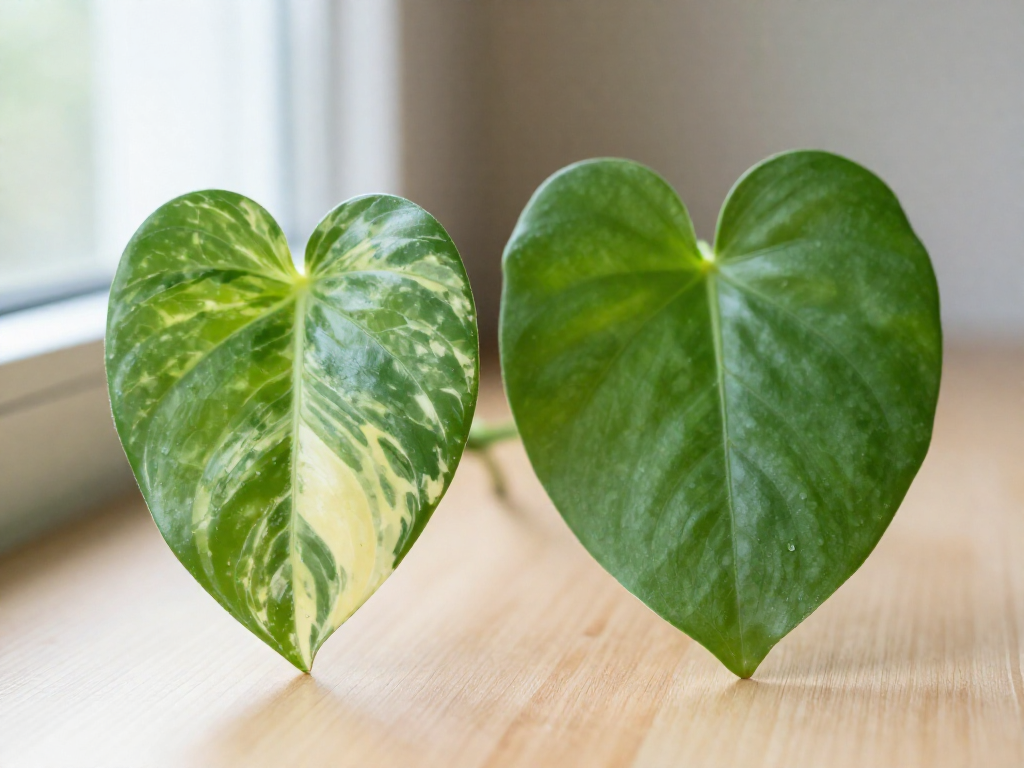
Pothos vs. Philodendron vs. Snake Plant: Which Should You Start With?
Pothos, philodendron, or snake plant—which easy houseplant is the best first choice for your apartment? A clear, plant-by-plant comparison for new plant parents.
Jul 14, 2026 · 7 min read
Jade Plant Care: The Easy Beginner Succulent Tree
Learn how to care for a jade plant indoors: watering, light, soil, plus simple pruning to shape a bushy little succulent tree. Beginner-friendly, step by step.
Jul 14, 2026 · 9 min read
Fiddle Leaf Fig Care: Why It's Fussy and How to Cope
Can a beginner keep a fiddle leaf fig alive? An honest, plant-by-plant care guide covering light, watering, drafts, and how to fix brown spots and leaf drop.
Jul 14, 2026 · 12 min read