Chinese Evergreen (Aglaonema) Care for Low Light
How do I keep a Chinese evergreen healthy indoors?
On this page
Why the Chinese Evergreen Is Perfect for Dim Apartments
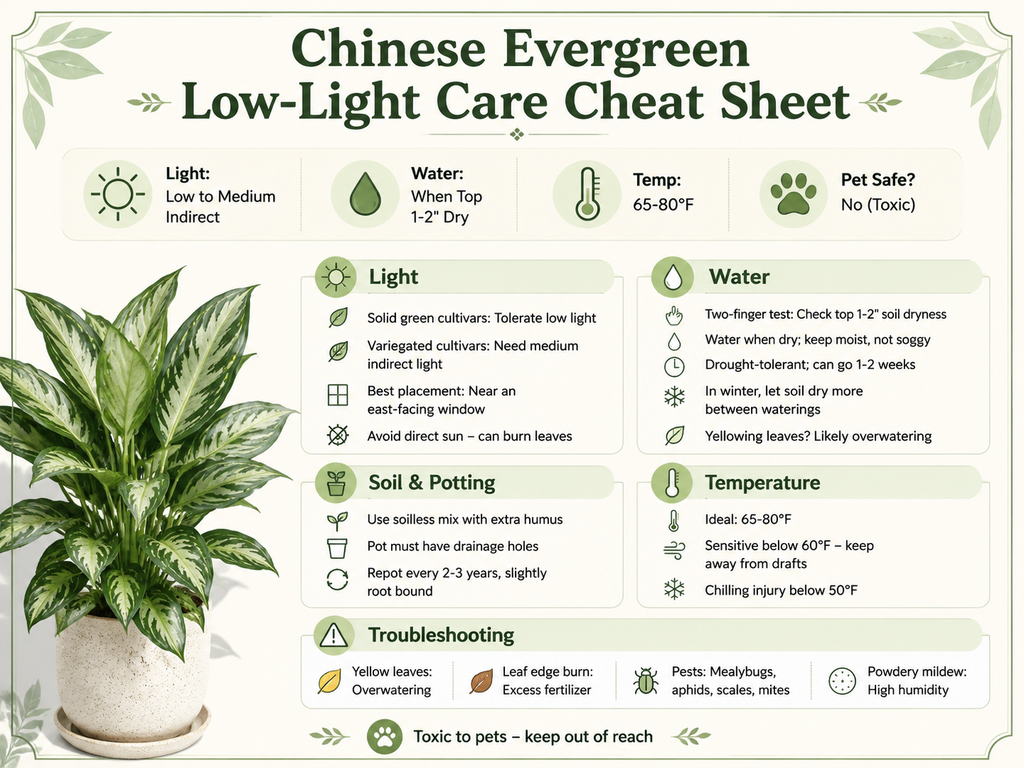
If your apartment is short on bright windows, the Chinese evergreen (Aglaonema) is one of the easiest plants to keep alive. Clemson University's horticulture experts call it "one of the most durable houseplants," noting that it tolerates poor light, dry air, air-conditioning, and even drought. That combination is exactly what a small US apartment throws at a plant.
Its low-light talent isn't luck. Aglaonema comes from the shaded rainforest floor of Southeast Asia, where little direct sun reaches the undergrowth—so dim corners feel like home. It even grows well under artificial light, which makes it a solid pick for offices and rooms with no usable window.
Expect a compact, tidy plant: it reaches about 1 to 3 feet tall and wide, with foliage ranging from solid green to varieties splashed with silver or gray. Variegated types (leaves marked with two or more colors) hold that patterning best in a bit more light, while solid-green kinds shrug off the darkest spots.
Set your expectations right and you'll be happy: this is a slow-growing, low-maintenance plant, not a fussy one. Give it time rather than constant attention.
Light: How Low Can You Really Go?
Short answer: it depends on your plant's leaves. Solid green Chinese evergreens are the true low-light champions, while colorful (variegated) types need a bit more brightness to stay vivid. Variegated simply means leaves with more than one color—splashes of silver, cream, pink, or gray mixed with green.
Solid green cultivars grow happily in low light—that's the indirect or heavily shaded spots you find a few feet back from a window (Clemson HGIC). If your apartment has dim corners, these are your safest pick.
Variegated cultivars will survive in low light, but they do their best in medium indirect light—bright light that never lands directly on the leaves (Proven Winners). Push them too far into a dark corner and they'll live, but the colorful patterns can fade and lose definition (Green Mad House). If you love that silver or pink coloring, give them more light to keep it sharp.
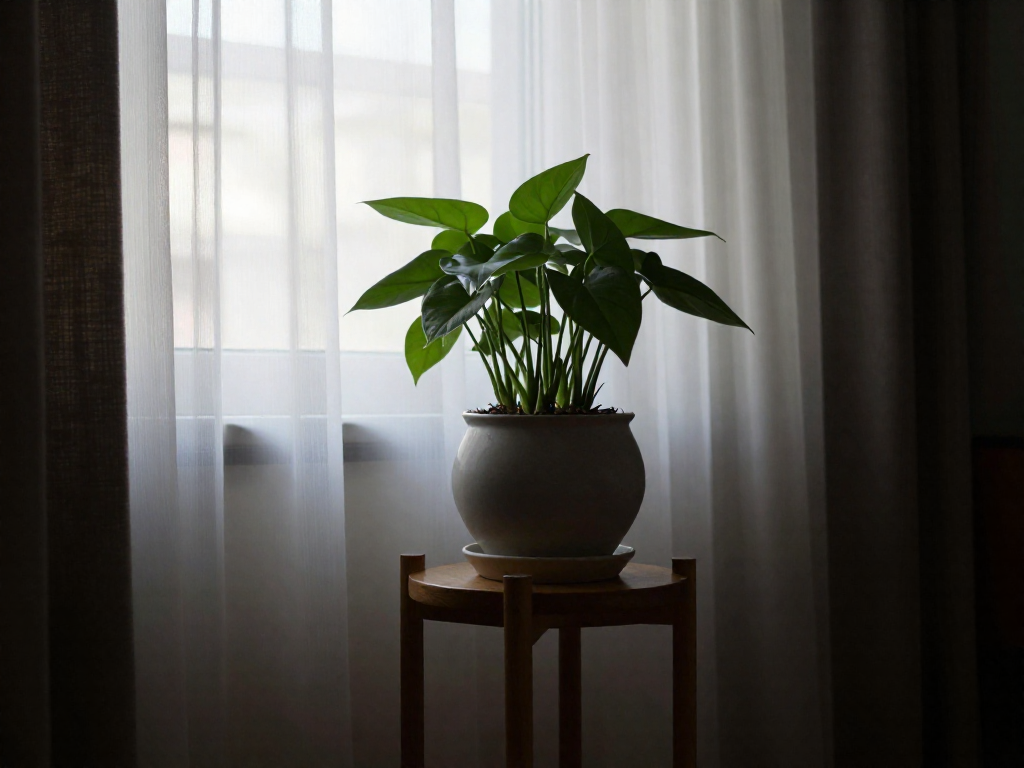
Best placement: near an east-facing window with low to medium indirect light (Proven Winners). East windows give gentle morning light without the harsh midday intensity.
Avoid direct sunlight. Direct rays will scorch the foliage, leaving crispy brown or bleached patches. Keep the plant just out of the sun's direct path.
One easy boost: wipe the leaves with a damp, lint-free cloth every few weeks. Dust builds a film that blocks light, so clean leaves absorb more of what little light a dim room offers—an easy win for apartment plants.
Watering Without Killing It: The Two-Finger Test
Overwatering is the number-one killer of Chinese evergreens, so when in doubt, wait. These plants are drought-tolerant and would rather be a little dry than sit in soggy soil.
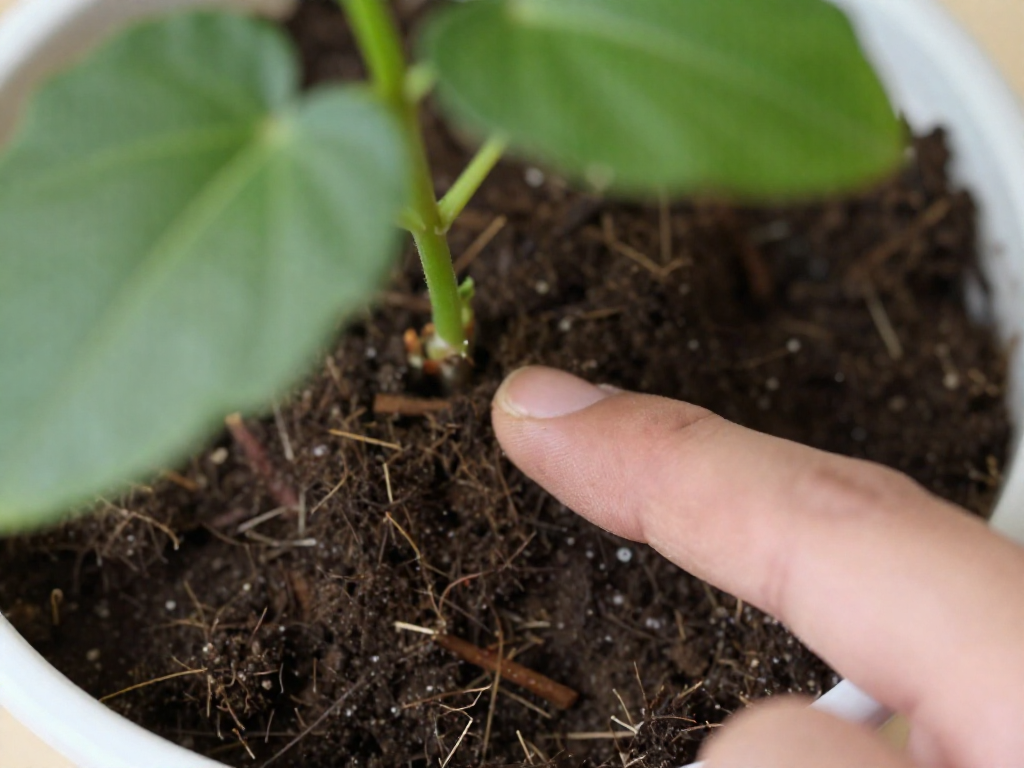
The two-finger test. Push two fingers into the soil down to the second knuckle (about the top 2 inches). If it feels dry, it's time to water. If it feels cold and damp, wait a few more days and check again. That's the whole routine—no schedule, no guessing.
When you do water, use room-temperature water and add it until it runs out the drainage holes. In an apartment, most Chinese evergreens go 1–2 weeks between waterings, but the exact timing depends on your pot size, light level, and how warm your space is. Always let the soil be your guide instead of the calendar.
Try bottom watering. Set the pot in a shallow dish of water for 15–20 minutes, then let it drain fully. This hydrates the roots evenly and helps discourage fungus gnats, those tiny flies that breed in constantly wet topsoil. Just never leave the plant standing in a saucer of water afterward.
Ease up in winter. When it's cold, let the soil dry out more between waterings. Cold temperatures plus wet soil are a fast track to root rot (roots that suffocate and decay in soggy soil). If you notice yellowing leaves, that's a common overwatering signal—let the soil dry thoroughly before watering again.
Soil, Pots, and Repotting
Chinese evergreens are forgiving about their pot, but they are unforgiving about wet feet. Get the soil and drainage right and you eliminate the most common way people kill this plant: root rot.
Soil: Use a standard soilless mix (a bagged potting mix made from peat or coco coir and perlite rather than garden dirt) with a little extra humus (decomposed organic matter that holds nutrients). This blend drains fast while staying lightly moist. Root rot almost always traces back to a slow-draining mix or overwatering, not to bad luck.
Pots: Whatever container you choose, make sure it has drainage holes so excess water can escape. This single detail matters more than the material or color.
Repotting: Aglaonema actually prefers to be slightly root bound (roots filling most of the pot), so resist the urge to size up early. Repot only every 2–3 years, in spring or summer when the plant is actively growing. When you do, choose a pot just 1–2 inches larger in diameter.
One caution: new growth comes from the crown at the plant's center, so avoid heavy pruning—cutting it back hard can kill the plant.
Temperature, Humidity, and Feeding
Chinese evergreens are tropical plants, so they like the same comfortable range most apartments already sit at: 68–80°F. The main thing to get right is protecting them from cold and sudden temperature swings.
Keep it warm and away from vents
Place your plant well away from drafty windows, exterior doors, and heating or cooling vents, which blast air that stresses the leaves. Below 60°F, the plant experiences stress and cold damage. Below 50°F, it can suffer chilling injury (permanent cold damage to the tissue). Since Aglaonema is only frost-hardy outdoors in USDA zones 10–12 (the warmest US regions, like South Florida), it stays indoors year-round for nearly every apartment dweller.
Humidity and feeding
Good news: this plant tolerates dry indoor air and air-conditioning without fuss, so you don't need a humidifier. Very high humidity is actually the bigger risk, as it can invite powdery mildew (a white, dusty fungus on leaves).
Feed lightly during spring and summer with a diluted, balanced houseplant fertilizer. Too much fertilizer causes leaf-edge burn (crispy brown margins), so when in doubt, use less.
Best Low-Light Varieties to Buy
Here's the simple rule to shop by: the more colorful the leaf, the more light it wants. Solid-green Chinese evergreens are the safest pick for the darkest corners of your apartment, while variegated types (leaves with multiple colors, like silver or gray patterning) need at least low-to-moderate indirect light to keep their color from fading.
For the dimmest rooms, look for these two:
- Pewter plant (A. crispum) — A robust variety that grows 3 to 4 feet tall with silvery markings on green leaves, and it tolerates very low light (Clemson HGIC).
- Chinese evergreen (A. modestum) — Shiny, dark-green, waxy leaves that handle both very low light and low humidity (Clemson HGIC), making it ideal for dry apartment air.
If you want a little more color without giving up too much shade tolerance, Igneous Ivory Frost has dark-green leaves with frosty-white margins and is more low-light tolerant than most variegated cultivars (Proven Winners). Just place it near an east-facing window rather than a dark corner.
Troubleshooting: Yellow Leaves and Pests
Most Chinese evergreen problems trace back to one culprit: too much water. Use this section to match the symptom to the fix.
Yellowing leaves. The most common cause is overwatering. Let the soil dry out thoroughly, then water again only when the top 1–2 inches feel dry. Yellowing can also come from underwatering, low humidity, too little light, or temperature extremes (cold drafts, heating vents), so check those if your watering is already on track. If only the lowest, oldest leaves yellow one at a time, that's usually just normal aging—nothing to fix.
Leaf-edge browning. Crispy, brown edges often mean over-fertilizing. Cut back to feeding only during spring and summer, and flush the soil with plain water to rinse out salt buildup.
Pests. Watch for mealybugs (white cottony spots), aphids, scale (small brown bumps), and mites (fine webbing). Wipe leaves with a damp cloth, then treat with insecticidal soap or neem oil, repeating weekly until they're gone.
Powdery mildew. This white, dusty coating appears in high humidity. Improve airflow, avoid wetting the leaves, and remove affected foliage.
When in doubt, ease off watering first—it solves most issues.
Is Chinese Evergreen Safe for Pets?
Short answer: no. The Chinese evergreen is toxic to dogs, cats, and horses, according to the ASPCA. The whole plant—leaves, stems, and stalks—contains insoluble calcium oxalates, tiny needle-like crystals called raphides. When a curious pet chews on it, those crystals release into the mouth and cause immediate pain and irritation.
What to watch for: drooling, pawing at the mouth, swelling of the tongue and lips, difficulty swallowing, and vomiting (horses don't vomit). The good news is that severity is generally low, and pets rarely eat much because the sting stops them fast.
If your pet takes a bite:
- Offer a small amount of xylitol-free dairy (like milk or plain yogurt) to help ease mouth irritation.
- Move the plant well out of reach—on a high shelf or in a pet-free room.
- Call the ASPCA Animal Poison Control Center at (888) 426-4435 if symptoms are severe or you're unsure. (A consultation fee may apply.)
When in doubt, contact your veterinarian.
Sources
- Chinese Evergreen (Aglaonema) Care, Cultivation & Growing Guide | Home & Garden Information Center — hgic.clemson.edu
- Indoor Chinese Evergreen Care Guide — provenwinners.com
- Aglaonema Care Guide | Popular Chinese Evergreen Varieties & Tips – Chelsea Garden Center — chelseagardencenter.com
- Care Guide for the Chinese Evergreen — The Green Mad House — thegreenmadhouse.com
- What Causes Yellow Leaves On Chinese Evergreen (Aglaonema)? – Greenspaces.id — greenspaces.id
- Toxic and Non-toxic Plants: Chinese Evergreen | ASPCA — aspca.org
- These Houseplants Can Cause Trouble for Your Pets | ASPCA — aspca.org
- Houseplants and Ornamentals Toxic to Animals - Toxicology - Merck Veterinary Manual — merckvetmanual.com
- Chinese Evergreen (Aglaonema): All You Need To Know — gardenia.net
FAQ
Which Chinese evergreen variety is best for low light?
Solid green varieties handle low light best. Aglaonema modestum (the classic Chinese evergreen) and the silvery-green Pewter plant (A. crispum) both tolerate very low light, while cultivars like Igneous Ivory Frost also do well in softer indoor lighting. Highly variegated types (those with lots of pink, red, silver, or cream) need low to moderate indirect light to keep their color, so choose a mostly-green plant for a genuinely dim room. "Low light" here means an indirect or heavily shaded spot; "moderate" means bright but indirect. Avoid direct sun on any variety, since it can burn the leaves.
How often should I water a Chinese evergreen?
Water when the top 1-2 inches of soil feel dry, which is typically every 1-2 weeks depending on pot size, light, and temperature. Stick two fingers into the soil: if the top couple inches are dry, water thoroughly until it drains from the bottom; if it feels cold and damp, wait. Aim for soil that stays lightly moist but never soggy, and always use a pot with drainage holes. This plant is drought-tolerant and forgives an occasional missed watering, so when in doubt, wait a day. In winter, let the soil dry out a bit more between waterings, since cold, wet soil invites root rot.
Why are my Chinese evergreen leaves turning yellow?
Overwatering is the most common cause of yellowing leaves and overall decline. If several leaves are yellowing, let the soil dry out thoroughly before watering again and confirm your pot drains freely, since soggy soil damages the roots. Other causes include too little water, cold drafts or temperatures below 60°F, low light, low humidity, and pests like mealybugs or scale. If only the lowest, oldest leaves yellow one at a time, that is often just natural aging and nothing to worry about. Check watering first, then rule out cold spots and pests before adjusting anything else.
Can a Chinese evergreen survive in a room with no windows?
It can tolerate very dim conditions and even thrive under artificial light, which makes it popular for offices and interior rooms. In a windowless space, keep it under regular room or desk lighting for several hours a day and choose a solid green variety like A. modestum, since green types cope with low light far better than variegated ones. Expect slower growth and note that colorful cultivars may lose some of their color definition in very low light. Wipe the leaves with a damp, lint-free cloth now and then so dust doesn't block what light there is.
Is Chinese evergreen toxic to cats and dogs?
Yes. Chinese evergreen (Aglaonema) is toxic to cats, dogs, and horses because the entire plant contains insoluble calcium oxalate crystals. When a pet chews it, needle-like crystals release into the mouth, causing oral irritation, pain and swelling of the mouth, tongue and lips, excessive drooling, and sometimes vomiting or difficulty swallowing. Severity is generally low, and a small amount of xylitol-free dairy can help soothe mouth irritation. Keep the plant out of reach of pets, and if you suspect ingestion, contact your vet or the ASPCA Animal Poison Control Center at (888) 426-4435.
How do I get my Chinese evergreen to keep its color?
Give variegated plants enough light. Colorful cultivars keep their vivid pink, red, or silver markings best in medium indirect light, such as near an east-facing window; in very low light they survive but fade toward plain green. Avoid direct sun, which burns the foliage. Keep the plant warm (65-80°F) and away from cold drafts and heating or cooling vents, since temperatures below 60°F cause stress. Dust the leaves with a damp cloth so they absorb available light, and don't over-fertilize, as excess fertilizer can burn the leaf edges. Solid green varieties, by contrast, hold their look fine in low light.
See also
- Best low-light houseplants for apartments
- How to fix overwatered houseplants
- Pet-safe houseplants for cat and dog owners
- Beginner's guide to watering indoor plants
- How to choose the right potting mix for houseplants
Related articles
Pothos vs. Philodendron vs. Snake Plant: Which Should You Start With?
Pothos, philodendron, or snake plant—which easy houseplant is the best first choice for your apartment? A clear, plant-by-plant comparison for new plant parents.
Jul 14, 2026 · 7 min read
Jade Plant Care: The Easy Beginner Succulent Tree
Learn how to care for a jade plant indoors: watering, light, soil, plus simple pruning to shape a bushy little succulent tree. Beginner-friendly, step by step.
Jul 14, 2026 · 9 min read
Fiddle Leaf Fig Care: Why It's Fussy and How to Cope
Can a beginner keep a fiddle leaf fig alive? An honest, plant-by-plant care guide covering light, watering, drafts, and how to fix brown spots and leaf drop.
Jul 14, 2026 · 12 min read