Fertilizing Houseplants: A Simple Beginner Feeding Routine
Do I need to fertilize and how often?
On this page
Do You Even Need to Fertilize Your Houseplants?
Short answer: yes, but only when your plant is actively growing (pushing out new leaves). If a plant is just sitting there through a dark winter, you can hold off.
Here's the "why." Outdoor plants get a steady trickle of nutrients from rain and decomposing leaves in the soil. A plant in a pot has none of that. It slowly uses up whatever nutrients came in its potting mix, and there's no natural way to replace them. You top up the water every time you water, but nutrients quietly drain away and have to be added back. That's all fertilizer is: replacing what the plant used up.
The good news is that this is low-stakes. You don't need a different product for every plant. One general-purpose houseplant fertilizer, used on a simple schedule, covers almost everything on a beginner's shelf.
And if you're growing the easy, forgiving plants most new plant parents start with—pothos, ZZ plant, or snake plant—you need even less. These grow slowly, especially in the lower light of an apartment, so they use nutrients slowly too. Feeding them just a few times a year is plenty. When in doubt, feed less: too little fertilizer is far easier to fix than too much.
Understanding the 3 Numbers on the Label (NPK)
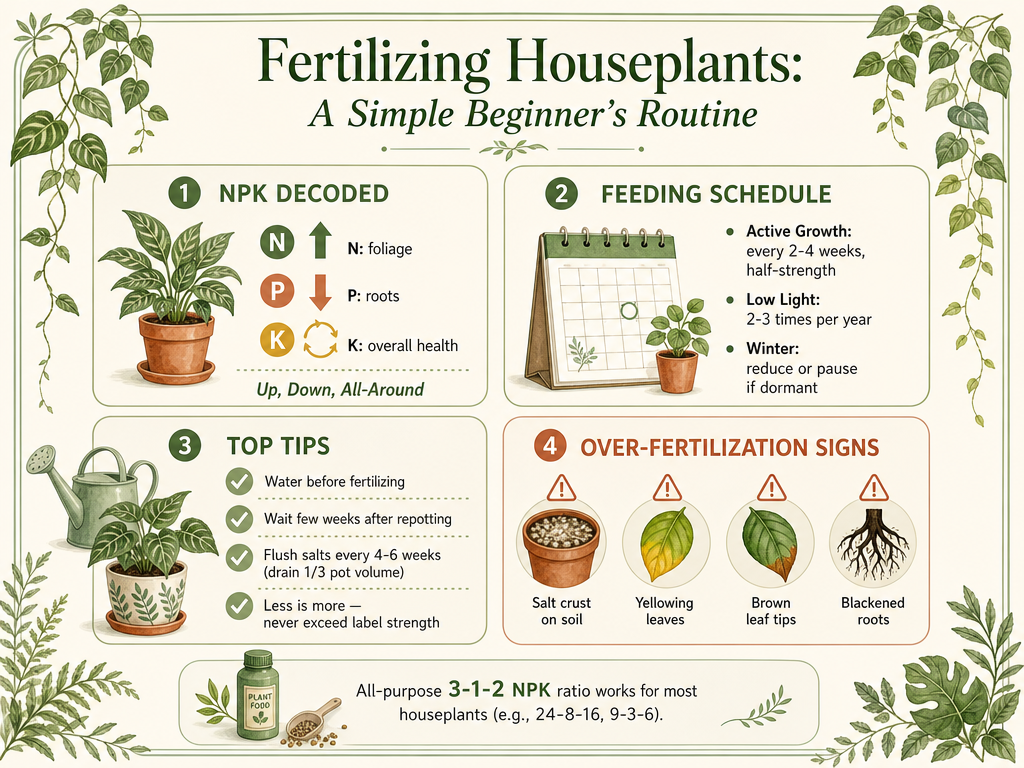
Pick up any fertilizer and you'll see three numbers, like 24-8-16 or 10-10-10. This is the NPK ratio, and it simply tells you the percentage of three main nutrients: Nitrogen, Phosphorus, and Potassium (potassium's symbol is K).
Here's an easy way to remember what each one does — "up, down, and all-around":
- Nitrogen (up): feeds leaves and stems, the green growth above the soil.
- Phosphorus (down): supports healthy roots.
- Potassium (all-around): keeps the plant's cells working and helps it handle stress.
What ratio should a beginner buy?
For most leafy houseplants (called foliage plants — grown for their leaves, not flowers), a 3-1-2-style ratio covers everything. That includes products like 24-8-16, 9-3-6, or 11-3-8 — notice each is just the 3-1-2 pattern scaled up. Foliage plants like a little extra nitrogen, and these ratios deliver it.
Balanced ratios where all three numbers match — like 10-10-10 or 20-20-20 — are also perfectly fine to start with.
The one exception: flowering plants such as peace lily, African violet, and orchid do best with more phosphorus (a higher middle number), so they often have their own labeled fertilizer.
Bottom line: you don't need a shelf of different bottles. One all-purpose fertilizer is enough to feed nearly every plant in your apartment.
The Simple Beginner Feeding Schedule
Here's the whole routine in one line: mix liquid fertilizer at half the strength on the label and feed about once a month during the growing season (spring and summer). That's it. For most US apartments, the growing season runs roughly March through October, when days are longer and your plants are actively pushing out new leaves.
In fall and winter, ease off. Feed every 6–8 weeks, or pause completely if the plant has stopped growing. There's no harm in stopping — a resting plant isn't using the food anyway, and leftover fertilizer just builds up as salt in the soil.
The one rule that matters most
Forget the calendar for a second. The real trigger for feeding is active new growth — fresh leaves unfurling. A plant grown entirely indoors doesn't always follow the seasons, so if yours is clearly pushing out new leaves in January, a light feeding is fine. Flip side: a plant sitting still in July doesn't need to be fed just because it's summer. Growth = feed. No growth = wait.
If your space is low-light
Rooms far from a window mean slower growth and much less feeding. In low light, 2–3 feedings a year is plenty. Overfeeding a slow plant is one of the most common beginner mistakes, so when in doubt, do less.
A gentler option (optional)
Prefer smaller, more frequent doses? You can feed weekly at half strength during spring and summer instead of monthly. Tiny regular meals are easier on the roots and cause less salt buildup — just flush the pot with plain water every 4–6 weeks to rinse out any excess.
Quick-reference by scenario
| Your setup | Spring/Summer | Fall/Winter |
|---|---|---|
| Bright light, actively growing | Every 4 weeks (or weekly, ½ strength) | Every 6–8 weeks, or pause |
| Low light | 2–3 times total for the year | Pause |
| Dormant (no new growth) | Wait until growth resumes | Don't feed |
Always mix at half strength unless a product specifically says otherwise — for beginners, underfeeding is far safer than overfeeding.
How to Apply Fertilizer Without Burning Your Plant
The schedule tells you when to feed. This is how to feed without harming your plant. Fertilizer burn — the root and leaf damage caused by too much fertilizer salt — is the most common beginner mistake, and every step below is designed to prevent it.
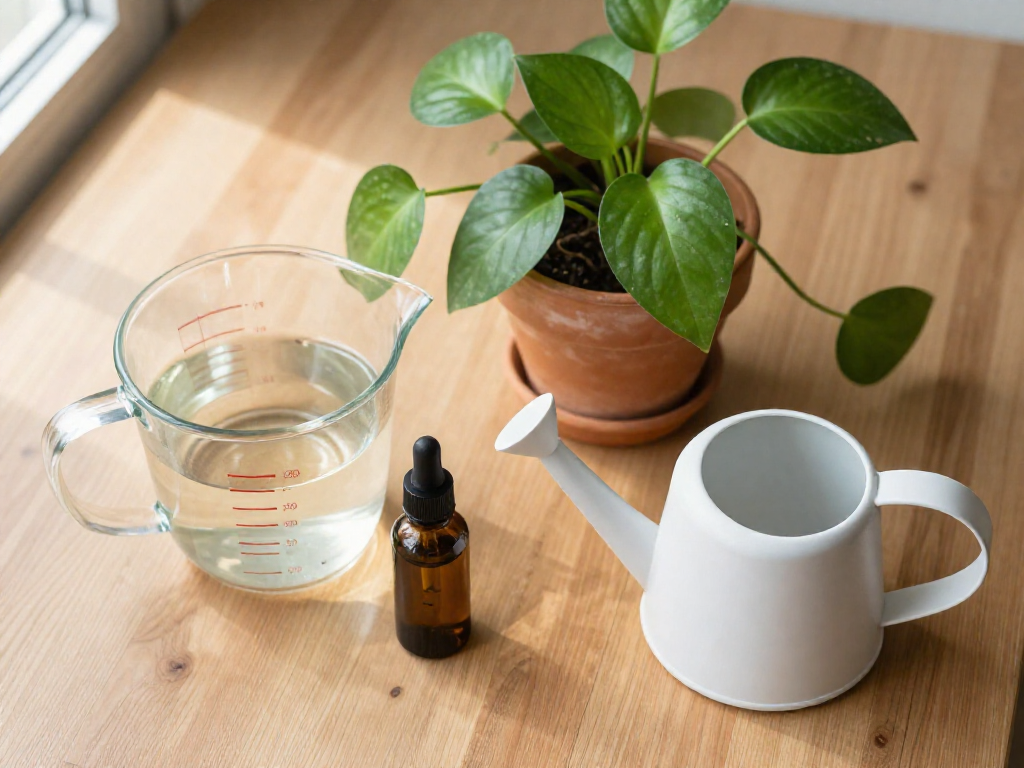
1. Water first. Never fertilize bone-dry soil, because concentrated fertilizer can burn dry roots. Water your plant so the soil is damp but not soggy, then feed.
2. Dilute to half strength (or weaker). Most labels are written for outdoor gardens with strong sun and heavy watering. Indoors, light is lower and pots are smaller, so full strength is often too much. Mix your water-soluble (liquid) fertilizer to half the label amount — or even weaker while you're learning.
3. Feed in the morning. Plants absorb nutrients best early in the day.
4. Water until it drains. Pour the diluted solution through the pot until it runs out the drainage holes. This spreads nutrients evenly and prevents salt from building up in one spot.
5. Wait after repotting. Give a freshly repotted plant a few weeks before feeding. New roots are fragile and easily burned, and fresh potting soil already contains nutrients.
The golden rule: you can always add more fertilizer, but you can't take it back once it's in the soil. When in doubt, use less.
Why Less Is Always Safer Than More
Here's the one rule that will save your plants: when in doubt, use less fertilizer. Fertilizer is essentially salt, and too much of it builds up in the soil and damages roots through a process called reverse-osmosis (where the salty soil actually pulls moisture out of the roots instead of feeding them).
The math is simple and one-sided:
- Under-feeding is easy to fix. A hungry plant just needs its next scheduled feeding, and it bounces back.
- Over-feeding can kill. Once you've applied too much, you can't take it back — you're stuck flushing the pot or repotting to save the plant.
This is exactly why we recommend half strength. The dosages on fertilizer labels are written for outdoor gardens with strong sun and heavy watering. Your small indoor pot, with lower light and gentler watering, needs far less.
Signs You've Over-Fertilized (and How to Fix It)
Fertilizer is basically salt, and too much of it builds up in the soil and damages roots. The good news: over-feeding is usually easy to catch early and simple to fix.
Warning signs to watch for:
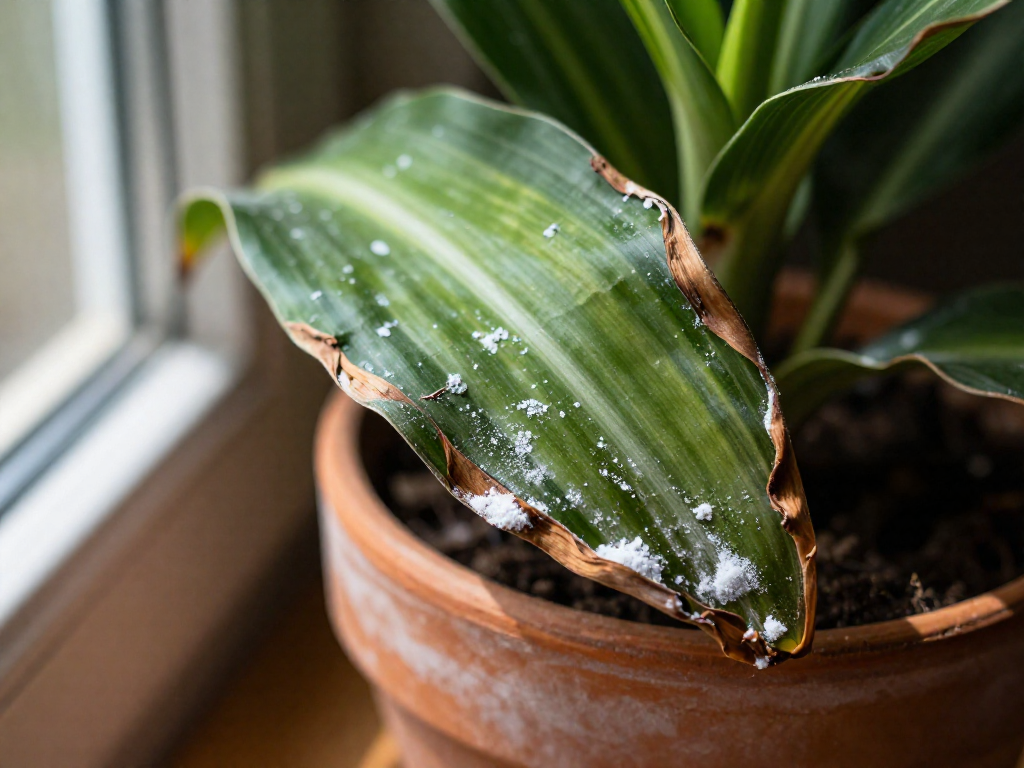
- A white, crusty layer on the soil surface or around the pot rim (that's salt buildup)
- Yellowing or wilting lower leaves
- Brown, crispy leaf tips or edges
- New growth coming in smaller than usual
- Dropping leaves
- Little to no new growth or blooms
- Blackened, limp roots (a sign of severe buildup)
How to fix it:
- Scoop off any crusted salt from the top layer of soil and toss it.
- Flush the pot with plain water, letting it run all the way through and drain freely from the bottom. This rinses excess salts out of the soil.
- Repeat once or twice for good measure.
If the plant is badly burned, skip the flush and repot into fresh potting soil instead. Fresh roots need a clean start.
Prevent it from happening again: Every 4–6 weeks, flush each pot with plain water until about a third of the pot's volume drains out the bottom, and skip that week's feeding. This clears out salts before they can build up—and it's the single easiest habit for keeping your plants happy.
A Few Plants That Want Something Different
The standard routine works for most beginner plants, but a handful of specialty plants have different needs. Here's what to know before you feed them.
Succulents and cacti. These grow slowly, so feed sparingly. Use a half-strength fertilizer every 2–4 weeks in late spring and summer only, and stop entirely in winter when they're resting.
Orchids, bromeliads, air plants, and African violets. These do better with fertilizers made specifically for them rather than an all-purpose formula. Look for a bottle labeled for your plant type—it takes the guesswork out.
Flowering plants. If you're trying to encourage blooms, choose a fertilizer higher in phosphorus (the middle number on the label). It supports flowering more than a plain balanced formula does.
Everything else. Common beginner plants—pothos, ZZ plant, snake plant, and spider plant—are perfectly happy with the standard half-strength routine. No special products needed.
Sources
- Fertilizer for most Houseplants – House Plant Journal — houseplantjournal.com
- How and When to Fertilize Houseplants Indoors — provenwinners.com
- Houseplant Fertilizer Guide: When, How & What Type to Use – Elm Dirt — elmdirt.com
- How to Fertilize Houseplants: Help Your Plants Thrive – Unsolicited Plant Talks — unsolicitedplanttalks.com
- Houseplant Fertilization — homegarden.cahnr.uconn.edu
- How to Fertilize Indoor Plants: Ways to Feed Houseplants — joyusgarden.com
- Spring Feeding: Houseplant Fertilizing 101 - Pistils Nursery — pistilsnursery.com
- The Simple Fertilizer Schedule That Works for Any Houseplant – Leaves and Soul — leavesandsoul.com
- 7 Signs of over fertilized plants | Houseplant Resource Center — youtube.com
- How to save Over-fertilized House Plants — House Plant Shop — houseplantshop.com
- how often do we need to fertilize our plants? : r/houseplants — reddit.com
FAQ
Do I really need to fertilize my houseplants?
Yes, if you want steady, healthy growth. In a pot, your plant slowly uses up the nutrients in its soil every time it grows. Outdoors, rain and decomposing leaves replenish those nutrients naturally, but a potted plant on your windowsill can't do that on its own. Watering replaces water, not nutrients, so fertilizer is how you refill the tank. That said, feeding is only useful when a plant is actively growing and getting decent light. A plant sitting in a dim corner and barely growing needs very little (2-3 times a year is plenty), while a plant pushing out new leaves in a bright spot benefits from regular feeding.
How often should I fertilize houseplants?
For most houseplants, feed every 2-4 weeks during the active growing season (roughly spring and summer, about March through September), then cut back or stop in fall and winter. A simple, safe beginner routine is a half-strength liquid fertilizer every 2-4 weeks while plants are growing, dropping to monthly (or pausing entirely) in the darker months. Adjust to your light: plants in low light grow slowly and only need feeding a few times a year, while plants in bright light growing quickly can handle the more frequent end of the range. The best guide is the plant itself. If it's pushing out new leaves, it can use fertilizer; if it's not growing, hold off.
Can I use the same fertilizer for all my houseplants?
For the majority of common leafy houseplants (pothos, philodendron, snake plant, ZZ, spider plant, and similar tropicals), yes. A single balanced or foliage-friendly fertilizer will serve them all well, so you don't need a different product for every plant. A widely recommended all-purpose ratio is 3-1-2 (nitrogen-phosphorus-potassium), or any multiple of it like 24-8-16 or 9-3-6. Foliage plants especially appreciate the higher nitrogen. The main exceptions are a few specialty plants, orchids, bromeliads, air plants, African violets, cacti, succulents, and carnivorous plants, which do better with fertilizers formulated for them. For everything else, one good general fertilizer is all a beginner needs.
Should I fertilize houseplants in winter?
Usually not, but watch the plant rather than the calendar. Most houseplants slow down or go dormant in winter because of shorter days and lower light, and a resting plant can't use extra nutrients, so many growers reduce feeding to about once a month or stop altogether from roughly October through February. However, plants grown entirely indoors don't always follow the seasons. If yours is genuinely pushing out new leaves under good light, that's active growth and you can support it with a light, diluted feeding even in winter. The rule that matters is: feed when there's active growth, skip when there isn't.
What does 3-1-2 or 10-10-10 mean on fertilizer?
Those three numbers are the N-P-K ratio, the percentages of nitrogen (N), phosphorus (P), and potassium (K) in the fertilizer, the three main nutrients plants need. An easy way to remember what each does is "up, down, and all-around": nitrogen (up) fuels leaf and stem growth above the soil, phosphorus (down) supports roots (and flowering), and potassium (all-around) keeps the plant's overall cell functions and stress tolerance healthy. So 10-10-10 is a balanced blend with equal amounts of each, good all-purpose feeding. A 3-1-2 ratio is higher in nitrogen, which suits leafy foliage plants. Flowering plants tend to prefer a bit more phosphorus.
How do I know if I've over-fertilized my plant?
Over-fertilizing is essentially a salt overload that burns the roots, and it shows up in a few telltale signs: a white crust of salt on the soil surface or pot rim, browning or burned leaf tips and edges, yellowing and wilting lower leaves, smaller new growth or no new growth at all, dropping leaves, and in bad cases blackened, mushy roots. Because too much fertilizer can't be undone once absorbed, prevention matters, use less rather than more. If you catch it early, scrape off any salt-crusted topsoil and flush the pot with plain water until it drains freely from the bottom, repeating once or twice. In severe cases, repot into fresh soil.
Should I fertilize a newly repotted plant?
No, wait a few weeks first. Fresh potting soil already contains nutrients, so a newly repotted plant doesn't need feeding right away. Just as important, repotting disturbs the roots and leaves them more vulnerable to fertilizer burn, so adding fertilizer too soon can do harm rather than help. Give the plant a few weeks to settle in and start putting out new growth, then resume your normal feeding routine, and feed sparingly at first since the new soil is still doing some of the work.
Is liquid or granular fertilizer better for beginners?
Liquid fertilizer is the easier, more forgiving choice for most beginners. You mix it with water (typically to half strength for indoor plants), which gives you precise control over how much your plant gets and makes it simple to dial back or flush out if you overdo it. A common beginner approach is a diluted liquid feed applied during regular watering while plants are actively growing. One key habit: always water first or feed onto already-damp soil, never onto bone-dry soil, since fertilizing dry roots can burn them. Because indoor light is lower and pots are small, half strength is safer than the full label rate, which is written with sunny outdoor gardens in mind.
See also
- How to Water Houseplants: A Beginner's Guide
- Best Soil for Houseplants: A Simple Beginner Breakdown
- How Much Light Does My Houseplant Need?
- Beginner-Friendly Houseplants That Are Hard to Kill
- Snake Plant Care for Beginners
- Pothos Care: The Complete Beginner Guide
Related articles
A Beginner's Glossary of Houseplant Terms
Confused by plant jargon? This plain-language glossary defines the houseplant terms beginners hit most—nodes, variegation, perlite, root-bound and more.
Jul 14, 2026 · 6 min read
How to Clean Dusty Houseplant Leaves (and Why It Matters)
Dusty leaves block light and slow plant growth. Learn the simple, safe way to clean houseplant leaves by type—plus what to avoid, like leaf shine sprays.
Jul 14, 2026 · 6 min read
Winter Houseplant Care: Watering and Light When Days Get Short
Learn how to care for houseplants in winter: cut back watering, boost light and humidity, and pause feeding so your plants survive short, dark days.
Jul 14, 2026 · 11 min read